Which Reptile Light Survives a Humid Terrarium?
The Zoo Med ReptiSun T5 HO fixture leads UVB setups with a wipeable aluminum reflector, the Fluker’s Sun Dome delivers the best ceramic-socket value for basking bulbs, and the Exo Terra Compact Top Canopy suits misted rainforest terrariums through its mesh, splash-resistant design.
Aluminum reflectors and ceramic sockets separate fixtures that survive humidity from ones that rust within months. Keepers running misted or high-humidity terrariums get the most reliable results from the Zoo Med ReptiSun T5 HO, since its sealed reflector wipes clean without corroding. Tighter budgets can lean on the Fluker’s Sun Dome for basking heat instead.
Standard lamp fixtures corrode or short out fast inside a humid vivarium, so material matters more than wattage here. We compared reflector metal, socket type, and cord sealing rather than bulb compatibility alone, then checked which designs hold up under misting, rainforest humidity, and everyday tank cleaning.
The top picks, ranked

Zoo Med ReptiSun T5 HO Terrarium Hood
Aluminum reflectors wipe clean with a damp cloth after misting, unlike steel fixtures that rust over time. T5 HO linear UVB tubes inside cover a wider basking strip than compact bulbs manage. Waterproof end caps around the wiring keep condensation away from the electrical connections.
Pros
- Aluminum reflector resists rust from misting
- Wide UVB coverage from linear tube design
- Waterproof end caps protect wiring
Cons
- Longer footprint needs a full-length tank rim
- T5 HO tubes cost more to replace than compact bulbs
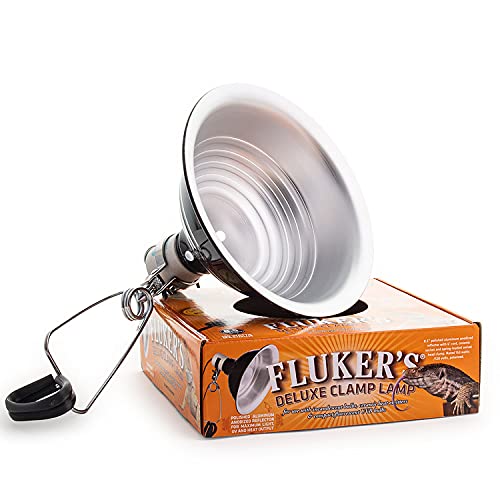
Fluker’s Sun Dome Ceramic Fixture
Porcelain ceramic sockets handle high-wattage basking bulbs without melting in humid air, something plastic sockets in cheaper domes cannot do. Polished aluminum reflects light and wipes free of substrate dust and condensation spray. An adjustable spring clamp repositions the dome over different basking spots.
Pros
- Ceramic socket tolerates high humidity and heat
- Wipeable aluminum dome cleans easily
- Clamp mount repositions without extra hardware
Cons
- No UVB output, heat and light only
- Clamp grip can loosen on thin tank rims

Zilla Reflector Dome Lamp Fixture
A smaller aluminum reflector pairs with a ceramic socket at a lower price than premium clamp lamps. Compact sizing suits smaller enclosures where a modest heat or UVB bulb covers the basking zone. Owners report the reflector wipes clean easily, though the clamp feels lighter duty than pricier models.
Pros
- Lower cost than premium ceramic domes
- Compact size suits smaller tanks
- Reflector cleans with a damp cloth
Cons
- Smaller dome limits bulb wattage options
- Clamp feels less sturdy than heavier-duty models

Exo Terra Compact Top Canopy
Mesh at the top lets misting systems spray straight through instead of pooling water on the fixture. A compact UVB or heat bulb sits above the mesh, keeping it out of direct water contact. Tropical amphibian and arboreal reptile keepers favor this style over solid-reflector domes.
Pros
- Mesh design drains misting water instead of pooling it
- Keeps bulb elevated away from direct spray
- Fits standard mesh-top terrarium lids
Cons
- Only fits terrariums with compatible mesh lids
- Lower wattage capacity than clamp dome fixtures

REPTI ZOO Dual Dome Lamp Fixture
Two independent ceramic sockets share one fixture, running a basking bulb and a UVB bulb side by side without mounting separate domes. Aluminum housing wipes down easily on cleaning day, and each socket gets its own on-off switch. Larger enclosures benefit most, since one bulb alone cannot cover the full basking area.
Pros
- Runs basking and UVB bulbs from one fixture
- Independent switches control each bulb separately
- Aluminum housing wipes clean easily
Cons
- Heavier than single-bulb domes, needs a sturdy rim
- Two bulbs draw more total wattage
Evergreen Pet Supplies Ceramic Socket Dome
A high-wattage-rated ceramic socket supports heat bulbs sized for larger reptiles like bearded dragons. Aluminum reflectors resist pitting from humidity better than painted steel domes do. A heavy-gauge clamp keeps the fixture steady on both glass and mesh tank rims.
Pros
- Ceramic socket supports higher-wattage heat bulbs
- Larger dome spreads heat over a wider basking area
- Sturdy clamp holds on both glass and mesh rims
Cons
- Larger size takes up more space above the tank
- No built-in switch, needs a separate timer or outlet switch
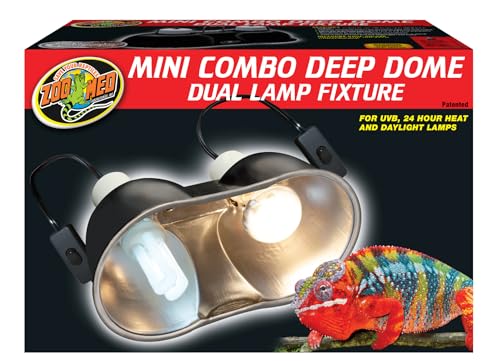
Zoo Med Nano Deep Dome Fixture
A deep dome shape concentrates light and heat downward, suiting nano and small terrariums housing dart frogs or juvenile reptiles. Aluminum interiors wipe clean of condensation without corroding. A slim clamp fits the thinner rims common on nano glass enclosures.
Pros
- Deep dome focuses light for smaller enclosures
- Slim clamp fits thin nano tank rims
- Aluminum interior resists condensation corrosion
Cons
- Too small for larger adult reptile enclosures
- Limited to lower-wattage compact bulbs
Side by side
| # | Model | Reflector material | Best for | Score | Price |
|---|---|---|---|---|---|
| 1 | Zoo Med ReptiSun T5 HO Terrarium Hood | Aluminum | Best overall | 9.4 | Check price |
| 2 | Fluker’s Sun Dome Ceramic Fixture | Ceramic (porcelain) | Best value | 9.0 | Check price |
| 3 | Zilla Reflector Dome Lamp Fixture | Ceramic | Best budget | 8.6 | Check price |
| 4 | Exo Terra Compact Top Canopy | Mesh top canopy with compact dome | Best for humid and misted rainforest terrariums | 8.4 | Check price |
| 5 | REPTI ZOO Dual Dome Lamp Fixture | 2 independent ceramic sockets | Best for dual-bulb basking and UVB setups | 8.2 | Check price |
| 6 | Evergreen Pet Supplies Ceramic Socket Dome | Ceramic, high-wattage rated | Best for high-wattage heat bulbs | 8.1 | Check price |
| 7 | Zoo Med Nano Deep Dome Fixture | Aluminum, deep dome shape | Best for small and nano terrariums | 8.0 | Check price |
What to look for
What to look for in washable reptile lighting Reflector material decides how well a fixture survives repeated cleaning and misting. Aluminum resists rust, while painted steel domes pit and flake with age. Socket type matters just as much, since ceramic tolerates humidity and higher wattages better than plastic. Sealed or waterproof wiring keeps condensation away from the electrical contacts.
Best reptile lighting for humid and misted enclosures Rainforest and amphibian setups do better with mesh canopy designs, like the Exo Terra Compact Top Canopy, which let misting water drain through instead of pooling on the fixture. Ceramic-socket domes with aluminum reflectors, such as the Fluker’s Sun Dome, also hold up well when wiped down after each misting cycle. Exposed plastic sockets are worth avoiding in any high-humidity tank.
Reptile lighting for UVB and full-spectrum setups Linear T5 HO fixtures like the Zoo Med ReptiSun cover a wider basking strip than compact UVB bulbs, useful for reptiles that bask across a broad area. Dual-dome fixtures separate UVB and heat bulbs onto independent switches, which helps when daytime and basking-spot schedules differ. Reflector wipeability is worth checking before mounting any fixture near a misting system.
Which fixture fits a nano or small tank Small enclosures rarely need full clamp-dome hardware. A compact deep dome, like the Zoo Med Nano, focuses light without overwhelming a nano tank’s limited rim space. Lower-wattage bulbs paired with these smaller fixtures cut the risk of overheating a small terrarium. Slim clamps built for thin rims stop the fixture from slipping off nano glass enclosures.
Common questions
What makes a reptile light fixture washable or wipeable?
Aluminum reflectors and ceramic sockets resist rust and heat damage from repeated cleaning, unlike painted steel domes or plastic sockets that corrode or crack over time.
Can reptile light fixtures get wet from misting systems?
Direct water contact damages most fixtures, so mesh canopy designs or fixtures with waterproof end caps hold up better in tanks with automatic misting.
Is a ceramic socket better than a plastic socket for reptile lamps?
Ceramic sockets tolerate higher wattages and humidity without melting or degrading, making them the standard choice for basking bulbs above 75 watts.
How often should reptile lighting fixtures be cleaned?
Wiping the reflector during regular tank maintenance, roughly every one to two weeks, keeps substrate dust and mineral buildup from misting water from collecting.
Do UVB fixtures need to be washable for reptile tanks?
Any fixture near a humid or misted enclosure benefits from a wipeable aluminum reflector, since condensation collects on UVB hoods just as it does on heat domes.
Dome fixture vs canopy fixture: what is the difference?
A dome fixture clamps onto a tank rim and hangs a bulb downward, while a canopy fixture mounts on top of a mesh lid for better ventilation and drainage.
Can one fixture run both a basking bulb and a UVB bulb?
Dual-socket fixtures, like the REPTI ZOO Dual Dome, house two bulbs with independent switches, letting keepers run basking and UVB lighting from a single mount.
What size dome fixture fits a nano terrarium?
Small deep-dome fixtures around 4 inches across, such as the Zoo Med Nano Deep Dome, fit the thinner rims typical of nano and small glass enclosures.
Which reptile lighting fixture works best for rainforest tanks?
Mesh canopy designs like the Exo Terra Compact Top Canopy handle rainforest humidity best, since water drains through the mesh instead of pooling on the fixture.
Our take
Zoo Med’s ReptiSun T5 HO fixture handles both UVB output and washdown durability better than compact alternatives, making it the pick for most vivarium setups. Keepers running misted rainforest tanks should choose the Exo Terra Compact Top Canopy instead, since its mesh design keeps water off the bulb and reflector. Anyone with a single basking bulb and a tight budget gets solid value from the Fluker’s Sun Dome or the smaller Zilla dome.
Olivia Hartley
Olivia spent several years working at an animal shelter and a pet-supply retailer before joining the editorial team. She researches pet gear with an emphasis on safety, comfort and the fine print that owners often miss.


