Which Horse Lead Ropes Actually Rinse Clean Fast
Weaver Leather’s Poly Lead Rope sheds mud and dries fastest for daily barn use. Sensitive skinned horses do better with the padded grip on Perri’s Padded Cotton Lead Rope. Budget minded barns stocking multiple stalls should pick the Partrade Poly Lead Rope instead of premium options.
Weaver Leather’s Poly Lead Rope tops this list because polypropylene sheds mud and saliva instead of soaking them in. A solid brass snap on it resists the rust that plain steel picks up near wash racks. Riders who prefer a softer feel in hand may still lean toward cotton instead.
Not every rope marketed for barn use sheds water and grime the same way, since fiber type changes drying time and odor retention. We compared material, hardware and owner reports on smell, mildew and how each rope held up after repeated hosing.
How to choose
What makes a horse lead easy to wash Material decides washability more than any other factor. Polypropylene and BioThane shed water and grime instead of absorbing it, so a quick rinse or wipe restores them. Cotton and nylon soak up moisture and manure, requiring a machine wash or hand scrub to get fully clean. Hardware matters too, since brass and nickel plating resist rust better than plain steel.
Poly and BioThane versus cotton and nylon Poly and BioThane ropes dry within an hour and rarely mildew, making them practical for muddy paddocks and wash racks. Cotton and nylon feel softer in hand and suit calm handling, but they hold odor and take longer to dry after rain or hosing. Wet climate barns lean toward poly, while dry climate barns often keep cotton for the comfort.
Best lead ropes for young or nervous horses A padded lead like the Perri’s Padded Cotton Lead Rope softens sudden pulls near the halter, helping young or head shy horses stay calmer during handling. Skip a chain end lead for green horses, since chain pressure needs experienced timing and can worsen pulling behavior if misapplied.
Cleaning and storage tips Hose down poly and BioThane leads after muddy turnout, then hang them to air dry fully before coiling. Cotton and nylon leads do best in a mesh laundry bag on a gentle machine cycle. Store every lead rope dry, since damp storage causes mildew and hardware rust regardless of material.
The shortlist, ranked

Weaver Leather Poly Lead Rope
Polypropylene fiber sheds mud and saliva rather than absorbing them, unlike cotton rope. A solid brass snap resists the corrosion that comes from repeated hosing near wash racks. Barn owners report years of daily use with no fraying at the snap end.
Pros
- Sheds moisture instead of absorbing it
- Brass snap resists rust near wash areas
- Dries fast enough for same day reuse
Cons
- Stiffer feel than natural cotton rope
- Can feel slick in wet gloved hands

Tough1 BioThane Lead Rope
BioThane coating sheds mud and manure with a quick hose rinse, something no fabric rope manages. It resists cracking in cold weather better than plain vinyl straps. Owners with muddy turnout paddocks say it stays odor free through every season.
Pros
- Fully waterproof surface never absorbs odor
- Wipes clean in seconds after turnout
- Resists cracking in cold temperatures
Cons
- Less flexible feel than woven rope
- Can feel slippery when hands are wet
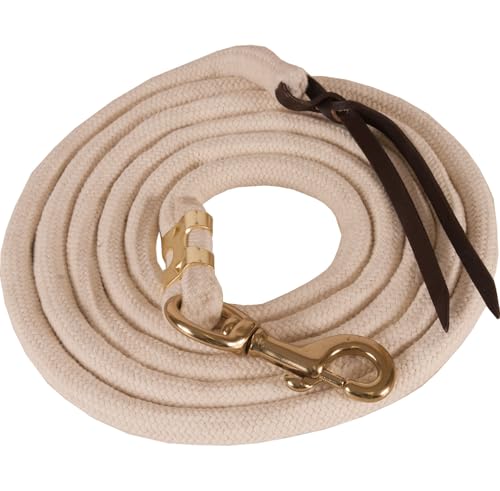
Mustang Cotton Lead Rope
Natural cotton fiber stays comfortable against bare hands during long lead sessions. Its bolt snap handles daily catching and turnout without binding. Handlers of young or nervous horses like the soft feel when a horse pulls back suddenly.
Pros
- Comfortable grip for extended handling
- Machine washable when heavily soiled
- Lower cost than coated alternatives
Cons
- Absorbs moisture and dries slower than poly
- Can mildew if stored damp

Hamilton Nylon Lead Rope with Chain
A nylon body paired with a chain end gives extra control over strong or pulling horses. Nylon wipes down easily after wet or muddy conditions. Trainers run the chain over the nose or under the chin for brief correction, not constant pressure.
Pros
- Chain end adds control for strong horses
- Nylon body resists staining and wipes clean
- Widely available replacement chains
Cons
- Chain requires drying to prevent rust
- Not ideal for horses sensitive to chain pressure

Perri’s Padded Cotton Lead Rope
A padded section near the snap softens contact for horses that fuss during haltering. Its cotton core stays gentle on both horse and handler hands. Owners of head shy or thin skinned horses report calmer handling with this padded design.
Pros
- Padded section reduces pressure near the halter
- Gentle on sensitive skinned horses
- Comfortable for handlers during long sessions
Cons
- Padding retains moisture longer than plain rope
- Shorter length than standard 10 foot leads

Partrade Poly Lead Rope
Basic polypropylene construction covers daily catching and leading without a big cost. Its simple bolt snap holds up to routine barn handling. Owners buying leads for multiple horses choose it to keep spares in every stall.
Pros
- Low cost enough to buy in multiples
- Sheds water and dries quickly
- Simple design with no extra parts to maintain
Cons
- Hardware is lighter duty than premium brands
- Rope feels stiffer than cotton over time

Professional’s Choice Cotton Lead Rope
A straightforward cotton lead suits routine grooming, turnout and grazing duties. Its snap fits most standard halters without modification. Owners describe it as the rope they reach for before anything fancier.
Pros
- Fits most standard halter rings
- Machine washable for routine cleaning
- Comfortable grip for daily use
Cons
- Slower to dry than synthetic rope
- Can fray at the snap end after heavy use
Side by side
| # | Model | Material | Best for | Score | Price |
|---|---|---|---|---|---|
| 1 | Weaver Leather Poly Lead Rope | Polypropylene | Best overall | 9.3 | Check price |
| 2 | Tough1 BioThane Lead Rope | BioThane coated webbing | Best for easy cleaning | 9.0 | Check price |
| 3 | Mustang Cotton Lead Rope | Cotton | Best value | 8.7 | Check price |
| 4 | Hamilton Nylon Lead Rope with Chain | Nylon webbing with steel chain | Best for training control | 8.5 | Check price |
| 5 | Perri’s Padded Cotton Lead Rope | Cotton with padded neoprene section | Best for sensitive skinned horses | 8.3 | Check price |
| 6 | Partrade Poly Lead Rope | Polypropylene | Best budget | 8.1 | Check price |
| 7 | Professional’s Choice Cotton Lead Rope | Cotton | Best for everyday handling | 8.0 | Check price |
Common questions
What is the best material for a washable horse lead?
Polypropylene and BioThane rinse clean fastest and resist mildew, making them the top choice for barns wanting low maintenance leads. Cotton and nylon work too but need more frequent washing to stay fresh.
Can horse lead ropes go in the washing machine?
Cotton and nylon leads are usually machine washable on a gentle cycle inside a mesh bag to protect the hardware. Poly and BioThane ropes rarely need a machine wash since a hose rinse cleans them just as well.
How long should a horse lead rope be?
Most general purpose leads run 8 to 10 feet, giving enough slack for grazing and turnout while staying manageable. Training leads with a chain end sometimes run shorter to keep control closer to the halter.
Why do horse leads get moldy?
Damp storage after riding in rain or wet mud lets mildew grow, especially on cotton and nylon fiber that holds moisture. Hanging leads to fully dry before coiling and storing prevents most mold growth.
Is a chain lead rope safe for all horses?
No, chain leads suit experienced handlers working with strong or pulling horses, since incorrect chain pressure can cause pain or a fear response. Calm or young horses generally do better on a plain rope lead.
What hardware should I look for on a lead rope snap?
Solid brass or nickel plated snaps resist corrosion far better than bare steel, especially on leads that get hosed off regularly. Bolt snap versus panic snap style matters too, depending on how fast you need release access.
Do BioThane lead ropes smell less than cotton?
Yes, BioThane sheds moisture and manure instead of absorbing it, so it rarely develops the musty smell that damp cotton rope can hold even after washing.
How often should a horse lead rope be replaced?
Replace a lead once the hardware shows rust pitting, the fiber frays near the snap, or stitching loosens at the loop end. Daily use ropes typically need replacement every one to two years depending on barn conditions.
Poly vs cotton lead rope: which is better for daily barn use?
Poly wins on drying speed and odor resistance for muddy daily use. Cotton wins on hand comfort during long lead sessions, provided it gets washed and fully dried often enough to avoid mildew.
Our take
Barns dealing with regular mud and wash rack duty should choose the Weaver Leather Poly Lead Rope, since it sheds moisture without holding odor. Horses that fuss during haltering do better with the padded comfort of the Perri’s Padded Cotton Lead Rope. Multi horse barns stocking spares for every stall can rely on the Partrade Poly Lead Rope without overspending.
Olivia Hartley
Olivia spent several years working at an animal shelter and a pet-supply retailer before joining the editorial team. She researches pet gear with an emphasis on safety, comfort and the fine print that owners often miss.


