Variable Speed Spindle Sanders That Handle Curves With Control
For most woodworkers, the Wen 6321 is the best balance of power, speed range, and affordability, offering a 4.5 amp motor and speeds from 750 to 3200 RPM that handle everything from softwoods to hardwoods. Its main limitation is a smaller 6 by 9 inch table that may not suit large panels, but for detailed sanding tasks, it excels.
Spindle sanders are indispensable for smoothing curved edges and shaping contours that other sanders cannot reach. Variable speed control adds precision, letting you match the sanding speed to the material and task.
We looked at models from Wen, Delta, Shop Fox, and others to find the best options for hobbyists and professionals alike. Each product below excels in specific areas, from portability to heavy-duty performance.
Before you buy
The best picks, ranked
WEN 6321 4.5 Amp Oscillating Spindle Sander
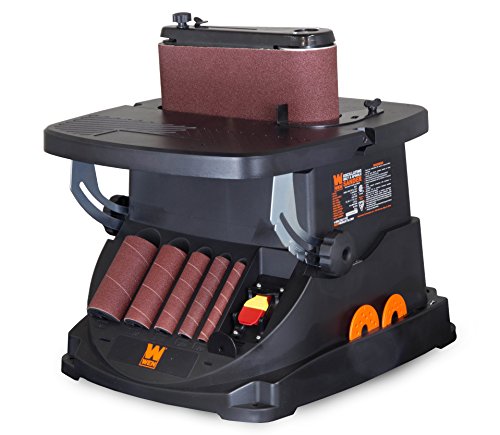
The WEN 6321 offers a powerful 4.5 amp motor and variable speed from 750 to 3200 RPM, making it versatile for various sanding tasks. Owners appreciate its smooth operation and effective dust collection. The oscillation helps prevent clogging and produces a finer finish. It includes six spindles and a 6 by 9 inch aluminum table.
Pros
- Wide speed range
- Oscillation reduces heat and clogging
- Effective dust collection port
Cons
- Table is relatively small
- Some users report vibration at high speeds

Delta 31-460 1/2 HP Oscilliating Edge Sander
The Delta 31-460 is a stationary oscillating edge sander with a 1/2 HP motor and variable speed control. Its heavy cast iron base and large table provide stability for large workpieces. It accepts 4 inch by 24 inch abrasive belts and offers a 12 inch throat depth. Ideal for serious woodworkers who need robust performance.
Pros
- Heavy duty construction
- Large work surface
- Smooth oscillation mechanism
Cons
- Higher price point
- Belt tracking needs occasional adjustment

Shop Fox W1848 1-1/2 HP Oscillating Spindle Sander
The Shop Fox W1848 is a commercial grade spindle sander with a 1-1/2 HP motor and variable speed from 600 to 3600 RPM. It offers a huge 25 inch throat and 4 inch stroke, making it easy to handle large panels. The table tilts up to 45 degrees for angled sanding. Built like a tank, it is a favorite in professional workshops.
Pros
- Extremely powerful
- Large capacity
- Tilting table for bevel work
Cons
- Very heavy, requires dedicated space
- Expensive for hobbyists

Delta 31-230 1/3 HP Oscilliating Spindle Sander
The Delta 31-230 offers a 1/3 HP motor and variable speed from 1000 to 3500 RPM. It includes seven spindles and a 9 by 12 inch table. This benchtop model saves space without sacrificing performance. Users find it reliable for small to medium projects, though it lacks a stand.
Pros
- Affordable
- Compact design
- Includes many spindles
Cons
- No stand included
- Oscillation stroke is short
Grizzly T31619 1/2 HP Oscilliating Spindle Sander
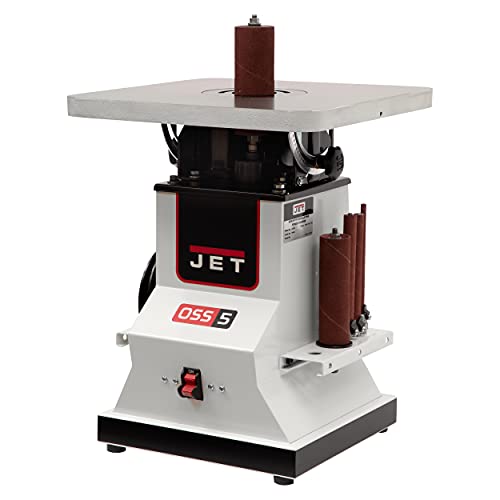
The Grizzly T31619 is a benchtop spindle sander with a 1/2 HP motor and variable speed from 750 to 3200 RPM. It features a tilting table and a quick release spindle lock for easy changes. The dust collection is decent, and it runs quietly. A solid choice for workshops with limited floor space.
Pros
- Tilting table
- Quiet operation
- Good value
Cons
- Spindle changes require tool
- Dust collection not as effective as others

Powermatic PM2244 1-1/2 HP Oscilliating Spindle Sander
The Powermatic PM2244 is a top tier spindle sander with a 1-1/2 HP motor and variable speed from 400 to 3600 RPM. Its cast iron construction ensures stability and longevity. The 3 inch dust port connects to standard systems. While pricey, it delivers exceptional precision and smooth operation.
Pros
- Superior build quality
- Wide speed range
- Large table
Cons
- High cost
- Very heavy (over 300 lbs)
Jet JOVS-10 Oscillating Spindle Sander
The Jet JOVS-10 is a benchtop oscillating spindle sander with a 1/2 HP motor and variable speed from 750 to 3200 RPM. It includes a 10 inch throat and a 6 by 8 inch table. Its compact footprint fits small workspaces, yet it handles curves and contours effectively. Owners praise its vibration free operation.
Pros
- Compact size
- Low vibration
- Easy spindle changes
Cons
- Small table limits large pieces
- Dust collection port is small
How they stack up
| # | Model | Motor | Best for | Score | Price |
|---|---|---|---|---|---|
| 1 | WEN 6321 4.5 Amp Oscillating Spindle Sander | 4.5 Amp, 1/3 HP | Best Overall for Most Woodworkers | 9.4 | Check price |
| 2 | Delta 31-460 1/2 HP Oscilliating Edge Sander | 1/2 HP, 115V | Best for Professional Shops | 9.1 | Check price |
| 3 | Shop Fox W1848 1-1/2 HP Oscillating Spindle Sander | 1-1/2 HP, 110V/220V | Best for Large Scale Sanding | 9.0 | Check price |
| 4 | Delta 31-230 1/3 HP Oscilliating Spindle Sander | 1/3 HP | Best Budget Option | 8.8 | Check price |
| 5 | Grizzly T31619 1/2 HP Oscilliating Spindle Sander | 1/2 HP | Best for Versatility | 8.7 | Check price |
| 6 | Powermatic PM2244 1-1/2 HP Oscilliating Spindle Sander | 1-1/2 HP | Best Premium Build | 8.5 | Check price |
| 7 | Jet JOVS-10 Oscillating Spindle Sander | 1/2 HP | Best for Small Shops | 8.2 | Check price |
Frequently asked questions
What is the difference between a spindle sander and an oscillating spindle sander?
A spindle sander rotates only, while an oscillating spindle sander also moves up and down. The oscillation reduces heat and clogging, speeds up sanding, and gives a smoother finish.
What speed should I use for different woods?
For hardwoods like oak or maple, use lower speeds around 1000 to 1500 RPM to avoid burning. For softwoods like pine, higher speeds up to 3000 RPM are fine. Adjust based on the grit and desired finish.
Can I use a spindle sander for inside curves?
Yes, spindle sanders are ideal for sanding inside curves and contours. The small diameter spindles reach tight areas that other sanders cannot. Choose the spindle that best fits the curve radius.
What spindle sizes do I need?
Most kits include spindles from 1/8 inch to 1 inch. For versatility, look for a set that covers common sizes. Larger spindles (up to 1.5 inches) are available for bigger jobs.
How important is dust collection on a spindle sander?
Dust collection is very important because sanding creates fine dust that can harm your lungs and obscure the workpiece. A good dust port connected to a shop vac or dust collector keeps the air clean and improves visibility.
Can I use a spindle sander to shape wood?
Yes, with coarse grit sleeves, you can remove material quickly and shape edges. For more aggressive shaping, a spindle sander is not a substitute for a router, but it can refine shapes smoothly.
Do spindle sanders require special sleeves?
Yes, they use sanding sleeves that fit over the spindle. These are available in various grits and sizes. Always match the sleeve to the spindle diameter.
Are benchtop spindle sanders as good as floor models?
Benchtop models are lighter and less powerful, but they are adequate for small to medium projects. Floor models offer more power, larger tables, and better stability for heavy use.
Our pick
For most woodworkers, the WEN 6321 offers the best all around value, combining solid performance, an ideal speed range, and affordability. If you need more power and a larger capacity for professional work, invest in the Shop Fox W1848. For a compact solution that saves space, the Jet JOVS-10 is a reliable choice. Avoid models with limited speed ranges if you work with varied materials.
Jake Monroe
Jake worked as a residential contractor for over a decade before shifting to full-time writing. He evaluates power tools, hand tools and workshop gear through the lens of someone who has actually used them on job sites, not just read the box.