Which Vacuum Flask Actually Keeps Drinks Hot All Day
Based on specifications and owner feedback, the Stanley Classic Legendary Bottle wins for all-day heat retention, the Zojirushi SM-SC48 leads for coffee performance, and the Thermos Stainless King 40oz offers the strongest value among seven compared flasks. Stainless steel double-wall vacuum insulation powers all three.
Insulation time swings from a few hours to well over a day depending on flask design. Three models lead this comparison: the Stanley Classic Legendary Bottle, the Zojirushi SM-SC48, and the Thermos Stainless King, based on published specs and owner feedback.
Picking the right one gets tricky fast, since capacity, mouth width, and intended use pull in different directions. A bottle built for pouring coffee rarely suits soup or ice water. We compared specifications, materials, and owner reports across seven current Amazon listings to sort flasks by real use case rather than price alone.
The top picks, ranked

Stanley Classic Legendary Vacuum Bottle 1.1 Qt
Double-wall 18/8 stainless steel gives this 1.1 quart bottle its vacuum insulation. According to the listing, it holds heat for up to 24 hours and cold for up to 35 hours. A pour-through stopper and stacking cup make it a common pick for camping trips and long shifts, according to owner feedback.
Pros
- Holds heat through a full outdoor day
- Steel body resists dents and rust
- Wide base keeps it stable in a pack
Cons
- Bulkier than slim commuter bottles
- Narrow neck limits ice cube size

Zojirushi SM-SC48 Stainless Steel Vacuum Bottle
Coffee and tea drinkers get 16 ounces of vacuum-sealed stainless steel with the SM-SC48. A one-touch stopper opens with a single button for one-handed pouring. Owners frequently note that coffee stays near drinking temperature for several hours without a separate lid to misplace.
Pros
- One-handed pouring stopper
- Compact size fits most cup holders
- Slim profile for a bag or briefcase
Cons
- Smaller capacity than family-size flasks
- Costs more than similarly sized bottles
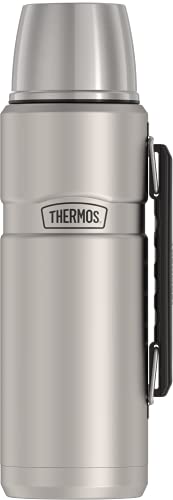
Thermos Stainless King 40oz Vacuum Insulated Flask
Stainless King pairs 18/8 steel with Thermos vacuum insulation in a 40 ounce body. The listing states cold retention up to 18 hours and hot retention up to 8 hours. A wide mouth takes ice cubes directly, and a built-in handle helps carry it alongside a lunch bag.
Pros
- Large capacity for sharing
- Wide mouth fits ice cubes easily
- Carry handle built into the lid
Cons
- Heavier than single-serve bottles
- Hot retention trails narrow-neck flasks

Tiger MCA-C060 Vacuum Insulated Bottle Wide Mouth
Soup and stew call for a wide mouth, and the MCA-C060 delivers one in stainless steel. Vacuum insulation keeps contents warm through a lunch break, according to owner feedback. A shoulder strap and compact 20 ounce size make it easy to carry to work or school.
Pros
- Spoon fits easily for soup and stew
- Compact size for a lunch bag
- Wide opening simplifies cleaning
Cons
- Smaller capacity limits use for drinks alone
- Heat retention trails narrow-neck flasks

Contigo Thermalock Vacuum-Insulated Stainless Steel Water Bottle
A locking lid rated leak-proof for bags sets the Thermalock apart from simpler screw-cap bottles. Stainless steel vacuum insulation fills a 24 ounce body sized for cup holders and car door pockets. The listing lists cold retention up to 28 hours and hot retention up to 10 hours.
Pros
- Locking lid prevents leaks in a bag
- Fits most cup holders and door pockets
- One-hand button for drinking
Cons
- Lid is bulkier than simple screw caps
- Not built for eating food from it

Simple Modern Summit Water Bottle with Straw Lid
Everyday hydration, not hot pouring, is the focus behind the Summit bottle’s design. Double-wall vacuum insulation in stainless steel comes at a lower price point than premium brands. Owners report solid cold retention through a full workday at this price tier, and a straw lid ships included.
Pros
- Lower price than premium steel flasks
- Powder coat resists slipping in hand
- Straw lid suits everyday sipping
Cons
- Hot retention weaker than dedicated flasks
- Straw lid isn’t built for pouring

Thermos FUNtainer Vacuum Insulated Stainless Steel Water Bottle
Kids’ lunchboxes get a scaled-down 12 ounce version of Thermos vacuum insulation with the FUNtainer. A spill-resistant spout and carry loop suit smaller hands. Owners note the compact size fits standard lunch bags without crowding out food containers.
Pros
- Sized right for smaller hands
- Fits standard kids’ lunch bags
- Spout reduces spill risk
Cons
- Capacity too small for adult daily use
- Not designed for hot soup or food
Compared at a glance
| # | Model | Capacity | Best for | Score | Price |
|---|---|---|---|---|---|
| 1 | Stanley Classic Legendary Vacuum Bottle 1.1 Qt | 1.1 quart (37 oz) | Best overall | 9.4 | Check price |
| 2 | Zojirushi SM-SC48 Stainless Steel Vacuum Bottle | 16 oz (0.48 L) | Best for coffee heat retention | 9.2 | Check price |
| 3 | Thermos Stainless King 40oz Vacuum Insulated Flask | 40 oz (1.2 L) | Best value | 9.0 | Check price |
| 4 | Tiger MCA-C060 Vacuum Insulated Bottle Wide Mouth | 20 oz (0.6 L) | Best for soup and food | 8.8 | Check price |
| 5 | Contigo Thermalock Vacuum-Insulated Stainless Steel Water Bottle | 24 oz (0.7 L) | Best for daily commute | 8.6 | Check price |
| 6 | Simple Modern Summit Water Bottle with Straw Lid | 32 oz (0.9 L) | Best budget | 8.3 | Check price |
| 7 | Thermos FUNtainer Vacuum Insulated Stainless Steel Water Bottle | 12 oz (0.35 L) | Best for kids | 8.0 | Check price |
What to look for
What Makes a Vacuum Flask Hold Its Temperature Two walls of steel with the air pumped out between them define a vacuum flask. That gap blocks heat transfer far better than a single-wall bottle or a plastic thermos. Capacity spans a wide range, from 12 ounces for kids’ bottles to 40 ounces for family-size flasks. Stainless steel grades like 18/8 resist rust and avoid holding onto food odors the way older aluminum designs did. A well-built flask holds a usable temperature through a full workday, according to owner reports, not just an hour or two. Weight adds up too, since a full 40 ounce steel bottle can push past a pound before you add liquid.
Vacuum Flask vs Insulated Water Bottle: What’s the Difference Marketing blurs these two categories, yet they solve different problems. A classic vacuum flask favors a narrow neck and a stopper built for pouring liquid into a cup, the way the Stanley Classic design works. Insulated water bottles instead use screw caps or straw lids meant for sipping on the move. Wide-mouth flasks split the difference, letting a spoon reach soup while ice cubes drop in freely. Whether you pour, sip, or eat straight from the container decides which category actually fits.
Which Size and Mouth Opening Fits Your Use Case Commuters heading to an office usually do fine with a 16 to 24 ounce bottle sized for a cup holder. Soup and stew drinkers need a mouth opening of at least 2 inches so a spoon fits comfortably. Parents packing lunches often reach for a 10 to 12 ounce kid-sized bottle with a spill-resistant spout. Groups sharing coffee or tea benefit from a 40 ounce flask with a built-in cup for pouring. Matching capacity to the actual use case avoids hauling dead weight all day.
How to Clean a Vacuum Flask and Fix Common Problems Hand washing extends the life of a vacuum seal more reliably than a dishwasher cycle. Harsh detergents and high heat can degrade the gasket around the lid over time. A metallic taste in the first few uses usually fades once the steel interior gets seasoned by a handful of washes. Dropping a flask hard enough to dent the outer wall can break the vacuum and end its insulating power for good. Musty smells typically call for a baking soda soak followed by a full air-dry before the next use.
Questions worth asking
How long does a vacuum flask keep drinks hot?
Most stainless steel vacuum flasks hold heat for 6 to 12 hours, based on manufacturer listings. Narrow-neck models like the Stanley Classic 1.1 Qt tend to outlast wide-mouth designs. Starting temperature and how often the lid opens both affect the actual result.
What is the difference between a vacuum flask and a thermos?
Thermos started as a brand name that became a generic term for vacuum-insulated containers, similar to Kleenex and tissues. Vacuum flask describes the technology itself, a sealed double-wall design with air removed between the layers. Most consumer thermos bottles and vacuum flasks work identically today.
Can you put a vacuum flask in the dishwasher?
Manufacturers generally recommend hand washing to protect the vacuum seal and any powder-coated finish. Some lids and stoppers carry a top-rack dishwasher-safe label, though the main steel body usually doesn’t. Check the listing for your specific model before running a cycle.
Which vacuum flask is best for soup?
Wide-mouth flasks like the Tiger MCA-C060 work best for soup, since a spoon can reach the bottom easily. Look for an opening around 2 inches or wider plus a food-safe interior coating. Narrow-neck flasks are harder to clean after carrying broth or stew.
Is a stainless steel vacuum flask better than plastic?
Steel holds temperature longer and resists cracking, staining, and odor absorption better than plastic. Plastic vacuum bottles run lighter and cheaper, which suits occasional or light use. Steel construction tends to last longer and perform more consistently for daily hot and cold drinks.
Does a wide mouth vacuum flask lose heat faster?
Yes, a wider opening lets more warm air escape every time the lid comes off. Manufacturers offset this with thicker gaskets and tighter-sealing lids on wide-mouth models. For pure heat retention over many hours, a narrow-neck flask still holds a slight edge.
Are vacuum flasks safe for carbonated drinks?
Most manufacturers advise against carbonated beverages, since built-up pressure can pop the lid off forcefully. Sealed vacuum lids aren’t designed to vent that pressure safely. Still water, coffee, tea, or soup remain the safer choices for a standard vacuum flask.
What size vacuum flask works best for a daily commute?
A 16 to 24 ounce bottle fits most cup holders and bag pockets without adding much weight. Commuters carrying coffee alone can go smaller, while anyone adding snacks may prefer the larger end. Models like the Contigo Thermalock also add a locking lid for bags that get tossed around.
Is it worth buying an expensive vacuum flask?
Higher-priced flasks from brands like Zojirushi and Stanley often use thicker steel and tighter tolerances, and owners report that translates into longer heat retention. Budget models still perform fine for short trips or occasional use. Frequency of use and how long liquid needs to stay hot decide which tier makes sense.
The verdict
A vacuum flask earns its spot in a kitchen or bag once capacity and mouth opening match the actual use, whether that means coffee, soup, or a full day outdoors. The Stanley Classic Legendary Bottle covers general use best, while the Zojirushi SM-SC48 rewards dedicated coffee drinkers. Parents and budget shoppers still get solid performance from the remaining picks, just with smaller capacities or lighter builds.
Dana Whitfield
Dana spent eight years buying and merchandising for a regional kitchenware retailer before moving into editorial work. She has handled thousands of SKUs across cookware, small appliances and kitchen organization, and focuses on the practical differences that matter once a product is actually in daily use.


