Which UV Filter Protects a Lens Without Adding Flare?
B+W XS-Pro UV Haze MRC Nano 010M takes the lead on 16 layer nano coating and a brass ring that never binds. Hoya HD3 answers with chemically hardened glass for rough handling. K&F Concept Nano-X MCUV brings 28 coating layers to thread sizes kit zooms actually use.
Buy the B+W XS-Pro UV Haze MRC Nano 010M if you shoot toward light and want to stop thinking about the filter. Brass threads back off cleanly, and 16 nano layers hold ghosting down around streetlights. Below 20mm on full frame, check the corners before a paid shoot.
Product photos tell you nothing about filter quality. Coating count, glass source and ring metal decide whether that extra surface ruins a backlit frame or seizes on the barrel. We compared published layer counts, glass suppliers, frame materials and mount depth. Owner reports about stuck rings, stacking and cold weather removal filled the remaining gaps.
Our top picks

B+W 77mm XS-Pro UV Haze MRC Nano 010M
Schott optical glass sits in a slim brass ring that threads on square and backs off without a grip tool. MRC Nano coating repels water and skin oil, so a single wipe clears most smudges. Front threads stay open, which keeps the original cap and a second filter usable.
Pros
- Brass threads resist cross threading and binding
- Nano coating sheds water and fingerprints
- Open front threads keep caps and stacking usable
Cons
- Ring can still show at very wide focal lengths
- Heaviest frame in this group
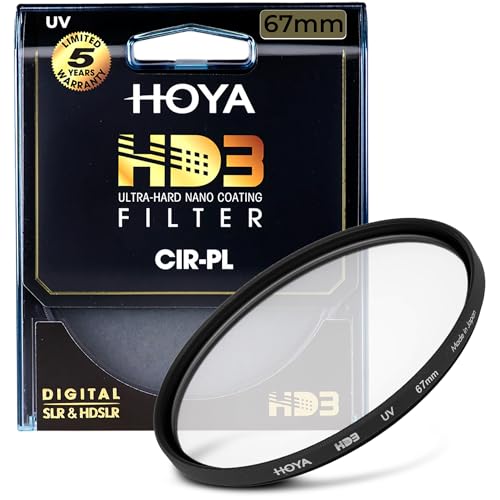
Hoya 67mm HD3 UV Filter
Chemically hardened glass carries the pitch here, surviving knocks that shatter ordinary filters. A 32 layer coating keeps reflections in check under stage lighting and streetlights. Low profile aluminum holds the ring thin enough for most wide zooms.
Pros
- Hardened glass survives drops and bag knocks
- 32 layers cut ghosting around point lights
- Oil resistant surface wipes clean dry
Cons
- Aluminum ring sticks after an overtighten
- Thread sizes stop at 82mm

K&F Concept Nano-X 77mm MCUV Filter
Twenty eight coating layers on HD optical glass put the spec sheet close to premium territory. Aviation aluminum with deep knurling gives gloved fingers something to grip in cold weather. Water beads and rolls off the surface, which matters on a windy coast.
Pros
- Layer count rivals premium brand filters
- Knurled edge turns easily with gloves on
- Thread range spans 37mm to 95mm
Cons
- Batch consistency varies more than B+W
- Slim ring drops front threads on some sizes

Amazon Basics 58mm UV Protection Lens Filter
Coverage, not optical polish, is the reason to fit this one. Plain optical glass in an aluminum ring shields a kit zoom front element through travel and family use. Put a bright source inside the frame and ghosting shows up.
Pros
- Simplest way to cover a kit lens front element
- Sizes match most entry level zooms
- Light enough to leave mounted all day
Cons
- Ghosting appears against bright sources
- Poor match for night or backlit work

Breakthrough Photography X4 UV Filter 77mm
SCHOTT B270 glass and 16 layer multi resistant coating aim squarely at reflection control. Raised traction ridges on the brass frame let cold fingers break a stuck filter loose without tools. Breakthrough backs the glass for 25 years.
Pros
- Traction ridges free a seized filter by hand
- Brass frame keeps threads true over years
- 25 year warranty covers coating failure
Cons
- Fewer thread sizes stocked than Hoya
- Textured ring catches on tight lens pouches

Urth 67mm UV Lens Filter Plus+
Twenty layer nano coating over German optical glass sits inside a slim ring built for wide zooms. Scratch resistant treatment holds up to repeated microfiber wipes on salty coastal days. Urth funds tree planting with each filter sold.
Pros
- Slim ring reduces corner darkening on wide zooms
- Nano coating resists salt spray residue
- Tree planting funded with every purchase
Cons
- Slim profile leaves no front threads
- Aluminum dents more easily than brass

Tiffen 72mm UV Protector
ColorCore glass laminated between optical flats keeps the surfaces parallel, and production stays in the United States. Crews already running Tiffen in a matte box get matching rendering on threaded lenses. Coating is minimal here, so pull it off for night exteriors.
Pros
- Rendering matches Tiffen matte box glass
- Laminated build keeps surfaces flat
- Stocked in standard video thread sizes
Cons
- Minimal coating ghosts under streetlights
- Smooth ring offers little grip when wet
Side by side
| # | Model | Coating | Best for | Score | Price |
|---|---|---|---|---|---|
| 1 | B+W 77mm XS-Pro UV Haze MRC Nano 010M | 16 layer MRC Nano | Best overall | 9.4 | Check price |
| 2 | Hoya 67mm HD3 UV Filter | 32 layer Ultra Hard | Best for durability | 9.2 | Check price |
| 3 | K&F Concept Nano-X 77mm MCUV Filter | 28 layer nano | Best value | 9.0 | Check price |
| 4 | Amazon Basics 58mm UV Protection Lens Filter | Basic single coating | Best budget | 8.8 | Check price |
| 5 | Breakthrough Photography X4 UV Filter 77mm | SCHOTT B270 | Best premium | 8.6 | Check price |
| 6 | Urth 67mm UV Lens Filter Plus+ | 20 layer nano | Best for travel and landscape | 8.3 | Check price |
| 7 | Tiffen 72mm UV Protector | ColorCore laminated | Best for video rigs | 8.0 | Check price |
Before you buy
What a UV filter actually does on a digital camera Digital sensors already block ultraviolet, so haze control stopped being the selling point years ago. Protection carries the whole argument now. Coated glass takes the sand, sea spray and finger grease instead of your front element. Replacing a scratched front element means weeks in a repair queue. Judge any filter on coating and frame, not on the UV wording printed on the box.
How coating layers control ghosting and flare Every air to glass surface throws a little light back toward the sensor. Multicoating suppresses those reflections layer by layer. Counts between 16 and 32, as on the B+W and the Hoya HD3, stop headlights turning into mirrored blobs. Single coated glass shows the fault the first night you shoot a street scene. Nano finishes add a second payoff: water beads up and dust brushes away without fluid.
Thread size, slim mounts and wide angle lenses Your thread size is printed on the lens barrel or inside the cap, beside a circle with a line through it. Match it exactly, or fit a step up ring. Lenses wider than 20mm on full frame want a slim mount such as the XS-Pro or the Urth Plus+, otherwise corners darken. Slim rings usually give up the front threads, so the original cap stops clipping on. Weigh that tradeoff before ordering, because a cap you cannot mount becomes a daily annoyance.
When to take the filter off Concerts, night streets and frames pointed at a sunrise are all reasons to unscrew it. Any extra surface creates a reflection path, and even 32 layers cannot erase it. Studio work behind a hood gains nothing from a filter either. Keep glass on for beaches, dusty trails, car detailing, kids and pets. Physical risk outweighs the small optical cost in those settings.
Frequently asked questions
Do UV filters reduce image quality?
A well coated filter causes no visible sharpness loss in normal light. Trouble starts with bright sources in or near the frame, where the extra surface creates ghosting. Single coated glass shows it first.
What size UV filter does my lens need?
Look for a number beside a circle with a line through it, printed on the lens barrel or inside the cap. That figure is the filter thread in millimetres. Common sizes run 49mm, 52mm, 58mm, 67mm and 77mm.
Is a UV filter or a lens hood better protection?
Hoods absorb knocks from the side and block stray light. Filters handle spray, dust and fingerprints on the glass itself. Running both covers more risk than either alone.
Can you leave a UV filter on all the time?
Yes for outdoor, travel and family work. Take it off for night scenes, concerts and any frame holding a strong light source. Swapping takes seconds once the threads are clean.
UV filter vs clear protector: what is the difference?
Modern UV filters block almost nothing a sensor does not already block, so optically they behave like clear protectors. Canon and Nikon simply label theirs protector or NC. Buy on coating quality rather than on the name.
Which UV filter is best for wide angle lenses?
Slim mounts such as the B+W XS-Pro or the Urth Plus+ keep the ring outside the image circle. Standard thickness rings darken corners below 20mm on full frame. Verify with a plain sky shot at the widest setting.
How do you clean a UV filter without scratching it?
Blow grit off first with a rocket blower. Then work a microfiber cloth in a spiral from the centre outward. Nano coated glass such as the Hoya HD3 usually clears with no fluid at all.
Are basic uncoated UV filters worth using?
On a kit zoom shot in daylight, yes. On a fast prime or for night work, weak coating undoes the reason you bought the lens. Match filter quality roughly to lens quality.
Can you stack a UV filter with a polarizer?
Physically yes, when the filter keeps front threads, as the B+W XS-Pro does. Optically it adds two more surfaces and raises flare risk. Remove the UV filter and mount the polarizer on its own.
How do you remove a UV filter that is stuck?
Grip the ring evenly with a rubber band or a filter wrench, never by squeezing one side. Cooling the lens slightly can loosen an overtightened aluminum ring. Frames with traction ridges, such as the Breakthrough X4, rarely reach that point.
The bottom line
B+W XS-Pro UV Haze MRC Nano 010M is the one to buy for most photographers, since brass threads and 16 nano layers fix the two complaints owners raise most. Pick the Hoya HD3 instead when the camera lives in a backpack and takes knocks on trails. Covering a kit zoom for holiday photos? K&F Concept Nano-X gives up almost nothing you will notice.
Marcus Chen
Marcus covered consumer electronics for enthusiast tech publications for six years before joining ChoiceCrest. He specializes in translating manufacturer spec sheets into plain-language buying advice, with a focus on audio, computing accessories and smart-home gear.

