Turkish Coffee Pots Ranked by Foam and Control
CopperBull’s heavy gauge hammered cezve suits most home brewing, since thick copper spreads heat evenly and lifts a proper foam. DEMMEX covers three or four cups in one go. Induction owners need the Korkmaz Sultan stainless pot, because no tin lined copper cezve will heat on that hob.
CopperBull’s hammered cezve is the pot to buy for daily Turkish coffee. Walls close to 1mm carry heat evenly across the base, which is what raises a thick foam instead of a rolling boil. Tin lining is the catch: hand washing only, and nothing happens on an induction hob.
Slow, controlled heating drives this method, so the vessel matters more here than in almost any other brew. We compared wall thickness, interior lining, capacity, handle design and hob compatibility across copper, stainless and automatic options. Owner reports on tin wear, handle temperature and behaviour on electric rings shaped the ranking.
The top picks, ranked

CopperBull Heavy Gauge Hammered Copper Turkish Coffee Pot
Thick copper moves heat fast and spreads it across the base, so foam climbs before the grounds underneath scorch. Its interior carries a food safe tin lining, the traditional treatment for copper cookware. Wide base and narrow neck give the classic cezve taper, and that shape keeps foam in the pot rather than on the hob.
Pros
- Heavy copper heats evenly across the base
- Traditional tin lined interior
- Narrow neck builds and holds foam
Cons
- Hand wash only, never a dishwasher
- Will not heat on an induction hob

DEMMEX Hammered Copper Turkish Coffee Pot
Larger body covers a household serving guests rather than one cup at a time. A long brass handle keeps knuckles clear of a gas flame, though brass does warm through during a slow brew. Hammered finish hides the small marks copper collects across a few years of use.
Pros
- Holds enough for three or four small cups
- Long handle clears the flame
- Hammered surface disguises wear
Cons
- Brass handle warms on a long brew
- Larger volume is harder to foam evenly

Korkmaz Sultan Turkish Coffee Pot
Stainless body over an encapsulated base heats on induction, which no copper pot in this group manages. Base thickness slows the climb enough to develop foam, if not as gently as thick copper does. Bakelite handle stays cool throughout, and the pot takes a dishwasher cycle, so daily use costs no effort.
Pros
- Runs on induction as well as gas
- Dishwasher safe stainless body
- Handle stays cool throughout the brew
Cons
- Heats less evenly than thick copper
- Interior stains over time

Arzum OKKA Minio Turkish Coffee Machine
This machine removes the one skill the method demands, which is knowing the moment to lift the pot. Water and grounds heat together, sensors watch the foam, and heating stops before anything reaches the rim. Its cooking pot lifts out for rinsing, and an alert sounds when the cup is ready to pour.
Pros
- Consistent foam without watching the hob
- Cooking pot detaches for cleaning
- Alert signals the exact pouring moment
Cons
- Occupies counter space and a socket
- Less control over grind and timing

IMEEA Turkish Coffee Pot 18/10 Stainless Steel
Single serving cezve in 18/10 stainless that comes up to temperature quickly on the smallest ring. Mirror finish wipes clean, and the riveted handle stays firmly attached where glued grips eventually fail. Thin walls react fast, so keep the flame low or the foam breaks apart before it forms.
Pros
- Simple entry into proper Turkish coffee
- Cleans quickly and takes a dishwasher
- Right size for a single cup
Cons
- Thin walls demand a low flame
- Metal handle needs a cloth on gas
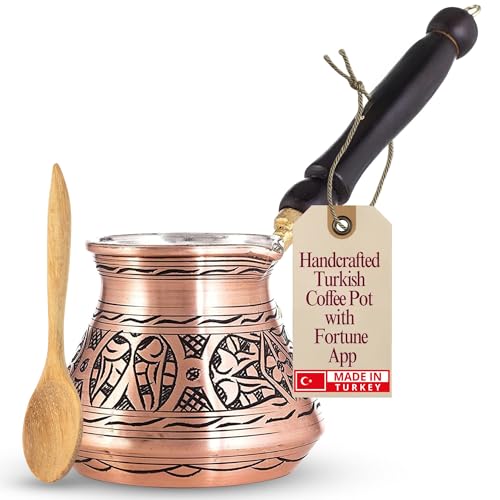
Erbulus Handmade Copper Turkish Coffee Pot
Engraved copper body runs thinner than the CopperBull, so it reacts faster and wants a lower flame from the start. Wooden handle stays cool without a cloth, which counts on a small gas ring. Capacity covers one strong cup, making this the pot you keep for yourself rather than for company.
Pros
- Wooden handle needs no cloth
- Reacts quickly on a small burner
- Engraved finish makes it a good gift
Cons
- Thinner copper scorches if rushed
- Too small to serve more than two

Beko Turkish Coffee Machine BKK 2300
Two cups brew in a single cycle, which fits a couple drinking together each morning. Sensing cuts the heat before foam climbs past the rim, so the counter stays clean. Grind matters more than with a cezve, because the machine expects the flour fine texture that pre ground Turkish coffee already has.
Pros
- Two cups from one cycle
- Boil over protection built in
- Brewing pot lifts out for washing
Cons
- Needs a genuinely fine Turkish grind
- Takes permanent counter space
How they stack up
| # | Model | Material | Best for | Score | Price |
|---|---|---|---|---|---|
| 1 | CopperBull Heavy Gauge Hammered Copper Turkish Coffee Pot | Hammered copper, around 1mm thick | Best overall | 9.4 | Check price |
| 2 | DEMMEX Hammered Copper Turkish Coffee Pot | Hammered copper, around 1mm thick | Best for three or four cups | 9.2 | Check price |
| 3 | Korkmaz Sultan Turkish Coffee Pot | Stainless steel with thick encapsulated base | Best for induction hobs | 9.0 | Check price |
| 4 | Arzum OKKA Minio Turkish Coffee Machine | Automatic Turkish coffee machine | Best automatic | 8.8 | Check price |
| 5 | IMEEA Turkish Coffee Pot 18/10 Stainless Steel | 18/10 stainless steel | Best budget | 8.5 | Check price |
| 6 | Erbulus Handmade Copper Turkish Coffee Pot | Handmade engraved copper | Best for one strong cup | 8.2 | Check price |
| 7 | Beko Turkish Coffee Machine BKK 2300 | Automatic Turkish coffee machine | Best for two cups at once | 8.0 | Check price |
What to look for
What to look for in a Turkish coffee pot Shape does half the work. A wide base over the heat with a narrow neck above concentrates foam and stops it escaping. Thickness governs control, and anything near 1mm of copper buys time to react before the coffee lifts. Size by cups rather than ounces, since a traditional serving runs roughly 2 to 3 ounces and any cezve foams best filled to the neck.
Copper vs stainless steel cezves Copper spreads heat about as evenly as any kitchen metal, which is why traditional pots use it. In return it wants a tin lining, hand washing and gentle treatment, and it never works on induction. Stainless answers the practical side: dishwasher safe, unbothered by acidity, available with a magnetic base. Accept slightly less even heating and a bit more attention at the hob.
Matching the pot to your hob Gas suits copper best, because a small flame is easy to trim mid brew. Electric coils hold heat after the dial moves, so lift the pot instead of turning anything down. Ceramic hobs handle both metals provided the base sits flat. Induction only recognises magnetic bases, which narrows the field to stainless models such as the Korkmaz Sultan.
When an automatic Turkish coffee machine makes sense Machines exist for one reason: the same cup without supervision. Arzum OKKA Minio and the Beko BKK 2300 both watch the foam and cut the heat, removing the boil over that ruins early attempts. You give up control in exchange, since grind, ratio and timing are partly decided for you. Anyone brewing every morning values that trade more than an occasional drinker will.
Common questions
What is a cezve, and how is it different from a saucepan?
A cezve is the small long handled pot used for Turkish coffee, built with a wide base and a narrow neck. That taper concentrates foam and holds it in, which straight sided pans cannot do.
What size Turkish coffee pot should you buy?
Count cups rather than ounces. One serving runs about 2 to 3 ounces, so a 6 ounce pot covers one or two cups while a 16 ounce pot like the DEMMEX handles three or four. Foam builds best when the pot is filled to the base of the neck.
Is copper or stainless steel better for Turkish coffee?
Copper heats more evenly and hands you more control at the moment foam rises. Stainless is easier to live with, since it takes a dishwasher and some models work on induction. Flavour differences come from technique, not the metal.
Can you use a Turkish coffee pot on an induction hob?
Only with a magnetic base. Tin lined copper pots will not heat at all. Korkmaz Sultan is the induction option in this group, and automatic machines sidestep the question completely.
How fine should the grind be for a cezve?
Finer than espresso, closer to flour, so the grounds stay suspended while the foam builds. Coarser coffee sinks and the cup turns thin. Pre ground Turkish coffee already sits at that texture.
Do copper coffee pots need a tin lining?
Yes. Bare copper reacts with acidic coffee, so traditional pots carry a tin interior. Inspect it yearly and have the pot retinned once bright copper starts showing through.
How do you clean a Turkish coffee pot?
Rinse tin lined copper in warm water with a soft cloth, skipping abrasives and the dishwasher entirely. Stainless models such as the IMEEA pot go straight in a dishwasher. Never scrape a tinned interior with a metal spoon.
Can you make Turkish coffee on an electric stove?
Yes, though residual heat in a coil catches people out. Start low, then lift the pot off the ring as foam rises rather than turning the dial down. Thick copper forgives more here than thin stainless.
Is an automatic Turkish coffee machine worth buying?
Worth it if you brew daily and want an identical result each time. Arzum OKKA Minio manages foam unattended. Anyone who enjoys the ritual, or wants to adjust grind and timing, will prefer a cezve on the hob.
CopperBull vs Korkmaz Sultan: which pot should you pick?
Your hob decides. CopperBull gives finer control on gas and builds a thicker foam through heavy copper walls. Korkmaz Sultan is the choice on induction, and it also survives a dishwasher, which the tin lined CopperBull cannot.
Our pick
CopperBull’s heavy gauge hammered cezve is the one to buy for daily Turkish coffee, since thick walls and a proper tin lining give this method the control it needs. Cooking on induction changes the answer to the Korkmaz Sultan stainless pot, because no copper cezve heats on that hob. Anyone who wants the same cup every morning without watching the foam should choose the Arzum OKKA Minio instead.
Dana Whitfield
Dana spent eight years buying and merchandising for a regional kitchenware retailer before moving into editorial work. She has handled thousands of SKUs across cookware, small appliances and kitchen organization, and focuses on the practical differences that matter once a product is actually in daily use.


