Treadmills Built for Walking Pace, Not Sprinting
Horizon Fitness T101 fits most daily walkers, with a 55 inch cushioned deck and a 0.5 mph start. XTERRA Fitness TR150 keeps a full frame at entry level. WalkingPad C2 folds in half, so a flat with no spare corner still gets a belt.
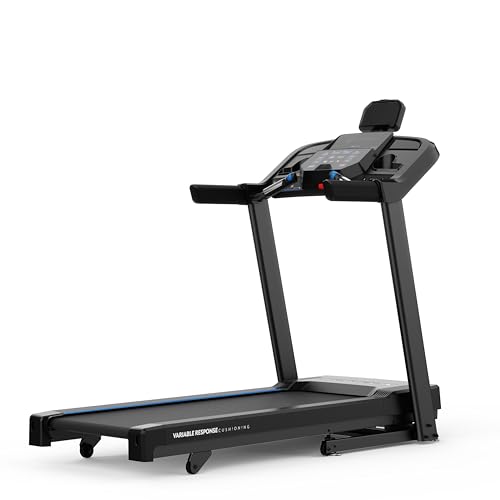
Horizon Fitness T101 is the buy for anyone walking an hour a day in a room with space to give. Its 55 by 20 inch belt allows a full stride, and three zone cushioning takes the sting out of long sessions. At 2.5 continuous horsepower, this is a walking machine rather than a daily running one.
Listings sell top speed, which is the wrong number for a walker. Belt length, minimum speed and motor noise decide whether an hour on the deck is pleasant. We compared deck dimensions, continuous duty horsepower, incline range and folded footprint, then weighed owner reports on belt drift, console volume and real desk clearance.
What we recommend
Horizon Fitness T101 Treadmill
Fifty five inches of belt lets walkers near six feet keep a natural stride instead of shuffling. Three zone cushioning softens the footstrike while staying firm at push off. Speed spans 0.5 to 10 mph, and a hydraulic assist lowers the deck when you fold it away.
Pros
- Cushioning holds up over hour long walks
- 0.5 mph minimum allows slow recovery sessions
- Hydraulic fold and transport wheels ease storage
Cons
- Belt runs short for a long running stride
- Console is a basic LCD, not a touchscreen

XTERRA Fitness TR150 Folding Treadmill
XTERRA holds the entry point of the category with a 50 by 16 inch belt and a frame that folds upright. Three manual incline positions add grade with no lift motor to fail later. Gait width is the catch, since 16 inches feels tight next to a 20 inch deck.
Pros
- Folds upright and locks for storage
- Manual incline has no motor to break
- Twelve preset programs run from a simple LCD
Cons
- Sixteen inch belt is narrow for a wide gait
- Incline must be set before you step on

WalkingPad C2 Folding Treadmill
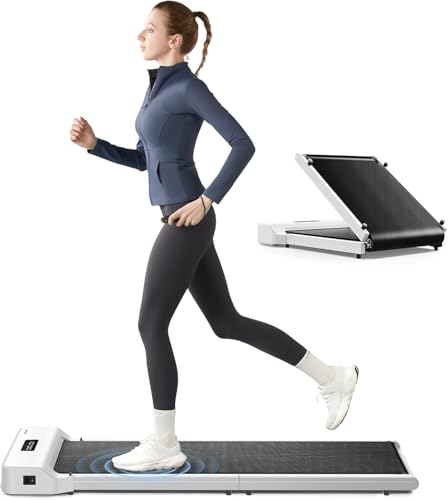
A hinge across the middle drops the frame into a slab that slides under a bed or sofa. Top speed lands near 3.7 mph, covering walking and ruling out jogging. Control runs through a remote or the phone app, as there is no console within reach.
Pros
- Smallest stored footprint of the seven
- Quiet enough for a flat with neighbours below
- App records steps and distance per session
Cons
- No handrail, so balance support is missing
- 220 pound capacity trails framed treadmills

UREVO 2 in 1 Under Desk Treadmill
The folding handrail is the trick here: flat under a standing desk during work, raised for a faster walk afterwards. With the rail up, speed reaches about 7.6 mph. Deck height stays low, which clears desks that block bulkier pads.
Pros
- One machine covers desk steps and evening walks
- Low profile fits under most standing desks
- 265 pound rating beats typical desk pads
Cons
- Heavier to shift than a bare walking pad
- Belt is narrower than a full frame deck

NordicTrack EXP 7i Treadmill
Powered incline reaching 12 percent raises effort without raising speed, so impact stays low. A seven inch touchscreen runs iFIT sessions that change the grade for you mid walk. Getting full value from the machine assumes you keep that subscription running.
Pros
- Grade builds intensity at walking speed
- Guided sessions adjust incline hands free
- SpaceSaver fold suits a spare bedroom
Cons
- Headline features lean on an iFIT subscription
- Heavy and awkward for one person to move

Sunny Health & Fitness SF-T7643 Heavy Duty Walking Treadmill
Sunny rates this frame to 350 pounds, the highest figure in the group, with reinforced steel under the deck. Speed stops at 9 mph, matching walking and light jogging rather than sprint work. Extended side rails give something solid to hold across the full stride.
Pros
- Highest weight rating of these seven
- Long rails steady the whole walking stride
- Large console buttons stay readable mid walk
Cons
- Heavy to reposition once assembled
- Console offers no app connectivity
Egofit Walker Pro
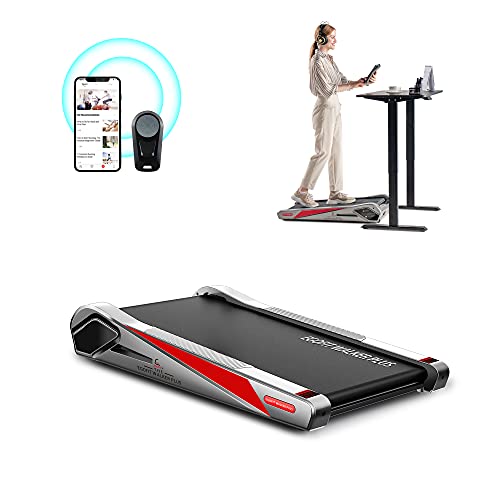
Egofit builds the shortest and lowest pad here, aimed at desks where a standard walking pad jams against the frame. A fixed 5 degree deck angle adds calf engagement at slow speeds. Belt length caps the machine at walking, never striding out.
Pros
- Clears desk frames that block taller pads
- Fixed incline adds effort below 3 mph
- Light enough to stand on end in a cupboard
Cons
- Short belt suits shorter strides only
- A 3.1 mph ceiling rules out jogging
Compared at a glance
| # | Model | Deck size | Best for | Score | Price |
|---|---|---|---|---|---|
| 1 | Horizon Fitness T101 Treadmill | 55 by 20 in | Best overall | 9.4 | Check price |
| 2 | XTERRA Fitness TR150 Folding Treadmill | 50 by 16 in | Best budget | 9.2 | Check price |
| 3 | WalkingPad C2 Folding Treadmill | Folds in half for under bed storage | Best for small apartments | 9.0 | Check price |
| 4 | UREVO 2 in 1 Under Desk Treadmill | Flat desk pad or raised handrail | Best for desk walking | 8.8 | Check price |
| 5 | NordicTrack EXP 7i Treadmill | 0 to 12 percent powered | Best for incline walking | 8.6 | Check price |
| 6 | Sunny Health & Fitness SF-T7643 Heavy Duty Walking Treadmill | 350 lb | Best for higher weight capacity | 8.3 | Check price |
| 7 | Egofit Walker Pro | 0.6 to 3.1 mph | Best for tight desk clearance | 8.0 | Check price |
How to pick the right one
What matters in a treadmill you plan to walk on Belt length shapes comfort more than motor size does. Look for 50 inches or more if you stand near six feet, because a short deck quietly shortens your stride. Minimum speed deserves a check too: a 0.5 mph start makes slow recovery walks possible, and plenty of machines will not hold a steady belt that low. Around 2.0 to 2.5 continuous horsepower is ample for walking, and quiet running matters more than peak power in a flat or a home office. Read the folded dimensions before ordering, not after the box arrives.
Deck cushioning, incline and joint comfort Cushioning like the three zone deck on the Horizon Fitness T101 absorbs the footstrike while keeping push off firm. Walkers chasing more effort should add grade rather than speed, since a 10 percent incline raises intensity with no extra impact. NordicTrack EXP 7i automates that through programmed hill sessions. Knee or hip trouble points firmly toward a long cushioned deck, and away from a thin pad laid on a hard floor.
Best for desk work and small apartments Desk pads solve a different problem: banking steps during calls and meetings. Clearance under the desk is the measurement that decides it, and Egofit Walker Pro exists for desks where taller pads will not fit. UREVO adds a folding handrail, so one machine covers quiet desk walking and a faster session later. WalkingPad C2 folds in half and genuinely disappears under a bed. Each of the three trades deck length and stability for that storage win, which makes them poor choices as a household’s only treadmill.
Weight capacity, support rails and steady footing Stated capacity reflects frame strength and motor duty together, not belt width alone. Sunny Health & Fitness SF-T7643 carries 350 pounds on extended handrails, useful for anyone who likes a grip while walking. Rail length drives balance, and desk pads have no rails at all. Coming back from injury or surgery? Prioritise rails and a wide belt first, then worry about screens and programs.
Good to know
What speed counts as a walking pace on a treadmill?
Comfortable walking sits between 2.5 and 3.5 mph for most adults. A brisk fitness pace runs 3.5 to 4 mph, which every machine here can reach.
How long should a treadmill belt be for walking?
Fifty inches handles most adults, and 55 inches suits taller walkers. Anything shorter compresses the stride once a session passes half an hour.
Are under desk treadmills worth it?
Yes when the goal is daily step count during work hours. For structured cardio, a framed treadmill with handrails and incline does the job better.
Can you put a walking pad on carpet?
It works, though a thin mat helps airflow and stops the belt sinking into deep pile. Keep the underside vents clear of fibres.
Does incline walking burn more than flat walking?
Raising the grade increases effort at the same speed, which is why NordicTrack EXP 7i offers up to 12 percent. Joint impact stays well below running.
Which treadmill is best for heavier walkers?
Sunny Health & Fitness SF-T7643 rates to 350 pounds with long support rails. Horizon Fitness T101 covers 300 pounds and cushions better.
WalkingPad C2 vs UREVO 2 in 1: which is better?
Pick the C2 when storage space is the binding constraint, since it folds in half. Choose the UREVO when you also want a handrail and speeds above 4 mph.
How much floor space does a folding treadmill need?
Allow the open footprint plus roughly two feet of clearance behind the deck. Folded, a full frame model still occupies close to three by three feet.
Is 2.5 horsepower enough for walking every day?
It is, comfortably. Continuous duty ratings near 2.0 to 2.5 CHP handle daily walking; sustained running is where a stronger motor starts to matter.
Do walking treadmills need belt lubrication?
Most framed decks call for silicone lubricant every few months of regular use. Many walking pads ship pre lubricated, so follow the manual rather than a general rule.
Our pick
Horizon Fitness T101 is the pick for regular walking. Its cushioned 55 inch deck and 0.5 mph floor suit long sessions in a way no walking pad here matches, and folding it away needs one hand. Choose the WalkingPad C2 when the machine has to vanish under a bed between uses. Walkers who want hill work without extra speed should stretch to the NordicTrack EXP 7i and keep the subscription active.
Derek Holt
Derek has a background coaching recreational and amateur athletes and has worked the sales floor at specialty fitness retailers. He focuses on equipment durability, ergonomics and realistic use cases rather than marketing claims.