Stop Your Trailer Jack From Sinking Into Soft Ground
Camco’s Stabilizing Jack Pads suit most RV owners with their interlocking design and carry strap. Kohree’s rubber scissor jack pads work better on uneven gravel, and Aupar’s 5000 pound foot plate fits owners with heavier cargo or equipment trailers.
A bare jack foot sinks straight into gravel, mud, or asphalt that softens in summer heat, which tilts the trailer off level. Camco’s Stabilizing Jack Pads spread that load across a wider interlocking base, work under most scissor and tongue jacks, and only underperform on genuinely soft sand where a larger plate helps more.
We compared pads by rated weight capacity, the jack styles each one fits, and how the material holds up outdoors across seasons. Interlocking tabs and strap storage mattered as much as raw size.
The top picks, ranked

Camco Stabilizing Jack Pads
These polypropylene pads interlock edge to edge so they stay put under a scissor jack instead of sliding apart. A built-in strap bundles the full set for storage in a trailer compartment.
Pros
- Interlocking edges resist shifting under load
- Strap keeps the set organized between trips
- Lightweight enough to store in any compartment
Cons
- Thinner than rubber pads on sharp gravel
- Not rated for the heaviest equipment trailers

Kohree RV Stabilizer Jack Pads
Kohree builds these from rubber rather than hard plastic, which lets the pad flex slightly over small rocks instead of rocking on a single high point. That flex also dampens vibration transferred up into the jack.
Pros
- Rubber flexes over small stones instead of rocking
- Dampens vibration better than rigid plastic
- Grips gravel and asphalt without sliding
Cons
- Rubber picks up dirt and needs occasional washing
- Lower weight rating than solid plastic plates

Aupar Trailer Jack Foot Plate
This single-plate design bolts onto a 2-inch jack tube and carries a 5000 pound rating, well above typical stamped pads. Equipment and car haulers running heavier tongue weight get a plate that will not deform under load.
Pros
- Higher weight rating than multi-pad plastic sets
- Removable pin base simplifies replacement
- Steel construction resists cracking in cold weather
Cons
- Fits only 2-inch tube jacks, not universal
- Heavier to carry than a plastic pad set

CURT 28272 Trailer Jack Foot
CURT designed this foot as a direct replacement for the stock foot on its own 2-inch tube tongue jacks, rated to 2000 pounds. It swaps on without adapters for anyone running CURT jack hardware already.
Pros
- Exact fit for CURT’s own tongue jack line
- Simple bolt-on replacement, no adapter needed
- Lower cost than aftermarket universal plates
Cons
- Rated lower than the Aupar heavy-duty plate
- Best suited to CURT hardware specifically

Eaz-Lift Stabilizing Jack Pads
Eaz-Lift sells its pads in a set of four with a mesh bag, priced for owners who just need a reliable multi-pack rather than a specialty plate. The flat top gives jack feet a consistent, level surface.
Pros
- Affordable multi-pack for routine camping use
- Mesh bag keeps pads together and dries them faster
- Flat top prevents jack feet from rocking
Cons
- No interlocking feature between pads
- Less rigid than steel plate options
Valterra Trailer Jack Foot Pad
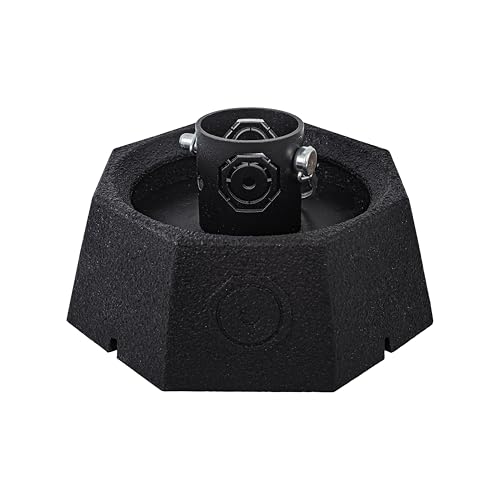
Valterra’s pad includes several pin holes spaced to match different jack foot designs, which avoids buying a second pad when switching trailers. The base is wide enough to resist tipping on packed dirt.
Pros
- Multiple pin positions fit several jack brands
- Wide base resists tipping on packed dirt
- Lighter than steel plate alternatives
Cons
- Not rated for the heaviest equipment trailers
- Pin holes can wear with repeated swapping

Tri-Lynx Jack-It Pad
Tri-Lynx extends the footprint further than most pads on this list specifically to spread weight over soft sand or mud where a smaller plate would still sink. Campers heading to beach or off-grid sites get the most benefit here.
Pros
- Widest footprint on this list for soft surfaces
- High-impact plastic resists cracking in cold
- Works under multiple jack styles
Cons
- Bulkier to store than compact interlocking pads
- Sold individually, so a full set costs more
What to look for
Why a bare jack foot is not enough A tongue jack or scissor jack concentrates the trailer’s full corner weight onto a few square inches of steel. On asphalt in summer heat or soft gravel after rain, that small foot sinks or tips, which throws the whole trailer out of level. A foot pad spreads that load over a wider area so the ground underneath can actually support it.
Matching the pad to your jack type Scissor jacks and pin-style tongue jacks use different foot shapes, so check which style your trailer has before ordering. Multi-pad interlocking sets like Camco’s work across most scissor jacks, while plate-style pads such as the Aupar or CURT options bolt directly onto a specific tube size.
For routine camping and driveway use A standard multi-pack like the Eaz-Lift or Camco set handles typical gravel, grass, and asphalt pads without issue. These are the lightest and cheapest options, and they store flat in a bin or storage compartment between trips.
For heavier trailers or soft ground Equipment trailers, car haulers, and anyone camping on sand or mud need either a higher capacity plate, like the Aupar 5000 pound foot, or a wider-footprint design like the Tri-Lynx Jack-It. The extra surface area matters more than the material once the ground itself is the limiting factor.
How they compare
| # | Model | Material | Best for | Score | Price |
|---|---|---|---|---|---|
| 1 | Camco Stabilizing Jack Pads | UV-stabilized polypropylene | Best overall | 9.2 | Check price |
| 2 | Kohree RV Stabilizer Jack Pads | Rubber | Best for uneven ground | 8.8 | Check price |
| 3 | Aupar Trailer Jack Foot Plate | Steel with pin base | Best weight capacity | 8.9 | Check price |
| 4 | CURT 28272 Trailer Jack Foot | Stamped steel | Best for CURT tongue jacks | 8.5 | Check price |
| 5 | Eaz-Lift Stabilizing Jack Pads | High-density polyethylene | Best value multi-pack | 8.4 | Check price |
| 6 | Valterra Trailer Jack Foot Pad | Reinforced plastic | Best for universal pin-style jacks | 8.3 | Check price |
| 7 | Tri-Lynx Jack-It Pad | High-impact plastic | Best for sand and mud | 8.6 | Check price |
Questions worth asking
Do I need jack foot pads if I already park on concrete?
Concrete rarely needs a pad, since it already resists sinking and rocking. Pads matter most on gravel, dirt, grass, sand, and asphalt that softens in heat.
What weight capacity do I need for my trailer?
Match the pad’s rating to your trailer’s tongue weight when jacked, not the total trailer weight, since that is the load the jack foot actually carries. Most travel trailers need 2000 to 3000 pounds of capacity, while equipment trailers can need 5000 or more.
Can one pad fit both scissor jacks and tongue jacks?
Some interlocking multi-pad sets work under either style since they simply provide a flat surface, but bolt-on plate replacements are built for one tube size and jack type specifically. Check the compatibility list before buying a plate-style pad.
Will plastic pads crack in cold weather?
High-impact and UV-stabilized plastics used in pads like Camco’s or Tri-Lynx’s resist cracking better than basic polyethylene, but any plastic becomes more brittle below freezing. Store pads inside the trailer rather than exposed outside in winter if possible.
How many pads do I actually need?
A single-axle travel trailer typically needs one pad under the front tongue jack and sometimes one more under each rear stabilizer, so a 4-pad set covers most setups. Dual-axle and larger trailers with more stabilizer points may need a second set.
Do rubber pads work better than plastic on gravel?
Rubber pads like Kohree’s flex slightly over small stones, which reduces rocking compared to a rigid plastic pad resting on one high point. Plastic plates still win on raw weight capacity and resist gravel punctures better over time.
Can I use a foot pad on sand?
A standard pad helps but a wider design like the Tri-Lynx Jack-It spreads weight further and resists sinking into sand noticeably better. Narrow pads can still slowly sink under sustained weight on sand.
Do jack foot pads replace the need for leveling blocks?
No, foot pads prevent sinking and tipping at a single jack point, while leveling blocks raise the trailer to correct an unlevel site. Most RV owners carry both since they solve different problems.
The bottom line
Camco’s Stabilizing Jack Pads cover the most common scissor and tongue jack setups and are the easiest pick for typical camping use. Owners hauling heavier equipment trailers should move up to the Aupar 5000 pound plate instead, since it is rated for loads the Camco set was never meant to carry. Anyone camping regularly on sand or mud gets more real benefit from the wider-footprint Tri-Lynx Jack-It than from any standard multi-pack.
Tony Russo
Tony trained as an automotive technician and spent years in service and parts retail before moving into writing. He focuses on garage tools, car care products and accessories from a hands-on maintenance perspective.