Which Trailer Hitch Ball Mount Fits Your Rig?
B&W’s Tow and Stow Adjustable Ball Mount tops this comparison, thanks to a swing away head and a wide drop and rise range. CURT’s 45900 Adjustable Ball Mount suits lighter, occasional towing at a friendlier cost. Weigh Safe’s 180 Hitch adds a built in tongue weight scale for owners who load trailers themselves.
Owners who rotate between several trailers get the most from the B&W Tow and Stow, since one adjustable head covers multiple ball sizes and drop heights. The CURT 45900 handles lighter, single trailer duty for less outlay. Anyone loading trailers alone benefits from the Weigh Safe 180 and its built in tongue weight readout.
We compared published gross trailer weight and tongue weight ratings, shank sizes, ball diameters and drop and rise ranges across all seven mounts. Owner feedback on rust, rattle and how quickly each unit swaps between trailers factored into the ranking too.
The best picks, ranked

B&W Trailer Hitches Tow & Stow Adjustable Ball Mount
A multi ball head lets this mount flip between diameters instead of forcing a tool change. Rise and drop adjust across a wide range, so one unit handles a boat trailer one weekend and a utility trailer the next. Solid steel construction sits under a powder coat finish built to shrug off road grime.
Pros
- Swings out of the way when not towing
- Covers several trailer types with one head
- Solid steel body resists flex under load
Cons
- Adds noticeable weight versus aluminium mounts
- Costs more than fixed or single ball designs

CURT 45900 Adjustable Trailer Hitch Ball Mount
Channel style adjustment sets the ball platform at several pinned heights, closing most gaps between vehicle and trailer. A corrosion resistant coating holds up better than bare steel through wet seasons. Roadside height changes take a pin and a few minutes, nothing more.
Pros
- Pinned adjustment sets height without tools
- Coating resists rust better than plain steel
- Built for single trailer, single owner use
Cons
- Some kits sell the mount without a ball
- Pins can seize if never greased

Weigh Safe 180 Hitch Adjustable Aluminium Ball Mount
A built in gauge on the shank reads tongue weight directly, removing the need for a separate bathroom scale trick. Aluminium construction cuts overall heft while a stainless ball resists the rust that plagues plain steel balls. Two ball sizes sit on one head for mixed trailer duty.
Pros
- Reads tongue weight without extra tools
- Aluminium body is easier to lift and store
- Stainless ball resists corrosion
Cons
- Gauge needs level ground to read accurately
- Aluminium surface scuffs more easily than steel

Andersen Hitches Rapid Hitch Aluminium Adjustable Ball Mount
Aluminium construction with a stainless steel ball keeps this mount light enough to lift into a receiver with one hand. Sliding pins set the height quickly, which matters when trailers change often. Owners report the finish stays free of the rust streaks common on plain steel mounts.
Pros
- Light enough for one hand installation
- Stainless ball avoids the usual rust streaks
- Height adjusts fast with sliding pins
Cons
- Rated capacity trails heavy steel mounts
- Aluminium marks and scuffs over time

Reese Towpower Interlock Ball Mount
Fixed drop construction means nothing to adjust and nothing to work loose over miles of towing. Solid steel keeps the design simple and quiet in the receiver. It suits a trailer that already sits level at a known drop height.
Pros
- No moving parts to rattle loose
- Quiet fit inside the receiver tube
- Durable coating handles repeated towing seasons
Cons
- Drop height is fixed, not adjustable
- Less useful for owners with multiple trailers
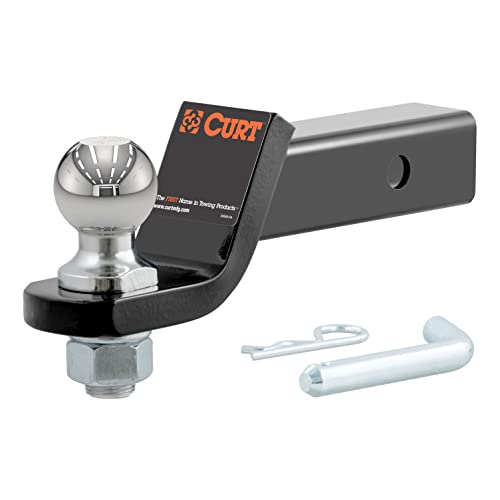
CURT 45036 Class 3 Trailer Ball Mount
Plain steel construction covers everyday Class 3 towing, from utility trailers to small campers. A modest fixed drop matches many trucks and SUVs straight from the factory. Based on specifications, its gross trailer weight rating holds up well for the class.
Pros
- Lower cost than adjustable competitors
- Common replacement part at most retailers
- Install takes minutes with basic tools
Cons
- No height adjustment built in
- Coating chips with repeated use

Husky Towing Adjustable Tri-Ball Mount
Three ball diameters share one head, so switching trailers means rotating the mount instead of swapping a ball. Mixed fleets of utility, boat and camper trailers benefit most from this setup. Extra bulk behind the bumper is the tradeoff for that flexibility.
Pros
- Three ball sizes ready without tools
- Suits owners towing several trailer types
- Steel construction holds up under regular use
Cons
- Bulkier profile hangs lower behind the bumper
- Unused balls can catch shins or cargo
Before you buy
What to look for in a trailer hitch ball mount Hitch classes run from Class 1 through Class 5, and each step up raises the gross trailer weight and tongue weight capacity. A Class 3 receiver paired with a Class 5 ball mount still functions as a Class 3 setup, because the weakest link sets the limit. Check the rating sticker on the receiver, then match it against the tow rating in the owner’s manual. Shank size matters too. Most trucks and SUVs use a 2 inch receiver opening, though some heavier trucks step up to 2.5 inches.
How much drop or rise does your trailer need A trailer that noses down or tail drops shifts weight off the axles it was built around. Measure from the ground to the receiver opening, then to the bottom of the trailer coupler. The difference tells you how much drop or rise to buy. Loaded truck beds sit lower than empty ones, so adjustable mounts earn their keep across seasons and cargo loads.
Which ball size and tongue weight numbers matter Trailer couplers stamp their required ball diameter directly on the casting, and common sizes run 1 7/8 inch, 2 inch and 2 5/16 inch. Fitting the wrong ball means the coupler will not latch, which is a safety failure, not a cosmetic mismatch. Tongue weight should land around 10 to 15 percent of the loaded trailer weight. Getting that ratio wrong is a leading cause of trailer sway at highway speed.
Why hitches rattle and how to quiet one down Play between the shank and the receiver produces the clunk most owners notice first at low speed. An anti rattle clamp or a threaded hitch pin removes most of that movement and cuts wear on both parts. Grease the ball before each trip and keep pin holes free of grit. Steel mounts benefit from a dry garage. Aluminium resists rust on its own, but a rinse after salted roads still helps.
Compared at a glance
| # | Model | Ball sizes | Best for | Score | Price |
|---|---|---|---|---|---|
| 1 | B&W Trailer Hitches Tow & Stow Adjustable Ball Mount | Multi ball head | Best overall | 9.4 | Check price |
| 2 | CURT 45900 Adjustable Trailer Hitch Ball Mount | Channel style adjustable | Best value | 9.2 | Check price |
| 3 | Weigh Safe 180 Hitch Adjustable Aluminium Ball Mount | Integrated tongue weight gauge | Best for tongue weight control | 9.0 | Check price |
| 4 | Andersen Hitches Rapid Hitch Aluminium Adjustable Ball Mount | Aluminium | Best lightweight adjustable | 8.7 | Check price |
| 5 | Reese Towpower Interlock Ball Mount | Fixed drop ball mount | Best for a single trailer | 8.5 | Check price |
| 6 | CURT 45036 Class 3 Trailer Ball Mount | Class 3 | Best budget | 8.3 | Check price |
| 7 | Husky Towing Adjustable Tri-Ball Mount | Three diameters on one head | Best for multiple ball sizes | 8.0 | Check price |
Good to know
How do I know what hitch class my vehicle has?
Check the rating label on the receiver itself, which lists maximum gross trailer weight and tongue weight. The owner’s manual confirms the vehicle’s tow rating, and the lower number applies.
Does a bigger ball mount raise my tow rating?
No. The lowest rated part in the system, usually the vehicle or receiver, sets the ceiling. Swapping in a heavier duty ball mount changes nothing about what the vehicle can pull.
What ball size do I need for my trailer?
Look at the stamp cast into the trailer coupler. It lists the exact diameter required, and only that size will latch securely. Multi ball mounts exist for owners who tow trailers with different coupler sizes.
Should a trailer sit level when towing?
Level, or very slightly nose down, is the target for most conventional trailers. That keeps weight distribution close to what the axles were engineered for and cuts down on sway.
Why does my hitch rattle so much?
Receivers are machined with clearance so mounts slide in without a fight, and that clearance turns into movement on the road. An anti rattle device or a threaded pin takes up the slack.
Are aluminium ball mounts strong enough for towing?
Yes, provided the rating matches your load. Reputable aluminium mounts carry published weight ratings just like steel, resist corrosion better, and lift more easily.
Do I need a weight distribution hitch instead of a ball mount?
It becomes worth considering once trailer weight approaches roughly half the tow vehicle’s weight, or when the rear end sags visibly. Many manufacturers list a specific threshold in the owner’s manual.
How often should hitch hardware be inspected?
Give it a visual check before every trip and confirm the coupler latch and safety chains. Inspect the ball itself for wear or looseness at the start of each towing season.
Fixed vs adjustable ball mount: which is better?
Fixed mounts cost less and have no parts to work loose, which suits one trailer that already sits level. Adjustable mounts cost more but cover multiple trailers or a truck bed that changes height under load.
Final word
B&W’s Tow and Stow earns the top spot for anyone rotating between trailers, since its swing away head and wide adjustment range replace a drawer full of fixed mounts. CURT’s 45900 covers lighter, single trailer duty at a friendlier cost. Weigh Safe’s 180 Hitch is worth the premium for owners who load trailers solo and want tongue weight visible before pulling away.
Tony Russo
Tony trained as an automotive technician and spent years in service and parts retail before moving into writing. He focuses on garage tools, car care products and accessories from a hands-on maintenance perspective.


