Trailer Hitch Locks That Actually Stop Thieves
The Master Lock 389DAT universal coupler lock covers the widest range of coupler sizes with hardened steel protection. Reese Towpower’s 72783 receiver lock suits owners on a tighter budget, and Proven Industries’ 2516 fits anyone parking an expensive trailer in an unmonitored lot overnight.
Most stolen trailers disappear from driveways in under two minutes, and a bare hitch pin does nothing to stop that. The Master Lock 389DAT universal coupler lock blocks the coupler itself from latching onto any ball, fits 1-7/8 to 2-5/16 inch couplers, and only falls short if your coupler has an unusually deep profile that needs a longer shackle.
We compared locks by shackle or barrel diameter, the receiver or coupler sizes each one actually fits, and how owners rate them after months of outdoor exposure. Drill resistance and weatherproof housings mattered more here than price.
Our top picks
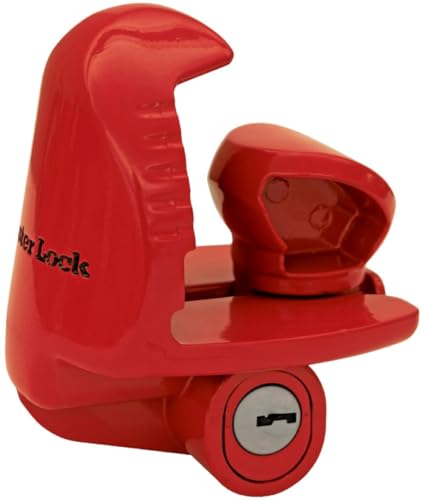
Master Lock 389DAT Universal Coupler Lock
This coupler lock drops into the ball socket and blocks the latch from closing on any hitch ball. A hardened boron shackle resists bolt cutters and hacksaws better than softer steel designs.
Pros
- Fits most common coupler sizes without swapping parts
- Hardened shackle resists cutting tools
- Compact enough to store in a tow vehicle glovebox
Cons
- Rubber dust cap can work loose on rough roads
- Key cylinder needs occasional graphite lubrication

Reese Towpower 72783 Receiver Lock
This pin-style lock replaces a standard hitch pin in a 2-inch receiver tube and keeps anyone from pulling the ball mount or cargo carrier out. The barrel-style lock head sits flush against the receiver to limit prying leverage.
Pros
- Lower cost than most coupler-style locks
- Flush head design limits pry points
- Works on ball mounts, cargo carriers, and bike racks
Cons
- Does not stop coupler theft, only accessory removal
- Pin can rattle slightly on rough roads

Proven Industries 2516 Receiver Lock
Proven Industries machines this lock from solid steel bar stock rather than stamped sheet metal, which removes the seam a pry bar would normally exploit. It is built for owners who park a loaded enclosed trailer unattended for days at a time.
Pros
- No welded seams for thieves to attack
- Available in 2.5 in size for heavy-duty receivers
- Powder coat resists rust in coastal climates
Cons
- Heavier than stamped-steel alternatives
- Premium build pushes it above budget locks

Rhino USA 2 Inch Trailer Hitch Pin Lock
Rhino USA’s pin lock targets the standard 2-inch receiver market with a simple barrel lock and a rubber weather cap over the keyhole. It is the most common pin lock recommendation for owners who just need basic deterrence.
Pros
- Among the least expensive true steel pin locks
- Weatherproof cap keeps the keyhole from rusting
- Backed by a lifetime warranty from the brand
Cons
- Thinner barrel than the Proven Industries model
- Key sometimes needs wiggling in cold weather

RETRUE Universal Trailer Coupler Lock
RETRUE’s coupler lock uses an adjustable shackle that reaches around deeper couplers that a fixed-length lock cannot clear. Owners who tow more than one trailer with different coupler depths get one lock that adapts to both.
Pros
- Adjustable shackle clears deeper couplers
- One lock serves multiple trailers
- Simple thumb-turn adjustment, no tools needed
Cons
- Adjustable mechanism adds a moving part that can wear
- Not as drill resistant as solid hardened-steel designs

Trimax TC1 Coupler Lock
The TC1 clips over the coupler latch handle itself rather than filling the ball socket, which makes it faster to install and remove at a boat ramp or job site. Trimax ships it with a vinyl-coated shackle to protect the coupler finish.
Pros
- Installs in seconds without aligning a socket
- Vinyl coating protects paint on the coupler handle
- Easy to spot visually as a theft deterrent
Cons
- Does not block the ball socket itself
- Less effective on couplers with a recessed latch

B&W Trailer Hitches GNXA1020 Combo Latch Lock Set
This set pairs a latch lock with a chain lock so gooseneck and fifth wheel haulers can secure both connection points at once. B&W builds it specifically to match its own Companion and Turnoverball hardware.
Pros
- Secures the latch and chain in one purchase
- Matches B&W hardware without fitment guesswork
- Hardened steel resists bolt cutters
Cons
- Built around B&W hardware, not universal
- More than most owners need for a bumper-pull trailer
How to choose
What a hitch lock actually protects A hitch pin lock stops someone from pulling your ball mount, cargo carrier, or bike rack out of the receiver tube. A coupler lock stops the whole trailer from being towed away, since it blocks the coupler from closing over any ball. Decide which risk worries you more before buying, because the two lock types solve different problems.
Matching the lock to your coupler or receiver size Couplers commonly run 1-7/8, 2, or 2-5/16 inches, and a lock sized wrong will not seat. Receiver tubes are almost always 1-1/4 or 2 inches on consumer trucks and SUVs. Check both measurements on your own hardware before ordering, since manufacturer listings describe the range but your coupler’s depth can still vary.
For trailers parked at home overnight A standard receiver pin lock like the Reese Towpower 72783 or Rhino USA pin lock covers most driveway risk, since casual theft usually targets whatever looks easiest to grab. Pair it with parking the trailer nose-in toward a wall or fence to block coupler access entirely.
For unattended lots, job sites, or long storage Step up to a solid-body lock such as the Proven Industries 2516 or add a coupler lock on top of a pin lock. Thieves with more time will attack welded seams and thin shackles first, so the extra cost buys real resistance rather than just a visual deterrent.
How they stack up
| # | Model | Lock type | Best for | Score | Price |
|---|---|---|---|---|---|
| 1 | Master Lock 389DAT Universal Coupler Lock | Coupler socket lock | Best overall | 9.4 | Check price |
| 2 | Reese Towpower 72783 Receiver Lock | Receiver pin lock | Best value | 9.0 | Check price |
| 3 | Proven Industries 2516 Receiver Lock | Receiver pin lock | Best heavy duty | 9.3 | Check price |
| 4 | Rhino USA 2 Inch Trailer Hitch Pin Lock | Receiver pin lock | Best budget | 8.6 | Check price |
| 5 | RETRUE Universal Trailer Coupler Lock | Coupler lock | Best for mixed coupler sizes | 8.5 | Check price |
| 6 | Trimax TC1 Coupler Lock | Latch clip lock | Best padlock-style coupler lock | 8.7 | Check price |
| 7 | B&W Trailer Hitches GNXA1020 Combo Latch Lock Set | Latch and chain combo | Best for gooseneck and fifth wheel setups | 8.8 | Check price |
Questions worth asking
Do trailer hitch locks actually stop theft?
They slow down or deter most opportunistic theft, since a thief without bolt cutters or a grinder will usually move on. A determined thief with the right tools and enough time can defeat any lock, so a hitch lock works best alongside parking choices and visibility.
What size hitch lock do I need?
Measure your receiver tube opening, which is almost always 1-1/4 or 2 inches, and separately measure your coupler’s inside diameter, which commonly runs 1-7/8 to 2-5/16 inches. Buy based on both measurements, not just the trailer’s weight class.
Is a coupler lock better than a receiver pin lock?
A coupler lock stops the whole trailer from being towed, while a pin lock only protects whatever is plugged into the receiver tube. Owners worried about the trailer itself disappearing should prioritize a coupler lock.
Can I use both a pin lock and a coupler lock together?
Yes, and many owners with expensive trailers do exactly that. The pin lock protects the ball mount from being swapped out, while the coupler lock protects the trailer from being hitched to a different tow vehicle.
Will a hitch lock rust shut over a winter outdoors?
Locks with a rubber or vinyl dust cap over the keyhole hold up better in rain and snow than open-keyhole designs. A light annual application of dry graphite or lock lubricant in the cylinder also prevents sticking.
Do hitch locks fit both ball mounts and cargo carriers?
Most 5/8 inch pin locks fit any accessory built to the same Class III or IV receiver standard, including cargo carriers, bike racks, and ball mounts. Always confirm the pin diameter matches, since some heavy-duty Class V hitches use a larger pin.
Are keyed-alike hitch locks worth it?
Keyed-alike locks let one key open multiple locks on the same trailer or tow vehicle, which is convenient if you already run several locks from the same brand. It is a minor convenience rather than a security upgrade.
How do I know if a hitch lock will clear my coupler’s depth?
Fixed-shackle locks list a coupler range in inches, but unusually deep or recessed couplers can still block a standard shackle from closing. An adjustable-shackle design like the RETRUE lock solves this without guessing at a second purchase.
Do I need a different lock for a gooseneck trailer?
Gooseneck and fifth wheel trailers connect through a latch and separate safety chain rather than a standard ball coupler, so a bumper-pull coupler lock will not fit. A combo set built for that hardware, such as B&W’s GNXA1020, covers both connection points.
Our take
Pick the Master Lock 389DAT if you tow one trailer with a standard coupler and want broad fit without extra parts. Choose the Proven Industries 2516 instead if the trailer sits unattended in a lot overnight, since its solid-steel body resists prying far better than stamped alternatives. Gooseneck and fifth wheel owners should skip bumper-pull coupler locks entirely and go straight to the B&W combo set.
Tony Russo
Tony trained as an automotive technician and spent years in service and parts retail before moving into writing. He focuses on garage tools, car care products and accessories from a hands-on maintenance perspective.


