Trail Cameras for Scouting Game Without Spooking It
The Browning Strike Force Pro XD leads this comparison with a fast trigger speed, high resolution images and reliable infrared flash for night scouting. The Bushnell Core DS suits hunters who need the most discreet no-glow flash, while the Moultrie Mobile Edge fits remote properties where checking a card in person is not practical.
The Browning Strike Force Pro XD stands out because its fast trigger speed catches fast-moving deer that slower cameras miss entirely, paired with image quality clear enough to judge antler size. Its main limitation is connectivity, since it stores to a memory card rather than sending photos remotely like cellular models.
We compared published trigger speed, detection range, flash type and resolution specs across each camera rather than running our own field trials.
The best picks, ranked

Browning Strike Force Pro XD Trail Camera
A trigger speed near 0.2 seconds catches animals moving quickly through frame, where slower cameras only capture an empty background. Infrared flash illuminates nighttime scenes without the visible red glow some animals learn to avoid. Image resolution stays sharp enough to count points on a buck from a reasonable distance.
Pros
- Fast trigger speed captures quick-moving animals reliably
- High resolution images help with identifying individual animals
- Low glow infrared flash stays discreet at night
Cons
- No cellular connectivity, so cards must be checked in person
- Battery life drops faster with high resolution and frequent triggers

Bushnell Core DS No Glow Trail Camera
A true no-glow infrared flash emits no visible light at all, the most discreet option for pressured animals that associate red glow with danger. Dual sensor technology adjusts exposure differently for day and night images, improving clarity in both conditions. The rugged housing holds up to repeated exposure to rain and temperature swings.
Pros
- True no-glow flash stays completely invisible to animals
- Dual sensor setup improves both day and night image quality
- Weatherproof housing withstands rain and temperature extremes
Cons
- No-glow flash has a shorter effective night range than standard infrared
- Lacks cellular connectivity found on remote monitoring cameras
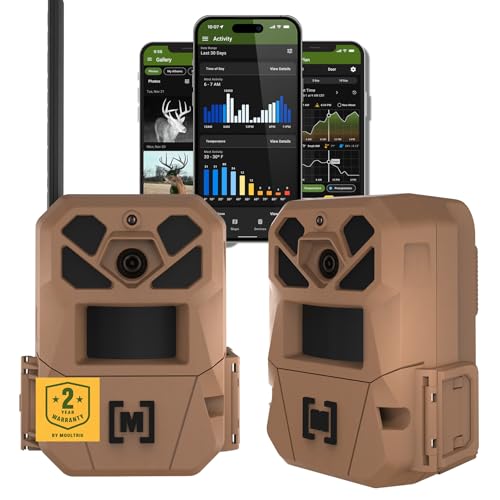
Moultrie Mobile Edge Cellular Trail Camera
Built-in cellular connectivity sends photos directly to a smartphone app, removing the need to physically visit a remote camera to check a card. A long detection range picks up movement across larger clearings than short-range budget cameras. Solar panel compatibility extends battery life for cameras left unattended for months.
Pros
- Cellular connectivity removes the need for in-person card checks
- Long detection range covers larger clearings and field edges
- Solar compatibility extends time between battery changes
Cons
- Requires an ongoing data plan subscription for cellular transmission
- Higher upfront cost than non-cellular trail cameras

Spypoint Flex Cellular Trail Camera
This camera covers both cellular networks through a dual-SIM design, improving signal reliability in areas with inconsistent single-carrier coverage. A moderate detection range and trigger speed suit food plots and trail intersections rather than wide open fields. Lower data plan pricing makes ongoing cellular use more affordable than premium competitors.
Pros
- Dual-SIM design improves cellular reliability across carriers
- Lower cost data plans than many competing cellular cameras
- High resolution images for identifying animals remotely
Cons
- Detection range is shorter than dedicated long-range cellular cameras
- Dual-SIM cellular still depends on a paid data plan
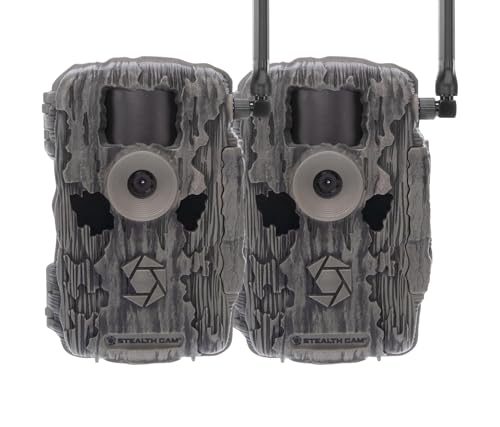
Stealth Cam Fusion X Trail Camera
A higher megapixel sensor paired with daylight-optimized color balance produces clearer daytime images than cameras tuned mainly for night performance. It still runs standard infrared flash for nighttime use, though image detail drops compared to its daytime shots. Fusion X supports both standalone card storage and optional cellular add-on hardware.
Pros
- Daylight color balance produces sharper daytime images
- High megapixel count captures fine detail in good light
- Optional cellular add-on offers flexibility without a built-in modem
Cons
- Nighttime image detail trails dedicated no-glow night cameras
- Cellular add-on hardware costs extra beyond the base camera

Tactacam Reveal X Gen 2.0 Cellular Trail Camera
Push notifications arrive within minutes of a triggered photo, letting hunters react to movement patterns almost as they happen. A compact housing mounts easily on narrower trees than bulkier cellular cameras. Built-in GPS tagging logs the exact camera location within the companion app for managing multiple cameras across a property.
Pros
- Near real-time photo alerts speed up response to animal movement
- Compact housing fits narrower trees and tighter mounting spots
- GPS tagging helps manage multiple cameras across a property
Cons
- Requires an active cellular data plan for remote alerts
- Compact housing holds a smaller battery than bulkier cameras
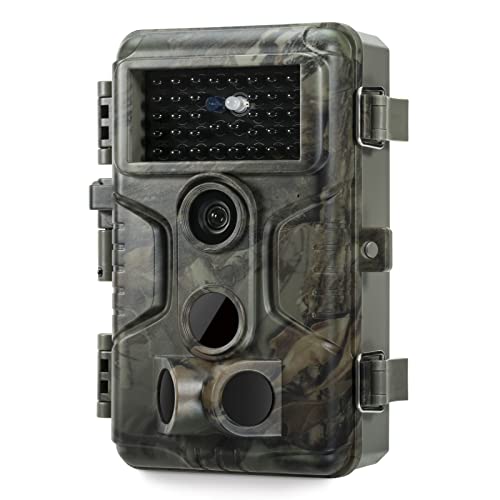
Campark T45 Trail Camera
A straightforward infrared flash and card-based storage keep this camera affordable while covering the basics of day and night scouting. Detection range and trigger speed trail premium cameras but still catch most animals walking through frame. It runs on standard batteries, avoiding the added cost of proprietary power packs.
Pros
- Lower price point than premium or cellular trail cameras
- Standard AA batteries are easy and cheap to replace
- Covers basic day and night scouting needs
Cons
- Slower trigger speed than premium cameras like the Browning Strike Force Pro XD
- No cellular connectivity for remote monitoring
How they stack up
| # | Model | Trigger Speed | Best for | Score | Price |
|---|---|---|---|---|---|
| 1 | Browning Strike Force Pro XD Trail Camera | Approximately 0.2 seconds | Best Overall | 9.0 | Check price |
| 2 | Bushnell Core DS No Glow Trail Camera | No glow infrared | Best for No-Glow Night Images | 8.8 | Check price |
| 3 | Moultrie Mobile Edge Cellular Trail Camera | Built-in cellular, app based | Best for Remote Properties | 8.9 | Check price |
| 4 | Spypoint Flex Cellular Trail Camera | Dual-SIM cellular | Best Value Cellular | 8.6 | Check price |
| 5 | Stealth Cam Fusion X Trail Camera | Up to 32 megapixels | Best for Daytime Photo Quality | 8.4 | Check price |
| 6 | Tactacam Reveal X Gen 2.0 Cellular Trail Camera | Built-in cellular, real-time alerts | Best for Real-Time Alerts | 8.7 | Check price |
| 7 | Campark T45 Trail Camera | Infrared | Best Budget | 8.0 | Check price |
How to choose
What to look for in a trail camera Trigger speed decides whether a camera catches a moving animal or an empty frame, with faster cameras performing better on deer trails and open fields. Flash type affects how discreet night images are, since true no-glow flash emits no visible light at all. Detection range and resolution round out the picture, controlling how far away motion triggers a photo and how clear that photo turns out.
Cellular versus card-based cameras Cellular cameras like the Moultrie Mobile Edge and Spypoint Flex send photos to a phone app, which saves trips to remote properties but requires an ongoing data plan. Card-based cameras like the Browning Strike Force Pro XD and Campark T45 cost less upfront and need no subscription, but require a physical visit to retrieve images. Properties within easy driving distance often do fine with a card-based camera.
Infrared versus no-glow night flash Standard infrared flash, used on most cameras in this comparison, produces a faint visible glow that some animals notice over time. True no-glow flash, found on the Bushnell Core DS, stays completely invisible but typically has a shorter effective night range. Hunters on heavily pressured land often prefer no-glow despite the range tradeoff.
Matching a camera to property size Larger properties and wide open fields benefit from a longer detection range, as offered by the Moultrie Mobile Edge. Smaller food plots and trail intersections work fine with moderate range cameras like the Spypoint Flex or Stealth Cam Fusion X. Hunters monitoring several spots across a large property should prioritize cellular connectivity to avoid checking every camera in person.
Frequently asked questions
What is a good trigger speed for a trail camera?
A trigger speed near 0.2 seconds, as on the Browning Strike Force Pro XD, catches fast-moving animals that slower cameras can miss entirely.
Do cellular trail cameras need a data plan?
Yes. Cellular models like the Moultrie Mobile Edge and Spypoint Flex require an ongoing data plan to send photos to a phone app.
What is a no-glow trail camera?
A no-glow camera, like the Bushnell Core DS, uses infrared flash that emits no visible light at all, making it harder for animals to detect.
How far away can a trail camera detect movement?
Detection range varies by model, from around 65 feet on the Spypoint Flex up to roughly 80 feet on the Moultrie Mobile Edge.
Can a trail camera send photos in real time?
Yes. The Tactacam Reveal X Gen 2.0 sends push notifications within minutes of a triggered photo through its cellular connection.
What resolution is good enough for identifying animals?
Resolutions of 24 to 33 megapixels, found across most cameras here, provide enough detail to identify individual animals and judge antler size.
Do trail cameras work with solar panels?
Some cellular models, including the Moultrie Mobile Edge, support solar panel accessories that extend time between battery changes.
Is a card-based or cellular trail camera better for remote land?
Cellular cameras like the Spypoint Flex suit remote land better, since they remove the need to physically travel to the camera to check photos.
How many batteries does a trail camera need?
Most cameras, including the Campark T45, run on standard AA batteries, though battery life drops with higher resolution and frequent triggers.
Our take
Hunters who want strong all-around performance without a data plan should choose the Browning Strike Force Pro XD for its fast trigger speed and image quality. Anyone monitoring a remote property they cannot visit often should pick the Moultrie Mobile Edge instead for its cellular connectivity and solar compatibility. Hunters on heavily pressured land should prioritize true no-glow flash and choose the Bushnell Core DS over standard infrared cameras.
Sierra Daniels
Sierra's background is in landscape design and nursery retail. She focuses on lawn and garden equipment, outdoor furniture and gear durability, weighing published specs against how materials actually hold up outside.

