Tool Belts Built for Full Days on the Job Site
The Occidental Leather 5089 Tool Belt is the best overall pick, distributing weight through a padded belt while keeping pockets organized by tool type. Framers and carpenters needing more pouches should consider the CLC Custom Leathercraft belt instead, while electricians should look at the Klein Tools Tradesman Pro.
The Occidental Leather 5089 handles a full day of mixed trade work well, with leather pouches that hold shape and a padded belt that reduces hip fatigue. Its pocket layout suits general carpentry more than specialized electrical work, so an electrician should consider the Klein Tools Tradesman Pro instead. Framers carrying a heavier tool load will find more pouch capacity in the CLC Custom Leathercraft belt.
Tool belts differ most in pocket layout, material durability, and how well the belt itself supports a loaded weight. We compared published pocket counts, material type, and owner feedback on belt comfort to match each belt to real trade needs.
How to pick the right one
What to look for in a tool belt Pocket layout should match the actual trade, since an electrician’s small parts differ from a framer’s fasteners and larger hand tools. Material affects durability, with leather holding shape longer than nylon under heavy daily loads. Belt support matters for comfort, as a padded or curved design reduces pressure during long shifts. Weight capacity should match the realistic tool load, not just the number of pockets available.
Tool belts for carpentry and framing work A belt with more individual pouches, like the CLC Custom Leathercraft, suits framers carrying a wider variety of tools and fasteners. The Occidental Leather 5089 balances organization and durability for general carpentry without the bulk of a dedicated framer belt. Both benefit from a reinforced hammer loop for securing a full-size hammer during movement.
Tool belts for electrical and technician work A pocket layout built for small parts, like the Klein Tools Tradesman Pro offers, suits pliers and strippers better than general carpentry pouches. Lighter scaled belts, like the Husky Technician’s Tool Belt, suit occasional light tool carrying in tight spaces like crawl spaces or cabinets. Neither needs the pouch capacity a framer’s belt requires.
Comfort and budget tradeoffs across tool belts A curved, ergonomic support structure, like Gatorback’s B240, reduces lower back pressure more than a flat strap design during long shifts. The DEWALT DG5333 trims cost with nylon construction, trading some shape retention for a lower price. Padded backing, found on both the Occidental Leather 5089 and Klein Tools Tradesman Pro, adds comfort regardless of trade specialty.
Our top picks
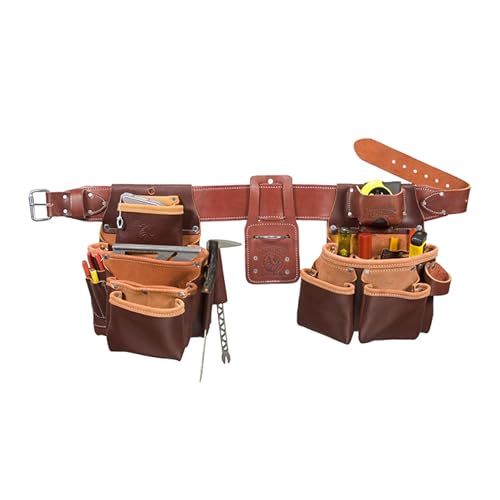
Occidental Leather 5089 Tool Belt
Occidental Leather builds this belt’s pouches from full-grain leather that holds its shape far better than nylon under heavy daily loads. A padded leather belt distributes tool weight across a wider area than a basic strap, reducing hip pressure over a long shift. Pocket layout separates fasteners from hand tools, cutting down time spent searching mid-task.
Pros
- Leather pouches hold shape better than nylon over time
- Padded belt reduces hip fatigue during long shifts
- Organized pocket layout speeds up tool retrieval
Cons
- Costs more than nylon or synthetic belts
- Leather needs occasional conditioning to stay supple

CLC Custom Leathercraft Tool Belt
CLC Custom Leathercraft adds more individual pouches to this belt than general-purpose designs, suited to framers carrying a wider tool variety. A reinforced hammer loop holds a full-size hammer securely during movement. The belt uses a padded back panel to help offset the added pouch weight.
Pros
- More pouches fit a wider variety of tools and fasteners
- Reinforced hammer loop holds a hammer securely
- Padded back panel helps offset heavier loads
Cons
- More pouches add bulk around the waist
- Heavier overall than minimalist tool belts

DEWALT DG5333 Tool Belt
DEWALT prices this belt below premium leather options while still including a rugged ballistic nylon construction. Multiple pockets and loops cover common hand tools without the higher cost of full leather pouches. A quick-release buckle speeds up putting the belt on and off between tasks.
Pros
- Lower cost than premium leather tool belts
- Quick-release buckle speeds up putting it on and off
- Lighter weight than full leather alternatives
Cons
- Nylon pouches hold shape less well than leather over time
- Less padding than premium belts for heavy loads

Milwaukee 48-22-8120 Tool Belt
Milwaukee organizes this belt’s pockets for quick single-hand access, suited to fast-paced jobs where searching for a tool wastes time. A reinforced material resists tearing at stress points better than basic nylon. The belt integrates with Milwaukee’s broader pouch and suspension system for added capacity if needed later.
Pros
- Pocket layout speeds up single-hand tool retrieval
- Reinforced material resists tearing at stress points
- Compatible with Milwaukee’s broader pouch system
Cons
- Smaller pouch capacity than dedicated framer belts
- Full system expansion costs more over time

Husky Technician’s Tool Belt
Husky scales this belt down for lighter technician work, carrying a handful of tools rather than a full carpenter’s loadout. Smaller pouches keep the belt’s profile slim, useful in tighter workspaces like crawl spaces or cabinets. A simple single-strap design keeps the belt easy to adjust quickly.
Pros
- Slim profile fits tighter workspaces comfortably
- Lower cost than heavy-duty framer belts
- Simple strap design adjusts quickly
Cons
- Limited pouch capacity for a full tool loadout
- Not built for heavy daily carpentry work
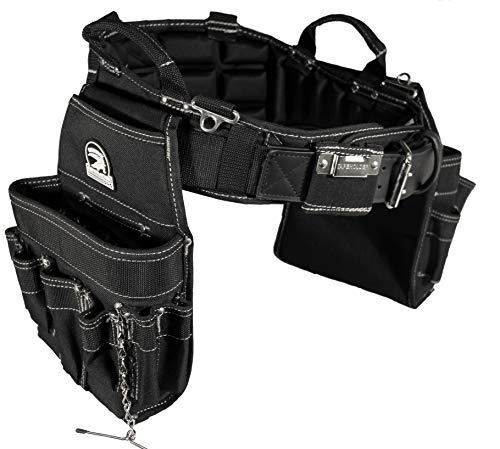
Gatorback B240 Tool Belt
Gatorback curves this belt’s support structure to match the lower back rather than sitting as a flat strap, reducing pressure points over a long shift. The curved design pairs with suspenders in the broader Gatorback system for heavier loads. Pouches still cover standard carpentry tools despite the ergonomic focus.
Pros
- Curved support structure reduces lower back pressure
- Suspender compatibility helps with heavier loads
- Pouches still cover standard carpentry needs
Cons
- Curved design costs more than flat strap belts
- Suspenders sold separately for full support benefit

Klein Tools Tradesman Pro Tool Belt
Klein Tools shapes this belt’s pockets specifically for electrical tools, including dedicated slots for pliers, strippers, and small parts. A padded back section adds comfort during long periods of standing and climbing. Rivet reinforcement at stress points extends pocket life under daily electrical work.
Pros
- Pocket layout suits electrical tools and small parts well
- Padded back section adds comfort during long shifts
- Riveted stress points extend pocket lifespan
Cons
- Layout is less ideal for general carpentry tools
- Smaller main pouches than framer-focused belts
How they stack up
| # | Model | Pouch Material | Best for | Score | Price |
|---|---|---|---|---|---|
| 1 | Occidental Leather 5089 Tool Belt | Full-grain leather | Best Overall | 9.2 | Check price |
| 2 | CLC Custom Leathercraft Tool Belt | More pouches than general-purpose belts | Best for Pouch Capacity | 8.7 | Check price |
| 3 | DEWALT DG5333 Tool Belt | Ballistic nylon | Best Value | 8.4 | Check price |
| 4 | Milwaukee 48-22-8120 Tool Belt | Optimized for quick single-hand access | Best for Quick Access Layout | 8.6 | Check price |
| 5 | Husky Technician’s Tool Belt | Smaller, suited to light tool loads | Best for Light Trade Work | 8.2 | Check price |
| 6 | Gatorback B240 Tool Belt | Curved, ergonomic back support | Best for Back Support | 8.8 | Check price |
| 7 | Klein Tools Tradesman Pro Tool Belt | Designed for electrical tools and small parts | Best for Electricians | 8.9 | Check price |
Frequently asked questions
What should I look for in a tool belt?
Pocket layout matched to your trade, durable material, and belt support for comfort during long shifts matter most.
Is leather or nylon better for a tool belt?
Leather, used in the Occidental Leather 5089, holds its shape longer under heavy daily use, while nylon belts like DEWALT’s cost less and weigh less.
What is the best tool belt for electricians?
The Klein Tools Tradesman Pro is laid out specifically for electrical tools, pliers, strippers, and small parts.
Do tool belts need suspenders for heavy loads?
Heavier loads benefit from suspender support, which systems like Gatorback’s B240 offer as a compatible add-on for reduced back strain.
How many pockets does a framer’s tool belt need?
Framers generally need more pouches than a technician, which is why belts like the CLC Custom Leathercraft include additional pocket capacity.
Can a tool belt be too heavy to wear comfortably?
Yes, an overloaded belt without proper padding or support, like a basic flat strap design, can cause hip and back fatigue over a full shift.
Are padded tool belts worth the extra cost?
Padded designs, like the Occidental Leather 5089 or Klein Tools Tradesman Pro, reduce pressure points during long periods of standing and climbing.
What material holds up best for daily tool belt use?
Full-grain leather and reinforced synthetics hold shape and resist tearing better than basic nylon under daily heavy use.
Is a smaller tool belt better for tight workspaces?
Yes, a slimmer profile, like the Husky Technician’s Tool Belt, moves more easily through crawl spaces and tight cabinets than a bulky framer belt.
Do tool belts fit different waist sizes?
Most, including the Occidental Leather 5089 and DEWALT DG5333, offer adjustable straps or buckles to fit a range of waist sizes.
Our take
The Occidental Leather 5089 remains the strongest overall pick for general trade work, combining durable leather pouches with a padded belt for all-day comfort. Framers carrying a wider tool variety should choose the CLC Custom Leathercraft belt instead for its added pouch capacity. Electricians get a better matched layout from the Klein Tools Tradesman Pro.
Jake Monroe
Jake worked as a residential contractor for over a decade before shifting to full-time writing. He evaluates power tools, hand tools and workshop gear through the lens of someone who has actually used them on job sites, not just read the box.