Tomato Cages Rated by Wire Gauge and Real Height
K-Brands Tomato Cage Ultimate wins overall on heavy gauge steel and folding storage. Gardener’s Blue Ribbon Ultomato adjusts its arms as the plant grows. GROWNEER Plant Support Cages cover a whole bed cheaply for peppers and determinate tomatoes. Wire gauge, not height, separates cages that survive a full crop from ones that bend.
Buy the K-Brands Tomato Cage Ultimate if last year’s cage collapsed under a full crop. Gardener’s Blue Ribbon Ultomato suits a plant that branches unevenly. GROWNEER Plant Support Cages cover several plants for less money.
Garden centers sell one tapered cone regardless of plant type, sized for a determinate variety that stays compact. An indeterminate tomato keeps climbing past head height and carries far more fruit. We compared wire gauge, height, base width and how owners describe each cage holding up by the end of a season.
The top picks, ranked

K-Brands Tomato Cage Ultimate
Heavy gauge steel gives this cage the strength a mature indeterminate plant actually needs. Full height and a wide square base keep it upright through summer storms. Unlike a wire cone, it folds flat once the season ends. Owners report it replaces the yearly habit of buying and tossing thin cones.
Pros
- Heavy gauge steel supports a fully loaded plant
- Folds flat, so storage takes little space
- Square base resists tipping in loose soil
Cons
- Priced well above a basic wire cone
- Needs assembly each spring

Gardener’s Blue Ribbon Ultomato Tomato Plant Cage
Three stakes anchor the plant while clip on arms add support wherever branches actually need it. That beats a fixed ring that rarely lines up with real growth. Sprawling or unevenly branched plants benefit most. Owners report the tradeoff is setup time, since positioning several arms takes longer than dropping a cone over a seedling.
Pros
- Arms reposition to match how the plant branches
- Packs down into stakes for storage
- Handles uneven and sprawling growth well
Cons
- Takes longer to set up than a one piece cage
- Plastic clips turn brittle after a few seasons
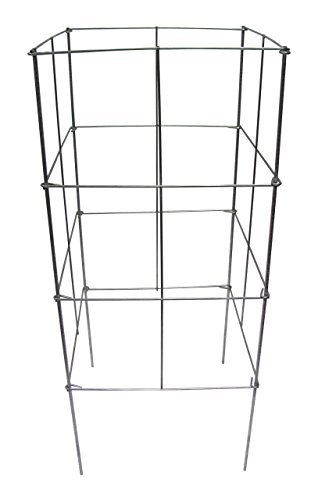
Glamos Wire Products Heavy Duty Tomato Cage
This cone uses noticeably thicker wire than the standard version sold at most garden centers. Galvanizing keeps it rust free through repeated outdoor seasons. Nothing here is new, the classic shape is simply built to a higher gauge. Owners report the same cage still working years later, which is the argument for buying thickness over price.
Pros
- Thick gauge resists bending under a full crop
- Galvanized coating holds up outdoors for years
- No assembly, ready to use out of the box
Cons
- Cone shape does not fold or stack for storage
- Narrow top limits room for a mature, bushy plant

Panacea Products Tomato Cage
Three rings taper up a powder coated steel frame, sold in several heights to match determinate or shorter indeterminate plants. The coating keeps it presentable next to flowers or ornamentals. It sits between flimsy dollar store cones and heavy duty steel. Owners report it suits determinate tomatoes well but flexes under a large sprawling plant.
Pros
- Several heights available for different varieties
- Coated finish looks tidy in visible beds
- Sold widely, easy to find a replacement
Cons
- Not rigid enough for a large indeterminate plant
- Cones do not nest flat for storage

GROWNEER Plant Support Cages
A pack covers several plants at once, matching how most people actually plant a bed rather than buying one cage at a time. Lighter wire keeps cost down and suits peppers and bush tomatoes fine. Rings and legs snap together without tools. Owners report the wire bends once a large indeterminate plant fully loads it.
Pros
- Covers a whole row of plants for one price
- No tools needed for assembly
- Works well for peppers and determinate varieties
Cons
- Bends under a heavy indeterminate crop
- Coating chips at the joints over time

Legigo Tomato Cages for Garden
Sections stack on top of each other, so height grows along with the seedling instead of towering over it from day one. Nesting sections also save shed space over winter. Push fit assembly needs no tools. Owners report the stack joints flex once fruit weighs the plant down, and a cable tie at each joint fixes that.
Pros
- Height increases in stages as the plant grows
- Sections nest together for easy storage
- Push together assembly needs no tools
Cons
- Joints between sections flex under a heavy load
- Extra cable ties needed for a fully secure stack

MTB Garden Tomato Cage
Plain coated wire keeps the price low enough to outfit a whole vegetable bed at once. It suits determinate tomatoes, peppers and flowering perennials rather than a sprawling heirloom vine. Light weight makes it easy to reposition. Owners report it does the job on smaller plants, and that overloading it bends the wire rather than breaking anything else.
Pros
- Cheap enough to buy in bulk for a full bed
- Suits peppers and bush varieties well
- Light weight makes repositioning easy
Cons
- Too light for a mature indeterminate tomato
- Wire stays bent once overloaded
What to look for
Determinate vs indeterminate: which cage do you need? Determinate tomatoes stop growing once they set their crop, capping out at a predictable size. A standard garden cage handles that weight without trouble. Indeterminate varieties keep climbing until frost, often past six feet, and carry far more foliage and fruit. Undersized cages buckle under that load by midsummer. Check the plant tag or seed packet before buying supports, not after the plant outgrows a flimsy cone.
Why wire gauge matters more than cage height Height alone does not predict strength. A tall cage in thin wire simply bends further before it topples. Gauge, the thickness of the wire, is what actually carries the load, and sellers rarely list it clearly. Flex a display model by hand; if it gives easily, a loaded plant in wind will flatten it. Heavier gauge costs more upfront but outlasts several seasons of cheap cones.
How to anchor a cage so wind cannot tip it Most failures are the whole cage tipping over, not the wire itself bending. Push each leg deep into the soil at planting time. On taller cages, drive a stake alongside and tie the cage to it for extra hold. Loose or sandy soil benefits from ground staples or a length of rebar. Install support early, since forcing a cage over a grown plant tears roots and snaps stems.
Storing tomato cages between seasons A rigid cone cage takes up a corner of the shed all winter and snags on everything stored near it. Folding designs and stackable sections solve that problem directly. That convenience is the main reason to pick them over an equally strong fixed cage. Storage space is not an issue for everyone, in which case a heavy galvanized cone left outdoors will still last for years.
The lineup, side by side
| # | Model | Material | Best for | Score | Price |
|---|---|---|---|---|---|
| 1 | K-Brands Tomato Cage Ultimate | Heavy gauge coated steel | Best overall | 9.4 | Check price |
| 2 | Gardener’s Blue Ribbon Ultomato Tomato Plant Cage | Three stakes joined by clip on arms | Best adjustable | 9.2 | Check price |
| 3 | Glamos Wire Products Heavy Duty Tomato Cage | Heavy gauge galvanized wire | Best for durability | 9.0 | Check price |
| 4 | Panacea Products Tomato Cage | Powder coated steel | Best classic design | 8.8 | Check price |
| 5 | GROWNEER Plant Support Cages | Multipacks covering several plants | Best value multipack | 8.5 | Check price |
| 6 | Legigo Tomato Cages for Garden | Stackable sections add height over time | Best for stacking height | 8.2 | Check price |
| 7 | MTB Garden Tomato Cage | Coated steel wire | Best budget | 8.0 | Check price |
Frequently asked questions
What size tomato cage do I actually need?
Determinate tomatoes usually do fine in a cage three to four feet tall. Indeterminate varieties often need five feet or more, plus a stake for extra anchoring. Base width matters too, since a bushy plant needs room to spread rather than being squeezed into a narrow cone.
Are cheap wire cone cages worth buying?
They work fine for peppers, determinate tomatoes and flowering perennials, which is what they were built for. A mature indeterminate tomato will bend the wire and tip the whole cage over. Most complaints trace back to using a light cage on the wrong plant.
When is the best time to put a cage on a tomato plant?
Set it at planting time, or within a week or two while the plant stays small. Forcing a cage over a grown plant means threading branches through rings and disturbing roots. Early support also trains the stem to grow upward from the start.
Tomato cage vs stake, which works better?
Cages need no ongoing attention and suit a plant left to bush out on its own. Stakes cost less and store flat, but need the plant tied in every week or two and usually pruned to one or two stems. Choose a cage for low maintenance, a stake if you already prune.
How do you stop a tomato cage from blowing over?
Push the legs well into the soil at planting time. Drive a separate stake alongside a tall cage and tie the two together. Ground staples help in sandy or loose soil, and grouping cages so they lean on each other adds stability too.
Can tomato cages be used for other plants?
Yes, they suit peppers, eggplants, bush beans and perennials like peonies that flop over once they flower. Lighter multipack cages, built for smaller loads, often fit these plants better than a heavy duty tomato cage does.
Do galvanized tomato cages rust over time?
Galvanizing slows rust considerably but does not stop it forever, especially at cut wire ends or scratches in the coating. Storing cages under cover through winter extends their life. Powder coated cages look neater at first but chip more easily, and rust starts wherever the coating chips.
How many cages does one tomato plant need?
One cage per plant is standard practice. A vigorous indeterminate variety sometimes benefits from a cage plus a nearby stake, or an extra stacked section on a sectional design. Needing two full cages around one plant usually just means the first one was too small.
What is the difference between a tomato cage and a tomato trellis?
A cage surrounds the plant and needs almost no upkeep once it is in place. A trellis relies on tying stems to a flat frame or netting as they grow, which takes more regular attention but suits a narrow space against a fence or wall better than a wide cage would.
The verdict
K-Brands Tomato Cage Ultimate justifies its higher price with heavy gauge steel that survives a loaded indeterminate plant and a folding design that stores flat all winter. Gardener’s Blue Ribbon Ultomato fits a plant that branches unevenly, since its arms move to match real growth. GROWNEER Plant Support Cages cover peppers and determinate varieties across a whole bed for less money.
Sierra Daniels
Sierra's background is in landscape design and nursery retail. She focuses on lawn and garden equipment, outdoor furniture and gear durability, weighing published specs against how materials actually hold up outside.
