Tin Snips for Straight, Left, and Right Metal Cuts
Midwest Snips MWT-6510C covers straight, left, and right cuts in one three-piece kit for most sheet metal jobs. HVAC crews lean on Malco C4R aviation snips for heavy 18-gauge duct work, while Klein Tools 1104 handles long straight cuts with less hand strain.
Cutting sheet metal cleanly starts with matching a snip’s cut direction to the shape you’re cutting. Straight blades handle long runs, and offset left or right snips follow curves without the handle blocking your line. A three-piece aviation set covers most home and light HVAC jobs in one purchase.
Gauge capacity and blade steel vary more between brands than color-coded handles suggest. We compared listed cutting capacity in sheet steel gauge, handle grip material, and leverage ratios against owner feedback on blade dulling over time. Ductwork installers and occasional DIYers end up with different picks as a result.
The best picks, ranked
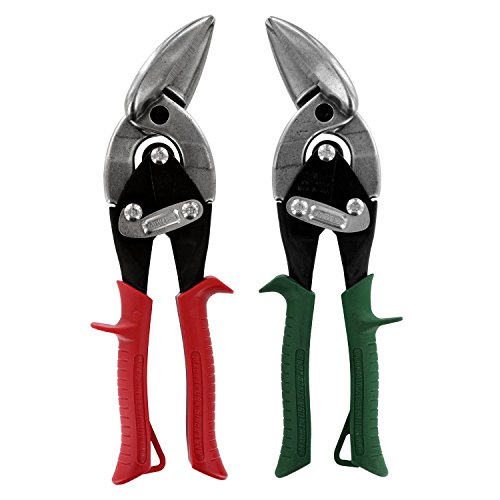
Midwest Snips MWT-6510C 3-Piece Aviation Snip Set
Yellow, red, and green handles mark straight, left, and right blades so grabbing the correct tool takes a glance, not a search. Serrated jaws bite into 18-gauge steel and 24-gauge aluminum without skating off the line. Compound-action pivots multiply hand force, which matters on a full afternoon of cutting.
Pros
- Covers all three cut directions in one purchase
- Serrated jaws resist slipping on the cut line
- Compound leverage cuts hand fatigue on long jobs
Cons
- Carrying case adds bulk versus a single snip
- Blades benefit from light oiling to avoid rust
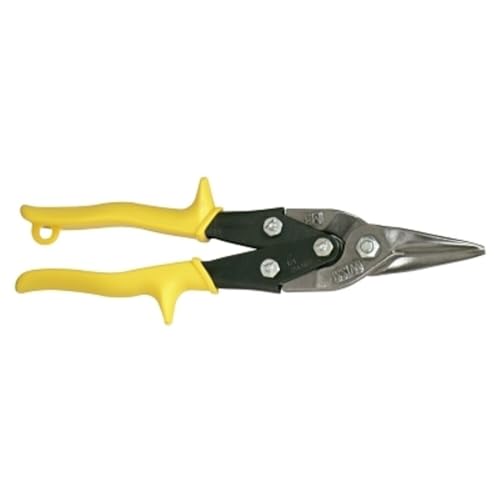
Wiss M3R Metalmaster Compound Action Snips
A right offset blade curves clockwise, matching how most right-handed users naturally swing the tool. Forged alloy steel holds an edge through repeated cuts in flashing and light ductwork. Compound action reduces the squeeze force needed, so curved cuts stay smooth instead of choppy.
Pros
- Smooth curved cuts with less wrist strain
- Forged blade keeps its edge over time
- Compound pivot lowers required squeeze force
Cons
- Only follows right-hand curves, not left
- Struggles on long straight runs

Malco C4R Aviation Snips
HVAC crews run this snip daily on 18-gauge galvanized duct, a thicker material than most flashing jobs. A wide jaw opening clears more metal per stroke than lighter snips manage. Spring-loaded jaws reopen automatically, speeding up repetitive cuts across a full duct run.
Pros
- Rated for daily use on heavier duct gauge
- Spring return speeds up repeated cutting
- Wide jaw clears thick material in fewer passes
Cons
- Adds noticeable weight over a long shift
- Costs more than general-purpose snip sets

IRWIN Vise-Grip 2073114 3-Piece Aviation Snip Set
Three blades cover straight, left, and right cuts at a price below most name-brand sets. Cutting capacity matches pricier snips at up to 18-gauge cold rolled steel. Textured rubber keeps grip secure once hands pick up metal shavings and oil.
Pros
- Full three-direction set at a lower cost
- Matches premium sets on cutting capacity
- Textured grip resists slipping mid-cut
Cons
- Edge dulls sooner under heavy daily use
- Compound action feels stiffer than pricier snips

Klein Tools 1104 Aviation Snip
This snip cuts one direction only, straight, and tracks that line without drifting off course. High-leverage jaws take on 18-gauge cold rolled steel with less squeeze than standard shears need. An ergonomic grip spreads pressure across the palm during long cutting sessions.
Pros
- Tracks straight lines with minimal drift
- Lower squeeze force than standard shears
- Ergonomic grip eases long sessions
Cons
- Cannot follow curved cut lines
- Needs a companion snip for curved work
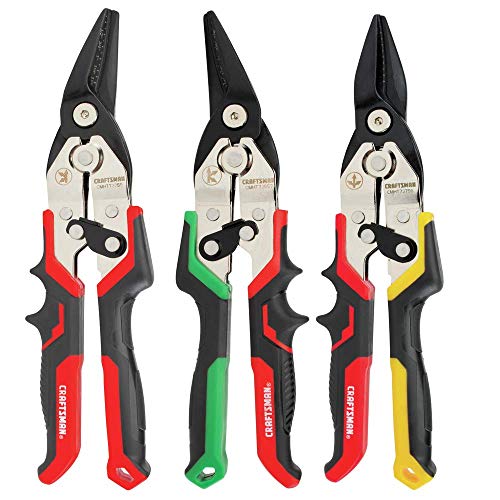
Craftsman CMHT73573 Aviation Snips
Homeowners fixing gutters, flashing, or a single duct patch rarely need a professional’s full kit. A drop-forged blade cuts up to 18-gauge steel at a price built for occasional use. Its compact size tucks into a toolbox drawer alongside other hand tools.
Pros
- Priced for occasional home projects
- Compact enough for a standard toolbox
- Drop-forged blade resists chipping
Cons
- Not built for daily professional cutting
- Single direction limits use on curves

DEWALT DWHT73819 Aviation Snips
Reinforced housing on this snip survives drops onto concrete, a routine hazard on active job sites. Serrated jaws grip 18-gauge steel firmly enough to resist sliding off the cut line. A spring-assisted handle cuts down the manual effort needed to reopen the jaws between cuts.
Pros
- Reinforced housing survives jobsite drops
- Serrated jaws resist slipping off the line
- Spring assist eases repetitive cutting
Cons
- Straight cuts only in this listing
- Housing adds bulk versus lighter snips
How they compare
| # | Model | Blade Material | Best for | Score | Price |
|---|---|---|---|---|---|
| 1 | Midwest Snips MWT-6510C 3-Piece Aviation Snip Set | Chrome molybdenum steel | General sheet metal work needing all three cut directions | 9.4 | Check price |
| 2 | Wiss M3R Metalmaster Compound Action Snips | Forged alloy steel | Right-hand curved cuts on thin gauge metal | 9.2 | Check price |
| 3 | Malco C4R Aviation Snips | High-carbon alloy steel | Heavy-gauge HVAC duct work | 9.1 | Check price |
| 4 | IRWIN Vise-Grip 2073114 3-Piece Aviation Snip Set | Chrome molybdenum steel | Budget-minded shoppers wanting a full set | 8.8 | Check price |
| 5 | Klein Tools 1104 Aviation Snip | Forged alloy steel | Long straight cuts with less hand strain | 8.6 | Check price |
| 6 | Craftsman CMHT73573 Aviation Snips | Drop-forged steel | Occasional home and DIY projects | 8.3 | Check price |
| 7 | DEWALT DWHT73819 Aviation Snips | High-carbon steel | Jobsite durability and drop resistance | 8.0 | Check price |
How to pick the right one
What decides which tin snips to buy Cut direction comes first: straight, left offset, and right offset blades each follow a different path through metal. Blade steel affects edge life, and chrome molybdenum or high-carbon alloys outlast basic stamped steel. Gauge capacity sets the thickest material a snip handles without extra force. Compound-action jaws multiply hand strength, which counts most on longer sessions.
Which tin snips work best for HVAC ductwork Ductwork often runs 18-gauge galvanized steel, thicker than typical flashing or gutter material. Snips built for HVAC, like the Malco C4R, rate their jaws for that gauge without excess hand fatigue. A spring-loaded return speeds up the repetitive cutting a full duct run demands. Offset right-cut blades suit the curved transitions found in duct fittings.
Best tin snips for curved and circular cuts Curved cuts need an offset blade that keeps the handle clear of the material. Left offset snips cut counterclockwise curves, and right offset blades like the Wiss M3R follow clockwise curves more naturally for right-handed users. A three-piece set covers both directions plus straight cuts in one purchase.
Tin snips for occasional home repairs Gutter repair, flashing, or a single ductwork patch rarely calls for professional-grade jaws rated for daily HVAC use. A single straight-cut snip, such as the Craftsman CMHT73573, handles most home jobs at a lower cost than a full three-piece set. Storage size matters more here, since a home toolbox already holds other tools.
Common questions
What is the difference between straight and offset tin snips?
Straight-cut snips track a flat line through metal. Offset left and right snips angle the blade away from the handle so it can follow curves without blocking your view.
Can tin snips cut 18 gauge steel?
Most aviation snip sets, including the Midwest Snips MWT-6510C and Malco C4R, list a maximum capacity of 18-gauge cold rolled or galvanized steel.
How do I know if I need left or right cut snips?
Right-hand curves, moving clockwise, generally cut better with right offset (green handle) snips. Left-hand curves suit left offset (red handle) blades, and a three-piece set covers both plus straight cuts.
Are aviation snips the same thing as tin snips?
Aviation snips are a compound-leverage style of tin snip, originally built for cutting aircraft sheet metal. People use both terms interchangeably for hand-held metal shears today.
What gauge of metal can a DIYer cut by hand?
Consumer-grade snips handle up to 18-gauge steel or lighter aluminum without much strain. Thicker material usually calls for power shears instead.
Do tin snips work on stainless steel?
Some models, like the Wiss M3R, list a lighter capacity for stainless steel, often around 24 gauge, since stainless resists cutting more than mild steel.
How often do tin snip blades need sharpening?
Frequency depends on use, though forged alloy and chrome molybdenum blades generally hold an edge longer than basic stamped steel.
Is a compound-action snip worth the extra cost?
For anyone cutting metal regularly, yes. Compound leverage lowers the hand force needed per cut, which matters most on longer runs or thicker gauge material.
Which tin snips are best for HVAC work?
Malco C4R aviation snips are built for daily duct work, rating jaws for 18-gauge galvanized steel with a spring-loaded return for repetitive cuts.
What size snip set should a beginner buy?
A three-piece set like the Midwest Snips MWT-6510C or IRWIN 2073114 covers straight and curved cuts, so a beginner isn’t stuck without the right blade.
Our pick
Cut direction matters more than brand name when picking tin snips. A three-piece set like the Midwest Snips MWT-6510C covers straight and curved cuts for most household and light HVAC jobs. Daily duct work favors the heavier capacity of the Malco C4R, while occasional home repairs suit a single straight-cut snip like the Craftsman CMHT73573.
Jake Monroe
Jake worked as a residential contractor for over a decade before shifting to full-time writing. He evaluates power tools, hand tools and workshop gear through the lens of someone who has actually used them on job sites, not just read the box.


