How to Pick a Tie Rod End That Won’t Fail Early
Moog Problem Solver leads this comparison for its greaseable stud and hardened bearing. Mevotech Supreme suits high-mileage vehicles chasing durability without the premium cost. ACDelco Professional wins when factory-matched fitment matters most, since its design mirrors the original equipment part exactly.
Moog Problem Solver earns the top spot here, built around a greaseable stud and a bearing that compensates for wear. For high-mileage repairs, Mevotech Supreme delivers similar durability at a lower cost. Need exact factory fitment instead? ACDelco Professional matches the original equipment design closely.
Tie rod ends look interchangeable in a product listing, but a sealed joint and a greaseable one age very differently under road grit and winter salt. We compared published bearing designs, boot materials and thread accuracy, then weighed owner reports of premature knocking, torn boots and mismatched thread pitch before ranking these seven.
The shortlist, ranked

Moog Problem Solver Tie Rod End
Independent shops recommend Moog’s Problem Solver line most often, for mechanical reasons rather than brand loyalty. A grease fitting lets you flush grit out of the joint at every service interval, and the powdered metal bearing compensates for wear instead of developing play right away. Owners frequently report it outlasting the original equipment part it replaced.
Pros
- Serviceable with a grease gun at every oil change
- Bearing design compensates for wear over time
- Covers a wide range of makes and models
Cons
- Priced above economy replacement lines
- Durability advantage depends on routine greasing

Mevotech Supreme Tie Rod End
Mevotech built its Supreme line for vehicles already past their factory service life. Bearing surfaces run larger than stock, and studs are stronger than the parts they replace. A grease fitting keeps the joint serviceable rather than disposable, closing much of the gap to premium brands at a lower cost.
Pros
- Oversized bearing surfaces resist wear longer
- Grease fitting supports long-term servicing
- Close to premium durability at lower cost
Cons
- Coverage thins out on newer model years
- Boot material feels less robust than Moog’s

ACDelco Professional Tie Rod End
ACDelco Professional mirrors the tie rod end General Motors installed at the factory, without a dealer parts counter markup. Thread pitch and taper match closely, which is exactly where cheap universal listings tend to fail. Many units ship sealed rather than greaseable, so plan to replace rather than service them.
Pros
- Fitment matches factory specification closely
- Consistent manufacturing quality control
- Stocked widely at auto parts retailers
Cons
- Sealed versions cannot be regreased
- Thinner coverage for imported vehicles
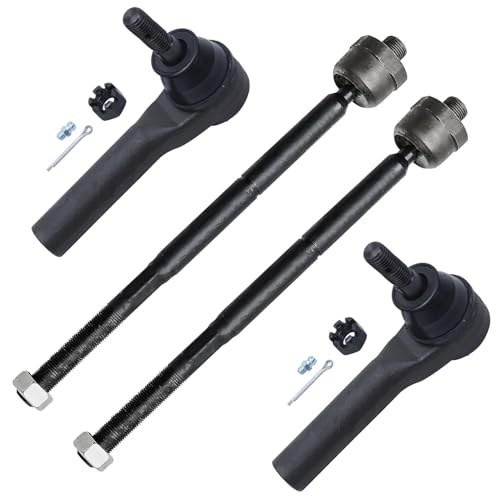
Detroit Axle Front Outer Tie Rod End Kit
Detroit Axle sells these as matched pairs or full front end kits, which suits how tie rod ends typically fail together. Quality sits below premium lines, and most joints are sealed rather than greaseable. Hardware ships in the box, and fitment is accurate when you order by vehicle.
Pros
- Pairs and kits lower the cost per corner
- Castle nuts and cotter pins included
- Practical choice for high-mileage daily drivers
Cons
- Not serviceable once installed
- Shorter expected service life than premium brands
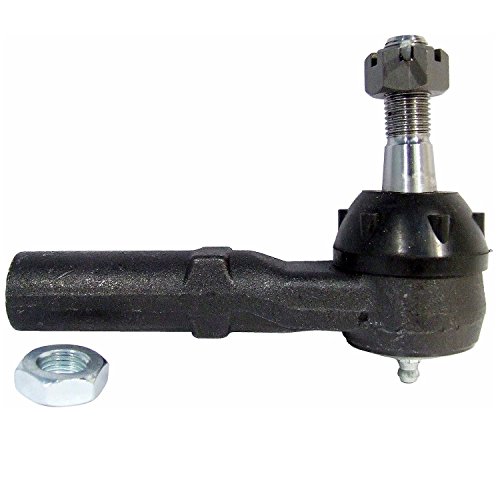
Delphi Steering Tie Rod End
Delphi supplies steering and suspension parts to several manufacturers, so many European and some Asian vehicles get the same part the factory used. Boot quality stands out here, and a torn boot is the most common early failure point on any tie rod end. Application coverage runs narrower than the big aftermarket catalogs, so check the fitment list first.
Pros
- Often the identical part fitted at the factory
- Durable boot resists splitting under road grit
- Accurate taper and thread dimensions
Cons
- Application list is narrower than mass-market brands
- Sealed design rules out regreasing

Proforged Tie Rod End
Proforged builds its joints with forged housings and larger diameter studs for pickups, off road rigs and anything hauling regular weight. Every unit ships greaseable. Extra material can make some parts a tighter fit in the knuckle, so allow more time for installation.
Pros
- Forged construction handles heavy axle loads
- Greaseable across the entire lineup
- Holds alignment settings under repeated stress
Cons
- Tighter fit can slow down installation
- More capacity than a light passenger car needs

Dorman Steering Tie Rod End
Catalog breadth is Dorman’s real strength, covering older or less common vehicles premium brands have dropped. Quality suits normal road use rather than heavy duty demands, and most units ship sealed. Reach for it when the part you need is not otherwise available for your vehicle.
Pros
- Lists applications other brands have discontinued
- Reasonable cost for everyday road use
- Easy to source without a long wait
Cons
- Not built for towing or heavy duty use
- Owner reports of inconsistent boot longevity
Compared at a glance
| # | Model | Bearing type | Best for | Score | Price |
|---|---|---|---|---|---|
| 1 | Moog Problem Solver Tie Rod End | Powdered metal, gusher design | Best overall | 9.4 | Check price |
| 2 | Mevotech Supreme Tie Rod End | Metal to metal, oversized | Best value | 9.2 | Check price |
| 3 | ACDelco Professional Tie Rod End | Original equipment style | Best for original equipment fit | 9.0 | Check price |
| 4 | Detroit Axle Front Outer Tie Rod End Kit | Matched pair or front end kit | Best budget kit | 8.8 | Check price |
| 5 | Delphi Steering Tie Rod End | Original equipment supplier part | Best for European vehicles | 8.6 | Check price |
| 6 | Proforged Tie Rod End | Forged steel | Best for trucks and towing | 8.3 | Check price |
| 7 | Dorman Steering Tie Rod End | Very broad, including older models | Best for hard to find applications | 8.0 | Check price |
Before you buy
How to tell a tie rod end is actually worn Vague or wandering steering is the classic symptom, often paired with a clunk over bumps. One front tire showing feathered tread wear points the same direction. Lift the wheel off the ground, then rock the tire at three and nine o’clock; noticeable play confirms the diagnosis. A split or weeping boot counts as failure on its own, since the grease has already escaped.
Greaseable vs sealed: which tie rod end lasts longer A zerk fitting on greaseable joints lets you push fresh grease through and force contaminants out. That only helps if you actually use a grease gun regularly. Sealed joints arrive packed at the factory and hold up well until the boot splits, then wear accelerates fast. Pick based on how you maintain the vehicle, not on price alone.
Inner vs outer tie rod ends: which one is loose Outer tie rod ends thread into the steering knuckle, and most DIY replacements target this joint. Inner tie rods sit inside the rack as a socket, usually requiring a specific removal tool. Play traced to the rack end will not be fixed by swapping the outer joint. Confirm which joint is loose before ordering parts.
Why an alignment matters after replacing a tie rod end Toe angle changes the moment a tie rod end is threaded in or out. Counting turns during removal gets the new part close enough to drive to a shop safely. That is not a substitute for a proper four wheel alignment. Skipping it chews through a new front tire within a few thousand miles.
Questions worth asking
How long do tie rod ends typically last?
Most last well past 100,000 miles on smooth, dry roads. Rough roads and salted winters cut that figure considerably. Boot condition drives most of the variance. Once a boot splits and grease escapes, failure often follows within a year.
Should tie rod ends be replaced in pairs?
Shops commonly recommend it, since both sides see identical mileage and road conditions. If one side failed, the other is usually not far behind. Replacing both together also means one alignment covers the whole repair instead of two.
Is it safe to drive with a worn tie rod end?
Not for long. Sloppy steering signals wear, and full separation means losing steering control on that wheel entirely. Treat noticeable play or a clunking noise as an urgent repair, not something to monitor.
Can I replace a tie rod end myself?
It is a moderate DIY job requiring jack stands, a torque wrench and usually a tie rod separator. Breaking the tapered stud loose is the hardest part. Setting thread depth correctly matters too. Book a professional alignment afterward even if you handle the mechanical work solo.
What does a bad tie rod end sound like?
Owners typically describe a knock or clunk from the front end over bumps or during low speed turns. A dry joint sometimes adds a squeak. Distinguishing it from a worn ball joint or sway bar link by sound alone is difficult, so confirm with a physical inspection.
Do greaseable tie rod ends actually last longer than sealed ones?
They can, but only with regular greasing. A grease fitting purges dirt and moisture from the joint on schedule. Left ungreased, a greaseable design offers no real advantage and can even let contamination in through the fitting.
Will new tie rod ends fix uneven tire wear?
They remove the cause, but only a wheel alignment corrects the geometry that caused the wear. Tire tread that is already feathered or scalloped will stay noisy even after the repair. Budget for tire replacement if the damage is severe.
Which specs determine the correct tie rod end for my car?
Order by year, make, model, engine and drivetrain rather than by a part number found online. Confirm whether you need the inner or outer joint. Four wheel drive and two wheel drive versions of the same model often use different parts entirely.
The bottom line
Moog Problem Solver remains the strongest pick for anyone keeping a vehicle long term, since its greaseable design lets you maintain the joint instead of waiting for failure. Mevotech Supreme is the smarter buy for a high mileage car you want to keep running without the premium price tag. Choose ACDelco Professional when exact factory fitment matters more than serviceability.
Tony Russo
Tony trained as an automotive technician and spent years in service and parts retail before moving into writing. He focuses on garage tools, car care products and accessories from a hands-on maintenance perspective.


