Tents for Weekend Camping and Backcountry Treks
The Coleman Sundome 4-Person Tent leads this list for quick, affordable car camping setup. The NEMO Dagger Osmo 2P wins for ultralight backpacking, while the Core Equipment 9-Person Instant Cabin fits large groups needing standing room.
The Coleman Sundome 4-Person Tent tops this list for most car campers, setting up in minutes with a simple two-pole design at an affordable price. It suits weekend trips and car camping, though its partial rainfly offers less storm coverage than premium backpacking tents.
We compared weight, capacity, wall construction, and setup style across car-camping and backpacking tents. Owner feedback on weather protection, durability, and ease of setup filled gaps the spec sheets leave out. Group size and how far you carry the tent change which option fits best.
What to look for
What weight and wall construction affect Weight matters most once a tent leaves the car trunk and goes on a back. Double-wall construction, separating the tent body from the rainfly, reduces condensation better than single-wall designs. Capacity ratings assume a tight fit, so most campers size up one person from the stated number for real comfort.
Freestanding dome vs instant cabin tents Freestanding dome tents pitch with crossing poles and work on most surfaces without staking. Instant cabin tents use pre-attached poles that unfold into shape in minutes, trading some weight for setup speed. Backpacking tents prioritize low weight and compact pack size over either of those conveniences.
Best for large groups and family camping Groups beyond four people benefit from a cabin-style tent with near-vertical walls and real standing height. Room dividers, like Core Equipment includes, add privacy when sharing one large tent. These tents trade portability entirely for interior space and comfort.
Best for backpacking and trail use Backpacking tents prioritize weight under five pounds and a compact packed size over interior space. Double-wall construction and quality rainfly coverage matter more here, since backpackers camp in more exposed, unpredictable weather. Ultralight fabrics like NEMO’s Osmo blend cut weight without sacrificing waterproofing.
The best picks, ranked

Coleman Sundome 4-Person Tent
Coleman’s Sundome uses a simple two-pole dome design that two people can pitch in under ten minutes. A rainfly covers the top seams, though it does not extend to a full vestibule like premium backpacking tents. The 9 pound weight suits car camping more than carrying it on a trail.
Pros
- Simple two-pole design sets up quickly without much practice
- Affordable price point for a reliable 4-person family tent
- Removable rainfly adds weather protection over mesh panels
Cons
- Heavier than tents designed for backpacking
- Partial rainfly coverage offers less storm protection than full-coverage designs

Marmot Tungsten 2P
Marmot’s double-wall design separates the tent body from the rainfly, reducing condensation buildup compared to single-wall tents. Color-coded poles speed up setup for solo backpackers pitching camp after dark. The 3-season rating means it is not built for sustained heavy snow loads.
Pros
- Double-wall construction reduces condensation inside the tent
- Color-coded poles simplify setup, even in low light
- Reasonable weight for a durable 3-season backpacking tent
Cons
- Not rated for sustained heavy snow loads
- Costs more than basic car-camping dome tents

NEMO Dagger Osmo 2P
NEMO uses its Osmo fabric blend to cut weight while skipping the PFAS waterproofing chemicals older tent fabrics relied on. Dual doors and vestibules let two hikers exit without crawling over each other. The lighter fabric trades a bit of raw durability for the weight savings thru-hikers want.
Pros
- Lightweight build suits thru-hiking and multi-day backpacking trips
- Dual doors and vestibules improve livability for two people
- PFAS-free waterproofing avoids older harmful chemical treatments
Cons
- Lighter fabric trades some durability for weight savings
- Costs more than heavier backpacking tents with similar capacity
Kelty Discovery Element 4
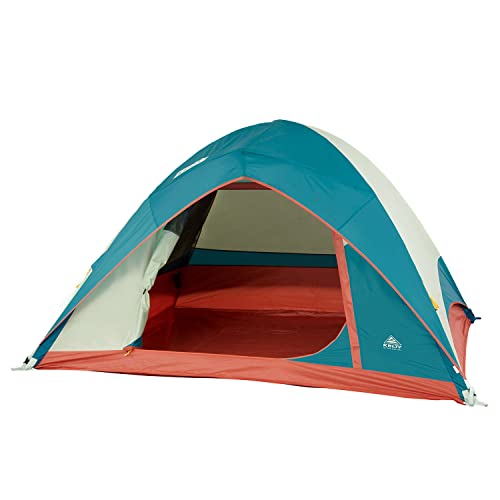
Kelty keeps the Discovery Element simple and affordable, aimed at families trying camping without a big upfront investment. Color-coded poles and clips speed up setup compared to sleeve-style tents. Fabric and zippers trail premium tents in long-term durability under frequent use.
Pros
- Affordable price point lowers the barrier for new camping families
- Color-coded pole system simplifies setup for beginners
- Reasonable interior space for a 4-person budget tent
Cons
- Fabric and zippers trail premium tents in long-term durability
- Rainfly coverage is more basic than higher-end family tents
Core Equipment 9-Person Instant Cabin Tent
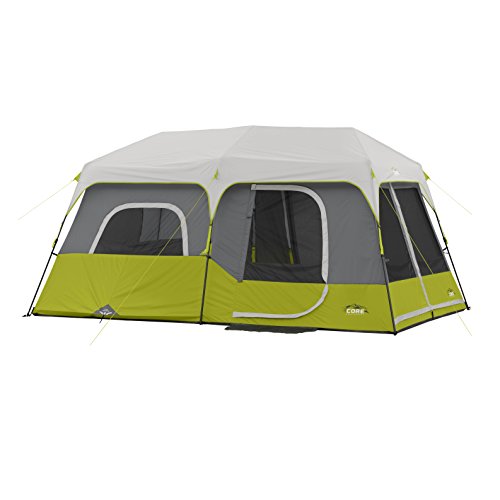
Core Equipment pre-attaches the poles to the tent body, so setup takes roughly two minutes without separately assembling pole sections. A center height near 6.5 feet lets most adults stand upright inside. The large footprint needs a correspondingly large, flat campsite to pitch properly.
Pros
- Pre-attached poles allow setup in about two minutes
- Standing height center fits most adults without stooping
- Included room divider adds privacy for larger groups or families
Cons
- Large footprint requires a correspondingly large, flat campsite
- Heavier and bulkier than tents built for smaller groups

ALPS Mountaineering Lynx 2-Person
ALPS Mountaineering prices the Lynx below most name-brand backpacking tents while keeping reasonably durable materials. A single door and vestibule cover basic storage needs for boots and packs. The simpler design skips some of the livability touches pricier two-door tents include.
Pros
- Lower price than most 3-season backpacking tents of similar weight
- Reasonably durable materials for the price point
- Compact packed size suits backpacking without excess bulk
Cons
- Single door design is less convenient than dual-door tents
- Fewer livability features than premium backpacking tents

Coleman Skydome 6-Person
Coleman angles the Skydome’s walls closer to vertical than a typical dome, which adds usable headroom and floor space for the stated capacity. An integrated LED lighting system lines the ceiling for hands-free light at night. The near-vertical wall design adds some weight over a standard dome shape.
Pros
- Near-vertical walls add usable headroom compared to standard dome tents
- Integrated LED lighting system removes the need for a hanging lantern
- Spacious interior suits families or small groups car camping
Cons
- Heavier than standard dome tents of similar capacity
- Size and weight make it impractical for backpacking
Compared at a glance
| # | Model | Capacity | Best for | Score | Price |
|---|---|---|---|---|---|
| 1 | Coleman Sundome 4-Person Tent | 4-person | Best overall for car camping | 9.1 | Check price |
| 2 | Marmot Tungsten 2P | 2-person | Best for 3-season backpacking durability | 9.0 | Check price |
| 3 | NEMO Dagger Osmo 2P | 2-person | Best for ultralight backpacking | 9.2 | Check price |
| 4 | Kelty Discovery Element 4 | 4-person | Best value family tent | 8.7 | Check price |
| 5 | Core Equipment 9-Person Instant Cabin Tent | 9-person | Best for large groups | 8.8 | Check price |
| 6 | ALPS Mountaineering Lynx 2-Person | 2-person | Best budget backpacking tent | 8.6 | Check price |
| 7 | Coleman Skydome 6-Person | 6-person | Best for headroom and family comfort | 8.9 | Check price |
Common questions
What does a 3-season tent rating mean?
A 3-season tent is built for spring, summer, and fall conditions, not sustained heavy snow loads. 4-season tents add reinforced poles and fabric for winter mountaineering.
How much should a backpacking tent weigh?
Most backpacking tents for two people weigh between 3 and 5 pounds. Ultralight options can weigh less, usually trading some durability or livability for that weight.
What tent capacity should I actually buy for two people?
A tent rated for 2 people often fits snugly with just sleeping pads and minimal gear. Many backpackers size up to a 3-person tent for more comfortable room.
Do instant cabin tents hold up as well as traditional tents?
Instant tents trade some weight savings and packed size for fast setup, but quality varies by brand. Reputable brands build instant tents durable enough for regular car camping.
How do I prevent condensation inside a tent?
Double-wall construction with proper rainfly ventilation reduces condensation significantly. Cracking vents or doors slightly, weather permitting, also helps air circulate.
What is the difference between a freestanding and non-freestanding tent?
A freestanding tent holds its shape with poles alone, without needing stakes. Non-freestanding tents rely on guylines and stakes for structure, which usually saves weight.
How long does it take to set up a family camping tent?
Dome-style family tents typically set up in 10 to 15 minutes for two people. Instant cabin tents can set up in as little as two to five minutes.
Can backpacking tents handle heavy rain?
Quality 3-season backpacking tents with a full-coverage rainfly handle sustained rain well. Checking the fly’s coverage and seam sealing matters more than the tent’s overall price.
What size tent do I need for a family of four?
A tent rated for 4 to 6 people usually gives a family of four comfortable room for gear and movement. Sizing up from the exact headcount avoids a cramped feel.
How do I keep a tent floor from getting damaged on rocky ground?
A ground tarp or footprint sized slightly smaller than the tent floor protects against punctures and abrasion. Clearing obvious rocks and sticks before pitching also helps.
Our pick
The Coleman Sundome 4-Person Tent is the strongest overall pick for weekend car camping, balancing quick setup with a price that suits occasional use. Backpackers covering serious trail mileage should choose the NEMO Dagger Osmo 2P instead, since its lighter weight and PFAS-free fabric fit multi-day trips the Sundome’s bulk was never built for.
Sierra Daniels
Sierra's background is in landscape design and nursery retail. She focuses on lawn and garden equipment, outdoor furniture and gear durability, weighing published specs against how materials actually hold up outside.