How to Heat a Tent Safely Without Carbon Monoxide Risk
Mr. Heater’s MH9BX Buddy leads this roundup, pairing an oxygen depletion sensor with a tip over switch and enough output for a mid size tent. The MH18B Big Buddy scales up for large tents and canvas shelters. At a powered site, the Dr. Infrared DR-968 removes carbon monoxide risk entirely.
Seven tent heaters make this list, chosen for real safety documentation as much as warmth. Mr. Heater’s Buddy MH9BX suits most campers first, the Big Buddy MH18B handles large or canvas tents, and the Lasko MyHeat fits a powered site with minimal draw.
Fuel burning heaters produce carbon monoxide, and a sealed tent gives that gas nowhere to escape, so this category punishes bad choices more than most gear categories. We compared rated BTU or wattage, documented safety cutouts such as oxygen depletion sensors and tip over switches, fuel type and availability, and whether each manufacturer states the unit is rated for enclosed spaces. Specifications came from manufacturer listings and safety documentation rather than marketing copy.
What to look for
Why is heating a tent dangerous Propane, butane and catalytic heaters all burn fuel, and burning fuel consumes oxygen while releasing carbon monoxide. A sealed tent traps that gas instead of letting it disperse. Campers die from carbon monoxide poisoning most winters, often without waking up. Carry a battery powered carbon monoxide alarm and place it at head height where you sleep. Keep vents open at both low and high points, and never leave a fuel burning heater running unattended overnight.
Which safety features actually matter An oxygen depletion sensor cuts fuel flow once oxygen in the air drops below a safe threshold. A tip over switch does the same the instant the unit is knocked on its side. Both were engineered specifically for enclosed spaces, unlike open camp stove burners. Check manufacturer documentation directly, since marketplace listings sometimes omit which safety mechanisms a model actually carries.
How much BTU or wattage does your tent need A two person backpacking tent rarely needs more than 4,000 BTU once closed up. Mid size family tents run comfortably on 9,000 BTU. Large canvas or wall tents call for 18,000 BTU or a heater built for that range. Oversizing wastes fuel and adds unnecessary moisture from combustion.
Propane or electric: which is better at a campsite Campgrounds with electrical hookups let an electric heater remove carbon monoxide risk entirely, since there is no combustion. Amperage limits still apply, and a 1,500 watt unit can trip a weak pedestal. Backcountry or dispersed camping without power leaves propane as the practical option, provided the model carries an oxygen depletion sensor. Portable power stations can run small electric heaters, but heating drains a battery faster than almost any other camp device.
The shortlist, ranked
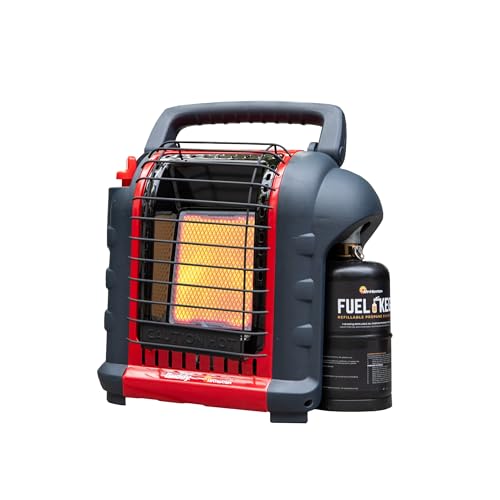
Mr. Heater MH9BX Buddy Portable Propane Heater
Safety cutouts set the Buddy apart from generic propane burners: an oxygen depletion sensor shuts fuel flow as oxygen falls, and a tip over switch cuts power if the unit is knocked. Two output settings, 4,000 and 9,000 BTU, cover a mid size tent through most three season nights. Ventilation and a carbon monoxide alarm are still required, and Mr. Heater states that directly in the manual.
Pros
- Oxygen depletion sensor and tip over cutout come standard
- Two settings suit mild and cold nights
- Runs from small cylinders or a hose to a larger tank
Cons
- Still requires ventilation and a carbon monoxide alarm
- High setting burns through a one pound cylinder quickly
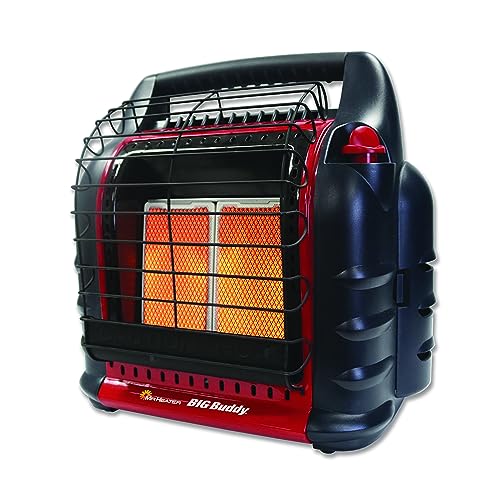
Mr. Heater MH18B Big Buddy Portable Propane Heater
Two cylinders and a third output level give the Big Buddy enough range for a large family tent or canvas wall tent. A battery powered fan spreads heat instead of radiating it in one direction. Extra height and weight make it a car camping item, and the same ventilation rules from the Buddy still apply.
Pros
- Highest output among the propane models here
- Fan circulates heat rather than radiating it one way
- Two cylinders extend run time
Cons
- Bulky and heavy for backpacking
- Fan depends on batteries to run

Mr. Heater MH4B Little Buddy Portable Propane Heater
Screwing directly onto a one pound cylinder, the Little Buddy is the smallest and simplest propane option here. Single setting output of 3,800 BTU suits a backpacking tent or two person dome rather than a family shelter. Oxygen depletion sensor and tip over shut off carry over from the larger Buddy models, unlike unregulated camp burners.
Pros
- Smallest propane heater with full safety cutouts
- Single knob keeps operation simple
- One cylinder lasts several hours of runtime
Cons
- No adjustment beyond the single output level
- Sits high on the cylinder, easy to tip

Camco Olympian Wave-3 Catalytic Heater
Catalytic reaction produces heat without a visible flame, so the Wave-3 runs silently compared with radiant propane heaters. Wall mounting or an optional stand keeps it off the tent floor, and it draws propane through a hose connection rather than a screw on cylinder. Manufacturer ventilation guidance is strict here, and the required fresh air opening should stay open the entire time it runs.
Pros
- Runs silently with no fan or flame noise
- Adjustable output from 1,600 to 3,000 BTU
- Efficient propane use for the heat produced
Cons
- Fresh air opening must stay clear at all times
- Needs a hose and external tank, not screw on cylinders
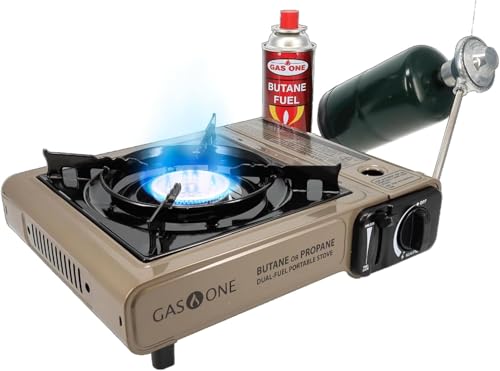
Campy Gear Chubby 2 in 1 Portable Propane Heater and Stove
Combining a heater and a stove burner in one unit saves pack space on trips where every item has to earn its place. Standard one pound propane cylinders power the Chubby, and a tip over shut off is built in. Output near 9,000 BTU takes the chill off a small tent rather than heating a large shelter.
Pros
- Doubles as a cooking stove burner
- Compact size relative to its output
- Uses widely available one pound cylinders
Cons
- No oxygen depletion sensor, unlike the Mr. Heater lineup
- Modest output for tents larger than a two person shelter

Dr. Infrared Heater DR-968 Portable Space Heater
Electrical hookups remove carbon monoxide from the equation entirely, since the DR-968 burns no fuel. Infrared quartz elements pair with a thermostat and remote control, and output covers a large tent on a shore power connection. Amperage limits matter here: a 1,500 watt draw trips weaker campsite pedestals.
Pros
- No combustion, so no carbon monoxide risk
- Thermostat holds a set temperature automatically
- Tip over and overheat protection with a cool touch housing
Cons
- Requires a mains hookup with adequate amperage
- Larger and heavier than the propane options here

Lasko MyHeat Personal Ceramic Heater
Only 200 watts flow through the MyHeat, low enough to avoid tripping a marginal hookup or draining a portable power station in an hour. Warmth radiates immediately around the unit rather than filling a whole tent, which suits a camp chair or the foot of a sleeping bag. Ceramic element and cool touch housing keep burn risk low.
Pros
- Low power draw suits weak hookups and power stations
- No combustion keeps carbon monoxide risk at zero
- Small enough to pack in any corner of a bag
Cons
- Warms a person, not a whole tent
- Still needs mains power or a sizable power station
The lineup, side by side
| # | Model | Output | Best for | Score | Price |
|---|---|---|---|---|---|
| 1 | Mr. Heater MH9BX Buddy Portable Propane Heater | 4,000 and 9,000 BTU settings | Best overall | 9.4 | Check price |
| 2 | Mr. Heater MH18B Big Buddy Portable Propane Heater | 4,000, 9,000 and 18,000 BTU settings | Best for large tents | 9.2 | Check price |
| 3 | Mr. Heater MH4B Little Buddy Portable Propane Heater | 3,800 BTU single setting | Best compact | 9.0 | Check price |
| 4 | Camco Olympian Wave-3 Catalytic Heater | 1,600 to 3,000 BTU adjustable | Best for quiet running | 8.8 | Check price |
| 5 | Campy Gear Chubby 2 in 1 Portable Propane Heater and Stove | Around 9,000 BTU | Best dual purpose | 8.6 | Check price |
| 6 | Dr. Infrared Heater DR-968 Portable Space Heater | 1,500 watts | Best for powered sites | 8.3 | Check price |
| 7 | Lasko MyHeat Personal Ceramic Heater | 200 watts | Best low power option | 8.0 | Check price |
Common questions
Is it safe to use a heater inside a tent?
Only with the right equipment and precautions in place. Choose a heater the manufacturer rates for enclosed spaces, keep vents open at both low and high points, and run a battery powered carbon monoxide alarm. Never sleep with a fuel burning heater still running. Electric models at a powered site avoid carbon monoxide entirely.
What does an oxygen depletion sensor do?
It monitors oxygen concentration in the surrounding air and shuts off fuel flow once levels drop too low. Falling oxygen usually signals inadequate ventilation before it becomes dangerous. Consider it a minimum requirement on any propane heater built for enclosed use. It does not replace a separate carbon monoxide alarm.
How many BTU does a tent heater need?
Around 4,000 BTU suits a small two person tent. A mid size family tent runs well on roughly 9,000 BTU. Large canvas or wall tents typically need 18,000 BTU or more. Wind, insulation and outside temperature all shift these numbers, since tent fabric holds heat poorly compared to a building.
Can you run a propane heater overnight in a tent?
Manufacturers and camping safety groups advise against it. Warming the tent before bed, then switching the heater off, is the common approach. A properly rated sleeping bag and insulated pad carry you through the cold hours instead. Running any fuel burning heater unattended while asleep raises carbon monoxide risk.
Do propane tent heaters cause condensation?
Yes, burning propane releases water vapor along with heat. A closed tent traps that moisture, and it condenses back onto gear and fabric. Ventilation reduces the effect, as does shutting the heater off before sleep. Electric heaters add no moisture to the air.
Are catalytic heaters safer than propane radiant heaters?
Catalytic models burn flamelessly, which lowers fire risk and noise. Oxygen consumption and combustion byproducts still apply, since the reaction still burns fuel. Manufacturers specify a minimum fresh air opening that must stay clear the entire time the unit runs. Ventilation requirements matter just as much as with a radiant propane heater.
Can an electric tent heater run on a portable power station?
Technically yes, provided the inverter can supply the wattage the heater draws. Heating drains battery capacity faster than almost any other device you would pack. A 1,500 watt heater can empty a mid size power station within an hour. Lower wattage personal heaters, closer to 200 watts, are far more realistic on battery power.
What is the safest way to heat a tent?
Reducing the need for heat comes first: a cold rated sleeping bag, insulated pad and warm layers cut demand before a heater ever runs. Electric heaters at a powered site carry the lowest risk, since there is no combustion. Propane heaters with an oxygen depletion sensor, tip over switch and steady ventilation rank next. Skipping the safety features to save money is where camping heater accidents start.
The verdict
Mr. Heater’s MH9BX Buddy remains the pick most campers should start with, combining useful output with an oxygen depletion sensor and tip over cutout. Large or canvas tents call for the extra range of the Big Buddy MH18B instead. Where mains power is available, an electric heater like the DR-968 removes carbon monoxide risk from the trip entirely.
Sierra Daniels
Sierra's background is in landscape design and nursery retail. She focuses on lawn and garden equipment, outdoor furniture and gear durability, weighing published specs against how materials actually hold up outside.


