Which task chair suits an eight hour desk day?
Steelcase Series 1 leads for full time desk work, combining a flexing LiveBack shell with a 400 pound rating. Branch Ergonomic Chair reaches similar posture using seven labelled adjustments. Shared offices are better served by HON Ignition 2.0, whose contract grade parts tolerate constant readjustment.
Steelcase Series 1 fits anyone logging six hours or more at a desk. Its back shell changes shape as you lean, and the frame is rated to 400 pounds. Armrests travel less in width than on the pricier Leap, so broad shoulders may sit cramped.
Product pages rarely publish the numbers that predict comfort. We compared seat height ranges, back tension systems, armrest axes, weight ratings and warranty terms across seven models. Owner reports on foam flattening, caster drag on carpet and gas cylinder sag decided the close calls.
How to pick the right one
What to look for in a task chair Seat height range decides fit before anything else. A chair that will not drop below 17 inches leaves shorter users dangling, and one capped at 20 inches cramps tall ones. Check the weight rating against your body weight plus the load you put through the arms. Armrest axes come next: height only arms force shrugged typing, while 4D arms swing inward toward the keyboard. Warranty length is the cheapest reliability signal available, since brands covering cylinders for a decade rarely fit thin ones.
Mesh vs foam: which back suits your room Mesh moves air, which matters in a south facing office or any room that runs warm. Foam spreads pressure more evenly for people who sit still for hours. Hybrids split the difference, like the mesh back and foam seat on HON Ignition 2.0. Judge the seat pan separately from the back, though. Mesh pans leave a firm front edge under the thighs, a complaint several Duramont owners repeat after four hour stretches.
Best task chairs for small home offices Herman Miller Sayl belongs here because an unframed back reads as furniture, not office equipment. Depth of 24.5 inches lets it tuck under a wall desk without blocking a doorway. For a bedroom corner where the chair gets pushed aside after work, Amazon Basics Mesh Mid-Back does the job. Caster spread decides how close you can park in an alcove, so measure the base rather than the seat. Colour choice matters more than buyers expect once a chair lives in a shared room.
Chairs for heavier users and long shifts Weight rating filters this group fast. Steelcase Series 1 carries 400 pounds and Herman Miller Sayl 350, while Branch stops at 275. Past eight hours, seat depth and recline tension matter more than a headrest, because thigh pressure generates more complaints than neck fatigue. Anyone alternating with a standing desk should confirm the cylinder lever falls under the hand without looking. Order carpet casters up front if your floor has thick pile, since stock hard floor wheels drag.
The top picks, ranked

Steelcase Series 1 Office Chair
Series 1 is built around a LiveBack shell that changes shape as you lean, holding lumbar contact through both typing and reclining. Seat height spans 16 to 21 inches, covering most adults without a footrest. Steelcase backs the frame, cylinder and fabric for 12 years.
Pros
- Back shell tracks spine movement
- 16 to 21 inch range fits short and tall users
- 12 year warranty includes the gas cylinder
Cons
- Armrests travel less in width than rivals
- Base assembly is awkward for one person
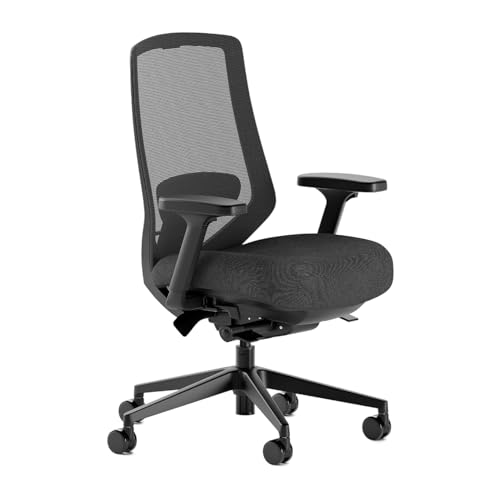
Branch Ergonomic Chair
Seven adjustment points sit behind clearly labelled levers, which helps anyone who never opens the manual. A mesh back moves air better than a padded shell in a warm room. Rated to 275 pounds, it aims at average frames rather than heavy users.
Pros
- Levers are labelled and within reach
- Mesh back stays cool through summer
- Arrives mostly preassembled
Cons
- 275 lb rating is the second lowest here
- Seat pan depth does not adjust

HON Ignition 2.0 Mesh Task Chair
HON sells Ignition 2.0 into contract furniture, so its parts tolerate being readjusted by a different person every day. Lumbar support slides vertically, letting one chair serve a 5 foot and a 6 foot user. Limited lifetime coverage applies to the frame and mechanism.
Pros
- Contract grade parts handle daily readjustment
- Lumbar height slides to suit different users
- Fabric and mesh options in many colours
Cons
- Seat foam feels firm for the first weeks
- Recline tension knob sits awkwardly low

Sihoo Doro C300 Ergonomic Office Chair
A dynamic lumbar arm follows your recline rather than holding one fixed position, and 4D armrests rotate inward for keyboard work. Headrest angle and height both adjust, which helps on video calls where you lean back. Sihoo rates the chair to 300 pounds and covers it for three years.
Pros
- Lumbar arm moves with the backrest
- Armrests rotate inward toward the keyboard
- Headrest adjusts for angle and height
Cons
- Three year warranty is short for the class
- Wide base crowds a small desk

Herman Miller Sayl Chair
Sayl hangs an unframed suspension back off a single spine, so it reads as furniture in a living room corner. Support comes from varied strand thickness instead of a rigid shell. Herman Miller rates it to 350 pounds and covers it for 12 years.
Pros
- Open back suits shared living spaces
- 12 year warranty on a slim frame
- Light enough to move between rooms
Cons
- Entry configurations skip adjustable arms
- No headrest option exists

Amazon Basics Mesh Mid-Back Desk Chair
Basics here means pneumatic lift, tilt lock and a mesh panel that vents heat off your back. Adjustment stops there, so posture tuning beyond seat height stays limited. A 225 pound rating and one year warranty mark it as a light duty seat.
Pros
- Assembles in roughly 20 minutes
- Mesh panel vents better than a padded back
- Compact enough for a bedroom desk
Cons
- No lumbar or armrest adjustment
- 225 lb rating rules out heavier users
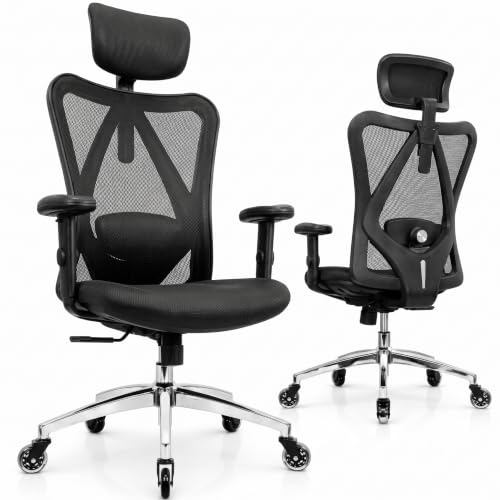
Duramont Ergonomic Adjustable Office Chair
Duramont runs the backrest high enough to support shoulders on users near 6 feet 3 inches, with a headrest that slides higher still. Lumbar support adjusts forward and back, not only up and down. Recline reaches 130 degrees and locks at several points along the way.
Pros
- Backrest height suits users over 6 feet
- Lumbar moves forward as well as up
- Recline locks at several angles
Cons
- Mesh seat edge presses on shorter legs
- Armrests adjust for height only
How they stack up
| # | Model | Weight rating | Best for | Score | Price |
|---|---|---|---|---|---|
| 1 | Steelcase Series 1 Office Chair | 400 lb | Best overall | 9.4 | Check price |
| 2 | Branch Ergonomic Chair | 275 lb | Best value | 9.2 | Check price |
| 3 | HON Ignition 2.0 Mesh Task Chair | 300 lb | Best for shared offices | 9.0 | Check price |
| 4 | Sihoo Doro C300 Ergonomic Office Chair | 300 lb | Best for lumbar support | 8.8 | Check price |
| 5 | Herman Miller Sayl Chair | 350 lb | Best for small spaces | 8.6 | Check price |
| 6 | Amazon Basics Mesh Mid-Back Desk Chair | 225 lb | Best budget | 8.3 | Check price |
| 7 | Duramont Ergonomic Adjustable Office Chair | 330 lb | Best for taller users | 8.0 | Check price |
Good to know
What is the difference between a task chair and an executive chair?
Task chairs prioritise adjustment range and a compact footprint for active desk work. Executive chairs use taller padded backs and wider seats, which suit meetings more than typing.
How high should a task chair seat be?
Set it so feet rest flat and knees sit near hip height. Most adults land between 17 and 20 inches, a range every chair here covers except the mid back Amazon Basics.
Is mesh or foam better for sitting eight hours?
Mesh wins on airflow and foam wins on pressure spread. Run warm and mesh helps; sit very still and foam helps; a hybrid like HON Ignition 2.0 covers both.
Which task chair is best for a heavier user?
Steelcase Series 1 carries 400 pounds, the highest rating in this group. Herman Miller Sayl follows at 350 pounds with matching 12 year coverage.
Do you need 4D armrests?
Only if you move between keyboard, mouse and tablet through the day. Arms that pivot inward keep elbows supported once hands drift toward the centre of the desk.
Steelcase Series 1 vs Branch Ergonomic Chair, which is better?
Series 1 wins on weight rating, warranty length and back shell movement. Branch answers with labelled controls, near complete preassembly and a lighter footprint.
Are task chairs good on carpet?
Yes, provided you fit carpet casters. Stock hard floor wheels drag on thick pile, and owners report that swapping a set takes minutes with no tools.
How long should a task chair last?
Warranty terms hint at the answer. Twelve year coverage from Steelcase and Herman Miller signals metal mechanisms, while one year coverage points to plastic parts that wear sooner.
What is the best task chair for a small home office?
Herman Miller Sayl, because its unframed back and 24.5 inch depth disappear against a wall desk. Amazon Basics Mesh Mid-Back works where the chair moves aside after work.
Is a premium task chair worth it?
Value shows up in cylinders, casters and tilt mechanisms that stay tight past year five. Sitting under four hours a day rarely justifies it, so a mid range chair usually suffices.
Our take
Steelcase Series 1 is the pick for most desk workers, since a flexing back, 400 pound rating and 12 year warranty address the three failures that usually retire a chair. Choose Branch Ergonomic Chair if you want the same posture fundamentals with fewer levers and less assembly. Anyone fitting a chair into a shared living room should take Herman Miller Sayl for its slim unframed back.
Marcus Chen
Marcus covered consumer electronics for enthusiast tech publications for six years before joining ChoiceCrest. He specializes in translating manufacturer spec sheets into plain-language buying advice, with a focus on audio, computing accessories and smart-home gear.


