Tart Pans That Release Crust Without Cracking It
The USA Pan Bakeware Tart Pan suits most home bakers, pairing a removable fluted bottom with a nonstick coating that releases crust cleanly. Bakers wanting a professional ring style do better with the Gobel tart ring, while anyone on a budget fits well with the Fox Run pan.
The USA Pan Bakeware Tart Pan leads this list because its removable fluted bottom pushes a finished tart up and out without cracking the delicate crust edge against the pan sides. Its main limitation is a fixed single size, which does not adjust for a larger or smaller tart than the pan’s own diameter.
We compared release mechanism, fluted depth and material across product listings and owner feedback rather than baking a tart in each pan ourselves.
The best picks, ranked

USA Pan Bakeware Tart Pan
A removable bottom pushes up from underneath, releasing a finished tart without flipping the pan upside down or prying at the crust edge. A silicone-based nonstick coating resists sticking even with high-sugar fruit fillings that can caramelize onto bare metal. Fluted sides are deep enough to hold a generous filling layer without overflowing during baking.
Pros
- Removable bottom releases tarts cleanly without flipping the pan
- Nonstick coating resists sticking from high-sugar fillings
- Fluted sides hold a generous filling layer without overflow
Cons
- Fixed single diameter does not adjust for different tart sizes
- Nonstick coating needs gentle utensils to avoid scratching over time

Gobel Tart Ring
A bottomless ring design, used widely in professional French pastry kitchens, bakes directly on a flat sheet pan for a crisper bottom crust than a solid-bottom pan allows. The fluted edge is pressed from tinned steel rather than coated aluminum, favored by bakers who season their own pans. Lifting the ring straight up after baking leaves the tart sitting cleanly on the sheet pan below.
Pros
- Bottomless ring design produces a crisper base crust than solid pans
- Tinned steel develops a natural seasoned patina over repeated use
- Lifting the ring away leaves a clean-edged tart with no flipping
Cons
- Requires a flat sheet pan underneath, adding an extra piece to manage
- Tinned steel needs seasoning and careful drying to prevent rust

Fox Run Tart Pan with Removable Bottom
This pan offers the same removable bottom convenience as pricier brands at a noticeably lower cost. Tin-plated steel construction keeps the price down compared to heavier aluminized or nonstick-coated pans. The fluted edge depth is slightly shallower, suited to thinner tart fillings rather than deep custard-style tarts.
Pros
- Lower cost than nonstick or heavy aluminized tart pans
- Removable bottom still offers clean release convenience
- Available in a useful range of common diameters
Cons
- Shallower fluting limits deep custard-style fillings
- Tin-plated finish is less durable than a nonstick coating long term

Norpro Tart and Quiche Pan
Deeper fluted sides than a standard tart pan give this design enough room for egg-based quiche fillings as well as fruit tarts. A removable bottom works the same way as other pans on this list, pushing the finished dish up and out cleanly. The extra depth means slightly longer baking times compared to a shallow tart pan.
Pros
- Deeper sides accommodate both quiche and fruit tart recipes
- Removable bottom still provides clean, crack-free release
- Versatile enough to replace a separate quiche dish
Cons
- Deeper fill requires longer baking time than shallow tart pans
- Less ideal for thin, delicate tarts that bake best in shallower pans
Chicago Metallic Tart Pan
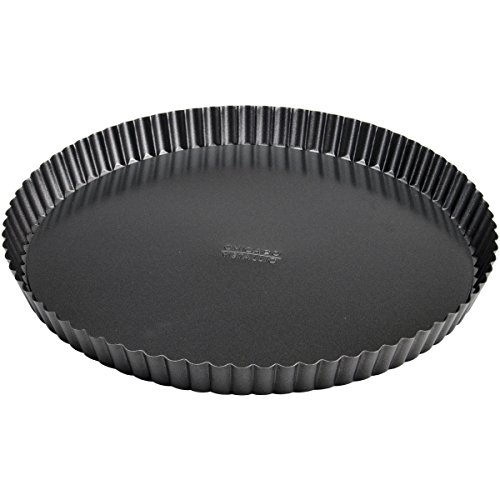
Heavy-gauge steel construction distributes oven heat more evenly across the base than thinner pans, reducing pale or unevenly browned crust spots. A nonstick coating pairs with the removable bottom for a clean release without extra flouring. The brand’s broader bakeware reputation carries over into consistent flat-bottom construction that avoids warping.
Pros
- Heavy-gauge steel browns crust more evenly than thinner pans
- Nonstick coating simplifies release without extra flouring
- Flat-bottom construction resists warping in a hot oven
Cons
- Heavier pan is less convenient to handle than lightweight options
- Costs more than basic tin-plated tart pans

Wilton Excelle Elite Tart Pan
A straightforward nonstick coating and removable bottom make this an approachable choice for someone baking a first tart. Wide availability through general kitchenware retailers means replacement or matching sizes are easy to find later. The fluted pattern is a standard depth, suited to most common tart recipes without needing adjustment.
Pros
- Nonstick coating and removable bottom suit first-time tart bakers
- Widely available, making replacement or matching pans easy to find
- Standard depth fits most common tart recipes without adjustment
Cons
- Fewer specialized features than professional-style ring pans
- Nonstick coating will eventually wear with repeated heavy use

Ateco Fluted Tart Ring
This ring is offered in smaller individual sizes suited to baking several single-serving tarts rather than one large one. Like other bottomless rings, it bakes on a flat sheet pan for a crisp base crust across every small tart. Stainless steel construction resists the rust risk that tinned steel rings carry if not dried thoroughly.
Pros
- Smaller sizes suit baking multiple single-serving tarts at once
- Bottomless design gives a crisp base crust like larger rings
- Stainless steel resists rust better than tinned steel alternatives
Cons
- Requires baking several rings at once for a full batch, adding setup time
- Not suited to baking one large single tart
How they compare
| # | Model | Material | Best for | Score | Price |
|---|---|---|---|---|---|
| 1 | USA Pan Bakeware Tart Pan | Aluminized steel with nonstick coating | Best Overall | 9.1 | Check price |
| 2 | Gobel Tart Ring | Tinned steel | Best Professional Style Pick | 8.8 | Check price |
| 3 | Fox Run Tart Pan with Removable Bottom | Tin-plated steel | Best Budget Pick | 8.4 | Check price |
| 4 | Norpro Tart and Quiche Pan | Tin-plated steel | Best for Quiche Crossover | 8.5 | Check price |
| 5 | Chicago Metallic Tart Pan | Heavy-gauge steel with nonstick coating | Best for Even Browning | 8.6 | Check price |
| 6 | Wilton Excelle Elite Tart Pan | Steel with nonstick coating | Best for First-Time Tart Bakers | 8.3 | Check price |
| 7 | Ateco Fluted Tart Ring | Stainless steel | Best for Multiple Small Tarts | 8.4 | Check price |
Before you buy
What to look for in a tart pan Release mechanism matters most, since a removable bottom or bottomless ring avoids the cracked crust edges that a solid one-piece pan risks. Material affects browning and durability, with heavy-gauge steel distributing heat more evenly than thin, lightweight pans. Fluted depth should match the recipe, since a shallow pan suits thin fruit tarts while a deeper pan handles quiche-style fillings better.
Removable bottom pans versus bottomless rings A removable bottom pan, like USA Pan’s or Wilton’s, is the simpler choice for most home bakers, releasing a tart by pushing up from underneath. A bottomless ring, such as Gobel’s or Ateco’s professional-style design, bakes directly on a sheet pan for a crisper base crust but requires managing that extra sheet pan. Bakers newer to tart making generally find a removable bottom pan easier to handle than a ring style.
Shallow tarts versus deeper quiche-style fillings A standard-depth pan, like Wilton’s or Chicago Metallic’s, suits classic fruit or custard tarts with a modest filling layer. A deeper pan, such as Norpro’s tart and quiche design, gives enough room for egg-based quiche fillings that need more vertical space. Choosing pan depth based on the most common recipe made saves buying a second pan later for a different filling style.
Single large tarts versus individual small tarts Most pans on this list bake one full-size tart meant for slicing and sharing. Ateco’s smaller ring sizes instead suit baking several individual single-serving tarts, useful for a dinner party or portion-controlled servings. Choosing between the two comes down to whether the occasion calls for one shared tart or several personal-sized portions.
Good to know
What is the best tart pan overall?
The USA Pan Bakeware Tart Pan works well overall because its removable fluted bottom and nonstick coating release tarts cleanly.
Should a tart pan have a removable bottom?
A removable bottom makes releasing a finished tart much easier and reduces the risk of cracking the crust edge.
What is a tart ring used for?
A bottomless tart ring, like Gobel’s or Ateco’s, bakes directly on a flat sheet pan to produce a crisper base crust.
Can a tart pan be used for quiche?
Yes, though a deeper pan like Norpro’s tart and quiche design handles egg-based fillings better than a shallow tart pan.
What material tart pan browns crust most evenly?
Heavy-gauge steel, like Chicago Metallic’s pan, distributes oven heat more evenly than thinner, lightweight pans.
Is a nonstick tart pan necessary?
A nonstick coating helps release high-sugar fruit fillings cleanly, though a well-greased plain metal pan can also work.
Can tart pans make individual small tarts?
Yes, smaller ring sizes, like Ateco’s, are designed specifically for baking several single-serving tarts at once.
What is a budget-friendly tart pan option?
The Fox Run Tart Pan with Removable Bottom offers the same release convenience as pricier pans at a lower cost.
Our take
For most home bakers, the USA Pan Bakeware Tart Pan remains the easiest choice thanks to its removable bottom and reliable nonstick release. Bakers chasing a professional crisp base crust should choose the Gobel tart ring instead, accepting the extra step of managing a separate sheet pan. Anyone baking tarts only occasionally can skip premium nonstick pans and pick the Fox Run pan for a lower cost with the same basic release convenience.
Dana Whitfield
Dana spent eight years buying and merchandising for a regional kitchenware retailer before moving into editorial work. She has handled thousands of SKUs across cookware, small appliances and kitchen organization, and focuses on the practical differences that matter once a product is actually in daily use.
You might also need

Zafit 4-Pocket Bedside Caddy: A $7.99 Fix for Nightstand Clutter?

Great Bay Home Reversible Recliner Cover: One Cover, Two Looks for $21.00?

Haute Decor 16-Inch Green Twist Ties (6-Pack): Worth It Over Plain Wire?