Which Swim Diaper Actually Stops Leaks at the Pool
The i play. by green sprouts Reusable Swim Diaper wins overall for its snug three layer gusset. Huggies Little Swimmers suit travel with tear away sides. ALVABABY Reusable Swim Diaper covers weekly lessons on a budget with adjustable snaps that fit a growing toddler.
Weekly swim lessons call for the i play. by green sprouts Reusable Swim Diaper, since its inner gusset seals well and rinses clean in a sink afterward. Traveling families do better with Huggies Little Swimmers, and budget minded parents stretch further with ALVABABY’s adjustable snap design.
Absorbency is not the job here, since a swim diaper that soaked up water would swell and sag off a toddler within minutes. Containing solids at the leg and waist is the entire point, so we compared gusset construction, adjustability, sizing accuracy, drying time and how each style matches common pool rules.
Our top picks

i play. by green sprouts Reusable Swim Diaper
Three fabric layers wrap a snug inner gusset that traps solids without holding water. Nothing swells or sags, since water drains straight through. Owners report the fit holds steady across a wide weight range within each size, and the outer layer air dries in under an hour.
Pros
- Snug inner gusset limits leaks
- Dries quickly after a rinse
- Accepted at most swim schools
Cons
- Pull on style fights a wet child
- Sizing runs by weight, not adjustable

Huggies Little Swimmers Disposable Swim Diapers
Tear away sides let you remove a soiled diaper without dragging it down wet legs. Unlike a standard diaper, the material resists swelling in water. Leg cuffs seal well enough for a single outing, which makes this the practical choice for a beach trip or hotel pool.
Pros
- No washing or wet items to carry
- Tear away sides speed up changes
- Sold at nearly every retailer
Cons
- Cost climbs fast with daily use
- Creates waste with every change
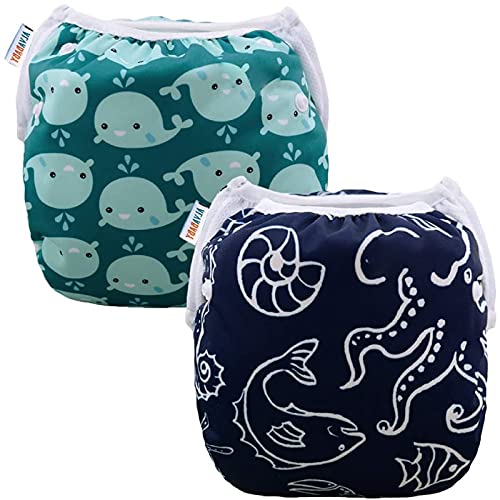
Beau and Belle Littles Nageuret Reusable Swim Diaper
A full grid of snaps at the waist and legs lets one diaper fit newborn through toddler sizes, an unusual range for this category. Parents dial in the leg opening precisely instead of trusting elastic alone. That adjustability makes it the widest usable size span among the seven picks here.
Pros
- Covers years of growth in one diaper
- Leg opening adjusts precisely
- Snaps simplify quick removal
Cons
- Snap grid takes practice to set right
- Bulkier under a swimsuit than pull on styles

Pampers Splashers Disposable Swim Diapers
Stretchy sides hug the leg without a stiff elastic band, which suits chunkier thighs where standard disposables gap. Dual leg cuffs add a second line of containment. Sides still tear away for a quick change, and owners note the fit runs snugger than most rival disposables.
Pros
- Snug fit on wider legs
- Dual cuffs improve containment
- Stretchy waist stays comfortable
Cons
- Single use pushes up cost over time
- Sizing runs small for some toddlers

Bumkins Reusable Swim Diaper
Snaps run down both sides so the diaper opens completely flat, turning a poolside change into a quick swap rather than a wrestling match. The waterproof outer wipes clean and dries fast between swims. That flat opening makes this the pick for parents changing a squirming toddler on a wet bench.
Pros
- Opens flat for fast changes
- Dries quickly between swims
- Wide range of prints available
Cons
- Side snaps can pop under strain
- Less snug seal than pull on styles
ALVABABY Reusable Swim Diaper
Snap rows at the waist and rise adjust across a broad weight range, and multipacks bring the cost per use below anything else in this group. A mesh lining rinses easily after a pool session. Owners note the elastic feels softer than premium brands, so getting the snap row right matters more here.
Pros
- Lowest cost per use in this group
- Multipacks keep a spare in the bag
- Snap rows cover a wide weight range
Cons
- Softer elastic needs careful snap setting
- Prints vary between production batches
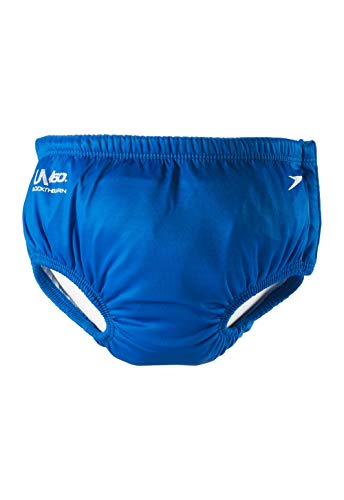
Speedo Begin to Swim UV Swim Diaper
UV rated fabric pairs with a snug swim diaper fit, covering the hips and lower back where sun exposure adds up fast outdoors. Chlorine resistant material holds its shape better than cotton blends in heavily treated pools. It suits families who swim outdoors often and want one less spot to cover in sunscreen.
Pros
- UV protection built into the fabric
- Chlorine resistant material lasts longer
- Trim, swimsuit style fit
Cons
- Fewer adjustment points than snap styles
- Pull on design only
How they compare
| # | Model | Type | Best for | Score | Price |
|---|---|---|---|---|---|
| 1 | i play. by green sprouts Reusable Swim Diaper | Reusable, pull on | Best overall | 9.4 | Check price |
| 2 | Huggies Little Swimmers Disposable Swim Diapers | Disposable | Best disposable | 9.2 | Check price |
| 3 | Beau and Belle Littles Nageuret Reusable Swim Diaper | Reusable with snaps | Best for adjustable fit | 9.0 | Check price |
| 4 | Pampers Splashers Disposable Swim Diapers | Disposable | Best disposable fit | 8.7 | Check price |
| 5 | Bumkins Reusable Swim Diaper | Reusable, side snapping | Best for quick changes | 8.5 | Check price |
| 6 | ALVABABY Reusable Swim Diaper | Reusable, one size | Best budget | 8.3 | Check price |
| 7 | Speedo Begin to Swim UV Swim Diaper | Reusable | Best for sun protection | 8.0 | Check price |
How to choose
Why swim diapers skip absorbency entirely Absorbent material would soak up pool water, swell and drag a swim diaper down within minutes. Manufacturers build these to contain solids only. Urine passes straight through into the water, which is why pools lean on chlorination and scheduled bathroom breaks instead. Treat a regular diaper as a hard no in the water, since it fails in exactly this way.
Reusable or disposable: match it to how often you swim Weekly lessons favor reusables, since two diapers let one dry while the other works and the savings add up fast. A single holiday tips the scale toward disposables, since nobody wants to pack soiled fabric home in a bag. Many families keep both: reusables for the local pool, disposables for travel. Check your pool’s own rules first, because some require a specific style.
How the leg and waist seal decides everything Every real difference between these seven options comes down to how snugly the fabric sits against the thigh. Too loose and containment fails outright. Too tight and a child ends up with red marks and a bad mood. Snap adjustable styles let you tune this directly, while pull on designs depend on the manufacturer nailing the elastic for your child’s build. Run a finger under the leg opening to check it: snug with no gap, not a struggle to fit.
Layering and pool policy add a second safety net Swim schools often recommend a snug swimsuit or a dedicated cover worn over the diaper as backup containment. Facilities that have dealt with accidents tend to write this into policy rather than suggest it. A cover also stops a reusable from riding down when a toddler tugs at it. UV fabric, like Speedo’s option, solves a second problem at once by covering skin that would otherwise need sunscreen.
Common questions
Do swim diapers hold urine?
No, and that is by design. An absorbent swim diaper would fill with pool water and sag off the child. These are built only to contain solid waste, while pools rely on chlorination and bathroom breaks for the rest.
Can I use a regular diaper for swimming?
No. Regular diapers absorb pool water, swell to several times their size and fall apart, leaving gel beads in the water. Most pools ban them outright and will ask a family to leave the water.
How should a swim diaper fit around the legs?
Snug at the waist and each thigh with no visible gap, but not tight enough to leave deep marks. A finger should slide under the leg opening with slight resistance. A loose leg opening causes most containment failures.
Are reusable swim diapers actually hygienic?
Yes, with proper care. Rinse solids into the toilet right away, then machine wash on a warm cycle. Skip fabric softener, since it weakens the fabric’s seal, and air dry fully before storing to prevent mildew.
How many swim diapers do I need for weekly lessons?
Two reusables cover weekly lessons, with one in use and one drying. Swimming several times a week justifies a third. For disposables, plan on one per session plus a spare in the bag.
Do swim diapers need changing after every swim?
Yes. Change right after leaving the water, and change immediately if a child soils it mid session. A wet swim diaper left on causes skin irritation fast, and a soiled one defeats the entire point.
What size swim diaper should I buy?
Go by weight, not age, since sizing is built around the leg and waist measurements weight predicts. Size down between sizes for better containment. Snap adjustable styles remove most of the guesswork.
Do pools require a specific type of swim diaper?
Policies vary by facility. Many require a snug fitting swim nappy, and some also require a swimsuit or cover worn over it. A few specify reusables only, so check before a first visit.
Reusable or disposable swim diapers, which costs less over time?
Reusables cost less per swim once you use them more than a handful of times, since two diapers can last years with regular washing. Disposables cost less upfront but add up fast with frequent swimming.
Can a toddler wear a swim diaper under a regular swimsuit?
Yes, and many pools expect it. A snug swimsuit worn over the diaper adds a second layer of containment and keeps a reusable from riding down during active play.
The verdict
The i play. by green sprouts Reusable Swim Diaper is the one to buy for regular lessons, since the inner gusset seals reliably and the whole thing rinses and dries fast. Families who mainly swim on holiday get more use from Huggies Little Swimmers and their tear away sides. Cost conscious parents should look to ALVABABY multipacks, which bring the price per swim down further than anything else here.
Rachel Simmons
Rachel previously worked in child-product retail and brings a practical, detail-first eye to gear reviews, focusing on safety standards, ease of use and the fine print that matters most for new caregivers.