How to Pick a Stress Relief Toy That Matches Your Habit
Antsy Labs Fidget Cube handles the widest range of habits in one palm sized shape. Fun in Motion’s Shashibo Shape Shifting Box holds attention longest through dozens of magnetic configurations. Crazy Aaron’s Thinking Putty suits squeezers rather than clickers. All three beat single function toys on versatility and daily carry durability.
Antsy Labs Fidget Cube covers clicking, rolling and flicking in one object, which makes it the safest pick when you do not yet know your own habit. Fun in Motion’s Shashibo Shape Shifting Box rewards longer sessions with dozens of magnetic shapes. Crazy Aaron’s Thinking Putty answers a squeezing habit that clickers never touch.
Every pair of hands finds a different motion soothing, so a toy built for clickers can frustrate someone who picks or squeezes instead. Noise matters just as much, since a satisfying click at a desk can annoy an entire office within minutes. We compared noise output, one handed operation and long term durability, then checked what owners report after months of daily carry.
What we recommend

Antsy Labs Fidget Cube
Six faces each cater to a different habit: clicking, gliding, rolling, flicking, spinning and a breathing disk. Closed fist use works without looking down at it. Two of the six sides click loudly enough to notice in a quiet room.
Pros
- Covers six separate fidget habits
- Fits inside a closed fist
- No need to look at it during use
Cons
- Clicking side carries in silent rooms
- Switch and joystick can loosen with heavy use
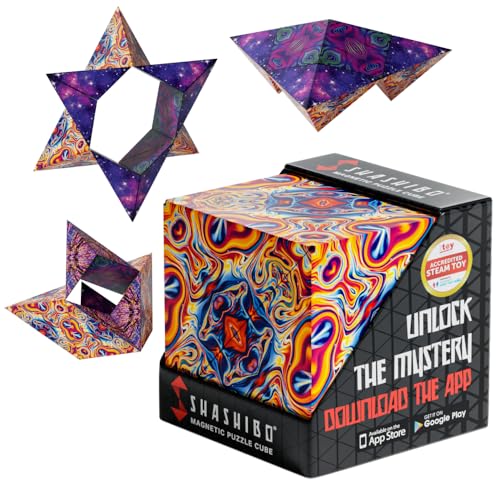
Fun in Motion Toys Shashibo Shape Shifting Box
Thirty six rare earth magnets fold this cube into dozens of geometric shapes. Each transition locks in with a soft click rather than a loud one. Owners report longer engagement than single function fidgets, since there is always another shape to try.
Pros
- Reconfigures into dozens of shapes
- Quiet enough for open offices
- Feels solid rather than hollow
Cons
- Strong magnets are a hazard near small children
- Printed panels show wear at the edges over time

Crazy Aaron’s Thinking Putty
Silicone putty stretches slowly, tears sharply, then bounces like rubber. One tin delivers three distinct textures instead of one repeated motion. Fabric and carpet are the real hazard, since the putty grabs fibers on contact.
Pros
- Silent operation for shared spaces
- Three different textures in one tin
- Stays workable for months if resealed
Cons
- Picks up lint from fabric and hair
- Cannot be washed once contaminated

Serenilite Hand Therapy Stress Ball
Dense gel filling adds real resistance instead of just squishing air. Typing related tension in the hands and forearms responds to that resistance over repeated sessions. Desk use stays silent, with nothing inside to click or rattle.
Pros
- Firm enough to double as grip exercise
- Completely silent on a desk
- Gel texture stays comfortable through long sessions
Cons
- A fingernail can split the shell with hard squeezing
- Offers one motion, unlike multi function cubes

Tangle Creations Tangle Jr. Classic Fidget
Curved segments link into a loop that twists with no start or stop point. Pocket size keeps it out of sight until you need it. Segments occasionally separate under strain, though snapping them back together takes seconds.
Pros
- Lowest price point in this roundup
- Continuous motion with no end position
- Small enough for a pocket or pencil case
Cons
- Segments pop apart under heavy twisting
- Less variety than magnetic or multi function toys

Chuckle & Roar Pop It Fidget Toy
A grid of silicone bubbles pops through with a soft sound, then resets when flipped over. Food grade silicone survives backpacks, drops and rinsing under a tap. Sound carries just enough that quiet offices tend to notice it.
Pros
- Washable when it picks up dirt
- Durable enough for daily backpack use
- Simple appeal across age groups
Cons
- Audible enough to notice in silent rooms
- Repetition offers less variety over time

Special Supplies Sensory Liquid Motion Bubbler
Colored droplets drift through liquid over roughly a minute per flip, giving eyes something to follow instead of hands something to do. Desk or shelf placement suits it better than a pocket. Owners report using it as a timed pause between tasks rather than a constant fidget.
Pros
- Zero noise output
- Doubles as a short visual timer
- Requires no hand movement at all
Cons
- Not built for portability and can crack if dropped
- Passive rather than tactile
What matters most
What kind of fidget habit do you have? Hands default to a handful of behaviors: clicking, twisting, squeezing, picking or just watching something move. Match the toy to that behavior first, not to whatever ranks highest. Clickers want buttons or switches, like the Fidget Cube. Squeezers do better with putty or a gel ball. People who fidget by reconfiguring or exploring gravitate toward magnetic puzzles such as the Shashibo. Buying a well reviewed toy that ignores your own habit is why so many end up in a drawer.
How much noise can a fidget toy make in an office or classroom? Clicking sounds carry further than most people expect in a quiet room. Thinking putty, magnetic puzzles and gel stress balls run silent, so they pass in shared offices and classrooms without comment. Fidget cubes and push pop toys make sound on at least one function. Save those for home use, or stick to their quiet sides during meetings.
Which fidget toys hold up to daily pocket carry? A toy left in a bag never gets used, so daily carry durability matters more than lab specs. Solid plastic and silicone shrug off keys, lint and getting sat on. Toys built from linked segments or printed graphics wear faster, since joints loosen and surfaces scuff within months. Check construction material before assuming a toy will survive a school bag or coat pocket.
Are fidget toys with magnets or small parts safe for kids? Two hazards matter most for children: strong magnets and small parts that detach. Swallowed magnets can pinch the intestine from both sides, which turns a toy into a medical emergency. Keep magnetic puzzles like the Shashibo with teenagers and adults rather than young children. Silicone push pops and soft putty work better for younger hands, still with an adult nearby.
How they stack up
| # | Model | Type | Best for | Score | Price |
|---|---|---|---|---|---|
| 1 | Antsy Labs Fidget Cube | Multi function fidget cube | Best overall | 9.4 | Check price |
| 2 | Fun in Motion Toys Shashibo Shape Shifting Box | Magnetic shape shifting puzzle | Best for long focus sessions | 9.2 | Check price |
| 3 | Crazy Aaron’s Thinking Putty | Silicone thinking putty | Best for a squeezing habit | 9.0 | Check price |
| 4 | Serenilite Hand Therapy Stress Ball | Gel stress ball | Best for hand and wrist tension | 8.8 | Check price |
| 5 | Tangle Creations Tangle Jr. Classic Fidget | Linked twisting fidget | Best budget | 8.6 | Check price |
| 6 | Chuckle & Roar Pop It Fidget Toy | Silicone push pop | Best value | 8.3 | Check price |
| 7 | Special Supplies Sensory Liquid Motion Bubbler | Liquid motion bubbler | Best for a calming visual break | 8.0 | Check price |
Common questions
Do fidget toys actually help with stress?
Repetitive hand movement is calming for many people, and a fidget toy gives that movement a low key outlet. It works as a coping aid, not a treatment, so ongoing anxiety deserves a conversation with a clinician.
Which fidget toy is best for the office?
Thinking putty, magnetic shape puzzles and gel stress balls run silent enough for shared desks. Fidget cubes and push pop toys make noise on some functions, so they suit home use better.
What is the difference between a fidget cube and a Tangle toy?
A fidget cube packs six separate mechanisms into one block for people unsure of their habit. A Tangle relies on one continuous twisting motion, which costs less and fits smaller pockets.
Can fidget toys improve focus and concentration?
Some people concentrate better with a quiet background activity for their hands, especially during calls or lectures. Others find any movement distracting, so a silent option is worth testing before committing to one.
What age is appropriate for a fidget toy?
Soft putty and silicone push pops suit most children over three with supervision nearby. Anything containing strong magnets or small removable pieces belongs with older children and adults only.
How do you clean a stress relief toy?
Silicone and hard plastic toys wash in warm soapy water and air dry within an hour. Thinking putty cannot be washed, but returning it to its tin keeps it usable for months.
Why does thinking putty pick up lint and hair?
Silicone putty stays slightly tacky by design, which is what makes it stretch and tear the way it does. That same tackiness grabs fibers from clothing, carpet and hair on contact.
Do fidget toys actually help with ADHD symptoms?
Some people with ADHD describe a quiet hand activity as making it easier to stay seated through a task. Research results are mixed, so treat a fidget toy as one tool alongside others, not a fix on its own.
Which stress relief toy lasts the longest?
Solid silicone push pops and gel balls tend to outlast anything with moving mechanical parts, since nothing inside can loosen. Magnetic puzzles hold up nearly as well, though printed panels fade before the magnets ever fail.
Are magnetic fidget toys safe to carry every day?
Airlines generally allow small magnetic toys in carry on bags, though checking the specific airline policy before a flight avoids surprises. For daily carry at home, the bigger risk is a small child reaching into a bag than any travel rule.
Final word
Antsy Labs Fidget Cube suits the widest range of habits in a shape you can carry every day. Choose Fun in Motion’s Shashibo Shape Shifting Box for longer, quieter focus sessions, or Crazy Aaron’s Thinking Putty if squeezing is the motion your hands actually want.
Rachel Simmons
Rachel previously worked in child-product retail and brings a practical, detail-first eye to gear reviews, focusing on safety standards, ease of use and the fine print that matters most for new caregivers.


