Which Staple Gun Handles Fabric, Wood and Fencing Best?
Arrow T50 Heavy Duty Staple Gun covers the widest range of light jobs, from fabric to light wood. WORKPRO Electric Staple Gun suits repeated upholstery work with a trigger-fire drive. PowerShot Pneumatic Staple Gun fits shops running staples all day at high volume.
Choosing a staple gun depends on drive frequency and what it drives into. Arrow T50 spans the widest range of light-duty jobs, from fabric to insulation to screen repair. Anyone stapling upholstery for hours benefits more from WORKPRO’s trigger-fire electric drive, and occasional users on a tight budget can get by with the manual Stanley TR45.
Staple guns split into manual squeeze, electric trigger and pneumatic drive types, and each suits different materials and frequency of use. We compared listed staple gauge ranges, drive force and owner reports on jamming and grip fatigue during extended sessions.
Our top picks

Arrow T50 Heavy Duty Staple Gun
Arrow’s T50 series accepts staples from 1/4 inch to 9/16 inch, covering fabric tacking through light wood joints. Steel construction has stayed nearly unchanged for decades, so replacement staples sit on shelves at almost every hardware store. A built-in release lever clears jammed staples without removing any parts.
Pros
- T50 staples are sold at nearly every hardware store
- Handles fabric, insulation and light wood equally well
- Steel body holds up over years of regular use
Cons
- Needs more hand force than electric guns on dense wood
- Heavier than plastic-bodied light-duty guns
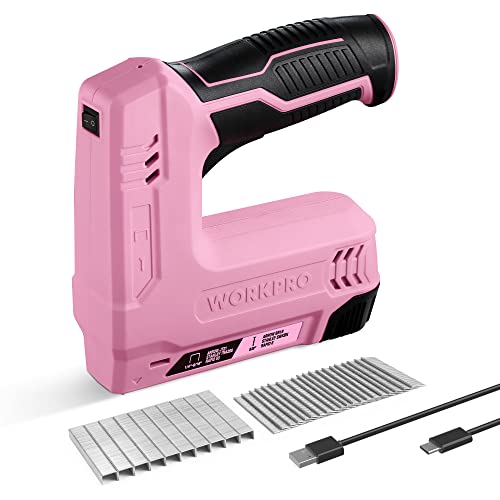
WORKPRO Electric Staple Gun
A light trigger pull replaces the full hand squeeze on this electric gun, cutting fatigue during long upholstery or craft sessions. Two power settings adjust drive depth for soft fabric versus denser wood trim. Being corded means no battery to charge mid-project.
Pros
- Trigger-fire drive cuts hand fatigue over long sessions
- Adjustable drive depth suits varied materials
- Corded design stays ready without charging
Cons
- Cord limits reach compared to cordless or manual guns
- Housing is bulkier than manual squeeze guns
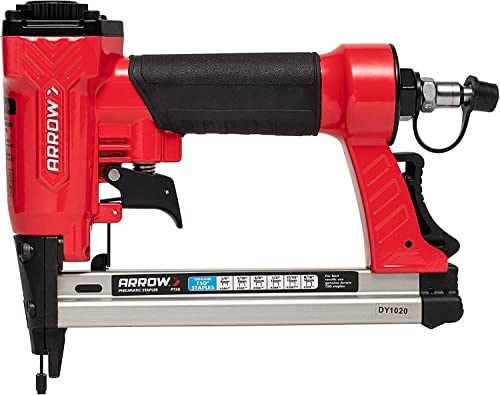
PowerShot Pneumatic Staple Gun
Air pressure drives every staple here, so hands stay fresh through shifts that would tire out a manual squeeze gun. Adjustable pressure between 60 and 100 PSI tunes drive depth from soft fabric to hardwood. An air compressor and hose are required, unlike battery or manual guns.
Pros
- Fastest repeat-fire speed for high-volume jobs
- Aluminum body keeps weight below steel manual guns
- Adjustable pressure suits varied material density
Cons
- Needs a separate air compressor and hose
- Impractical for occasional light household use
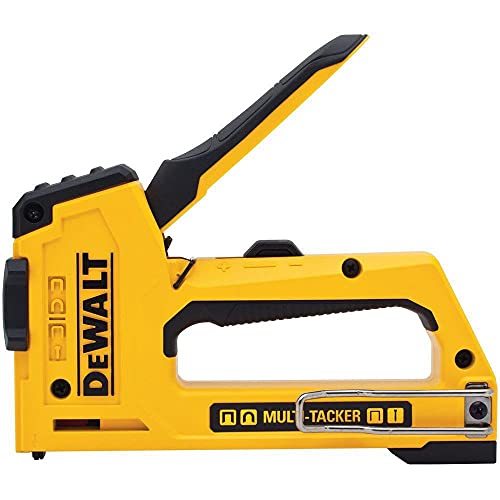
DEWALT DWHTTR510 Heavy Duty Staple Gun
Contractors moving between insulation, house wrap and light framing get a reinforced steel frame built to survive drops. Rubberized grip resists slipping in gloved hands during repeated daily use. Drive power adjusts to control staple depth across varied material density.
Pros
- Reinforced frame withstands jobsite drops and daily use
- Rubberized grip reduces slipping in gloved hands
- Adjustable drive power suits varied material density
Cons
- Bulkier and heavier than household staple guns
- Costs more than basic manual models

Surebonder 9600 Heavy Duty Staple Gun
Higher spring tension drives staples flush into plywood and trim, where lighter guns often leave them proud. An ergonomic handle spreads squeeze force across the palm, easing strain on long jobs. Staple leg lengths from 1/4 to 1/2 inch cover varied material thickness.
Pros
- Drives flush into denser wood than lighter-duty guns
- Ergonomic handle reduces palm strain
- Wide staple leg length range
Cons
- Needs more hand strength than electric options
- Heavier than compact household staple guns

Tacwise A5416V Hobby Staple Gun
Small craft projects, picture framing and light fabric work suit this compact, lightweight manual gun better than construction tasks. Low spring tension keeps hand effort minimal through short, frequent bursts. Standard 6 to 14mm staples keep replacement cost low.
Pros
- Light spring tension suits short, frequent use
- Compact size is easy to store or carry
- Replacement staples cost little
Cons
- Not built for wood or dense material stapling
- Smaller staple capacity than heavy-duty models
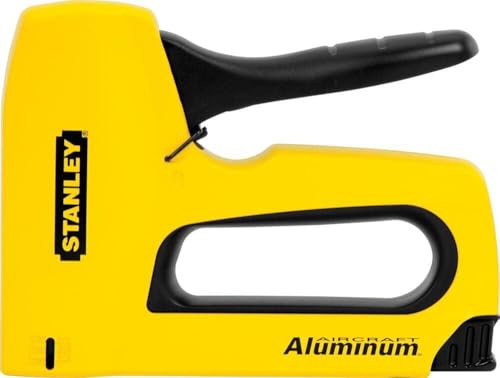
Stanley TR45 Heavy Duty Staple Gun
Occasional household jobs like screen repair, light upholstery and craft projects are this manual gun’s target. Standard staple sizes keep it simple without the added cost of electric or pneumatic drive. A compact frame stores easily in a drawer or toolbox.
Pros
- Costs less than electric or pneumatic staple guns
- Compact size for easy storage
- Handles light, occasional household tasks well
Cons
- Limited staple size range versus the Arrow T50
- Has no built-in jam-release lever
Before you buy
What should you look for in a staple gun? Drive type sets the baseline. Manual squeeze guns cost less and need no power source. Electric guns reduce hand fatigue for repeat use, while pneumatic guns handle the highest volume but need a compressor. Staple gauge range determines material compatibility, since fabric needs shorter, thinner staples than plywood or trim. Grip design and overall weight affect comfort during longer sessions.
Manual vs electric vs pneumatic staple gun: which is best? Occasional users do fine with a manual gun like the Arrow T50, since it needs no cord, battery or compressor. Electric guns such as the WORKPRO trade portability for less hand fatigue during long upholstery or craft sessions. Pneumatic guns like the PowerShot fire fastest but require an air compressor, which suits shops more than one-off home projects.
Which staple gun works best for upholstery and craft projects? Narrow crown staples and adjustable drive depth matter most here, since fabric thickness varies and the frame wood underneath often needs a firmer drive. WORKPRO’s adjustable power settings and the Arrow T50’s wide staple range both handle this repeatedly. Craft-only work, like framing or fabric trim, suits the lighter Tacwise A5416V instead.
Which staple gun handles wood, fencing or jobsite work best? Drive force and frame durability matter more than light weight here, since wood and outdoor fencing resist staples harder than fabric or foam. Surebonder 9600 and DEWALT DWHTTR510 both target denser material and repeated jobsite handling. Reinforced frames on both models are built to survive drops.
Compared at a glance
| # | Model | Drive type | Best for | Score | Price |
|---|---|---|---|---|---|
| 1 | Arrow T50 Heavy Duty Staple Gun | Manual squeeze handle | Best overall | 9.4 | Check price |
| 2 | WORKPRO Electric Staple Gun | Electric, corded | Best for upholstery and crafting | 9.2 | Check price |
| 3 | PowerShot Pneumatic Staple Gun | Pneumatic, requires air compressor | Best for high-volume shop use | 9.0 | Check price |
| 4 | DEWALT DWHTTR510 Heavy Duty Staple Gun | Manual squeeze handle | Best for jobsite durability | 8.8 | Check price |
| 5 | Surebonder 9600 Heavy Duty Staple Gun | Manual squeeze handle, heavy spring tension | Best for hardwood and trim | 8.6 | Check price |
| 6 | Tacwise A5416V Hobby Staple Gun | Manual squeeze handle, light tension | Best for light craft and hobby use | 8.3 | Check price |
| 7 | Stanley TR45 Heavy Duty Staple Gun | Manual squeeze handle | Best budget | 8.0 | Check price |
Frequently asked questions
What staple size fits most staple guns?
T50 series staples, spanning 1/4 to 9/16 inch leg length, fit the widest range of manual guns, including the Arrow T50 and DEWALT DWHTTR510. Gauge and crown width still vary by brand, so check the specific gun’s manual before buying refills.
Can a staple gun be used on wood?
Yes, though results depend on drive force and staple leg length. Guns rated for denser material, like the Surebonder 9600, drive flush into plywood and trim. Lighter craft guns, like the Tacwise A5416V, suit fabric and thin material better.
How do you clear a jammed staple gun?
Guns with a built-in release lever, like the Arrow T50, open at the front to clear a stuck staple without tools. Models without a lever, like the Stanley TR45, usually need the staple track removed by hand to clear a jam.
Is an electric staple gun better than a manual one?
It depends on how often you staple. Electric guns cut hand fatigue over long sessions and give more consistent drive depth. Manual guns need no power source and cost less upfront, which suits occasional tasks better.
Do pneumatic staple guns need a special air compressor?
They need a standard compressor rated for the gun’s PSI range, commonly 60 to 100 PSI for a gun like the PowerShot Pneumatic. Most home-shop compressors already meet that range, but check the rating before buying.
What is the difference between a staple gun and a hammer tacker?
A staple gun fires one staple per squeeze, trigger pull or air burst. A hammer tacker drives a staple on impact, like swinging a hammer, which is faster over large flat areas like carpet padding but less precise for detail work.
Can staple guns be used for fencing or outdoor projects?
Yes, with a heavy-duty model rated for denser material and rust-resistant outdoor staples. DEWALT DWHTTR510’s reinforced frame and adjustable drive power suit fencing and house wrap better than light craft guns.
How long do staple gun springs typically last?
Steel springs in manual guns, like the Arrow T50, commonly hold up through years of regular use before tension noticeably weakens. Daily jobsite use shortens that lifespan compared with occasional household tasks.
Which staple gun is best for a beginner?
A basic manual model like the Stanley TR45 is easiest to learn on, since there is no pressure setting or power source to manage. Move up to the Arrow T50 once you need a wider staple size range.
Our take
Arrow T50 covers fabric, insulation and light wood without needing a power source, making it the pick for most households. Upholstery work done in volume calls for WORKPRO Electric Staple Gun’s lighter trigger pull. Occasional light use only? Stanley TR45 handles the basics at a lower cost.
Jake Monroe
Jake worked as a residential contractor for over a decade before shifting to full-time writing. He evaluates power tools, hand tools and workshop gear through the lens of someone who has actually used them on job sites, not just read the box.