Which Under-Desk Treadmill Actually Fits a Standing Desk?
Most standing desks pair best with the LifeSpan TR1200-DT5, thanks to its low-profile frame and strong motor. Noise-sensitive offices should look at the iMovR ThermoTread GT instead. Budget shoppers get the best value from the Sperax 2-in-1, which adds a removable handrail for jogging.
A treadmill that clears your desk but cramps your stride solves nothing. The LifeSpan TR1200-DT5, iMovR ThermoTread GT, and Sperax 2-in-1 balance both factors better than most under-desk models. Each pairs a low frame profile with a belt long enough for a natural walking gait.
Published specs, belt dimensions, and owner feedback from Amazon listings carried more weight in this comparison than marketing claims. Desk clearance and quiet operation mattered most, since most buyers use these treadmills during work calls.
The shortlist, ranked

LifeSpan TR1200-DT5
Sit-stand desks were the design target here, not a treadmill with a desk bolted on after the fact. A low-profile frame clears most desk height ranges without shims. Owners report the motor stays quiet through full workdays.
Pros
- Low-profile frame built specifically for desk use
- 350 lb weight capacity fits most body types
- Continuous-duty motor stays quiet through calls and meetings
Cons
- Heavier frame makes it harder to move between rooms
- No incline adjustment available
iMovR ThermoTread GT
Office noise limits shaped this design before top speed did. A soft-start motor ramps up gradually instead of jolting the belt. Its narrow frame slides under most standing desks without shims.
Pros
- Motor noise rated under 45 dB for calls
- Slim frame fits low desk clearances
- Soft-start reduces sudden belt jolts
Cons
- Costs more than basic 2-in-1 models
- Top speed caps at 4 mph, slower than gym treadmills

Sperax 2-in-1 Under Desk Treadmill
Two modes live in one frame here: a walking pad plus a removable handrail for jogging. A wireless remote adjusts speed without bending down. Belt width suits most shoe sizes without crowding the edges.
Pros
- Removable handrail switches between walking and jogging
- Wireless remote allows hands-free speed changes
- Strong value against pricier desk-specific models
Cons
- Handrail assembly adds setup time
- Motor noise increases noticeably above 3 mph

WalkingPad A1 Pro
A folding hinge shrinks this pad to about a third of its flat footprint for closet storage. A companion app logs steps and syncs with common fitness trackers. Weight capacity runs lower here than most competitors on this list.
Pros
- Folds compact for storage in small apartments
- App syncing tracks steps and workout history
- Light enough to carry between rooms
Cons
- Lower 220 lb weight capacity than most rivals
- Narrower belt may feel tight for wider stances

UREVO 2-in-1 Under Desk Treadmill
Cost stays lower here than most desk-specific treadmills, while capacity still reaches 300 lbs. An LED display cycles through speed, time, distance, and calories. A detachable handrail converts it between walking pad and light jogging setups.
Pros
- Lower cost than desk-specific models with similar specs
- 300 lb capacity handles a wider range of users
- Detachable handrail adds jogging flexibility
Cons
- Plastic housing feels less durable than metal-frame rivals
- Remote control sold separately on some listings
Egofit Walker Pro
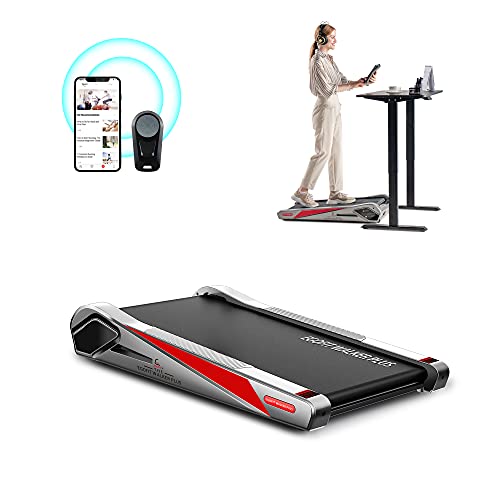
Belt length gets traded for a smaller footprint and a curved deck built for slow, steady walking. Top speed tops out well below the belt-style pads on this list. Its compact shape fits under desks with limited leg clearance.
Pros
- Compact curved deck fits tight under-desk spaces
- Quiet operation around 40 dB suits open offices
- Lighter unit simplifies moving and storage
Cons
- Top speed limited to 2.5 mph, too slow for jogging
- Shorter deck length restricts stride for taller users

Goplus 2-in-1 Folding Treadmill
Top speed climbs well above the walking-pace pads on this list, aimed at owners who want a running option too. A removable handrail bar bolts on for jogging support. Built-in wheels make it easier to roll after folding.
Pros
- 7.5 mph top speed supports running, not just walking
- Removable handrail adds stability at faster paces
- Folds with wheels for easier storage and moving
Cons
- Higher top speed brings more motor noise than desk-only pads
- Folded unit is bulkier than dedicated walking pads
Side by side
| # | Model | Belt size | Best for | Score | Price |
|---|---|---|---|---|---|
| 1 | LifeSpan TR1200-DT5 | 20 x 50 inches | Best overall for standing desk pairing | 9.4 | Check price |
| 2 | iMovR ThermoTread GT | 20 x 50 inches | Best for quiet, noise-sensitive offices | 9.1 | Check price |
| 3 | Sperax 2-in-1 Under Desk Treadmill | 17.5 x 40 inches | Best value for walking and light jogging | 8.9 | Check price |
| 4 | WalkingPad A1 Pro | 15.7 x 41.7 inches | Best for small spaces and storage | 8.7 | Check price |
| 5 | UREVO 2-in-1 Under Desk Treadmill | 17.5 x 39.5 inches | Best budget pick for everyday walking | 8.5 | Check price |
| 6 | Egofit Walker Pro | 15 x 33 inches | Best for tight, low-clearance desk setups | 8.3 | Check price |
| 7 | Goplus 2-in-1 Folding Treadmill | 15.7 x 39.5 inches | Best for tall or heavier users who also want to run | 8.1 | Check price |
How to choose
What to Look for Before Buying an Under-Desk Treadmill Belt size matters more than top speed for most desk users. Look for at least 17 inches of width and 39 inches of length to avoid stepping off the edges. Weight capacity should exceed body weight by a comfortable margin. Motor noise below 50 dB keeps calls and video meetings clear.
How to Match Frame Height to Your Standing Desk Most sit-stand desks sit between 28 and 34 inches at their lowest setting. Treadmill decks add anywhere from 4 to 6 inches under your feet. Measure your desk’s minimum height before ordering, since a tall deck can push a keyboard too high. Console-free designs like the LifeSpan separate the display from the frame to preserve clearance.
Which Speed and Belt Length Fit Your Walking Pace? Walking-only pads typically cap around 3.8 mph, enough for a brisk office pace. Models built for jogging, like the Goplus 2-in-1, push past 7 mph but need a longer deck. Shorter strides suit compact decks such as the Egofit Walker Pro. Match belt length to your natural stride to avoid clipping the front rail.
Best Treadmill Desk Setup for Noise-Sensitive or Shared Spaces Shared offices and thin apartment floors amplify motor vibration. A rubber mat under the treadmill cuts noise transfer to the space below. Units rated under 45 dB, such as the iMovR ThermoTread GT, work best near open floor plans. Folding models save floor space once the workday ends.
Common questions
Can any standing desk work with an under-desk treadmill?
Most sit-stand desks work if the lowest setting clears the treadmill’s deck height, usually 4 to 6 inches. Measure your desk’s minimum height before ordering. Desks with low crossbars or narrow legs may block wider treadmill frames.
How fast should you walk while working at a treadmill desk?
Most people type comfortably between 1 and 2 mph. Reading or calls work fine up to about 2.5 mph. Speeds above 3 mph tend to shake the keyboard and mouse too much for typing.
Are under-desk treadmills quiet enough for video calls?
Models rated under 45 dB, like the iMovR ThermoTread GT, stay quiet enough for most video calls. Cheaper motors above 55 dB can pick up on a laptop microphone. Placing the unit on a rubber mat also reduces vibration noise.
What weight capacity do under-desk treadmills have?
Capacity ranges from about 220 lbs on compact folding pads to 350 lbs on desk-specific models like the LifeSpan TR1200-DT5. Check the capacity against body weight plus any extra load, such as ankle weights.
Do under-desk treadmills fold up for storage?
Many do, including the WalkingPad A1 Pro, which folds to about a third of its flat size. Desk-specific models like the LifeSpan tend to stay flat and rely on a low profile instead. Folding models with wheels, like the Goplus 2-in-1, roll away after use.
Is a 2-in-1 treadmill better than a standard walking pad?
A 2-in-1 adds a removable handrail so you can jog as well as walk, which a standard walking pad does not support. Walking pads like the WalkingPad A1 Pro stay lighter and fold smaller instead. The right choice depends on whether a running option matters.
How many calories does walking at a desk burn?
Walking at 1 to 2 mph for an hour burns roughly 130 to 200 calories for an average adult, based on standard MET estimates. Actual numbers vary with body weight and pace. Even light desk walking adds up over a full workday.
Do under-desk treadmills need a special mat or flooring?
A rubber exercise mat isn’t required but cuts noise transfer to floors below. Hardwood and tile floors transmit more vibration than carpet. Renters in apartments often add a mat as a courtesy to neighbors.
What’s the difference between a walking pad and a treadmill desk?
Walking pads like the WalkingPad A1 Pro skip a console and focus on portability. Desk-specific treadmills like the LifeSpan TR1200-DT5 add a sturdier frame built for daily use. Both work under a standing desk if clearance allows.
Final word
A standing desk treadmill only works if the frame fits your desk and the belt fits your stride. The LifeSpan TR1200-DT5 balances both requirements best, while the iMovR ThermoTread GT suits noise-sensitive offices. Budget shoppers can still get a functional setup from the UREVO 2-in-1 without sacrificing weight capacity.
Derek Holt
Derek has a background coaching recreational and amateur athletes and has worked the sales floor at specialty fitness retailers. He focuses on equipment durability, ergonomics and realistic use cases rather than marketing claims.