Standard Lens Picks: 50mm Primes vs 28-70mm Zooms
Sigma 28-70mm F2.8 DG DN Contemporary leads for one-lens days on Sony E and Leica L, weighing 470 grams. Canon RF 50mm F1.8 STM is the lightest way into RF primes at 160 grams. Nikon NIKKOR Z 50mm f/1.8 S takes the sharpness and sealing crown.
Sigma 28-70mm F2.8 DG DN Contemporary suits Sony E and Leica L owners who want one lens on the body all day, because 470 grams covers group shots through 70mm portraits at a constant f/2.8. Background separation is where it gives ground. An f/1.8 prime blurs a backdrop far harder from the same spot.
Standard means different things on different sensors, so a 50mm frames like a 75mm on APS-C. We compared published optical data, weight, filter threads, close focus distance and mount availability. Owner feedback on autofocus noise, focus breathing and corner performance broke the remaining ties.
Before you buy
What counts as a standard lens A standard lens frames roughly what your eyes take in, without stretching perspective at the edges. On full frame that sits between 40mm and 55mm. Crop sensors change the maths, so 30mm to 35mm does the same job on APS-C. Standard zooms such as 28-70mm cover that window plus headroom on either side. Faces stay proportioned at these focal lengths, which is why portrait, product and street shooters keep coming back to them. Anything wider bends features near the frame edge, and anything longer forces you across the room.
Prime or zoom: which standard lens fits your shooting Primes buy light. An f/1.8 prime gathers about two thirds of a stop more than f/2.8 and blurs a background harder from the same distance. Zooms buy time. Moving from a table of six to one face takes a twist rather than a lens change and a missed moment. Weight tilts the choice as well: Canon RF 50mm F1.8 STM is 160 grams against 470 grams for the Sigma 28-70mm F2.8. Wedding, travel and event shooters usually take the zoom. Portrait, night and indoor work rewards the prime, and many owners end up carrying one of each.
Matching a standard lens to your mount and sensor Check coverage before you compare aperture. Sigma 30mm F1.4 DC DN is drawn for APS-C and will darken the corners on a full frame sensor. Mount availability narrows the field quickly: Tamron 28-75mm G2 is Sony E only, while the Sigma 28-70mm also ships in Leica L, and the Nikon and Canon picks stay inside their own systems. Filter threads matter to anyone buying a polariser, and 67mm covers both f/2.8 zooms here. Stabilisation sits in the body for all seven, so a camera without sensor shift needs faster shutter speeds to stay sharp.
Best standard lens for video, low light and close-ups For video, motor type outranks aperture. Linear focus in the Tamron 28-75mm G2 and stepping motors in both Sigma lenses stay near silent, while the DC motor in the Sony FE 50mm F1.8 gets picked up by an on-camera mic. Close focus separates the zooms from the primes: 0.18 metres at 28mm on the Tamron fills the frame with a plate of food, where the Sony prime stops at 0.45 metres. Dim receptions and stage work favour f/1.4 on the Sigma 30mm. Rain argues for sealing, which leaves the NIKKOR Z 50mm f/1.8 S and the Fujifilm XF 35mm f/2 R WR.
The best picks, ranked

Sigma 28-70mm F2.8 DG DN Contemporary
Constant f/2.8 arrives in a 470 gram barrel, roughly half the mass of a classic 24-70mm. Framing runs from a full dinner table at 28mm to a flattering head shot at 70mm. Sony E and Leica L versions both exist, and the 67mm thread matches most other Sigma zooms.
Pros
- Holds f/2.8 across the whole zoom range
- Stepping motor stays quiet on camera audio
- Gasket at the mount resists dust and splashes
Cons
- 28mm is tight inside small rooms
- Depends on body stabilisation, since the lens has none

Canon RF 50mm F1.8 STM
At 160 grams, this prime adds less weight than a spare battery yet opens to f/1.8. Focus pulls in to 0.3 metres, close enough to fill the frame with a coffee cup or a watch face. Canon fits a plastic mount and a stepping motor, so build stays basic while focus runs smooth and quiet.
Pros
- Seven rounded blades keep highlights circular
- Control ring assigns aperture, ISO or exposure compensation
- Slips into a jacket pocket beside the body
Cons
- Plastic mount flexes more than a metal bayonet
- Corners stay soft until roughly f/2.8
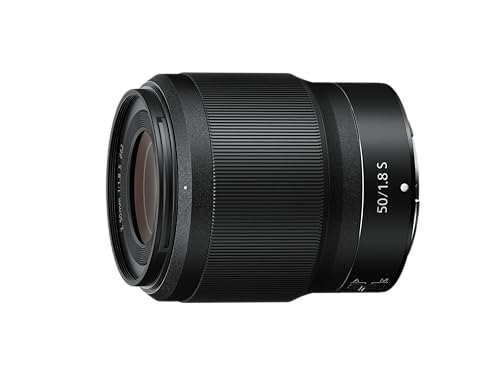
Nikon NIKKOR Z 50mm f/1.8 S
Nikon chose resolution over pocketability here, and 415 grams is the result. Two extra-low dispersion elements hold colour fringing down at f/1.8, including along high contrast edges. Sealing at the mount and switch suits damp landscape mornings, while filters use the common 62mm size.
Pros
- Sharp into the corners from wide open
- Nine blade diaphragm smooths background falloff
- Weather sealed barrel and rear gasket
Cons
- Long barrel unbalances the compact Z bodies
- Minimum focus of 0.4 m limits tabletop framing

Sony FE 50mm F1.8
Lightest route onto full frame Sony glass at 186 grams, using a small 49mm thread. Optics tighten up by f/2.8 for portraits and product work. An older DC motor drives focus, and owners report audible hunting once the light drops indoors.
Pros
- Metal mount despite the light plastic barrel
- Aspherical element curbs flare against backlight
- 49mm thread shares filters with other compact primes
Cons
- DC autofocus is slow and clearly audible
- Contrast dips when shot wide open at f/1.8

Tamron 28-75mm F2.8 Di III VXD G2
A VXD linear motor snaps focus faster than the stepping motors elsewhere in this group, and 0.18 metre close focus at 28mm reaches near macro framing. Coverage to 75mm keeps single lens wedding work practical. Weight lands at 540 grams, on the same 67mm thread Tamron uses across its primes.
Pros
- Linear motor tracks moving subjects quietly
- Near macro framing at the wide end
- USB-C port handles firmware and custom switch settings
Cons
- Sony E mount only, with no Nikon or Canon option
- 70 grams heavier than the Sigma 28-70mm

Sigma 30mm F1.4 DC DN Contemporary
Mounted on APS-C, this frames like a 45mm, the classic normal view. F/1.4 collects around one and a third stops more light than an f/2.2 kit zoom, which holds ISO down at indoor events. Sony E, Fujifilm X and Micro Four Thirds fittings are all sold.
Pros
- Brightest aperture in this group at f/1.4
- Brass bayonet survives frequent lens swaps
- Focuses to 0.3 m for food and detail shots
Cons
- Shades the corners on a full frame body
- No weather sealing around the barrel

Fujifilm XF 35mm f/2 R WR
Fujifilm wraps a 53mm equivalent view inside 170 grams of tapered metal. Nine sealing points keep rain and dust out when the body is WR rated too. An aperture ring with firm detents suits photographers who set exposure without checking a screen.
Pros
- Aperture ring clicks in third stop steps
- Sealed against rain and dust on WR bodies
- Focuses to 0.35 m for close detail
Cons
- f/2 separates a subject less than an f/1.4 prime
- Focus motor chatters more than newer Fujifilm designs
How they stack up
| # | Model | Focal range | Best for | Score | Price |
|---|---|---|---|---|---|
| 1 | Sigma 28-70mm F2.8 DG DN Contemporary | 28-70mm | Best overall | 9.4 | Check price |
| 2 | Canon RF 50mm F1.8 STM | 50mm | Best value | 9.2 | Check price |
| 3 | Nikon NIKKOR Z 50mm f/1.8 S | 50mm | Best for image quality | 9.0 | Check price |
| 4 | Sony FE 50mm F1.8 | 50mm | Best budget full frame prime | 8.8 | Check price |
| 5 | Tamron 28-75mm F2.8 Di III VXD G2 | 28-75mm | Best for video and events | 8.6 | Check price |
| 6 | Sigma 30mm F1.4 DC DN Contemporary | 30mm | Best for APS-C bodies | 8.3 | Check price |
| 7 | Fujifilm XF 35mm f/2 R WR | 35mm, 53mm equivalent | Best for Fujifilm X mount | 8.0 | Check price |
Questions worth asking
What is the best standard lens for beginners?
Canon RF 50mm F1.8 STM on RF bodies and Sony FE 50mm F1.8 on E mount both deliver f/1.8 in a tiny barrel. Aperture priority is the only setting either one really asks you to learn.
Is a 50mm prime or a 28-70mm zoom better for portraits?
A 50mm f/1.8 prime softens backgrounds more from the same standing spot. A 28-70mm zoom reframes from waist up to head shot instantly, which wins at busy events where nobody waits.
Which standard lens works on APS-C cameras?
Sigma 30mm F1.4 DC DN is designed for APS-C and frames like a 45mm. Fujifilm XF 35mm f/2 R WR handles X mount with a 53mm equivalent view and weather sealing.
Can I use a full frame standard lens on a crop body?
Yes, and image quality holds up, but the view narrows. A 50mm on APS-C frames like a 75mm, which pushes you several steps back for group shots indoors.
Does a standard lens need image stabilisation?
None of these seven include it. Sensor shift in current Sony, Canon, Nikon and Fujifilm bodies covers the gap, and shutter speeds near 1/100 second handle handheld stills without it.
Sigma 28-70mm F2.8 vs Tamron 28-75mm F2.8 G2: which should I pick?
Sigma saves 70 grams and adds a Leica L option. Tamron stretches to 75mm, focuses to 0.18 metres and drives a faster linear motor, so video and event work leans its way.
What filter size do standard lenses usually take?
Primes in this group run from 49mm to 62mm, while both f/2.8 zooms share 67mm. Settling on one thread lets a single polariser serve several lenses with step rings.
Is an f/1.8 standard prime worth it over a kit zoom?
For indoor and evening shooting, yes. Most kit zooms sit near f/4 at 50mm, so f/1.8 collects roughly four times the light and keeps ISO and noise down.
Which standard lens is best for video?
Tamron 28-75mm F2.8 Di III VXD G2, because its linear motor racks focus quietly and 0.18 metre close focus covers product inserts. Avoid the Sony FE 50mm F1.8 if the mic sits on the camera.
The bottom line
Take the Sigma 28-70mm F2.8 DG DN Contemporary if you want one lens covering most jobs on Sony E or Leica L, since 470 grams at a constant f/2.8 is the reason it beats bigger 24-70mm designs. Portrait and low light shooters should reach for a prime instead: Nikon NIKKOR Z 50mm f/1.8 S for sealed corner-to-corner sharpness, Canon RF 50mm F1.8 STM for anyone starting an RF kit on a budget-conscious build. APS-C owners can skip the full frame argument entirely and mount the Sigma 30mm F1.4 DC DN.
Marcus Chen
Marcus covered consumer electronics for enthusiast tech publications for six years before joining ChoiceCrest. He specializes in translating manufacturer spec sheets into plain-language buying advice, with a focus on audio, computing accessories and smart-home gear.


