Sous vide machines compared on power, clamps and apps
Anova Culinary Sous Vide Precision Cooker 3.0 suits most kitchens, pairing 1,100 watts with Wi-Fi alerts and onboard buttons. Breville Joule Turbo heats faster in a smaller body but runs from an app alone. Instant Pot Accu Slim covers steaks and chicken with no pairing at all.
Anova Culinary Sous Vide Precision Cooker 3.0 is the default recommendation for a home kitchen, because 1,100 watts heats a full stockpot quickly and Wi-Fi lets you check a long cook from work. Height is its weakness in shallow containers. Breville Joule Turbo runs smaller and faster, though it carries no display, so a dead phone ends the session.
Temperature accuracy barely separates these machines. Nearly all hold a set point within a fraction of a degree, which pushes the real differences onto heating power, clamp fit, app reliability and noise. We compared wattage, stated water capacity, control methods and connectivity type. Owner reports on broken clamps, dropped app connections and pump hum during overnight cooks decided the final order.
The shortlist, ranked

Anova Culinary Sous Vide Precision Cooker 3.0
Heating at 1,100 watts brings a large pot up without a long wait, and the screw clamp grips a stockpot, a polycarbonate tub or a cooler. Wi-Fi covers starting, stopping and monitoring from outside the house, which matters across a 24 hour short rib cook. Buttons and a display stay on the body, so a phone failure never stops the machine.
Pros
- Cooks fully without any phone connected
- Clamp adapts to deep pots and plastic containers
- Remote alerts suit overnight and all day cooks
Cons
- Tall body needs a reasonably deep container
- Pump hum carries in an open plan kitchen
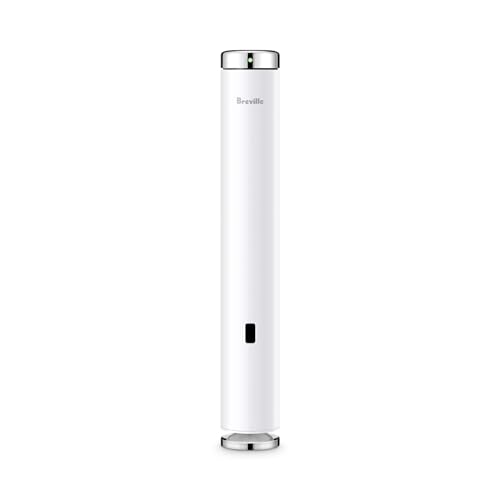
Breville Joule Turbo Sous Vide
Around 11 inches tall, it slips into a utensil drawer instead of claiming cupboard space. A magnetic foot lets it stand in a steel pot with no clamp at all. Turbo mode trims cook time by holding a calculated higher temperature early, and every setting lives in the app, since the body has no screen or dial.
Pros
- Smallest body among the 1,100 watt circulators
- Turbo mode shortens weeknight cook times
- Visual doneness guides help first time users
Cons
- Nothing works if the app fails to connect
- Magnetic base needs a steel bottomed pot

Anova Precision Cooker Nano 3.0
Rated near 750 watts, it manages pots up to roughly 12 litres, which covers steaks, chicken breasts and a tray of eggs. Bluetooth reaches across a room without any router setup. Buttons and a display sit on the unit, so it cooks with no phone in the picture.
Pros
- Cheapest route into the Anova app ecosystem
- Short enough to store in a utensil drawer
- Runs without joining a home network
Cons
- Slower heating in large volumes of water
- Bluetooth range rules out remote monitoring

Instant Pot Accu Slim Sous Vide Immersion Circulator
Every control sits on the unit, which suits cooks with no interest in pairing a kitchen appliance to a phone. Output lands around 800 watts, enough for a standard stockpot of steaks or thighs. Stability once the water reaches temperature matches pricier units, so the gap shows up in heat up speed and features rather than precision.
Pros
- Nothing to pair, register or update
- Holds temperature steadily once heated
- Simple enough for occasional weekend use
Cons
- Sends no alerts during a long cook
- Fixed clip fits fewer container walls

Inkbird ISV-100W WiFi Sous Vide Cooker
Notifications are the reason to pick this one. Leave a pork shoulder running 18 hours and a phone alert still flags a dropping water level. Output near 1,000 watts keeps heat up times sensible, and while the app looks less polished than Anova or Breville software, the temperature control underneath holds firm.
Pros
- Remote alerts on a mid range circulator
- Low water warning protects overnight cooks
- Touch panel runs independently of the app
Cons
- App layout feels rougher than rivals
- Joins 2.4 GHz networks only

Greater Goods Sous Vide Immersion Circulator
Owners return to one point repeatedly: it barely makes a sound, which matters when a cook runs all night in an open kitchen. Operation is a dial and an LCD, with no pairing step anywhere. Around 1,100 watts keeps heat up speed level with the app driven models.
Pros
- Quietest circulator here by owner reports
- Full heating power with no connectivity
- Interface anyone can operate on first use
Cons
- No notification when a cook finishes
- Smaller recipe community than Anova

SousVide Supreme Demi Water Oven
A sealed insulated tub replaces the pot, circulator and clamp, holding about 8.7 litres under a lid. Without a pump there is no noise and very little evaporation, even past 24 hours. Counter space pays for that, because it cannot fold away into a drawer between cooks.
Pros
- Silent through an overnight cook
- Insulated lid holds water loss down
- Nothing to clamp or size to a pot
Cons
- Occupies counter space permanently
- Capacity is fixed at one tub size
How they stack up
| # | Model | Power | Best for | Score | Price |
|---|---|---|---|---|---|
| 1 | Anova Culinary Sous Vide Precision Cooker 3.0 | 1,100 watts | Best overall | 9.4 | Check price |
| 2 | Breville Joule Turbo Sous Vide | 1,100 watts | Best for faster cooks | 9.2 | Check price |
| 3 | Anova Precision Cooker Nano 3.0 | About 750 watts | Best value | 9.0 | Check price |
| 4 | Instant Pot Accu Slim Sous Vide Immersion Circulator | About 800 watts | Best budget | 8.7 | Check price |
| 5 | Inkbird ISV-100W WiFi Sous Vide Cooker | About 1,000 watts | Best for long unattended cooks | 8.5 | Check price |
| 6 | Greater Goods Sous Vide Immersion Circulator | About 1,100 watts | Best for quiet operation | 8.3 | Check price |
| 7 | SousVide Supreme Demi Water Oven | About 8.7 litres | Best all in one water oven | 8.0 | Check price |
What matters most
What to look for in a sous vide machine Wattage sets how long you wait, not how accurate the cook is. Units near 1,100 watts pull a large pot to temperature well ahead of 750 watt models. Read the stated maximum water volume too, since a small circulator in a big cooler never quite catches up. Clamp design is the quiet dealbreaker: a fixed clip may not close on a thick walled polycarbonate tub. Onboard controls deserve a line on the checklist as well, because an app update that goes wrong should not cancel dinner. Noise only matters if the kitchen opens onto a bedroom or a living room.
Wattage, container size and heat up time Most home cooks use a 12 to 20 litre pot or a polycarbonate food container, and that choice interacts directly with heating power. Anova Precision Cooker Nano 3.0 at roughly 750 watts fits pots up to about 12 litres, while the 1,100 watt Precision Cooker 3.0 and the Greater Goods unit handle larger volumes comfortably. Filling from the hot tap cuts heat up time sharply on any model. Insulation matters more than buyers expect. A lid, or foil and a layer of ping pong balls, slows evaporation past the 12 hour mark. SousVide Supreme Demi sidesteps the issue entirely with a sealed insulated lid.
App control and alerts for overnight cooks Short cooks need no connectivity, which keeps the Instant Pot Accu Slim and the Greater Goods circulator in demand. Past roughly eight hours the maths changes, because water evaporates and a stalled cook is easy to miss while asleep. Wi-Fi models such as the Anova Precision Cooker 3.0 and the Inkbird ISV-100W push alerts to a phone, and Inkbird adds a low water warning on top. Breville Joule Turbo takes the idea furthest by deleting physical controls, elegant right up until the app refuses to pair. Cooking overnight regularly? Choose Wi-Fi over Bluetooth, since Bluetooth stops at the edge of the room.
Circulator vs water oven, and the gear you still need Immersion circulators clamp to any pot and store in a drawer, which fits the way most kitchens work. Water ovens such as the SousVide Supreme Demi swap that flexibility for silence, insulation and a fixed 8.7 litre tub, a fair trade for anyone cooking the same volume every week. Budget for a few extras either way: a lidded container, a rack to stop bags stacking, and zip bags or a vacuum sealer. Vacuum sealing is optional, because water displacement in a heavy zip bag seals steaks and chicken fine. One warning applies to every machine here. Sous vide browns nothing, so a hot cast iron pan or a torch remains part of the process.
Common questions
What is the best sous vide machine for home cooks?
Anova Culinary Sous Vide Precision Cooker 3.0 covers the widest range of kitchens, with 1,100 watts, Wi-Fi alerts and working onboard controls. Breville Joule Turbo is the alternative when drawer space is tight and running everything from a phone sounds fine.
How many watts does a sous vide cooker need?
Roughly 750 watts handles pots up to about 12 litres. Bigger containers, or impatience during heat up, call for 1,000 watts or more. Wattage changes waiting time rather than accuracy, since all of these hold a set point closely once the water arrives.
Do you need Wi-Fi on a sous vide machine?
Only for long cooks. Anything under about eight hours stays within sight of the kitchen. Overnight brisket and 48 hour short ribs are where remote alerts earn their keep, which puts the Anova Precision Cooker 3.0 and Inkbird ISV-100W ahead.
Anova vs Joule: which sous vide should I buy?
Anova keeps a display and buttons on the unit, so it cooks with the phone switched off. Joule Turbo is shorter, heats faster and adds visual doneness guides, at the cost of being app only. Pick Anova for reliability, Joule for space and speed.
Can you use a regular stockpot for sous vide?
Yes, and most owners do exactly that. Check the clamp closes on your pot wall, then cover the surface with a lid or foil to slow evaporation. Polycarbonate food containers stay popular because they insulate better and take purpose made lids.
Is a vacuum sealer necessary for sous vide?
No. Heavy duty zip bags with the air pushed out by water displacement work well for steaks, chicken and fish. A sealer earns its place for multi day cooks, freezing portions ahead, and anything where a floating bag would break the seal.
How much water does a long sous vide cook lose?
Enough to matter past about 12 hours in an uncovered pot. Lids, foil or ping pong balls cut that loss substantially. SousVide Supreme Demi removes the problem with a sealed insulated lid, which is its strongest practical argument.
Are cheap sous vide circulators accurate enough?
Generally yes. Instant Pot Accu Slim and Greater Goods both hold temperature closely once the water is up to heat. What you give up is heating speed, remote alerts and clamp flexibility rather than cooking precision.
Which sous vide machine is quietest for overnight cooking?
SousVide Supreme Demi makes no pump noise at all, because still water design skips the pump entirely. Among circulators, owners rate the Greater Goods unit quietest. Anova Precision Cooker 3.0 is the noisiest option here in an open plan room.
Is a sous vide water oven better than an immersion circulator?
It depends on how you cook rather than which is better built. Water ovens suit repeat batches at one volume, with silence and low evaporation included. Circulators win on storage, flexible container size and price, which is why most kitchens end up with one.
Our take
Anova Culinary Sous Vide Precision Cooker 3.0 is the safest buy for most kitchens, since 1,100 watts, an adjustable clamp and functioning onboard controls cover both weeknight chicken and a 24 hour brisket. Cooks short on storage who trust their phone should take the Breville Joule Turbo instead. Anyone who only wants a properly cooked steak without pairing anything can stop at the Instant Pot Accu Slim and put the difference toward a vacuum sealer.
Dana Whitfield
Dana spent eight years buying and merchandising for a regional kitchenware retailer before moving into editorial work. She has handled thousands of SKUs across cookware, small appliances and kitchen organization, and focuses on the practical differences that matter once a product is actually in daily use.

