RV Water Filters Built for Boondocking and Solar Rigs
Camco’s EVO Premium RV/Marine Water Filter leads for full flow and carbon block filtration on most rigs. Culligan’s RVF-10 matches its taste and odor control at a lower cost per cartridge. Camco’s TastePure with Flexible Hose Protector covers basic filtration for occasional weekend trips.
Camco’s EVO Premium RV/Marine Water Filter is the strongest all-around choice for most rigs, pairing carbon block media with a flow rate that keeps low-pressure pumps happy. Its cost sits above a basic inline filter, and it still needs a cartridge swap each season.
Solar-powered and boondocking RVers care less about brand names and more about flow rate, since undersized pumps and gravity fills punish restrictive filters. Micron ratings, rated flow in gallons per minute, cartridge life, and connection style across listings and owner feedback separate inline filters from canister systems.
How to choose
RV water filter types, from inline to canister systems Inline filters screw onto a garden hose at the water source, filtering before the tank fills or the tap flows. Canister systems mount to the RV frame or plumbing and stay in place all season. Dirt, rust, and grit larger than a few microns get caught by sediment cartridges. Carbon block cartridges pull chlorine taste, odor, and finer particles. Many rigs run both stages, either in one canister or as separate filters.
What micron rating removes from RV water Micron rating measures the smallest particle size a filter blocks. Standard inline filters sit around 20 microns, enough for visible sediment and rust. Carbon block filters rated closer to 1 or 5 microns catch finer particles and some cysts. Tighter filtration comes with lower micron numbers, but also more resistance to flow. Owners filling from questionable water sources, like unfamiliar campground spigots, benefit most from a finer rating.
Flow rate for solar and boondocking setups Solar-powered rigs often rely on a 12 volt pump running off batteries rather than shore pressure. A restrictive filter forces that pump to work harder, draining power faster. Gravity fills, common when topping off a tank from a jug or tote while boondocking, depend even more on low resistance. Fill times stay reasonable above 3 GPM under those conditions. Canister systems generally outperform basic inline filters here because of their larger cartridge surface area.
How long an RV water filter lasts before swapping Most carbon cartridges last one camping season under regular use, roughly four to six months. Heavier sediment loads or extended boondocking trips shorten that window. Packing a spare cartridge avoids a mid-trip search for a specific replacement part. Only the cartridge needs swapping in canister systems, not the whole housing, which cuts down on waste. A simple taste or odor change in the water is usually the first sign a filter needs replacing.
What we recommend

Camco EVO Premium RV/Marine Water Filter
Chlorine taste, odor, and fine sediment get targeted before water reaches the tap by this carbon block filter. Full flow rating means it does not choke gravity fed fills or a weak 12 volt pump. A quick connect fitting lets it swap into most standard garden hose setups.
Pros
- Full flow design avoids pressure drop at the tap
- Reduces chlorine taste and odor along with sediment
- Compatible with standard garden hose fittings
Cons
- Cartridge needs replacing each camping season
- Costs more than Camco’s basic TastePure line
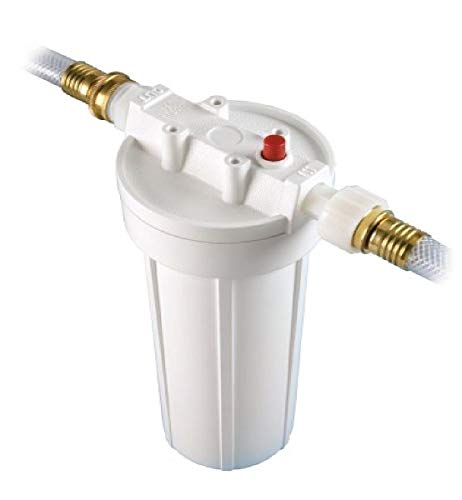
Culligan RVF-10 Premium RV/Marine Water Filter
Carbon filtration similar to pricier inline filters comes at a lower cost per cartridge in the RVF-10. Owners report it clears chlorine smell within the first few gallons of use. Two filters typically ship per pack, covering a longer stretch of travel.
Pros
- Lower cost per cartridge than premium competitors
- Ships as a two pack for extended trips
- Familiar Culligan filtration brand
Cons
- Flow rate lags behind full flow inline models
- Housing is plastic and less durable long term

Camco TastePure RV/Marine Water Filter with Flexible Hose Protector
Entry level and built for occasional weekend trips rather than full time boondocking, TastePure is Camco’s basic inline filter. Its flexible hose protector reduces kinking where the filter meets the spigot. Carbon media handles basic chlorine taste and odor without tackling fine sediment.
Pros
- Lowest cost of the inline options here
- Flexible protector guards against hose kinks
- Simple screw on install with no tools
Cons
- Limited sediment reduction compared to carbon block designs
- Best suited to short trips, not full time use

Hydro Life HL-200 Exterior RV Water Filter
Exterior mounting via bracket keeps the HL-200 out of the way of storage bays. Coconut shell carbon block filtration rates to a finer 1 micron nominal size, aimed squarely at taste, odor, and cyst reduction. A built in bypass valve lets water skip the filter during winterizing.
Pros
- Finer micron rating than most inline competitors
- Bypass valve simplifies winterizing
- Exterior mount keeps it off the countertop
Cons
- Slower flow rate than full flow inline filters
- Permanent mounting takes more setup time
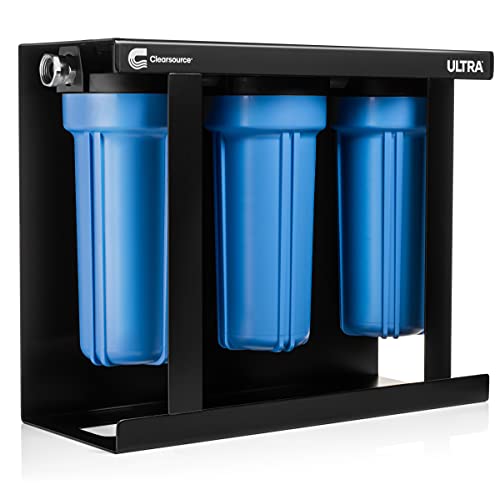
Clearsource Premium RV Water Filter System
A 5 micron sediment cartridge pairs with a carbon block stage in one permanently mounted canister housing. Larger cartridge surface area keeps flow high even as filters load with debris. Full time and off-grid rigs that fill from unknown campground or well sources get the most from this build.
Pros
- Two-stage design catches sediment before the carbon stage
- High flow rate suits whole-RV plumbing, not just a single tap
- Cartridges last roughly six months of regular travel
Cons
- Requires drilling and permanent mounting space
- Higher upfront cost than any inline filter here

Watts RV Pro+ Inline Water Filter
Carbon block filtration packs into a compact canister sized for RV storage bays with this filter. It is light enough to pack alongside solar panels and other boondocking gear without adding real weight. Quick connect fitting attaches directly to a garden hose at the fill point or spigot.
Pros
- Compact housing fits easily in a storage bay
- Quick connect fitting speeds up hose hookups
- Handles sediment and taste in a single cartridge
Cons
- No exterior mounting bracket included
- Cartridge life shortens with heavily sedimented water
Clearsource Nomad Portable RV Water Filter System
Two-stage sediment and carbon design carries over from Clearsource’s mounted system into a portable, carry case unit here. That matters for solar and boondocking rigs that fill tanks from varied sources instead of a fixed hookup. High flow keeps fill times short even through a low-pressure gravity feed.
Pros
- Portable case moves between rigs or fill points easily
- High flow rate suits gravity fills and weak pumps alike
- Same two-stage filtration as the mounted Clearsource system
Cons
- Bulkier to store than a single inline filter
- Costs more than basic inline options despite no permanent mount
The lineup, side by side
| # | Model | Filter media | Best for | Score | Price |
|---|---|---|---|---|---|
| 1 | Camco EVO Premium RV/Marine Water Filter | Carbon block with KDF | Best overall | 9.4 | Check price |
| 2 | Culligan RVF-10 Premium RV/Marine Water Filter | Activated carbon | Best value | 9.1 | Check price |
| 3 | Camco TastePure RV/Marine Water Filter with Flexible Hose Protector | Activated carbon | Best budget | 8.9 | Check price |
| 4 | Hydro Life HL-200 Exterior RV Water Filter | Coconut shell activated carbon block | Best for taste and odor | 8.7 | Check price |
| 5 | Clearsource Premium RV Water Filter System | Sediment plus carbon block, two-stage | Best whole-RV canister system | 8.5 | Check price |
| 6 | Watts RV Pro+ Inline Water Filter | Carbon block | Best inline filter for boondocking | 8.2 | Check price |
| 7 | Clearsource Nomad Portable RV Water Filter System | Sediment plus carbon block, two-stage | Best for off-grid and solar-powered rigs | 8.0 | Check price |
Frequently asked questions
Do I need a water filter for my RV?
Most RV parks and rural spigots deliver water that is safe but heavy on chlorine taste and sediment. A basic inline filter removes both without any plumbing changes. Boondockers filling from wells or unmarked sources benefit from finer filtration, closer to 1 or 5 microns.
Inline vs canister RV water filter, which is better?
Inline filters are cheaper and easier to swap between hoses, making them fine for occasional trips. Canister systems handle higher flow and larger sediment loads, which suits full time or off-grid travel. The choice comes down to how often the rig fills from unpredictable water sources.
How often should I replace my RV water filter?
Most cartridges are rated for one camping season, roughly four to six months of regular use. Heavy sediment or extended boondocking trips can shorten that to a few weeks. A drop in flow or a return of chlorine taste signals it is time to swap the cartridge.
Can I use a regular garden hose filter on my RV?
A basic garden hose filter reduces some sediment but is not built for drinking water contact or RV-specific flow rates. Filters marketed for RV or marine use include food-safe materials and connections sized for standard RV hoses. Sticking with an RV-rated filter avoids compatibility and material safety issues.
What micron rating is best for RV drinking water?
A 20 micron filter handles visible sediment and basic taste and odor for typical campground water. A 5 micron or finer carbon block filter catches smaller particles and works better with unknown well or lake sources. Boondockers filling from varied locations should lean toward the finer rating.
Is a whole-RV water filter system worth it for boondocking?
A canister system like the Clearsource Premium filters every tap in the rig instead of just one hookup point. That matters for full time boondockers who fill from wells, lakes, or unfamiliar spigots regularly. Weekend campers using established RV parks usually get by with a simpler inline filter.
Does a water filter reduce water pressure in an RV?
Any filter adds some resistance, but full flow rated inline filters and canister systems minimize the drop. A 20 micron basic filter restricts flow less than a fine carbon block, at the cost of coarser filtration. Low-pressure 12 volt pumps feel a restrictive filter more than a full shore hookup does.
What is the best RV water filter for well or campground water?
The Clearsource Premium or Nomad system covers both sediment and taste in one two-stage unit, suited to unpredictable well water. Established campground hookups with treated municipal water usually only need a basic carbon inline filter like the Camco TastePure. Matching the filter to the water source avoids paying for filtration that is not needed.
How does a solar-powered RV pump affect water filter choice?
A 12 volt pump running off battery power works harder against a restrictive filter, draining the battery faster during every fill. Filters rated above 3 GPM, like the Camco EVO or Watts Pro+, ease that load compared to slower rated cartridges.
Camco EVO vs Culligan RVF-10, which RV water filter is better?
The Camco EVO rates for higher flow at 3.0 GPM, better suited to weak pumps and gravity fills. The Culligan RVF-10 costs less per cartridge and ships two per pack, which favors buyers watching cartridge costs over raw flow.
Our take
Full flow and effective carbon filtration in a single inline unit make the Camco EVO Premium RV/Marine Water Filter the best mix for most owners. Full time boondockers and solar-equipped rigs filling from unpredictable sources should step up to the Clearsource Nomad or Premium system instead, since their two-stage design and higher flow rate handle sediment better under gravity fills. Weekend campers on a tighter budget can skip the extras and pick the Camco TastePure without much loss in day to day taste.
Tony Russo
Tony trained as an automotive technician and spent years in service and parts retail before moving into writing. He focuses on garage tools, car care products and accessories from a hands-on maintenance perspective.


