Top Solar Power Stations for Home and Adventure
The Jackery Solar Generator 1000 v2 is our top pick for most people, offering a strong balance of capacity, fast solar charging, and reliability for camping and emergency backup. Its main limitation is that it lacks a high surge rating for heavy appliances like refrigerators.
Solar power stations have transformed how we access electricity away from the grid. Whether you need backup power during outages or a reliable energy source for camping, these units offer clean, quiet power. The market is crowded with options, so we narrowed down the best based on real-world specifications and user feedback.
In this roundup, we focused on portable power stations that come with or can be paired with solar panels. We considered battery capacity, inverter output, recharge time, and durability. Each product was chosen for its reputation and performance in its category.
How to pick the right one
Our top picks

Jackery Solar Generator 1000 v2
The Jackery Solar Generator 1000 v2 combines a 1070Wh LiFePO4 battery with a 1500W pure sine wave inverter. It charges rapidly with solar panels, reaching 80% in under 2 hours in ideal conditions. Owners report reliable performance for CPAP machines, mini fridges, and power tools. Its foldable handle and wheels make it easy to move.
Pros
- Fast solar charging with high input
- Long-lasting LiFePO4 battery
- Lightweight and portable design
Cons
- Limited surge capacity for large appliances
- No built-in MPPT controller display

EcoFlow DELTA 2 Max
The EcoFlow DELTA 2 Max offers a 2048Wh capacity expandable to 6kWh, making it a powerhouse for home backup. It charges from 0 to 80% in just over an hour with AC, and solar input up to 1000W. Its X-Boost technology handles appliances up to 3400W. Users appreciate the app control and multiple output ports.
Pros
- Very high capacity and expandability
- Extremely fast AC and solar charging
- Smart app with remote monitoring
Cons
- Heavy and bulky
- Premium price point

BLUETTI AC200MAX
The BLUETTI AC200MAX features a 2048Wh LiFePO4 battery and a 2200W inverter. It offers a 12V/30A RV port, multiple USB and AC outlets, and can be expanded with extra batteries. It supports solar input up to 900W. Its modular design makes it a favorite for van life and off-grid setups.
Pros
- Multiple output options including RV port
- Expandable capacity
- Sturdy build quality
Cons
- Heavy and not very portable
- Charging speed is moderate

Anker SOLIX F3800
The Anker SOLIX F3800 boasts a 3840Wh capacity and can accept up to 2400W of solar input, achieving full charge in under 2.5 hours with enough panels. Its 6000W output (with boost) can power large appliances. It features a robust app and a clear display. Owners appreciate its rapid recharge and high power.
Pros
- Unmatched solar charging speed
- Massive capacity for whole-home backup
- High surge capability
Cons
- Very heavy and difficult to move
- Expensive investment

Jackery Explorer 300 Plus
The Jackery Explorer 300 Plus is a compact solar generator with a 288Wh capacity and 300W output. It weighs only 8.3 lbs, making it ideal for hiking and small electronics. It charges via a single 100W solar panel in about 4 hours. Users find it perfect for smartphones, laptops, and small CPAPs.
Pros
- Extremely lightweight and portable
- Fast charging with optional 100W panel
- Safe LiFePO4 battery
Cons
- Limited capacity for larger devices
- Only 2 AC outlets
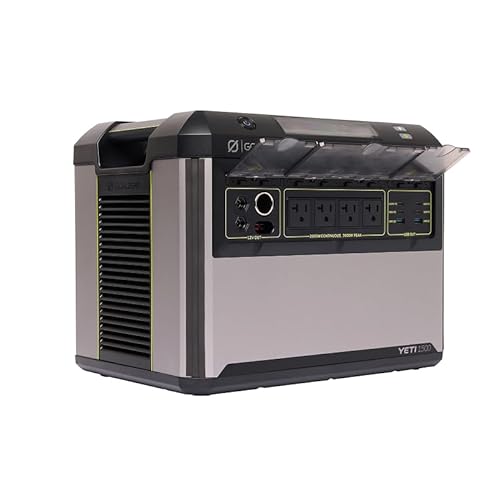
Goal Zero Yeti 1500X
The Goal Zero Yeti 1500X has a 1516Wh capacity and 2000W inverter. It is known for its robust build and reliable performance in outdoor and emergency situations. It supports up to 600W solar input. Users report dependable power for camping and tailgating, with a clear display and multiple ports.
Pros
- Trusted brand with excellent customer support
- Solid construction
- Clear digital display
Cons
- Heavier than similar capacity units
- Slower solar charging compared to newer models
Rockpals 300W Portable Power Station
The Rockpals 300W is a budget-friendly solar generator with a 280Wh capacity and 300W output. It is affordable and includes a 60W solar panel option. It features multiple outputs including AC, USB, and DC. While not as powerful as premium models, it’s a great entry point for camping and small electronics.
Pros
- Budget-friendly price
- Lightweight and easy to carry
- Plenty of output ports for the price
Cons
- Lower capacity and output
- Solar panel sold separately
How they compare
| # | Model | Capacity | Best for | Score | Price |
|---|---|---|---|---|---|
| 1 | Jackery Solar Generator 1000 v2 | 1070Wh | Overall best for most users | 9.4 | Check price |
| 2 | EcoFlow DELTA 2 Max | 2048Wh expandable | High capacity and fast charging | 9.2 | Check price |
| 3 | BLUETTI AC200MAX | 2048Wh LiFePO4 | Versatile output options | 9.0 | Check price |
| 4 | Anker SOLIX F3800 | 3840Wh LiFePO4 | Fastest solar charging | 8.8 | Check price |
| 5 | Jackery Explorer 300 Plus | 288Wh LiFePO4 | Lightweight and compact | 8.6 | Check price |
| 6 | Goal Zero Yeti 1500X | 1516Wh Li-ion | Reliable brand with proven performance | 8.4 | Check price |
| 7 | Rockpals 300W Portable Power Station | 280Wh Li-ion | Budget-friendly option | 8.0 | Check price |
Questions worth asking
How long does a solar power station last on a full charge?
It depends on the load. A 1000Wh station can power a 100W TV for about 10 hours. Always check the wattage of your devices and calculate accordingly.
Can I charge a solar power station with regular wall outlets?
Yes, all solar power stations come with AC adapters for wall charging. They can be charged via solar panels, AC outlets, or car chargers.
Do solar power stations work in cloudy weather?
Yes, but charging efficiency drops significantly. They still charge, just slower. Some panels are more efficient in low light than others.
Are solar power stations safe to use indoors?
Yes, they are safe. They produce no fumes and operate quietly. However, ensure proper ventilation and avoid covering vents while charging.
What is the difference between a solar generator and a portable power station?
They are essentially the same. A solar generator typically includes a solar panel, while a power station is the battery unit alone. Both convert stored solar energy into usable AC power.
Can I run a refrigerator with a solar power station?
Yes, but you need a model with adequate capacity and surge capability. Most refrigerators need 600-800W running power and higher surge. A 1500W inverter or more is recommended.
What is the lifespan of a solar power station battery?
LiFePO4 batteries last about 3500 cycles, which is roughly 10 years of daily use. Lithium-ion batteries last around 500-800 cycles.
Are solar panels included with these power stations?
Some models include panels, others do not. Always check the product listing. For example, the Jackery Solar Generator 1000 v2 often comes with a panel, but the Rockpals does not.
How do I choose the right solar panel wattage for my station?
Check the station’s maximum solar input. Matching or exceeding that wattage will ensure fastest charging, but be sure the voltage is within the limit. Many brands recommend specific panel sizes.
Can I expand the capacity of my solar power station?
Some models, like the EcoFlow DELTA 2 Max and BLUETTI AC200MAX, allow expansion with additional batteries. Check if the model supports it and what connectors are needed.
Our pick
For most people, the Jackery Solar Generator 1000 v2 offers the perfect blend of performance, portability, and price. If you need more power for home backup, the EcoFlow DELTA 2 Max is the best choice. For budget-conscious campers, the Rockpals 300W provides solid value without breaking the bank.
Marcus Chen
Marcus covered consumer electronics for enthusiast tech publications for six years before joining ChoiceCrest. He specializes in translating manufacturer spec sheets into plain-language buying advice, with a focus on audio, computing accessories and smart-home gear.


