Which Solar Pool Cover Actually Cuts Heating Costs?
Sun2Solar’s Blue 12-Mil Rectangular Solar Cover leads for balanced heat retention on standard pools. Blue Wave’s Gold and Silver Solar Blanket suits colder climates that need extra insulation overnight. Doheny’s Space Age Solar Pool Cover delivers comparable bubble thickness for owners watching cost.
Three covers stand out in this category. Sun2Solar’s blue 12-mil cover balances heat retention with enough sun transmission to warm most rectangular pools directly. Blue Wave’s gold and silver blanket adds a reflective underside that helps in climates where nights cool fast. Doheny’s Space Age cover matches that bubble thickness at a friendlier cost for budget minded owners.
Trapped air inside the bubble layer slows both heat loss and evaporation, the two factors that drive up a pool’s heating cost the most. Thicker bubbles insulate better but block more direct sunlight from warming the water underneath. We compared bubble thickness, color, UV resistance, and stated lifespan, then weighed owner reports of tearing and fading against manufacturer claims.
The best picks, ranked

Sun2Solar Blue 12-Mil Rectangular Solar Cover
Twelve mil bubbles strike a middle ground between heat retention and sun transmission, a balance that suits most climates. Blue coloring resists fading better than clear material under sustained UV exposure. Trimming it to fit pools slightly off standard dimensions takes only scissors or a utility knife.
Pros
- Balances heat retention and sun transmission well
- Blue color resists UV fading
- Trims easily for irregular pool shapes
Cons
- Heavier to handle than thinner covers
- Needs a reel for easy daily removal
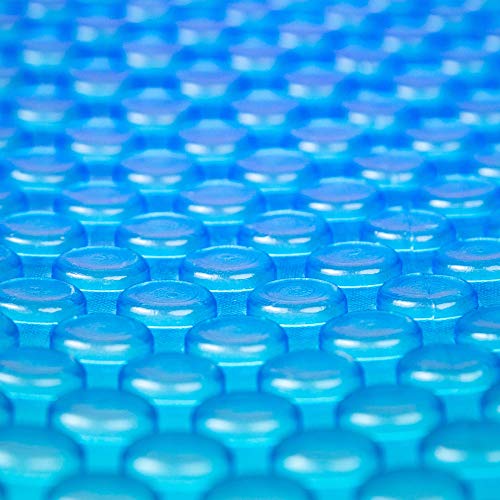
Blue Wave Gold and Silver Solar Blanket
A gold top layer absorbs sunlight while a silver underside reflects heat back into the water, a combination that performs well in cooler climates. Extra weight from the second layer makes a cover reel worth the investment for daily use. UV stabilized polyethylene resists breakdown over multiple seasons.
Pros
- Reflective underside improves retention in cool climates
- Gold top layer absorbs sunlight effectively
- Holds up across multiple seasons
Cons
- Heavier than single color covers
- Costs more than basic blue covers

Doheny’s Space Age Solar Pool Cover
Matching the bubble thickness of premium covers, Doheny’s hits a lower price point with a slightly thinner base material. Heat retention holds up well for a season or two of regular use. Owners who replace their cover annually find the cost tradeoff reasonable.
Pros
- Matches premium bubble thickness at lower cost
- Delivers solid heat retention for regular use
- Widely available in standard pool sizes
Cons
- Base material thinner than top tier covers
- Shorter expected lifespan under daily sun

Intex Solar Cover for Above Ground Pools
Sized specifically for round above ground pools, this cover skips the cutting and trimming that rectangular designs need for round shapes. Eight mil bubbles trap heat effectively for the smaller water volumes typical of above ground setups. Polyethylene construction keeps the price accessible.
Pros
- Pre sized for round above ground pools
- Needs no cutting or trimming
- Affordable for smaller pool volumes
Cons
- Thinner bubble than in ground rated covers
- Not designed for large rectangular pools

Robelle Pro-Strength Solar Pool Cover
Reinforced edge tape cuts down on the tearing that usually starts at a cover’s perimeter after repeated reeling. Fourteen mil bubbles run thicker than standard covers, adding both weight and insulation. Seasons of daily use show less wear than on thinner alternatives.
Pros
- Reinforced edges resist tearing from daily reeling
- Thicker bubble improves insulation
- Holds up well across multiple seasons
Cons
- Heaviest cover in this lineup
- Premium cost for the added reinforcement
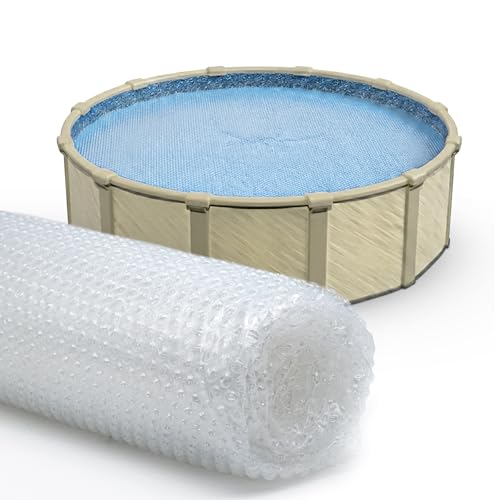
Sun2Solar Clear Solar Cover
Clear bubbles let more direct sunlight reach the water instead of relying on trapped air alone. Consistently sunny climates suit this design best. Overnight heat retention runs slightly behind darker colored covers once the sun goes down.
Pros
- Maximizes direct sun transmission to the water
- Performs well in consistently sunny climates
- Lighter feel than darker premium covers
Cons
- Retains less overnight heat than blue or gold covers
- UV degradation shows faster on clear material

In The Swim Silver and Blue Solar Cover
A silver underside paired with a blue top gives entry level reflective insulation. Eight mil bubbles keep the cover light and easy to handle, though that thinner build shortens its expected lifespan. Standard rectangular sizing fits most residential pools after trimming.
Pros
- Low entry price for reflective insulation
- Lighter weight simplifies daily handling
- Fits standard rectangular pool sizes
Cons
- Thinner bubble reduces long term durability
- Needs replacement sooner than heavier covers
How they compare
| # | Model | Thickness | Best for | Score | Price |
|---|---|---|---|---|---|
| 1 | Sun2Solar Blue 12-Mil Rectangular Solar Cover | 12 mil | Best overall | 9.2 | Check price |
| 2 | Blue Wave Gold and Silver Solar Blanket | 12 mil | Best for cold climates | 9.0 | Check price |
| 3 | Doheny’s Space Age Solar Pool Cover | 12 mil | Best value | 8.7 | Check price |
| 4 | Intex Solar Cover for Above Ground Pools | 8 mil | Best for above ground pools | 8.4 | Check price |
| 5 | Robelle Pro-Strength Solar Pool Cover | 14 mil | Best for durability | 8.8 | Check price |
| 6 | Sun2Solar Clear Solar Cover | 12 mil | Best for direct heating | 8.6 | Check price |
| 7 | In The Swim Silver and Blue Solar Cover | 8 mil | Best budget | 8.2 | Check price |
How to choose
How a solar pool cover actually saves money Trapped air inside the bubble layer slows both evaporation and overnight heat loss, the two biggest drivers of pool heating cost. Evaporation alone accounts for most of the heat an uncovered pool loses, so even a basic cover makes a real dent. Thicker covers insulate better but add weight and replacement cost.
Which bubble thickness fits your climate Eight mil covers suit mild climates or above ground pools where heat loss runs less severe. Most in ground rectangular pools land on 12 mil as the common middle ground. Fourteen mil and reinforced covers make sense in colder regions or for owners who want several seasons out of one cover.
Does cover color change heating performance Blue covers balance sun transmission and heat retention across most climates. Gold and silver combination covers reflect heat back into the water, which helps where nights cool quickly. Clear covers maximize direct sunlight transmission, a good fit for consistently sunny regions.
How to fit, store, and extend cover life Most covers ship oversized, so measuring the pool carefully before trimming matters more than the cutting itself. A cover reel cuts down on the folding and dragging that causes early tears, especially on 12 and 14 mil covers. Storing the cover out of direct sun when not in use slows the UV exposure that degrades bubbles over time.
Common questions
How much does a solar cover actually raise pool temperature?
Typical gains run 5 to 15 degrees Fahrenheit depending on climate, cover thickness, and how consistently it stays on the pool between swims.
What is the difference between 8 mil and 12 mil solar covers?
Mil refers to thickness. 12 mil covers insulate better and last longer under regular use, while 8 mil covers are lighter and cheaper but wear out faster.
Do solar covers really reduce evaporation?
Yes. Evaporation is the largest source of heat loss in an uncovered pool, and a solar cover’s bubble layer significantly slows water loss to the air.
Should the bubbles face up or down on a solar cover?
Bubbles face down, touching the water. This traps air against the surface for insulation while the flat side faces up toward the sun.
How long does a solar pool cover typically last?
Most covers last one to three seasons depending on thickness, UV exposure, and handling. Reinforced and thicker covers tend toward the longer end of that range.
Is a blue or clear solar cover better for heating?
Clear covers let more direct sunlight through to warm the water itself, while blue covers balance transmission with better heat retention overnight. Climate and sun exposure should guide the choice.
Can I cut a solar cover to fit an irregular pool shape?
Yes, most covers ship oversized specifically so they can be trimmed to match custom or irregular pool shapes with household scissors or a utility knife.
Do I need a cover reel for a solar pool cover?
A reel is not required but makes daily removal and replacement much easier, especially for 12 mil and thicker covers that are heavy when wet.
Is a solar cover worth it for an above ground pool?
Yes. Above ground pools hold less water relative to their surface area, so a properly sized cover like Intex’s round design often shows a bigger temperature gain than on a large in ground pool.
Our pick
Sun2Solar’s blue 12-mil cover suits most rectangular pools, balancing heat retention with enough sun transmission to warm the water directly. Cooler climates favor Blue Wave’s gold and silver blanket for its reflective heat retention. Doheny’s Space Age cover delivers comparable bubble thickness for a tighter budget.
Sierra Daniels
Sierra's background is in landscape design and nursery retail. She focuses on lawn and garden equipment, outdoor furniture and gear durability, weighing published specs against how materials actually hold up outside.