Solar Generators for Camping, CPAP and Home Backup
EcoFlow’s DELTA 2 is the broadest pick, matching 1024Wh of LiFePO4 capacity to an 1800W inverter and an 80 percent wall recharge in about 50 minutes. Jackery’s Explorer 1000 v2 carries similar capacity at lighter weight. For short trips, Bluetti’s EB3A holds 268Wh at roughly 10 pounds.
EcoFlow’s DELTA 2 covers the widest range of jobs for most buyers. Its 1024Wh LiFePO4 pack and 1800W inverter run a fridge, short microwave bursts and a full desk setup. Wall charging reaches 80 percent in roughly 50 minutes. Weight is the limit here, since 27 pounds keeps it near a vehicle.
Two numbers get mixed up constantly. Watt hours describe how long a unit lasts, while inverter watts decide what it can start at all. Pair 268Wh with a 600W inverter and a coffee maker drains the pack in minutes. We compared published capacity, continuous and surge output, solar input ceilings, cell chemistry and quoted recharge times. Each pick then went to the use case it genuinely suits.
The shortlist, ranked

EcoFlow DELTA 2
Pure sine output at 1800W handles most household appliances, and X-Boost stretches coverage to some resistive loads above that rating. LiFePO4 cells carry a roughly 3000 cycle rating to 80 percent capacity, far past older NMC packs. Bolt on expansion batteries and total storage reaches about 3kWh for longer outages.
Pros
- Fastest wall recharge of any unit compared here
- Expands to roughly 3kWh with add on batteries
- Fifteen ports span AC, USB-C, USB-A and 12V car sockets
Cons
- Cooling fans are audible during fast charging
- At 27 pounds it stays close to a vehicle

Jackery Explorer 1000 v2
This generation switched to LiFePO4 and still dropped to about 24 pounds, light for 1070Wh of storage. A 1500W inverter runs kettles, corded tools and a full camp kitchen. Bluetooth and Wi-Fi control puts state of charge on your phone from inside a tent.
Pros
- Lightest of the kilowatt class compared here
- Runs quieter than the DELTA 2 under moderate load
- State of charge visible in the app over Wi-Fi
Cons
- A 400W solar ceiling trails the DELTA 2
- Fewer outlets than rivals of similar size

Bluetti EB3A
Think phones, laptops and camp lights rather than appliances, because 268Wh disappears quickly under AC load. Power Lifting mode pushes the 600W inverter to drive some 1200W resistive devices at reduced speed. Ten pounds is the real argument for it, since a unit this light actually gets carried.
Pros
- Carried one handed at about 10 pounds
- LiFePO4 cells despite the entry position
- Reaches full charge from mains in around 30 minutes
Cons
- Capacity empties fast with anything on AC
- Fan spins up early and stays noticeable

Anker SOLIX C1000
Solar input peaks at 600W, the highest among the kilowatt units compared, so a large array refills the pack inside one good day. SurgePad lifts the 1800W inverter to 2400W for motor startup. Anker quotes 58 minutes to 80 percent from a wall outlet.
Pros
- Highest solar input ceiling of the kilowatt models
- Surge headroom starts compressors and water pumps
- Accepts a matching expansion battery
Cons
- Needs a large panel array to reach 600W
- Heaviest of the portable class at about 28 pounds

Jackery Explorer 300 Plus
Roughly 8.3 pounds slots this into a pack side pocket. A 300W AC outlet covers laptops, drone chargers and camera gear, while the 100W USB-C port fills a laptop without waking the inverter. Storage of 288Wh lasts a weekend of phones, headlamps and a camera battery or two.
Pros
- Light enough to carry on foot all day
- A 100W USB-C port skips inverter losses
- Recharges from USB-C as well as solar
Cons
- A 300W ceiling rules out kettles and heaters
- 288Wh needs a daily solar top up

Bluetti AC200L
Storage of 2048Wh with a 2400W inverter keeps a refrigerator, sump pump and lighting running through a multi day outage. Power Lifting raises the ceiling to 3600W for resistive appliances. B300K or B210 expansion packs take total capacity past 8kWh.
Pros
- Sized for a real outage, not a weekend camp
- 1200W solar input refills it in a single sunny day
- Expansion packs push storage beyond 8kWh
Cons
- About 62 pounds, so moving it wants a trolley
- More unit than any camping trip requires
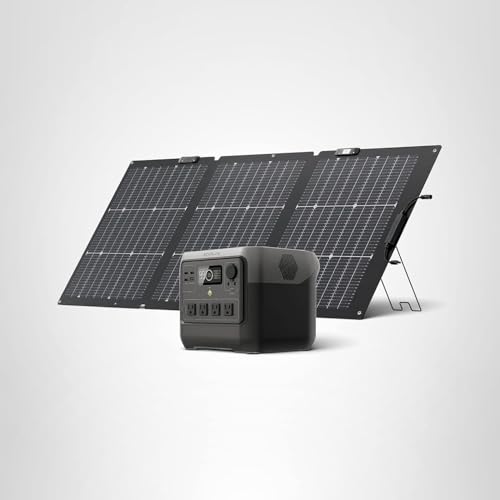
EcoFlow RIVER 2 Pro
With the heated humidifier switched off, 768Wh covers roughly two nights of CPAP use. An 800W inverter leaves headroom for a laptop and a small fan on the same trip. Mains charging finishes in about an hour, which fits an overnight stop with power.
Pros
- Two CPAP nights with the humidifier off
- Full mains recharge in roughly one hour
- About 17 pounds, easy for one person to shift
Cons
- A 220W solar ceiling slows off grid refills
- An 800W inverter limits appliance choice
What matters most
What watt hours, inverter watts and solar input mean Watt hours tell you duration, watts tell you capability. A fridge pulling 60W on average empties 1024Wh in roughly 14 hours before conversion losses, and real figures land about 10 percent lower. Inverter rating is a separate ceiling: a 600W unit refuses a 1200W kettle regardless of stored capacity. Solar input caps refill speed, so a 200W ceiling wastes most of a 400W array.
Why LiFePO4 chemistry decides long term value Every pick here runs LiFePO4, rated near 3000 cycles to 80 percent capacity against roughly 500 for older lithium NMC. Daily cycling in a van or cabin is where that gap turns into years of service. Heat tolerance is better too, with a safer thermal profile under sustained load. NMC power stations still sit in listings, so read the chemistry line before ordering.
Best solar generators for camping and van trips Weight sets the rules outdoors. Jackery’s Explorer 300 Plus at 8.3 pounds is the only model here you would carry any real distance. Step up to the Bluetti EB3A when an AC outlet has to do more than feed a laptop charger. Van dwellers should look instead at the Anker SOLIX C1000, whose 600W solar ceiling lets a roof array refill it between stops.
Sizing a unit for home backup and CPAP use Outage planning starts at the fridge, which typically needs 1 to 2kWh per day once cycling is counted. That rules out anything under a kilowatt and points to the Bluetti AC200L with its 2048Wh pack and expansion ports. CPAP users need far less, near 300Wh per night with the humidifier off, so the EcoFlow RIVER 2 Pro covers two nights. Electric heating and well pumps stay off the list for all seven.
Side by side
| # | Model | Capacity | Best for | Score | Price |
|---|---|---|---|---|---|
| 1 | EcoFlow DELTA 2 | 1024Wh LiFePO4 | Best overall | 9.4 | Check price |
| 2 | Jackery Explorer 1000 v2 | 1070Wh LiFePO4 | Best value | 9.2 | Check price |
| 3 | Bluetti EB3A | 268Wh LiFePO4 | Best budget | 9.0 | Check price |
| 4 | Anker SOLIX C1000 | 1056Wh LiFePO4 | Best for fast solar recharging | 8.8 | Check price |
| 5 | Jackery Explorer 300 Plus | 288Wh LiFePO4 | Best for camping and hiking trips | 8.6 | Check price |
| 6 | Bluetti AC200L | 2048Wh LiFePO4 | Best for home backup | 8.3 | Check price |
| 7 | EcoFlow RIVER 2 Pro | 768Wh LiFePO4 | Best for CPAP users | 8.0 | Check price |
Questions worth asking
What is the best solar generator overall?
EcoFlow’s DELTA 2 balances 1024Wh of storage, an 1800W inverter and the quickest wall recharge in this group. Anker’s SOLIX C1000 makes more sense when panels rather than mains do most of the charging.
How long will a solar generator run a refrigerator?
A modern fridge averaging around 60W uses 1 to 2kWh a day including start surges. Expect roughly 12 to 14 hours from a 1024Wh unit like the DELTA 2, and a full day or more from the 2048Wh Bluetti AC200L.
Do solar generators come with solar panels?
Usually not. Listings normally sell the power station alone, with panels offered as a separate bundle. Check the solar input ceiling and the connector type first, because exceeding the rated input gains you nothing.
Is LiFePO4 better than lithium ion in a power station?
For this job, yes. LiFePO4 cells last near 3000 cycles to 80 percent capacity against roughly 500 for NMC, and they handle heat more safely. Slightly more weight per watt hour is the tradeoff.
Can a solar generator run a CPAP machine all night?
Yes, provided the heated humidifier stays off. Draw falls to roughly 30 to 60W that way, so the 768Wh EcoFlow RIVER 2 Pro covers about two nights. Running the humidifier can triple consumption.
Which solar generator is best for camping?
Jackery’s Explorer 300 Plus at about 8.3 pounds, since nothing else here is light enough to carry on foot. Take the Bluetti EB3A instead when you need a stronger AC outlet and can accept 10 pounds.
How fast do solar generators recharge from panels?
Divide capacity by real panel output, which runs near 70 percent of the rated figure. A 400W array feeding the Anker SOLIX C1000 refills roughly 1056Wh across about four good hours. Cloud cover and panel angle change that sharply.
Can you run a solar generator indoors?
Yes. Nothing burns and no exhaust leaves the case, unlike a petrol generator, so indoor use during an outage is safe. Leave the vents clear, because cooling fans need airflow under load.
What size solar generator do you need for home backup?
Add up the daily watt hours of the loads you refuse to lose, usually a fridge, lights and phones. Most households land between 2 and 4kWh a day, which means a 2048Wh unit plus an expansion pack rather than a single kilowatt box.
Final word
Pick the EcoFlow DELTA 2 if one unit has to cover camping, job sites and short outages, because its 1800W inverter and 50 minute fast charge stretch furthest. Planning for multi day home backup changes the answer to the Bluetti AC200L and its 2048Wh expandable pack. Hikers and weekend campers should skip both and take the 8.3 pound Jackery Explorer 300 Plus, the only model light enough to carry.
Sierra Daniels
Sierra's background is in landscape design and nursery retail. She focuses on lawn and garden equipment, outdoor furniture and gear durability, weighing published specs against how materials actually hold up outside.


