Solar Garden Lights Compared: Lumens, Battery, and IP Rating
GIGALUMI Solar Pathway Lights suit long driveways with higher lumen output and an IP65 seal. URPOWER Solar Garden Lights work well in flower beds needing a soft ambient glow. Home Zone Security Solar Pathway Lights hold up best in wet climates thanks to their sealed housing and metal stakes.
GIGALUMI Solar Pathway Lights suit anyone lining a driveway or long walkway, putting out roughly 50 lumens per head with an IP65 seal against rain and snow. Their stakes sit shorter than some landscape-style lights, which matters in taller garden beds.
Cheap solar lights often fail after one rainy season when a low-grade battery or a weak seal lets moisture in. We compared lumen output, battery chemistry, and IP rating across seven sets to separate the durable options from the disposable ones.
The shortlist, ranked

GIGALUMI Solar Pathway Lights
Each stake puts out roughly 50 lumens from a warm white LED, bright enough to mark a driveway or walkway edge. An IP65 rating keeps rain, snow, and sprinkler spray from reaching the internal contacts. A 600mAh NiMH battery carries that output through 8 to 10 hours per charge.
Pros
- Bright enough for pathway edges, not just accents
- IP65 seal withstands sprinklers, rain, and snow
- NiMH battery holds charge across changing seasons
Cons
- Needs full sun exposure to reach its max run time
- Stakes sit shorter than some landscape-style lights

URPOWER Solar Garden Lights
Output stays lower than pathway-focused lights, tuned instead for soft accent lighting along flower beds and borders. A frosted lens spreads that light into a wider, softer pool instead of a single bright point. Push-in stakes install without tools in most garden soil.
Pros
- Frosted lens gives a softer, wider glow
- Lower cost per unit across larger multi-packs
- Push-in stake needs no tools to install
Cons
- IP44 rating resists less water than IP65 options
- Too dim to work as a walkway safety light

Home Zone Security Solar Pathway Lights
A fully sealed IP65 housing targets buyers in rainy or snowy regions, where lesser seals let moisture reach the battery compartment. Metal stakes resist bending in soft or freshly turned soil. Brightness stays consistent across the full 8-hour run time instead of dimming near the end.
Pros
- Sealed housing holds up through winter weather
- Metal stakes resist bending in soft soil
- Brightness stays consistent across the full run time
Cons
- Mid-range lumen output next to GIGALUMI’s
- Metal stakes add weight versus plastic alternatives

Otdair Solar Garden Lights
Large multi-packs bring the per-unit cost down for covering long garden borders. Otdair sells both warm white and multi-color LED versions in the same stake design. Lightweight housings push into soft soil quickly across a dozen or more spots.
Pros
- Large pack size covers long borders at lower cost
- Available in warm white or color-changing versions
- Lightweight stakes install quickly across many spots
Cons
- Shorter run time than higher-capacity battery models
- IP44 rating limits use in heavy rain areas

AceSial Solar Spotlights
An adjustable head aims the beam at a tree, flag, or garden statue instead of lighting a path. Two brightness modes stretch run time when full output is not needed. A 1200mAh lithium battery holds its charge longer between sunny days than the NiMH cells used elsewhere in this lineup.
Pros
- Adjustable angle for accenting specific features
- Higher lumen output than most pathway lights
- Lithium battery holds charge longer between sunny days
Cons
- Not built to line a walkway edge
- Costs more per unit than basic pathway stakes
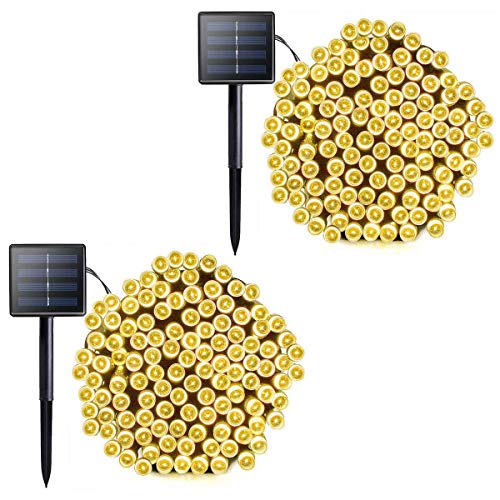
Vmanoo Solar Garden Lights
A smaller stake profile fits tightly spaced garden beds where larger pathway lights would crowd the plants. Output stays modest but consistent, suited to accent use rather than safety lighting. One-piece construction keeps installation to a single push into the soil.
Pros
- Compact size suits tightly spaced plantings
- Simple one-piece stake needs no assembly
- Consistent output through the rated run time
Cons
- Lowest lumen output in this comparison
- Not rated for heavy rain exposure

Aogist Solar Landscape Spotlights
A 2-in-1 mount lets this spotlight work as a ground stake or a wall-mounted fixture. Battery capacity trades down for a lower price point than lithium-based spotlights. Brightness still reaches about 40 lumens, enough to pick out a small tree or sign.
Pros
- 2-in-1 mounting adds installation flexibility
- Lower cost than lithium spotlight options
- Reasonable brightness for its price tier
Cons
- IP44 rating is less durable in wet climates
- NiMH battery degrades faster than lithium over seasons
The lineup, side by side
| # | Model | Lumens | Best for | Score | Price |
|---|---|---|---|---|---|
| 1 | GIGALUMI Solar Pathway Lights | ~50 per light | Best overall | 9.4 | Check price |
| 2 | URPOWER Solar Garden Lights | ~15 per light | Best for ambient garden glow | 9.1 | Check price |
| 3 | Home Zone Security Solar Pathway Lights | ~30 per light | Best for wet climates | 8.9 | Check price |
| 4 | Otdair Solar Garden Lights | ~20 per light | Best value | 8.6 | Check price |
| 5 | AceSial Solar Spotlights | ~80 per light on high | Best for highlighting features | 8.4 | Check price |
| 6 | Vmanoo Solar Garden Lights | ~12 per light | Best for small garden beds | 8.2 | Check price |
| 7 | Aogist Solar Landscape Spotlights | ~40 per light | Best budget | 8.0 | Check price |
Before you buy
What lumen output means for outdoor lighting A pathway light needs roughly 30 to 50 lumens to mark an edge safely at night. Accent lights tucked into garden beds can work well under 20 lumens without looking harsh. Spotlights aimed at a tree or statue benefit from 80 lumens or more to stand out from a distance. Matching output to the job keeps a yard from looking either dim or floodlit.
Battery chemistry and seasonal run time NiMH batteries are common and affordable, but they lose capacity faster in extreme cold than lithium cells. Lithium-based sets, like the AceSial spotlights, tend to hold a charge longer through short winter days. Capacity also scales with light output: the 1200mAh cell in AceSial’s spotlights supports both a brighter beam and two brightness modes.
IP rating and matching lights to climate An IP65 rating, found on the GIGALUMI and Home Zone Security lights, seals out driving rain and sprinkler spray. IP44-rated lights, common in budget multi-packs, suit drier climates or covered garden beds better than exposed, rainy regions. Gardeners in especially wet climates should weight the IP rating as heavily as lumen output when choosing a set.
Pathway lighting versus accent and feature lighting Walkway safety calls for brighter, evenly spaced stakes, like GIGALUMI’s higher-lumen design. Highlighting a specific tree or flag benefits from an adjustable spotlight head, like AceSial’s, rather than a fixed pathway stake. Small or tightly planted beds do better with a compact accent light, such as Vmanoo’s, that will not crowd nearby stems.
Common questions
How many lumens should solar pathway lights have?
Most pathway lights use 30 to 50 lumens per head, enough to mark a walkway edge at night without creating glare.
Do solar garden lights work in winter?
They can, but shorter daylight hours cut into charging time and cold weather lowers battery capacity, especially in NiMH-based lights rather than lithium ones.
What does IP65 mean on a solar light?
IP65 means the housing is fully dust-tight and protected against low-pressure water jets, which covers rain and sprinkler exposure common in garden settings.
How long do solar garden lights typically run each night?
Most lights in this comparison run 6 to 10 hours after a full day of sun exposure, with the AceSial’s 1200mAh lithium cell lasting longest.
Can solar spotlights replace pathway stakes along a walkway?
Adjustable spotlights like the AceSial are built to aim at a single feature rather than spread even light along a path, so dedicated pathway stakes still work better for that job.
Do solar lights need direct sunlight to charge?
Direct sun charges them fastest, but most panels in these products still gather some charge under partial shade, just with reduced output and run time.
What is the difference between NiMH and lithium batteries in solar lights?
Lithium batteries generally hold charge longer in cold weather and degrade more slowly over repeated cycles than the NiMH cells used in most budget solar lights.
Which solar garden lights work best for a small flower bed?
Compact stakes like the Vmanoo Solar Garden Lights fit tightly spaced plantings without crowding, though their lower lumen output suits accent use rather than pathway safety.
Are IP44 solar lights safe to use in rainy climates?
IP44 lights resist splashes but not driving rain or standing water, so buyers in consistently wet climates should look toward IP65-rated sets like GIGALUMI or Home Zone Security instead.
Which solar light brand lasts longest between charges?
AceSial’s spotlights use a 1200mAh lithium battery, the largest capacity in this comparison, giving them the longest stretch between full-sun charging days.
Final word
GIGALUMI Solar Pathway Lights remain the strongest overall pick for their combination of higher lumen output and IP65 weatherproofing. Gardeners in especially rainy climates should lean toward the Home Zone Security set instead, since its sealed housing and metal stakes hold up better through repeated storms. Anyone wanting to highlight a specific tree or statue will get more use from the adjustable AceSial spotlights, which trade pathway coverage for a longer-lasting lithium battery and a directional beam.
Sierra Daniels
Sierra's background is in landscape design and nursery retail. She focuses on lawn and garden equipment, outdoor furniture and gear durability, weighing published specs against how materials actually hold up outside.


