Smart Sensors Add Eyes and Ears to Your Whole House
Aqara Motion Sensor P1 leads with a 170 degree lens and a built in light sensor for smarter automations. Third Reality Smart Motion Sensor handles the same Zigbee job for less money. Govee WiFi Water Sensor 2 catches leaks fast, and Aqara Door and Window Sensor P2 adds Matter support for entry points.
Aqara Motion Sensor P1 detects motion across a 170 degree cone and reports ambient light alongside it, features that make automations smarter than a plain trigger. Third Reality Smart Motion Sensor does a similar job on Zigbee for less money. Govee WiFi Water Sensor 2 rounds out the top picks with a local siren loud enough to hear from another room.
Sensor listings rarely spell out which hub or border router a device actually needs, so shoppers often buy hardware their home cannot run. We compared published specifications, hub and protocol requirements, and what owners report about false triggers or dropped connections, then matched each sensor to the household job it handles best.
How to pick the right one
Which wireless protocol should you buy sensors for? Zigbee and Z-Wave sensors need a matching hub already running in the home. Thread sensors need a border router, often a recent Apple TV, HomePod mini or Echo, running as the anchor. WiFi sensors join a router directly, though several still ship with their own hub to save battery. Check what a home already runs before comparing sensor specs, since the wrong radio makes even a great sensor useless.
How motion sensors handle hallways, dens and pets Passive infrared motion sensors read heat moving across their field of view rather than straight toward the lens. Mounting one facing a doorway slows triggering compared to a side angle near the same door. A wide detection cone like the Aqara P1’s 170 degrees covers more of a room from a single corner. Dogs and cats can still trigger PIR sensors. A large pet radiates heat similar to a small adult. Weight based pet immunity settings and higher mounting cut down false alarms.
Contact and leak sensors for doors, windows and appliances Contact sensors pair a magnet with a reed switch. Gap tolerance decides whether a warped door or old frame still reports reliably. Leak sensors work differently. They sit flat on the floor near a water heater, dishwasher or washing machine supply line, not on top of the appliance. Alerts matter as much as detection. A local siren near 100 decibels reaches a room a phone notification might not. Matter and Thread support widen which platforms a contact sensor can join without a vendor bridge.
Climate logging and staying protected without internet Temperature and humidity sensors that log locally keep a full history even during a WiFi outage, then sync once the connection returns. Remote alerts still depend on a gateway or hub reaching the internet. A fully offline setup only protects the room it sits in. Sensors tied to a hub that runs automations locally keep working when the internet drops. Cloud only platforms go quiet at the exact moment a burst pipe or open door matters most. Favor local execution for anything tied to real damage prevention. Treat phone alerts as a backup, not the main defense.
What we recommend
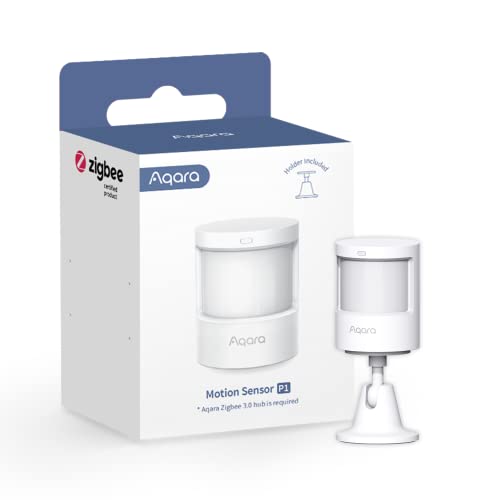
Aqara Motion Sensor P1
A 170 degree lens covers most of a room from one corner mount. Detection interval adjusts from a few seconds up to thirty minutes, so a hallway can stay responsive while a den avoids constant retriggering. Built in light level sensing lets automations turn on lights only after dark, not just on motion.
Pros
- Detection interval adjusts from seconds to thirty minutes
- Light level reading supports smarter lighting automations
- Two CR2450 cells reportedly last years between changes
Cons
- Requires an Aqara or compatible Zigbee hub
- Magnetic mount can slip on smooth or textured surfaces

Third Reality Smart Motion Sensor
SmartThings and Home Assistant both recognize this sensor without extra drivers. A 120 degree lens reports motion quickly from a shelf edge or door frame mount. Ambient light is not measured, so automations depend on motion alone rather than a combined trigger.
Pros
- Pairs directly with SmartThings and Home Assistant hubs
- Compact housing fits tight shelf and corner mounts
- Single CR2450 coin cell is easy to replace
Cons
- No ambient light sensor for combined triggers
- 120 degree detection angle is narrower than the Aqara P1

Govee WiFi Water Sensor 2
A local siren near 100 decibels sounds the moment the probe touches water, even if a phone alert gets missed. One hub connects to WiFi and relays alerts from multiple sensors placed around a home. Each sensor runs on AAA batteries. It cannot join WiFi directly, so the hub stays mandatory.
Pros
- Local siren near 100 decibels backs up phone alerts
- Single hub supports several sensor placements at once
- Setup skips any smart home platform requirement
Cons
- Sensors need the Govee hub and cannot join WiFi alone
- Integration with other smart home platforms stays limited

Aqara Door and Window Sensor P2
Matter support lets this sensor join Apple Home, Google Home or SmartThings without a vendor specific bridge. A 22 millimeter gap tolerance covers most door and window frames without extra shimming. Indoor rating means it stays inside only. A Thread border router, such as a recent Apple TV or Echo, needs to sit within range.
Pros
- Matter support works across Apple Home, Google Home and SmartThings
- 22 millimeter gap tolerance suits most door and window frames
- No proprietary hub needed once a Thread border router exists
Cons
- Needs a Thread border router somewhere in range
- Adhesive mount can fail on textured vinyl frames
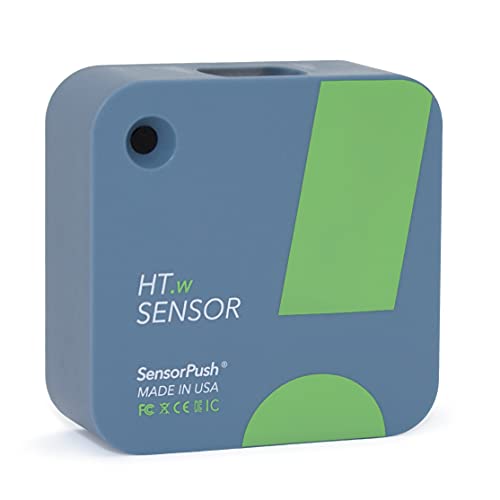
SensorPush HT.w Wireless Thermometer Hygrometer
Onboard logging tracks temperature and humidity even when no phone is nearby, then charts the history in the app without a subscription fee. Water resistant housing survives a crawl space, wine fridge or damp basement corner. Bluetooth handles local readings. Reaching a phone remotely needs the separate SensorPush gateway.
Pros
- Onboard history charts run without any subscription
- Water resistant housing suits damp or humid locations
- Owners report consistent temperature and humidity accuracy
Cons
- Remote alerts require buying the separate gateway
- Bluetooth range drops noticeably through thick walls
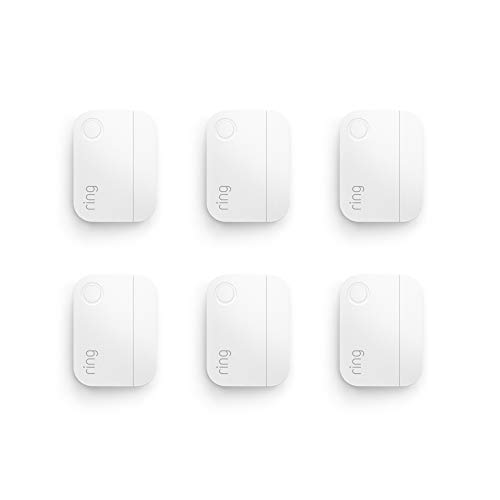
Ring Alarm Contact Sensor (2nd Gen)
Pairing with a Ring Alarm base station takes seconds and immediately feeds Home, Away and Disarmed modes. Second generation housing shrank compared to the original release. A standard CR2032 battery powers it. Value here depends entirely on already owning Ring Alarm hardware, since it will not connect to anything else.
Pros
- Pairs with a Ring Alarm base station in seconds
- Feeds directly into Home, Away and Disarmed modes
- Compact second generation housing fits tighter frames
Cons
- Only works with an existing Ring Alarm base station
- No standalone siren or local alert without the base
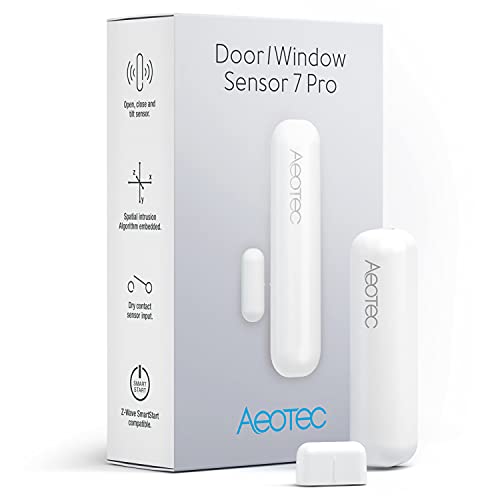
Ecolink Z-Wave Plus Door Window Sensor
A rare earth magnet tolerates wider gaps than most contact sensors, which helps on warped doors or older aluminum frames. External contact terminals let it read an existing wired alarm loop alongside its own wireless report. Housing runs bulkier than newer Thread sensors. A single CR2 battery reportedly lasts years between changes.
Pros
- Rare earth magnet tolerates wider door and frame gaps
- External terminals read an existing wired alarm loop
- Single CR2 battery reportedly lasts years per owner reports
Cons
- Housing is bulkier than newer Thread based sensors
- Needs a Z-Wave hub or controller to operate
How they stack up
| # | Model | Protocol | Best for | Score | Price |
|---|---|---|---|---|---|
| 1 | Aqara Motion Sensor P1 | Zigbee 3.0 | Best overall | 9.4 | Check price |
| 2 | Third Reality Smart Motion Sensor | Zigbee 3.0 | Best value | 9.2 | Check price |
| 3 | Govee WiFi Water Sensor 2 | WiFi via included hub | Best for leak detection | 9.0 | Check price |
| 4 | Aqara Door and Window Sensor P2 | Thread with Matter support | Best for contact sensing | 8.8 | Check price |
| 5 | SensorPush HT.w Wireless Thermometer Hygrometer | Bluetooth, gateway optional | Best for temperature and humidity | 8.6 | Check price |
| 6 | Ring Alarm Contact Sensor (2nd Gen) | Z-Wave via Ring Alarm base | Best for Ring users | 8.3 | Check price |
| 7 | Ecolink Z-Wave Plus Door Window Sensor | Z-Wave Plus | Best for Z-Wave systems | 8.0 | Check price |
Frequently asked questions
What does a smart sensor actually do?
It reports a change of state, such as motion, an open door, water on a floor or a temperature swing, to a hub or app. The sensor itself takes no action. Value comes from the automation or alert built on top of that report.
Do smart sensors need a hub to work?
Zigbee and Z-Wave sensors always need one. Thread sensors need a border router like a recent Apple TV or Echo. WiFi sensors skip that requirement on paper. Several models, including the Govee Water Sensor 2, still ship with their own hub anyway.
Zigbee vs Z-Wave vs Thread, what is the real difference?
All three are low power mesh radios built for battery powered devices. Zigbee is the most common and usually cheapest option. Z-Wave runs on a less crowded frequency band, so it interferes less with WiFi. Thread is newer and underpins Matter, which lets one sensor join multiple smart home platforms.
How long do smart sensor batteries last?
Contact and leak sensors often run one to three years, since they only transmit on a state change. Motion sensors drain faster, typically six months to two years, depending on the detection interval and how often the room sees traffic.
Will a motion sensor go off from my dog or cat?
It can. Passive infrared sensors detect moving heat, and a large dog reads similar to a small adult. Mounting a sensor higher with a downward tilt, or choosing one rated for pet immunity below a set weight, cuts down false triggers.
Can smart sensors send alerts without internet?
Sensing continues locally between the sensor and its hub even without internet. Whether an alert reaches a phone depends on the platform. Cloud dependent apps stop notifying until the connection returns. Hubs that run automations locally keep responding regardless.
Is a leak sensor worth buying if I already have home insurance?
Insurance pays out after damage happens, not before. Owners report that an early alert turns a flooded room into a wet towel instead of a repair claim. A leak sensor near a water heater or dishwasher is cheap protection against a much larger cleanup.
What is the best smart sensor for someone who already owns a Ring Alarm system?
A Ring branded contact sensor pairs with an existing Ring Alarm base station in seconds and feeds straight into Home, Away and Disarmed modes. It has little use outside that ecosystem, so it only makes sense once the base station is already installed.
How many smart sensors does a typical home need to start?
Three sensors cover most first setups: a contact sensor on the main entry door, a leak sensor at the highest risk appliance, and a motion sensor where automatic lighting saves the most effort. More sensors make sense once those automations prove useful.
What is the difference between a contact sensor and a motion sensor?
A contact sensor pairs a magnet and reed switch to report when a door or window opens. A motion sensor reads infrared heat moving through a room. Entry points suit contact sensors, while open areas suit motion sensors for lighting or occupancy.
The bottom line
Aqara Motion Sensor P1 earns the overall pick for its adjustable interval and built in light sensor, features that turn a simple trigger into a smarter automation. Third Reality Smart Motion Sensor covers the same Zigbee job for less, and Govee WiFi Water Sensor 2 is worth adding wherever a leak would cause real damage. Buyers already committed to Ring, Z-Wave or Thread should pick the sensor built for that ecosystem rather than force a mismatch.
Marcus Chen
Marcus covered consumer electronics for enthusiast tech publications for six years before joining ChoiceCrest. He specializes in translating manufacturer spec sheets into plain-language buying advice, with a focus on audio, computing accessories and smart-home gear.


