Automatic Pet Feeders Compared by Portion Control
PETLIBRO’s Granary Wi-Fi feeder offers the steadiest scheduling for most households. PetSafe’s Smart Feed suits larger dog portions with its 24 cup hopper. SureFeed’s Microchip Pet Feeder solves food stealing in multi pet homes, since its lid only opens for a registered pet’s chip or tag.
PETLIBRO’s Granary Wi-Fi feeder fits most homes, since its schedule survives a dropped router and a power cut. PetSafe’s Smart Feed suits dog sized appetites better, and SureFeed’s Microchip Pet Feeder solves food stealing between pets.
Smart feeders are harder to judge from a listing than they look, because portion accuracy shifts with kibble shape and app reliability varies between brands. We compared published capacities, dispensing mechanisms and battery backup, and checked what owners report about jams and missed meals.
What we recommend

PETLIBRO Granary Wi-Fi Automatic Pet Feeder
A sealed hopper keeps roughly five liters of kibble away from moisture and pests. Portions split into ten sizes across up to six meals daily, and the schedule keeps running through a dropped Wi-Fi signal because it saves to the unit. Owners report few jams with standard round kibble, plus dual power support from mains and battery backup.
Pros
- Schedule keeps running without Wi-Fi
- Battery backup covers power cuts
- Sealed hopper limits moisture and pests
Cons
- No wet food support
- Large or odd shaped kibble can jam the auger
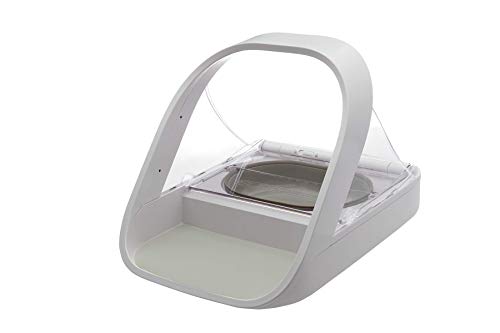
SureFeed Microchip Pet Feeder
The lid opens only when it reads a registered pet’s microchip or RFID collar tag. That mechanism stops one animal from raiding another’s prescription diet, a problem timer feeders cannot solve. Since it works as a bowl rather than a hopper, wet and dry food both work, though there is no app or automatic scheduling.
Pros
- Blocks food stealing by microchip or tag
- Handles wet and dry food equally
- Stores IDs for up to 32 pets
Cons
- No app or remote scheduling
- Runs on four C batteries, not mains power

PetSafe Smart Feed Automatic Dog and Cat Feeder
A 24 cup hopper handles medium and large dog appetites better than most cat sized feeders. Portions scale from an eighth of a cup up to four cups per meal, and slow feed mode stretches a meal over about fifteen minutes to curb gulping. The companion app manages schedules and lets you trigger a manual feed remotely.
Pros
- Large 24 cup hopper for big dogs
- Slow feed mode reduces gulping
- Manual feed option through the app
Cons
- Bulky footprint for small kitchens
- Odd shaped kibble can slow the auger

Feeder-Robot by Whisker
Whisker’s gravity fed dispensing system avoids the auger jams common on screw driven feeders. A food level sensor and full history tracking in the app show exactly when and how much your pet ate. Build quality sits above most rivals here, and the roughly 32 cup hopper reflects that higher position.
Pros
- Gravity feed resists jamming
- Detailed feeding history in the app
- Sturdy build materials
Cons
- Higher price than most rivals
- Large footprint takes up floor space

Petkit Fresh Element Solo Smart Feeder
A desiccant compartment and a tight lid seal slow staling in a hopper that can take weeks to empty. An infrared sensor detects auger blockages and pushes an alert to the app instead of silently skipping a meal. Portion control divides into finer steps than most rivals in this list.
Pros
- Desiccant compartment slows staling
- Infrared jam alerts reach the app
- Finer portion size control
Cons
- Smaller roughly 3 liter hopper
- App setup takes more steps than rivals

WOPET SmartFeeder Automatic Pet Feeder
A ten second voice recorder lets a familiar call bring your pet to the bowl at mealtime. Capacity runs to about six liters, enough for most cats and small dogs across four scheduled meals a day. Owners report the app covers basic scheduling reliably, without the extra features pricier models add.
Pros
- Wi-Fi scheduling at a lower cost
- Voice recorder calls pets to the bowl
- About 6 liter hopper suits small pets
Cons
- App interface is basic
- Some owners report occasional over dispensing

Arf Pets Automatic Pet Feeder
Meals schedule directly on the unit, removing any dependence on a router or an app. That suits anyone who wants automatic feeding without connecting another device to Wi-Fi. Capacity holds about 1.14 gallons, and an onboard display with buttons keeps portion changes simple.
Pros
- No app or Wi-Fi required
- Straightforward on unit timer
- Clear display for quick changes
Cons
- No remote feeding option
- No alert if a meal is missed
What to look for
What actually decides a smart feeder’s reliability Portion accuracy, hopper capacity, app reliability and jam resistance decide whether a feeder earns its keep. Camera features and voice recorders add convenience, not reliability. Battery backup and offline schedule storage protect against router drops and power cuts. Start with dispensing reliability, then narrow choices by household size and food type.
Wi-Fi app feeders versus timer only feeders App control lets you feed remotely, adjust portions from work and get an alert if a meal is missed. A schedule set on the unit itself needs no router, so it never goes offline with an app outage. Models with both Wi-Fi and onboard memory keep the schedule if the connection drops. Choose a timer only feeder when simplicity matters more than remote control.
Sizing hopper capacity and portions to your pet A cat or small dog rarely needs more than about four liters of hopper space across four meals a day. Larger dogs can empty a small hopper within a week, which points toward a bigger capacity model. Round kibble near ten millimeters dispenses most reliably through a screw auger, while flat or oversized pieces cause most reported jams. Gravity fed mechanisms and infrared blockage sensors handle irregular kibble better than a plain auger.
Feeding multiple pets or riding out a power cut A shared scheduled feeder works only if every pet eats the same diet and none steals another’s portion. Microchip or RFID locked bowls solve that problem when one pet needs a special diet or eats slower than the rest. Battery backup keeps dispensing going through an outage, though check whether the batteries run just the clock or the motor too. Multi pet households and unreliable power both call for a feeder built with a backup plan.
Compared at a glance
| # | Model | Capacity | Best for | Score | Price |
|---|---|---|---|---|---|
| 1 | PETLIBRO Granary Wi-Fi Automatic Pet Feeder | About 5 liters | Best overall | 9.4 | Check price |
| 2 | SureFeed Microchip Pet Feeder | Microchip or RFID tag | Best for multi pet homes | 9.2 | Check price |
| 3 | PetSafe Smart Feed Automatic Dog and Cat Feeder | 24 cups | Best for dogs | 9.0 | Check price |
| 4 | Feeder-Robot by Whisker | About 32 cups | Best build quality | 8.8 | Check price |
| 5 | Petkit Fresh Element Solo Smart Feeder | About 3 liters | Best for freshness | 8.6 | Check price |
| 6 | WOPET SmartFeeder Automatic Pet Feeder | About 6 liters | Best value | 8.3 | Check price |
| 7 | Arf Pets Automatic Pet Feeder | About 1.14 gallons | Best budget pick | 8.0 | Check price |
Questions worth asking
Can smart feeders handle wet food?
Hopper based feeders cannot manage wet food, since it spoils and clogs the auger. Microchip locked bowls such as the SureFeed handle wet and dry food because they work as a bowl, not a hopper.
What happens when the Wi-Fi connection drops?
Most feeders in this list store the schedule on the unit itself, so meals still dispense on time without a live connection. You lose remote feeding and missed meal alerts until the Wi-Fi reconnects.
Do smart feeders keep working during a power cut?
Only with battery backup, which most models here include. Check whether the batteries power just the display or the actual dispensing motor, since some cheaper units keep time but cannot dispense without mains power.
Will a smart feeder stop a pet from overeating?
It controls portion size and meal timing, which are the two levers that matter for weight management. It cannot stop an animal from tipping the unit or breaking into the hopper, so a locking lid and a stable base still help.
How do you stop the dispenser jamming?
Feed round kibble of a moderate size, avoid overfilling the hopper, and clear out dust regularly. An infrared blockage sensor, like the one in Petkit’s Fresh Element Solo, alerts the app instead of silently skipping a meal.
Is a camera feature worth paying extra for?
Only if checking in on your pet during the day matters to you. A camera adds no dispensing reliability and sometimes adds a subscription, so prioritize the mechanism over the video feed.
Should two pets share one feeder?
They can share a scheduled feeder if both eat the same food and neither bullies the other at mealtime. A microchip controlled bowl per pet is the more reliable fix if one needs a special diet or eats faster.
Which smart feeder works best for a multi cat home?
The SureFeed Microchip Pet Feeder handles multi cat homes best, since its lid opens only for the registered chip or RFID tag. That stops one cat from eating another’s portion or a prescription diet.
Does a pet feeder need regular cleaning?
Wipe the bowl daily and wash the hopper every couple of weeks, drying it fully before refilling. Kibble oils build up and turn rancid, which is a common reason pets suddenly refuse food from a feeder.
Our take
PETLIBRO’s Granary Wi-Fi feeder suits most households first, since its schedule holds through router drops and power cuts while the seal keeps kibble fresh. Pick the PetSafe Smart Feed for a dog sized appetite, and add a SureFeed microchip bowl when one pet in the house eats another’s dinner.
Olivia Hartley
Olivia spent several years working at an animal shelter and a pet-supply retailer before joining the editorial team. She researches pet gear with an emphasis on safety, comfort and the fine print that owners often miss.

