Which smart home gym can replace your free weights
Speediance Gym Monster 2 is the most complete option, pairing motor driven cables with a built in screen and a frame that folds flat. MAXPRO SmartConnect weighs around ten pounds, which suits renters and travellers. Echelon Reflect Touch 50 hangs on a wall, so no floor space disappears.
Speediance Gym Monster 2 suits anyone retiring a rack of plates. Electromagnetic cables cover the load range most lifters work in, plus modes such as eccentric overload that plates cannot produce. Unfolded footprint is the catch, since the frame claims a dedicated corner of a room.
Three very different machines share the smart gym label: motorised cable towers, class streaming mirrors and sensor fitted accessories. Each one solves a different problem. We compared resistance method and range, floor space, screen dependence, bundled accessories and assembly effort. Owner comments then settled the questions about cable feel, app stability and what stops working once a membership lapses.
Our top picks

Speediance Gym Monster 2
Two motors drive the cables, so load changes on the touchscreen instead of by moving pins. Eccentric overload and chain style curves sit on the menu, and no plate stack reproduces either. Frame folds down after a session, while the bundled bench and barbell handle turn it into a squat and press station.
Pros
- Presses, pulls and squats run from one frame
- Training modes free weights cannot copy
- Folds down to give the room back
Cons
- Unfolded footprint claims a dedicated corner
- Assembled weight makes relocation a two person job

MAXPRO SmartConnect Cable Home Gym
Ten pounds of hardware produces cable resistance running from light rehab loads up to heavy rows. Anchoring works off a door, a bench or a rack, making it the rare smart gym a renter can actually use. Bluetooth logs reps and load in the app, and the whole kit drops into a carry bag for travel.
Pros
- Packs down for hotels and shared housing
- Wide load range for a ten pound unit
- No studs, bolts or permanent fixings needed
Cons
- Anchoring adds setup time to every session
- Short cable travel limits some overhead moves

Echelon Reflect Touch 50
Wall mounting costs zero floor space, which answers the apartment problem better than any tower here. A 50 inch touchscreen carries live and on demand classes, and the mirrored panel lets you check form against the instructor. Load comes from bands or dumbbells you already own, never from the unit itself.
Pros
- Consumes wall space rather than floor space
- Large panel makes form checks practical
- Programming spans strength, yoga and cardio
Cons
- Supplies no resistance of its own
- Classes stop when the membership lapses

Beyond Power Voltra I
Digital load arrives without a frame or a mains cable, in a unit small enough for a drawer. Increments are fine enough for genuine progressive overload, and eccentric and isokinetic modes let the lowering phase carry more than the lift. Anchoring to a door or handle is the trade you accept for that size.
Pros
- Battery power leaves placement unrestricted
- Small load steps suit slow progression
- Stores in a drawer between sessions
Cons
- Heavy pulls need a genuinely solid anchor point
- Peak load sits below a full cable tower

NordicTrack Vault Complete
Behind the mirror waits a cabinet holding dumbbells, a kettlebell, bands, a mat and a roller. That fills the obvious gap in mirror gyms, which is that a screen cannot load a squat. Sessions run through iFIT with trainer guidance, and the door shuts on the clutter afterwards.
Pros
- Weights and screen occupy one wall unit
- Everything disappears once the door closes
- Trainer led plans cover strength and recovery
Cons
- Fixed dumbbell increments cap heavier lifters
- Guided content needs an iFIT membership
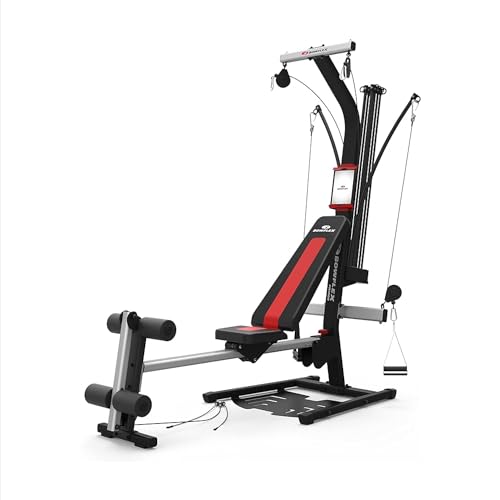
Bowflex Xtreme 2SE Home Gym
Power Rod resistance starts at 210 pounds and upgrades to 410, driving more than 70 exercises from one station. Nothing depends on a server staying online, which separates it from every screen based rival here. Rod tension builds toward the end of a rep, so the feel differs from a plate stack.
Pros
- Keeps working with no ongoing plan
- Long exercise list from a single station
- Light rod tension is kind to joints at rep start
Cons
- Assembly runs long with many small parts
- Rep tracking relies on a separate app
FightCamp Personal
Sensors inside the quick wraps count punches and measure output, turning bag work into structured sessions. Free standing bag and mat set up in a garage or a spare room. Conditioning is the job here rather than strength, so most owners run it alongside weights.
Pros
- Holds attention longer than steady state cardio
- Punch counts make progress measurable
- One bag setup serves a whole household
Cons
- Builds little strength on its own
- Classes require an active membership
How they compare
| # | Model | Resistance | Best for | Score | Price |
|---|---|---|---|---|---|
| 1 | Speediance Gym Monster 2 | Electromagnetic, about 220 lb combined | Best overall | 9.4 | Check price |
| 2 | MAXPRO SmartConnect Cable Home Gym | Cable, roughly 5 to 300 lb | Best portable | 9.2 | Check price |
| 3 | Echelon Reflect Touch 50 | 50 in touchscreen mirror | Best for small spaces | 9.0 | Check price |
| 4 | Beyond Power Voltra I | Digital, fine adjustment steps | Best compact digital resistance | 8.8 | Check price |
| 5 | NordicTrack Vault Complete | Touchscreen mirror | Best all in one cabinet | 8.6 | Check price |
| 6 | Bowflex Xtreme 2SE Home Gym | Power Rods, 210 lb, upgradable to 410 lb | Best without a membership | 8.3 | Check price |
| 7 | FightCamp Personal | Free standing bag, gloves, quick wraps and mat | Best for cardio boxing | 8.0 | Check price |
What matters most
What makes a home gym smart Three categories wear the same label. Motorised cable machines such as the Speediance Gym Monster 2 generate load electronically and change it mid set. Mirrors stream classes and supply none. Sensor kits like FightCamp add data to equipment you already understand. Choose the category before comparing screen sizes, because a mirror and a cable tower answer opposite questions.
Digital resistance vs power rods vs dumbbells Motors allow eccentric overload, fixed tempo and instant load changes, which suits structured progression. Power Rods on the Bowflex need no electricity and build tension toward the top of a rep. Dumbbells inside the NordicTrack Vault behave predictably but jump in fixed steps. Lifters chasing heavy compound numbers outgrow all three eventually. Anyone training between 20 and 200 pounds rarely will.
Best for apartments and shared housing Wall units win when floor space is the binding constraint, so the Echelon Reflect Touch 50 vanishes once a session ends. Renters barred from drilling should look at the MAXPRO SmartConnect or the Voltra I, since both anchor temporarily. Ceiling height deserves a check too, because overhead presses need more clearance than most people measure for. Downstairs neighbours also argue for cables over dropped plates.
Memberships and what stops working Screen based systems lose their classes the moment a plan lapses, and a few lose training modes with them. Hardware usually keeps running in manual mode. Bowflex sits outside this argument entirely, since the Xtreme 2SE never needed a plan. Add up three years of subscription before buying, because the commitment tends to outlive the initial enthusiasm.
Good to know
What is the best smart home gym for a small apartment?
Echelon Reflect Touch 50 uses wall space instead of floor space. When you also need real resistance in that footprint, MAXPRO SmartConnect stores in a bag between sessions.
Do smart home gyms need a subscription?
Guided content usually does. Bowflex Xtreme 2SE works fully without one, and cable units such as the Gym Monster 2 still run manually if a plan expires.
Can a smart home gym build real muscle?
Yes, provided the load range is high enough and you add weight over time. Digital cable systems make that progression easier to track than a rack of plates.
Smart home gym vs free weights: which is better value?
Plates cost less and never need a firmware update. Smart gyms buy back floor space, remove programming guesswork and add modes such as eccentric overload.
How much space does a smart home gym need?
Mirrors want a clear wall plus a mat. Cable towers like the Speediance need roughly seven feet of width, with room behind you to step away from the handles.
Which smart home gym suits a complete beginner?
NordicTrack Vault Complete, since the weights arrive with the unit and trainer guidance covers technique. Beginners rarely enjoy assembling an equipment list from scratch.
Is digital resistance safe to train alone with?
Generally yes, because the motor releases tension rather than dropping a load on you. Warm up properly and raise weight in small steps anyway.
Can you get cardio from a smart home gym?
Cable systems run circuits and mirrors stream cardio classes. For sustained heart rate work, FightCamp holds attention longer than either of those.
How long does a smart home gym take to assemble?
Cable towers and Bowflex stations run into hours with many fasteners. MAXPRO and the Voltra I need no assembly at all, which is part of their appeal.
The verdict
Speediance Gym Monster 2 takes the recommendation for anyone wanting one machine to carry serious strength work, because motorised cables handle squats, presses and pulls before folding away. Renters and frequent travellers are better served by MAXPRO SmartConnect, since nothing gets drilled or left standing. Skip mirror only systems unless a set of weights already sits in the room.
Derek Holt
Derek has a background coaching recreational and amateur athletes and has worked the sales floor at specialty fitness retailers. He focuses on equipment durability, ergonomics and realistic use cases rather than marketing claims.


