Chew Toys That Survive Rabbits, Chinchillas, and Ferrets
Niteangel’s Natural Loofah and Timothy Hay Chew Set holds up best against large, tough chewers thanks to its rope-strung, multi-material build. Kaytee’s Perfect Chew Stix Toy delivers stronger value at a lower cost. Bwogue’s bulk loofah pack suits multi-pet households that replace toys often.
Niteangel’s Natural Loofah and Timothy Hay Chew Set is the strongest all-around pick for large rabbits, chinchillas, and ferrets that shred soft toys fast. Its paper-rope core keeps loofah and wood pieces from scattering the way glued designs do, though the loofah sections still need replacing every few weeks under heavy use.
A toy sized for a four-pound guinea pig does not automatically survive an eight-pound rabbit or a determined ferret. We compared material thickness, assembly method, and owner reports of how quickly bigger or rougher chewers destroyed each toy.
Our top picks

Niteangel Natural Loofah and Timothy Hay Chew Toys Set
Paper rope strings together loofah, pressed timothy hay, and untreated wood chunks instead of glue, so a broken piece does not take the whole toy apart. Owners of larger rabbits and chinchillas report the rope core outlasting single-material loofah balls by weeks. The multi-piece set hangs from cage bars or sits loose inside a habitat.
Pros
- Rope core keeps pieces together once chewing starts
- Mixed materials offer harder and softer chew options in one set
- No dyes or glue means leftover fibers stay safe to swallow
Cons
- Loofah sections wear out faster than the solid wood pieces
- Not rigid enough for the heaviest, most aggressive chewers
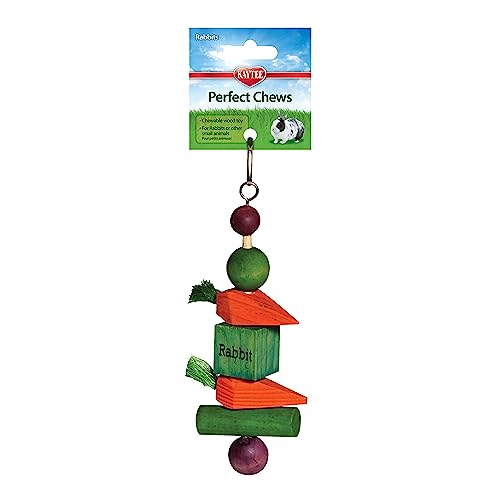
Kaytee Perfect Chew Stix Toy
Kaytee shapes this compressed wood chew stick for rabbits and guinea pigs that need constant tooth wear. Solid construction means no loose fibers to unravel, unlike woven or glued toys. Several owners report using it in cages built for larger rabbits without trouble.
Pros
- Solid build leaves nothing to unravel or scatter
- Low cost per toy makes frequent replacement affordable
- Dense wood lasts longer than loofah-based alternatives
Cons
- Single material offers less variety than mixed-media sets
- Bigger rabbits finish the smaller size quickly

Bwogue Natural Loofah Chew Toys Bulk Pack
A bulk bag of loofah, straw, and wood chew balls ships as a value multi-pack for rabbits and guinea pigs. High piece count makes it practical for larger habitats or multi-pet households going through toys quickly. Owners often split the pack across several enclosures instead of one.
Pros
- High piece count lowers the cost of frequent replacement
- Works across multiple cages or one larger habitat
- Natural fibers stay safe if chewed and swallowed in small amounts
Cons
- Individual pieces run smaller and wear out faster than dedicated chew sticks
- Loofah dust can build up in cages with heavy chewers

Oxbow Enriched Life Timothy Club
Oxbow compresses timothy hay into a single solid club rather than loose strands for its Enriched Life line. It doubles as a chew toy and a foraging activity, since pieces break off in irregular chunks. Owners of larger guinea pigs and rabbits report it lasting longer than loose hay because compression slows chewing down.
Pros
- Compression makes it last longer than loose hay piles
- Doubles as digestive fiber and a chew activity
- Single ingredient makes it easy to track what the pet eats
Cons
- Not durable enough for wood-preferring aggressive chewers
- Crumbles rather than staying intact once heavily gnawed

Ware Manufacturing Home Sweet Home Habitat Hideout
Ware Manufacturing weaves grass and wood into a hideout structure that doubles as a chew surface. Larger interior dimensions accommodate bigger rabbits and guinea pigs that outgrow standard hamster hideouts. Owners report the walls holding up to daily gnawing longer than plain cardboard tunnels.
Pros
- Doubles as shelter and a chew toy in one structure
- Larger interior fits bigger rabbits and guinea pigs comfortably
- Woven construction holds together longer than cardboard
Cons
- Determined chewers can open a hole within a few weeks
- Takes up more cage floor space than loose chew toys
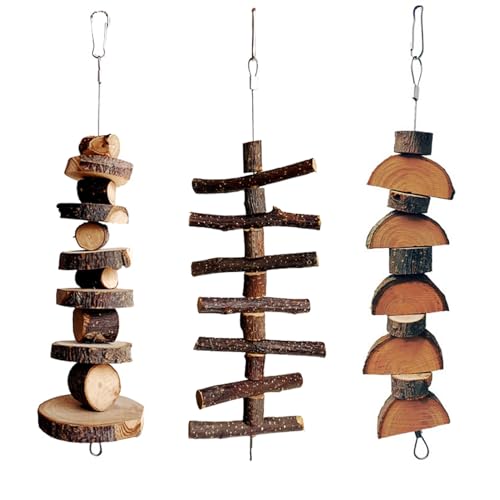
Mkono Natural Wood Hanging Chew Toys
Originally sold as bird toys, these hanging hardwood block sets use denser wood than most small-animal chew toys, strung on cotton rope or metal chain. Owners of large chinchillas, ferrets, and bigger rabbits report the hardwood surviving chewing that destroys standard loofah or hay toys within days.
Pros
- Hardwood resists the strongest bite force among the picks here
- Hanging design keeps the toy off soiled bedding
- Chain or rope options let owners choose chew resistance
Cons
- Metal chain versions are not meant to be chewed directly
- Denser wood takes longer for smaller pets to wear down

Living World Rainbow Chew Toy
Living World hangs dyed wood blocks from a rope, sized for standard small-animal cages but simple to move onto a larger enclosure’s bars. Shaped rather than solid pieces give pets multiple edges to gnaw. Owners report it working well as a secondary toy alongside a heavier-duty chew item.
Pros
- Multiple block edges give more chewing angles than a single stick
- Rope hanging keeps it accessible without touching the cage floor
- Bright colors make wear easy to spot and replace on time
Cons
- Dye on the wood surface wears off with heavy chewing
- Least durable option here for a large or aggressive chewer
The lineup, side by side
| # | Model | Material | Best for | Score | Price |
|---|---|---|---|---|---|
| 1 | Niteangel Natural Loofah and Timothy Hay Chew Toys Set | Loofah, timothy hay, natural wood | Best overall | 9.4 | Check price |
| 2 | Kaytee Perfect Chew Stix Toy | Compressed natural wood | Best value | 9.1 | Check price |
| 3 | Bwogue Natural Loofah Chew Toys Bulk Pack | Loofah, straw, wood pieces | Best budget | 8.8 | Check price |
| 4 | Oxbow Enriched Life Timothy Club | Compressed timothy hay | Best for foraging enrichment | 8.6 | Check price |
| 5 | Ware Manufacturing Home Sweet Home Habitat Hideout | Woven grass and natural wood | Best for tunnel and hideout use | 8.4 | Check price |
| 6 | Mkono Natural Wood Hanging Chew Toys | Hardwood blocks, cotton rope or chain | Best for aggressive chewers | 8.2 | Check price |
| 7 | Living World Rainbow Chew Toy | Dyed natural wood | Best for cage attachment variety | 8.0 | Check price |
What to look for
What Makes a Chew Toy Tough Enough for Bigger Pets? Density matters more than size. A thick, solid piece of untreated hardwood resists a large rabbit’s bite far longer than a wider, hollow loofah ball. Construction method counts too: rope-strung or molded pieces hold together after damage, while glued assemblies fall apart at the first broken seam. Check the listed material before assuming a bigger toy automatically lasts longer.
Chew Toys vs Foraging Toys: Which Do Larger Chewers Need? Pure chew toys like wood sticks and hardwood blocks exist to wear down teeth and survive repeated gnawing. Foraging toys like compressed hay clubs break apart gradually as the pet eats through them. Larger, more destructive chewers often finish a foraging toy in a single sitting, so pairing one durable chew toy with a cheaper foraging piece tends to work better than relying on either alone.
Sizing Tunnels and Hideouts for Bigger Breeds A hideout built for a hamster feels cramped to a larger rabbit within months of growth. Measure the animal’s resting length and add a few inches for turning room before buying a woven or wood hideout. Interior dimensions matter more than the outer footprint listed on most Amazon pages, since thick walls add bulk without adding usable space.
When a Bird Toy Works Better Than a Rabbit Toy Toys marketed for parrots and large birds often use denser hardwood than anything sold for small mammals, because birds apply comparable or greater bite force. Owners of unusually aggressive chinchillas or ferrets sometimes get more mileage from a bird toy’s hardwood blocks than from a small-animal aisle chew stick. Confirm the toy has no small metal parts, bells, or clips that could be swallowed before repurposing it.
Common questions
Are small animal chew toys safe for larger pets?
Most are safe as long as the material is untreated wood, loofah, or compressed hay without dye or glue that could flake off in large pieces. Durability, not safety, is the bigger concern, since a toy built for a hamster wears out fast under a rabbit’s stronger jaw.
What toys work best for large rabbits?
Solid wood chew sticks, rope-strung mixed-material sets, and hardwood block toys hold up better than loofah balls or loose hay. A dedicated hideout with woven grass walls also gives a big rabbit room to gnaw without destroying its shelter in days.
Can guinea pig toys be used for chinchillas?
Yes, most guinea pig chew toys made from wood, loofah, or compressed hay also list chinchillas as safe on the same listings. Chinchillas often chew harder and more constantly than guinea pigs, so denser wood toys tend to last longer for them.
How do I know if a chew toy is durable enough for aggressive chewers?
Check whether the listing describes solid or hardwood construction rather than woven, glued, or compressed material. Owner reviews mentioning how many days or weeks a toy lasted for a specific pet tend to be more reliable than the marketing description.
Loofah toys vs wood toys, which lasts longer?
Solid wood almost always outlasts loofah under the same chewing pressure, since loofah is a soft plant fiber meant to shred easily. Loofah suits smaller or gentler chewers, while wood handles larger or more aggressive pets better.
What is the best chew toy for large parrots?
Hanging hardwood block toys built for birds, like the style Mkono sells, tend to hold up best against a large parrot’s bite force. The same hardwood blocks also work as a crossover pick for unusually aggressive small-mammal chewers.
How often should I replace chew toys?
Replacement timing depends on the pet and the toy material. Loofah and hay-based toys often need replacing every one to two weeks for heavy chewers, while solid wood or hardwood toys can last a month or longer.
Are dyed or painted wood toys safe?
Toys using food-grade or non-toxic dyes, as most major brands list on their packaging, are generally considered safe in small amounts. Owners who prefer to avoid any risk tend to choose undyed, natural wood toys instead, especially for constant chewers.
What is the difference between a chew toy and a hideout toy?
A chew toy exists mainly to wear down teeth, while a hideout doubles as shelter and a gnawing surface. Pets that need both often do better with a woven hideout like Ware’s Habitat Hideout alongside a dedicated chew stick.
Do larger pets need bigger toys, or just tougher ones?
Toughness matters more than size. A dense, compact hardwood block can outlast a larger but hollow loofah toy against a big rabbit or chinchilla’s bite.
The bottom line
The Niteangel Natural Loofah and Timothy Hay Chew Set is the strongest overall pick, since its rope-strung construction survives larger, rougher chewers far longer than glued or single-material toys. Owners dealing with an unusually aggressive chinchilla or ferret should choose the Mkono hardwood block toy instead, since its bird-toy-grade density outlasts every mixed-material option here. Budget-focused households running multiple cages get more value from the Bwogue bulk loofah pack, which trades individual toy lifespan for a lower cost per replacement.
Olivia Hartley
Olivia spent several years working at an animal shelter and a pet-supply retailer before joining the editorial team. She researches pet gear with an emphasis on safety, comfort and the fine print that owners often miss.