Silicone Feeding Bibs Deep Enough to Catch the Mess
Bumkins Silicone Baby Bib leads the group with a pocket that holds its shape and a neck strap that adjusts through toddlerhood. Mushie suits smaller babies with softer, lighter silicone. OXO Tot’s roll up bib folds flat for a diaper bag, making it the pick for trips away from the high chair.
Three bibs stand out for different reasons. Bumkins Silicone Baby Bib holds a deep pocket open even when a baby leans forward, and its neck strap adjusts across several settings. Mushie’s silicone feels noticeably softer against a younger baby’s skin, while OXO Tot’s roll up design fastens shut for diaper bag storage.
Pocket geometry determines whether food lands in the bib or the lap, yet listing photos rarely show that side profile clearly. A stiff neck strap gets rejected within days, regardless of how good the pocket looks. We compared pocket shape, closure adjustment range, silicone softness and dishwasher care, then weighed owner reports on staining and long term shape retention.
What to look for
What to look for in a silicone feeding bib Pocket shape decides whether food lands in the bib or the lap, more than any other feature. A pocket that curves outward stays open when a baby leans forward, while a pocket that is simply folded flat collapses under a wriggling child. Neck closures matter almost as much, since a stiff or scratchy strap gets pulled off within days. Softness and thickness vary a lot between brands, even though most silicone bibs list the same food grade rating.
Which silicone bib fits which feeding stage? Newborns starting solids need a smaller, seamless design like the ezpz Tiny Bib, sized so it does not swamp a baby who just started sitting up. Mushie’s thinner, lighter silicone suits the same early stage for babies who reject anything stiff around the neck. Toddlers eating full meals need length and reach, which is why Elk and Friends sizes its bib for an older child at the table. Most households replace at least one bib as a baby moves between these stages.
How do you keep a silicone bib stain free? Nearly every silicone bib is dishwasher safe on the top rack, and most rinse clean at the sink in seconds. Tomato, carrot and turmeric will still stain lighter colors over time, though the staining is cosmetic rather than a hygiene issue. Leaving a stained bib in direct sunlight for a few hours fades most marks. Darker or muted tones, like Mushie’s palette, hide staining better from the start.
How many silicone bibs should a household own? One bib means washing mid meal or reaching for a paper towel, and weaning stages generate more laundry than expected. Two or three bibs let you keep one in the kitchen, one in a diaper bag and one in the dishwasher. KeaBabies and similar multipacks are usually the cheapest way to build that rotation. Mixing brands works too, pairing a softer bib for early days with a larger one for later meals.
The top picks, ranked
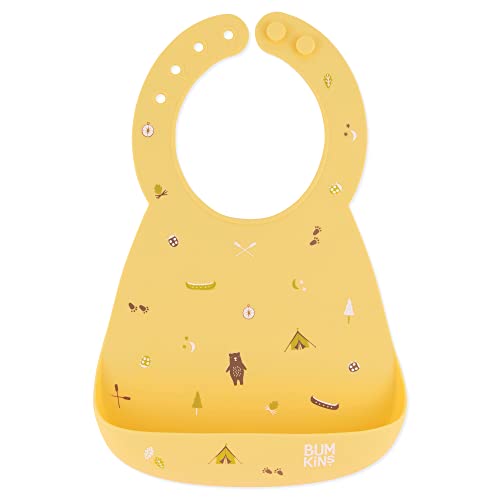
Bumkins Silicone Baby Bib
Bumkins holds its pocket open even when a baby leans forward, instead of collapsing flat against the chest. The neck strap adjusts across several settings, so one bib fits from early solids through toddlerhood. Silicone stays soft enough that fastening does not turn into a fight.
Pros
- Pocket stays open through active leaning and reaching
- Neck strap spans multiple sizes as a baby grows
- Soft silicone edge avoids fights over wearing it
Cons
- Bright colors show turmeric and tomato stains
- Bulkier to pack than a roll up design

Mushie Silicone Baby Bib
Mushie uses a thinner, softer silicone than most rivals, which matters for a six month old wearing a bib for the first time. Muted colors avoid the primary brights common on other brands. The catch pocket sits shallower than Bumkins, suiting smaller portions rather than a big self feeder.
Pros
- Softer, lighter silicone suits a first time wearer
- Muted color palette avoids bright primary tones
- Button closure adjusts without pinching skin
Cons
- Shallower pocket than deeper competing designs
- Thinner material folds more easily in storage

OXO Tot Waterproof Silicone Roll Up Bib
This bib rolls into itself and fastens with a strap, so a used one goes back in a diaper bag without smearing puree on anything else. The comfort fit neck strap avoids the stiff feel common in cheaper silicone. Coverage runs smaller than the wider bibs on this list, trading area for packability.
Pros
- Rolls closed for mess free diaper bag storage
- Comfort fit strap avoids a stiff neck feel
- Shaped pocket catches drops despite smaller size
Cons
- Roll fastener loosens with repeated use
- Smaller coverage than wide chest designs

ezpz Tiny Bib
ezpz sizes the Tiny Bib for the earliest weaning stage, cut higher so it does not swamp a baby who has just started sitting up. A single piece of silicone with no seams means no crevice traps food. It reads as a genuine first bib rather than a shrunken toddler version.
Pros
- Sized correctly for babies just starting solids
- Seamless build leaves no crevice for trapped food
- Rinses clean in seconds under running water
Cons
- Gets outgrown faster than adjustable larger bibs
- Costs more per bib than multipack alternatives
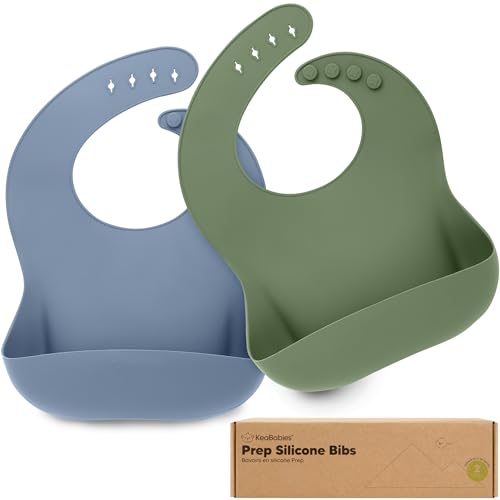
KeaBabies Silicone Baby Bibs
KeaBabies ships these in multipacks, a practical answer to the fact that one bib rarely survives a whole meal. Pocket depth is generous, and the silicone stays thick enough to hold shape after months of dishwasher cycles. A button strap with several positions handles the adjustment.
Pros
- Multipack pricing covers backup bibs affordably
- Thick silicone holds shape after repeated washing
- Deep pocket catches drops during messy meals
Cons
- Stiffer feel than premium thinner silicone
- Color consistency varies between production batches

Ali+Oli Silicone Baby Bib
Ali+Oli cuts its bib wider across the chest and shoulders, catching food that slips past narrower designs. The pocket rolls slightly outward, so it stays open against a high chair tray instead of folding flat. Extra coverage adds bulk, the tradeoff for anyone prioritizing area over packability.
Pros
- Wide cut catches food missed by narrower bibs
- Outward rolled pocket stays open against a tray
- Sturdy build holds up to daily use
Cons
- Bulkier profile crowds smaller diaper bags
- Wide shoulders can crowd a compact high chair

Elk and Friends Silicone Bibs
Elk and Friends sizes its bib for older babies and toddlers eating full meals across a table. Neck settings space widely, so the bib keeps fitting through a growth spurt. It offers more coverage than a small baby needs, which is exactly the point for this stage.
Pros
- Extra length suits toddlers eating full meals
- Wide neck range keeps fitting through growth spurts
- Large pocket handles bigger portions and reaching
Cons
- Oversized fit swamps younger babies
- Heavier feel than lightweight infant focused bibs
Side by side
| # | Model | Material | Best for | Score | Price |
|---|---|---|---|---|---|
| 1 | Bumkins Silicone Baby Bib | Food grade silicone | Best overall | 9.4 | Check price |
| 2 | Mushie Silicone Baby Bib | Soft food grade silicone | Best soft silicone for infants | 9.2 | Check price |
| 3 | OXO Tot Waterproof Silicone Roll Up Bib | Rolls up and fastens shut | Best for travel | 9.0 | Check price |
| 4 | ezpz Tiny Bib | Built for early weaning stage | Best for first foods | 8.8 | Check price |
| 5 | KeaBabies Silicone Baby Bibs | Multipack sets | Best value multipack | 8.6 | Check price |
| 6 | Ali+Oli Silicone Baby Bib | Wide chest and shoulder cut | Best coverage | 8.3 | Check price |
| 7 | Elk and Friends Silicone Bibs | Extended toddler length | Best for toddlers | 8.0 | Check price |
Frequently asked questions
At what age can a baby start using a silicone bib?
Many families start around six months when solid foods begin, choosing a smaller bib built for that stage. Always supervise feeding and follow the age guidance printed on the specific listing.
Are silicone feeding bibs safe for babies?
Food grade silicone is widely used in infant feeding products and holds up as inert and durable over years of washing. Check that a listing states food grade silicone before buying, and follow any age guidance given.
Can silicone bibs go in the dishwasher?
Yes, nearly all of them list dishwasher safe top rack care. Rinsing at the sink usually finishes the job in under a minute, which is often faster than loading a dishwasher.
How do you get stains out of a silicone bib?
Staining from tomato, carrot and turmeric is cosmetic and does not affect safety. Leaving the bib in direct sunlight for a few hours after washing fades most marks noticeably.
Why does a silicone bib smell bad?
Odor usually comes from storing a bib damp or washing it with a strong detergent. Drying it fully before storage, plus an occasional soak in warm water with baking soda, resolves most smells.
Silicone bibs vs fabric bibs, which works better?
Silicone wipes clean fast and catches dropped food in a pocket, while fabric stays softer and absorbs drool better between meals. Many households keep both types for different parts of the day.
How tight should a bib neck strap be?
A strap should sit snug enough that the bib does not slip, with room to fit a finger comfortably underneath. Adjustable button or strap closures make this easy to get right as a baby grows.
Will a silicone bib pocket hold spilled liquid?
A shaped pocket holds small amounts of dripped liquid for a short time, but it is built for solid food rather than a spilled cup. Tip out the contents promptly either way.
What is the best silicone bib for travel?
A roll up design like the OXO Tot bib folds flat and fastens shut, so a used bib does not smear puree across a diaper bag.
Do silicone bibs work for toddlers, not just babies?
Yes, a longer bib sized for toddlers, such as Elk and Friends, covers a child eating full meals across a table, unlike bibs built for early weaning.
Our pick
Bumkins Silicone Baby Bib is the one to buy first, since its pocket holds shape and the neck strap adjusts across the whole weaning period. Add the OXO Tot roll up for the diaper bag, and pick Mushie if a baby rejects anything stiff around the neck. Elk and Friends fits better once a toddler is reaching across the table for full meals.
Rachel Simmons
Rachel previously worked in child-product retail and brings a practical, detail-first eye to gear reviews, focusing on safety standards, ease of use and the fine print that matters most for new caregivers.

