A Serger Finishes Seams a Regular Machine Can’t
Brother 1034D suits first time sergers with color coded threading and dependable overlock stitches. Juki MO-654DE runs smoother and quieter for daily use. Janome 8002D handles knit and stretch fabric best, thanks to easy differential feed adjustment for jersey and activewear seams.
Brother 1034D works best for most first time sergers, thanks to color coded threading and steady stitch quality. Juki MO-654DE suits sewists working through fabric every week, since it runs smoother at higher speed. Janome 8002D fits knit and stretch projects best, because its differential feed dial is easy to set.
Serger threading paths confuse most beginners, and a mistimed loop turns into tangled thread instead of a seam. We compared threading systems, differential feed ranges, stitch width options, stitches per minute and included accessories. Owner feedback on retiming, tension drift and how each machine copes with denim or slippery jersey rounded out the picture.
The best picks, ranked

Brother 1034D Serger
Brother 1034D has been the default first serger recommendation for years. Color coded threading turns an intimidating diagram into a simple color match. Differential feed handles knit fabric without wavy seams, and owners report years of reliable service with routine oiling.
Pros
- Color coded threading simplifies setup
- Consistent stitch quality on multiple fabrics
- Widely available parts and tutorials
Cons
- Runs louder than premium models
- Tension dial takes practice to master

Juki MO-654DE Portable Serger
Juki brings industrial grade mechanics into a home sized machine. Vibration stays low even at 1500 stitches per minute, and the retractable knife cuts cleanly through multiple layers. Regular sewists gain more from this model than occasional users.
Pros
- Smooth, low vibration operation at speed
- Clean cuts through heavy fabric layers
- Solid mechanical build for frequent use
Cons
- Threading offers less visual guidance
- Heavier than portable competitors

Janome 8002D Serger
Janome’s differential feed dial adjusts easily, which matters when jersey wants to stretch under the needle. Rolled hems come out neat with the included accessories. Activewear and t shirt sewists benefit most from this control.
Pros
- Precise differential feed adjustment
- Clean rolled hem finish
- Simple, beginner friendly controls
Cons
- Fewer stitch configurations than premium models
- Manual covers only the basics

Brother ST4031HD Serger
Metal chassis construction sets the ST4031HD apart from lighter Brother models. Denim, canvas and upholstery weight fabric feed through without bogging the motor. Color coded threading carries over from Brother’s entry models, keeping setup familiar.
Pros
- Handles thick, multi layer seams confidently
- Stable on the table at higher speed
- Familiar Brother threading path
Cons
- Unnecessary bulk for lightweight fabric
- Heavier unit to store or move

Singer ProFinish 14CG754 Serger
Singer packs more stitch configurations into this model, from two thread work through four thread, rolled hem and flatlock. Decorative finish experiments become easier with that range. Switching between configurations does demand closer tension attention.
Pros
- Wide range of stitch configurations
- Generous included accessory set
- Flatlock option for decorative seams
Cons
- Tension needs resetting between configurations
- Some plastic components in the housing
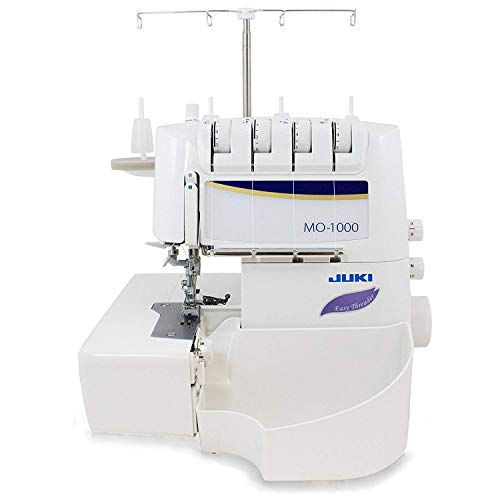
Juki MO-1000 Serger
Air assisted looper threading pushes thread through the path automatically on the MO-1000. That single feature removes the biggest reason sewists avoid their serger. Speed and build quality place it at the premium end of home overlockers.
Pros
- Looper threading is nearly effortless
- Fast, smooth operation at speed
- Strong overall build quality
Cons
- Highest outlay in this lineup
- Air system needs correct thread placement first
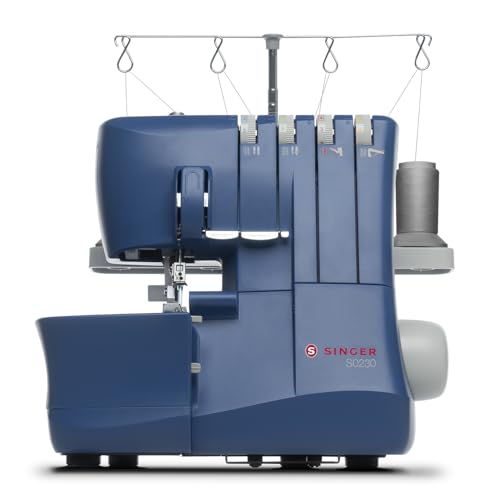
Singer S0230 Serger
S0230 covers three and four thread overlocking at the lowest outlay in this group. Occasional seam finishing suits this machine better than weekly garment production. Based on specifications, it runs slower than premium models, which rarely matters for light home use.
Pros
- Lowest cost entry point
- Compact footprint for small tables
- Simple stitch selection dial
Cons
- Noisier under heavier load
- Struggles with very thick fabric layers
How they stack up
| # | Model | Threads | Best for | Score | Price |
|---|---|---|---|---|---|
| 1 | Brother 1034D Serger | 3 or 4 thread overlock | Best overall | 9.4 | Check price |
| 2 | Juki MO-654DE Portable Serger | 2, 3 or 4 thread | Best value | 9.2 | Check price |
| 3 | Janome 8002D Serger | 3 or 4 thread overlock | Best for knits and stretch fabric | 9.0 | Check price |
| 4 | Brother ST4031HD Serger | Metal chassis | Best for heavy fabrics | 8.7 | Check price |
| 5 | Singer ProFinish 14CG754 Serger | 2, 3 or 4 thread | Best for stitch variety | 8.5 | Check price |
| 6 | Juki MO-1000 Serger | Air assisted looper threading | Best threading system | 8.3 | Check price |
| 7 | Singer S0230 Serger | 3 or 4 thread | Best budget | 8.0 | Check price |
What to look for
What does a serger do that a sewing machine can’t? A serger trims the raw edge and wraps it in thread within one pass. That produces the enclosed seam finish found in ready to wear clothing. Stretch seams flex with knit fabric instead of popping under strain. Buttonholes, zips and topstitching still need a standard sewing machine, so most home sewists keep both.
How does serger threading actually work? Loopers and needles each follow a separate thread path, and getting the order wrong causes most first day frustration. Color coded diagrams turn confusing paths into a simple match up. Lay in tension discs on newer models speed up rethreading between projects. Air assisted threading on premium machines pushes thread through the loopers automatically, removing the barrier for good.
What is differential feed and when do you adjust it? Two sets of feed dogs move at different rates, letting the machine stretch or ease fabric as it feeds. Set the dial above one to gather knit fabric and stop wavy seams. Drop it below one to prevent lightweight woven fabric from puckering. Jersey, activewear and swimwear projects depend on this adjustment most.
How do you maintain a serger and choose the right thread? Sergers throw lint aggressively because the knife trims fabric while the needle sews. Brush out the knife housing and loopers after every few projects. Replace the lower knife once cuts look ragged instead of trying to sharpen it. Cone thread designed for overlock speeds prevents the tension drift that cheap spool thread causes.
Questions worth asking
Do you need a serger if you already own a sewing machine?
It is optional but changes garment sewing significantly. A sewing machine can zigzag an edge, but a serger finishes seams faster and handles knit fabric better.
How many threads does a home serger need?
Four thread overlock handles most garment seams. Three thread suits edge finishing, and two thread works well on lightweight fabric. Most home machines cover all three configurations.
Is threading a serger hard to learn?
The first few attempts feel confusing, then threading becomes routine. Color coded paths shorten that learning curve, and air assisted systems on premium models remove most of the difficulty.
Can a serger sew an entire garment on its own?
Simple knit garments can come together mostly on a serger. Hems, topstitching and closures still need a regular sewing machine for most projects.
What thread should go in a serger?
Cone thread made for overlock machines unwinds smoothly at high speed and resists tension drift. Ordinary spools work in a pinch when paired with the correct thread stand.
How often does a serger knife need replacing?
Only when cuts start looking frayed or the blade shows visible nicks. Many home users go years before a replacement under normal fabric use.
Why does a serged seam pucker or wave?
Differential feed setting is almost always the cause. Raise it for stretchy knits that wave, and lower it for lightweight wovens that gather up.
Can a serger handle heavy fabric like denim?
Yes, though a metal framed heavy duty model manages multiple thick layers more comfortably. Slow down at seam intersections regardless of which machine you use.
What is the difference between a serger and a coverstitch machine?
A serger trims and finishes raw edges in one pass. A coverstitch machine sews the parallel topstitching seen on knit hems and does not trim fabric at all. Some machines combine both functions.
Which serger is best for a beginner?
Look for color coded threading and a straightforward differential feed dial. Machines like the Brother 1034D keep the learning curve short while still handling knit and woven fabric reliably.
Our pick
Brother 1034D remains the most sensible first serger, with approachable threading and stitch quality that holds up for years. Sewists working through fabric weekly gain more from the smoother, quieter Juki MO-654DE. Anyone focused on knits and stretch fabric should look at the Janome 8002D for its differential feed control.
Jake Monroe
Jake worked as a residential contractor for over a decade before shifting to full-time writing. He evaluates power tools, hand tools and workshop gear through the lens of someone who has actually used them on job sites, not just read the box.