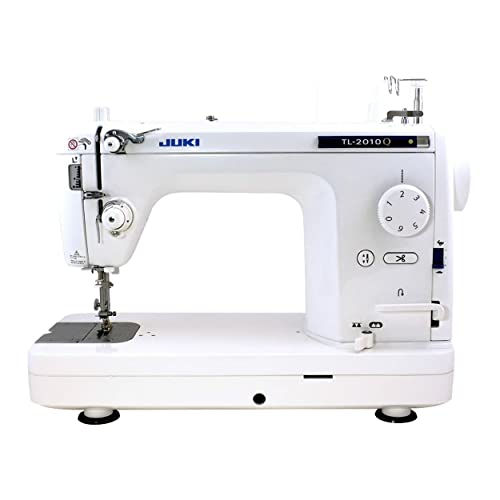
7 Serger Machines Built for Clean Knit Seams
Brother 1034D remains the pick most home sewers should buy, thanks to colour coded threading and a differential feed that handles knits cleanly. Juki MO654DE suits heavier fabrics and runs smoother at speed. Singer ProFinish 14CG754 covers more stitch types for less outlay.
Colour coded threading is what turns a frustrating serger into a usable one, and that is why the Brother 1034D still tops this list for most home sewers. Heavier fabric and a smoother running motor make the Juki MO654DE worth the extra outlay. Singer ProFinish 14CG754 covers the basics for less.
Serger specification lists look nearly identical while the actual experience of using each machine differs enormously, mostly because of threading and tension behaviour. We compared threading systems, differential feed ranges, supported stitch types, knife design and stitch width adjustment across current machines. Owner reports about tension drift, manual clarity and handling of slippery knits weighed heavily in the ranking.
What we recommend

Brother 1034D 3/4 Thread Serger
A colour coded threading diagram printed inside the door introduced a generation of home sewers to overlocking. Differential feed handles knits without waving, and the free arm makes cuffs and sleeves practical. Owners report years of service with only occasional oiling and blade replacement.
Pros
- Threading diagram stays genuinely followable
- Differential feed handles stretchy knits well
- Free arm suits sleeves and cuffs
Cons
- Runs louder than premium machines
- Tension dials need care on lightweight fabric

Juki MO654DE Portable Thread Serger
Industrial heritage shows in how smoothly this runs, with noticeably less vibration than budget machines at speed. Denim, canvas and multiple layers pass through where lighter machines hesitate. Threading stays colour coded, though the lower looper is fiddlier than on the Brother, which is the main learning curve.
Pros
- Runs smoothly with little vibration
- Handles heavy fabrics and multiple layers
- Differential feed range spans wider ratios
Cons
- Lower looper threading takes practice
- Weighs more to move than portable rivals

Singer ProFinish 14CG754 Serger
Two, three and four thread capability plus a built in rolled hem add more stitch versatility than the outlay suggests. Colour coded threading keeps setup manageable. A lighter build than the Juki means it can walk slightly at high speed on a slick table, which a mat solves.
Pros
- Stitch range runs wide for the outlay
- Rolled hem needs no plate change
- Colour coded threading guides setup
Cons
- Lighter body can shift at speed
- Tension adjustment stays more sensitive

Brother ST4031HD Serger
A metal frame and stronger knife reinforce this familiar Brother platform for canvas, denim and outdoor fabrics. Colour coded threading carries over from the 1034D, keeping it approachable. Bags, upholstery trim and workwear suit this machine better than fine dressmaking.
Pros
- Cuts heavy fabrics cleanly
- Metal frame reduces flex at speed
- Threading matches the approachable 1034D system
Cons
- Overkill for lightweight dressmaking
- Heavier to lift into storage

Janome 8002D Serger
Clear threading, colour coded tension dials and a lay in system tolerate small mistakes better than most competing machines. Stitch quality on standard cottons and knits stays consistently tidy. Fewer stitch types ship here than on the Singer, focused instead on reliable core overlock stitches.
Pros
- Setup stays very forgiving for beginners
- Stitches come out tidy on common fabrics
- Manual reads clearly and thoroughly
Cons
- Fewer stitch options than rival machines
- No built in rolled hem plate

Juki MO644D Portable Serger
A lighter, simpler Juki keeps the brand’s smooth running character in a machine easy to lift onto a table. Two, three and four thread stitches cover most home sewing needs. Quieter operation than budget machines matters most in a shared living space.
Pros
- Easy to move and store
- Runs noticeably quiet in operation
- Juki smoothness fits a smaller package
Cons
- Handles very heavy fabric less capably
- Ships with fewer included accessories

Brother 1034DX Serger with Included Accessories
Mechanically close to the 1034D, this version bundles extra feet and accessories that would otherwise be separate purchases, including a blind stitch foot and gathering foot. Someone starting from nothing skips several small orders this way. Performance and threading match the familiar Brother experience exactly.
Pros
- Extra feet arrive included
- Same reliable platform as the 1034D
- Good starting point with no other purchases needed
Cons
- Noise level matches the standard 1034D
- Extra feet see occasional use for many sewers
What to look for
Why threading decides whether you use the machine A serger threads three or four threads through loopers set in awkward places, and a badly documented path is why sergers end up sitting unused in cupboards. Colour coded guides matching the thread path count as the minimum. Air threading systems on premium machines blow thread through the loopers automatically, removing the problem entirely, though they carry a real premium. Clear colour coding covers most first machine needs.
What differential feed does for knit fabrics Differential feed drives the front and rear feed dogs at different speeds, either stretching or easing fabric as it passes the needle. Set above one, it stops knits from waving along the seam. Set below one, it stops lightweight wovens from puckering. This single feature separates a serger that handles jersey nicely from one that ruins it.
Which thread count and stitch type do you need Four thread overlock builds a strong seam that stitches and finishes in one pass, the standard construction stitch for knits. Three thread suits edge finishing and decorative work. Two thread handles lightweight finishing and flatlocking. A rolled hem, useful for napkins, scarves and lightweight edges, needs a machine that supports narrower stitch width through a plate change or a built in lever.
How to maintain the knife and needles The cutting knife trims seam allowance while sewing and wears with use, so check that replacement blades stay readily available for the model chosen. Most home sergers take standard sewing machine needles, keeping consumables cheap. Lint builds up quickly from the cutting action, so brush out the area under the looper cover regularly and oil the points the manual indicates.
How they compare
| # | Model | Threads | Best for | Score | Price |
|---|---|---|---|---|---|
| 1 | Brother 1034D 3/4 Thread Serger | 3 or 4 thread overlock | Best overall | 9.4 | Check price |
| 2 | Juki MO654DE Portable Thread Serger | 2, 3 or 4 thread | Best for heavier fabrics | 9.2 | Check price |
| 3 | Singer ProFinish 14CG754 Serger | 2, 3 or 4 thread | Best value | 9.0 | Check price |
| 4 | Brother ST4031HD Serger | Metal, heavy duty | Best for tough materials | 8.8 | Check price |
| 5 | Janome 8002D Serger | 3 or 4 thread overlock | Best for beginners | 8.6 | Check price |
| 6 | Juki MO644D Portable Serger | 2, 3 or 4 thread | Best compact option | 8.3 | Check price |
| 7 | Brother 1034DX Serger with Included Accessories | 3 or 4 thread overlock | Best accessory bundle | 8.0 | Check price |
Questions worth asking
Does a serger replace a regular sewing machine?
No. A serger finishes edges and constructs seams on knits, but it cannot sew buttonholes, topstitching, zips or pressed open straight seams. Almost everyone uses both machines together.
Is a serger hard to thread the first time?
The first few attempts, yes. It becomes routine afterward, especially on machines with colour coded paths. Tying new thread onto old and pulling it through beats rethreading from scratch, though needles still need doing by hand.
How many threads does a serger actually need?
Four thread capability covers construction and finishing, and suits what most buyers need. Three and two thread options add finishing and decorative flexibility, and ship on most machines anyway.
Can a serger sew heavy fabric like denim?
Lighter machines manage single layers but struggle at thick seam intersections. Machines with metal frames and reinforced knives handle denim and canvas far better, so choose accordingly for that material.
Why is my serger stitch loose or looping?
Tension on one specific thread is the usual cause, and the position of the loose loops points to which one. Rethreading completely with the presser foot raised solves most cases, since tension discs only open when the foot lifts.
Do sergers need special thread cones?
Serger cones are the practical choice, since the machine consumes thread quickly and cones feed more smoothly than spools. Regular thread works with cone adapters, but it runs out fast.
How often does a serger knife need replacing?
Owners report the blade lasting a long time in normal fabric use, with dull cutting or ragged edges signaling it is due. Cutting over pins is the fastest way to damage it.
Can I use a serger without cutting the fabric?
Yes, most sergers let you disengage the upper knife so the stitch forms without trimming. That helps when finishing an already cut edge or doing decorative flatlocking.
The bottom line
Brother 1034D remains the serger worth recommending first, since clear colour coded threading and a capable differential feed remove the two obstacles that make people give up on overlocking. Heavy fabric and smoother running favor the Juki MO654DE instead. A wider stitch range at lower outlay makes the Singer ProFinish 14CG754 the value alternative.
Jake Monroe
Jake worked as a residential contractor for over a decade before shifting to full-time writing. He evaluates power tools, hand tools and workshop gear through the lens of someone who has actually used them on job sites, not just read the box.