Self Watering Planters That Cut Down on Missed Waterings
The EarthBox Garden Kit suits vegetable gardeners with a reservoir and aeration screen designed specifically for tomatoes, peppers and similar crops. Indoor plant owners should consider the Lechuza Classico instead for its ceramic-style finish, while anyone working with window boxes benefits more from the Exaco City Garden design.
The EarthBox Garden Kit leads this list because its aeration screen and sized reservoir were engineered specifically around vegetable root systems, not adapted from a general houseplant pot. That vegetable-specific design makes it less suited to small succulents or houseplants that prefer drier soil. Indoor growers typically need a planter built around different watering needs instead.
We compared reservoir capacity, construction material, water level indicators and published plant type fit across seven current self watering planters rather than running our own long-term growth comparisons.
The best picks, ranked

EarthBox Garden Kit
An aeration screen separates the soil chamber from the water reservoir below, letting roots wick up moisture without sitting in standing water. A fill tube makes refilling the reservoir simple without disturbing the soil surface or plant roots. The kit includes a plastic cover that reduces weed growth and evaporation across the growing surface.
Pros
- Aeration screen prevents roots from sitting in standing water
- Fill tube simplifies refilling without disturbing plants
- Included cover reduces weeds and water evaporation
Cons
- Design is specialized for vegetables over small houseplants
- Larger footprint than compact indoor planter options
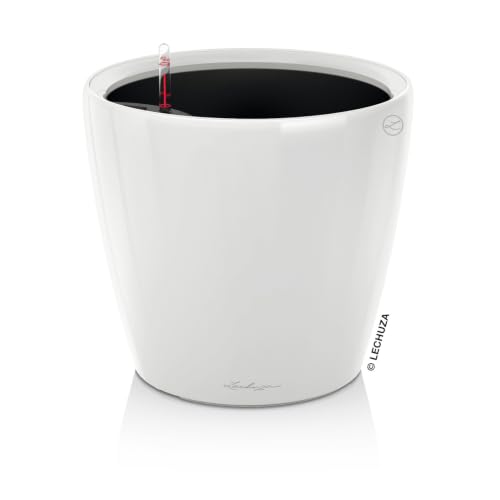
Lechuza Classico 21 Self-Watering Planter
A glossy, ceramic-style plastic finish fits indoor decor better than utilitarian plastic grow boxes built for vegetables. A water level indicator rises above the rim as the reservoir fills, showing exactly when to add more water. This planter suits houseplants and small ornamentals rather than vegetable crops needing deeper root space.
Pros
- Glossy finish suits indoor decor better than utility bins
- Visible water gauge removes guesswork on refilling
- Internal reservoir keeps the design visually clean
Cons
- Less root space than vegetable-specific planters
- Higher price than basic plastic self-watering pots

Bloem Fillable Self-Watering Planter
A straightforward reservoir base sits beneath the main pot, wicking water upward through a simple cord or wick system. The plastic construction costs less than ceramic-style or vegetable-specific designs while still reducing watering frequency. This planter works for both indoor and outdoor placement depending on the specific size chosen.
Pros
- Lower price than ceramic-style or vegetable-specific planters
- Wick system reduces watering frequency reliably
- Works for both indoor and outdoor placement
Cons
- Basic plastic look suits utility areas more than decor-focused rooms
- Smaller reservoir than dedicated vegetable grow boxes

Algreen Madera Self-Watering Planter
A faux wood-grain finish gives this planter a natural look for patios and decks without the rot risk real wood planters face over time. An internal reservoir and water level indicator mirror the function found in the Lechuza and EarthBox designs. Drainage overflow holes near the top prevent reservoir flooding during heavy rain.
Pros
- Wood-look finish avoids the rot risk of real wood planters
- Overflow holes prevent reservoir flooding in heavy rain
- Water level gauge matches premium indoor planter features
Cons
- Faux wood finish may fade faster than solid resin colors
- Heavier than basic plastic planters of similar size
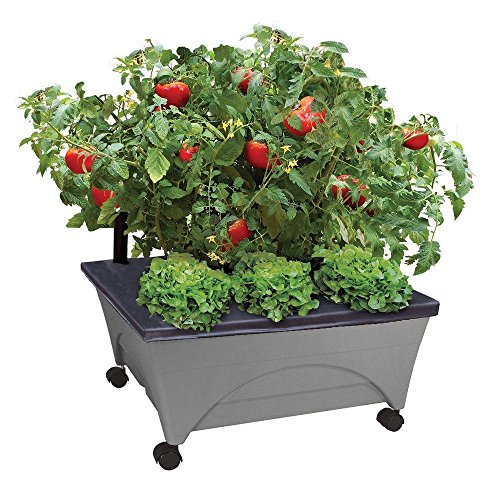
Exaco City Garden Self-Watering Window Box
A narrow, elongated shape fits window sills and balcony railings better than round or square planter designs built for floor placement. The reservoir sits along the base and includes a water level indicator visible from the side. This planter suits herbs, trailing flowers and other shallow-root plants common in window box displays.
Pros
- Narrow shape fits window sills and railings precisely
- Side-visible gauge makes checking water level easy
- Suits herbs and trailing flowers well
Cons
- Not suited to deep-root vegetables needing more soil volume
- Smaller overall reservoir than full-size floor planters

T4U Self-Watering Plastic Planter
A compact size suits small potted plants like succulents, herbs or starter houseplants rather than larger vegetables or shrubs. The reservoir base uses a simple wick system, and the lightweight plastic construction makes repositioning easy around a home. Multiple color options let buyers match the planter to existing room decor.
Pros
- Lightweight design makes repositioning simple
- Multiple color options match varied home decor
- Compact size suits small plants without wasted space
Cons
- Too small for larger vegetables or mature shrubs
- Reservoir capacity is modest compared to larger planters

Mkono Self-Watering Plastic Planter Pot
A set of smaller self-watering pots suits gardeners arranging several plants together on a shelf, windowsill or plant stand. Each pot includes its own small reservoir, so plants with different watering needs can be managed individually rather than sharing one large tank. The modern minimalist shape fits contemporary home decor styles.
Pros
- Individual reservoirs let each plant’s watering needs differ
- Minimalist style suits contemporary home decor
- Set format covers multiple plants at once
Cons
- Each pot’s reservoir is smaller than single larger planters
- Less suited to one large statement plant than a full-size pot
Side by side
| # | Model | Reservoir Design | Best for | Score | Price |
|---|---|---|---|---|---|
| 1 | EarthBox Garden Kit | Aeration screen separated | Best Overall | 9.0 | Check price |
| 2 | Lechuza Classico 21 Self-Watering Planter | Ceramic-style glossy plastic | Best for Indoor Decor | 8.7 | Check price |
| 3 | Bloem Fillable Self-Watering Planter | Wick-based water chamber | Best Budget Option | 8.2 | Check price |
| 4 | Algreen Madera Self-Watering Planter | Faux wood grain | Best for Wood-Look Outdoor Styling | 8.4 | Check price |
| 5 | Exaco City Garden Self-Watering Window Box | Narrow, elongated window box | Best for Window Boxes and Railings | 8.3 | Check price |
| 6 | T4U Self-Watering Plastic Planter | Compact, small plant focused | Best for Small Potted Plants | 8.1 | Check price |
| 7 | Mkono Self-Watering Plastic Planter Pot | Multiple individual pots | Best for Multi-Plant Shelf Displays | 8.0 | Check price |
What matters most
What to look for in a self-watering planter Reservoir size determines how many days a planter can go without a refill, which matters more for vacations or busy schedules. Material affects where the planter looks and performs best, with ceramic-style finishes suiting indoor decor and faux wood or resin suiting outdoor patios. A visible water level indicator removes the guesswork of checking reservoir levels by hand.
Vegetable-specific planters versus general houseplant designs The EarthBox Garden Kit uses an aeration screen engineered specifically for vegetable root systems like tomatoes and peppers. General self-watering pots such as the Lechuza Classico and Bloem model work better for houseplants and ornamentals that need different moisture levels than vegetables. Buyers should match the planter’s design intent to what they are actually growing rather than assuming one design fits every plant type.
Indoor decor focused options versus outdoor durability Ceramic-style finishes like the Lechuza Classico suit indoor rooms where appearance matters alongside function. Outdoor-focused designs such as the Algreen Madera use weather resistant faux wood finishes built to handle sun and rain. Window box shapes like the Exaco City Garden split the difference, working on covered porches or indoor sills depending on the specific placement.
Single large planters versus multi-pot sets A single larger reservoir, found in the EarthBox or Algreen Madera, suits one sizable plant or a small vegetable crop needing consistent moisture. Multi-pot sets like the Mkono design let several smaller plants with different watering needs sit on one shelf without sharing a single reservoir. Buyers with a varied plant collection often get more flexibility from individual small pots than one large shared planter.
Questions worth asking
What is the best self watering planter for vegetables?
The EarthBox Garden Kit uses an aeration screen specifically designed for vegetable root systems like tomatoes and peppers.
Do self watering planters work for indoor houseplants?
Yes, planters like the Lechuza Classico and T4U model are designed around houseplant and ornamental watering needs rather than vegetables.
How often do self watering planters need refilling?
This depends on reservoir size, plant type and climate, though many reservoirs last several days to a week between refills.
What is a water level indicator on a self watering planter?
It is a visible gauge, found on planters like the Lechuza Classico and Algreen Madera, that shows the current reservoir level without lifting the plant.
Can self watering planters be used outdoors?
Yes, outdoor-rated options like the Algreen Madera include overflow drainage to handle rain without flooding the reservoir.
Are self watering window boxes good for herbs?
Yes, narrow designs like the Exaco City Garden suit shallow-root herbs and trailing flowers well in a window sill or railing setup.
Do self watering planters prevent overwatering?
They help by controlling how much water reaches the roots through wicking, though the plant can still receive excess water if the reservoir overflows.
What size self watering planter is best for succulents?
A compact option like the T4U planter suits succulents and small potted plants better than a large vegetable-focused design.
The bottom line
For vegetable gardeners, the EarthBox Garden Kit remains the strongest choice thanks to its aeration screen built specifically around crops like tomatoes and peppers. Indoor plant owners who care about appearance should choose the Lechuza Classico instead, since its ceramic-style finish fits home decor better than a utility grow box. Anyone managing window sills or balcony railings will get a better fit from the Exaco City Garden window box than from a floor-standing planter design.
Sierra Daniels
Sierra's background is in landscape design and nursery retail. She focuses on lawn and garden equipment, outdoor furniture and gear durability, weighing published specs against how materials actually hold up outside.


