Self Healing Cutting Mats: Sizes, Grids and Layers
OLFA’s 24 by 36 inch double sided rotary mat recovers best under a 45mm blade, so quilters should start there. Fiskars matches the size with a softer face that needs less hand pressure. ARTEZA’s 18 by 24 inch five ply mat fits ordinary craft desks.
OLFA’s 24 by 36 inch double sided mat is the right default for anyone who sews. Rotary cuts close cleanly in its three layer PVC, and the printed grid survives years of use. Bulk is the catch, because a small desk cannot hold that span. Card makers rarely need more than a 12 by 18 inch face.
Listings make every mat look alike, yet thickness, layer count and grid accuracy differ widely between brands. We compared published dimensions, construction, angle markings and which faces are actually cuttable. Owner feedback on curling, gouging and grid fade decided the close calls.
The best picks, ranked

OLFA 24 x 36 Inch Double-Sided Self-Healing Rotary Mat
Three bonded PVC layers let the surface close behind a rotary blade instead of holding a permanent groove. Both faces cut, so flipping the mat doubles how long a working side stays smooth. Angle guides at 30, 45 and 60 degrees print on the gridded face for binding strips.
Pros
- Closes cleanly after repeated rotary passes
- Angle lines speed up binding and triangles
- Second face extends the usable life
Cons
- Takes a set unless stored flat
- Overhangs a small craft desk

Fiskars Self-Healing Rotary Cutting Mat 24 x 36
A softer compound lets a 45mm blade sink in with less downward pressure on long yardage cuts. Inch grid and bias lines run right across the face, which helps square fabric before trimming. Owners report craft knife work scars this surface sooner than a firmer mat.
Pros
- Long cuts need less hand strength
- Full width grid squares yardage quickly
- Softer face is gentler on blade edges
Cons
- Scalpel and hobby knife use marks it faster
- Only one printed side

ARTEZA Self Healing Cutting Mat 18 x 24
An 18 by 24 inch face covers most craft tables without swallowing them. Five plies absorb rotary blades and hobby knives alike, so a single mat handles mixed work. Flip it over for a plain back, handy when printed lines distract from a traced pattern.
Pros
- Metric and imperial scales on one surface
- Leaves room to work on a standard desk
- Copes with rotary and craft blades
Cons
- Smells of PVC for the first few days
- Too narrow for full width quilting cotton

Alvin GBM Series Professional Self-Healing Cutting Mat
Alvin aims this at design studios, pairing reversible green and black faces that cut glare under task lamps. Firmness keeps a steel rule from drifting partway through a long stroke. Grid printing stays accurate enough for model making and architectural mock ups.
Pros
- Firm face stops rulers sliding
- Black side reduces glare on white paper
- Large formats reach studio bench sizes
Cons
- Firmness demands more blade pressure
- Big sizes arrive rolled and need flattening
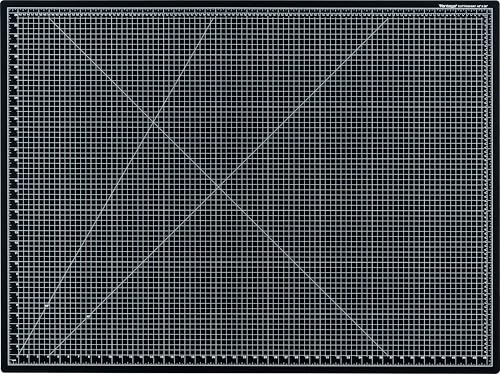
Dahle Vantage Self-Healing Cutting Mat 36 x 48
Spanning 36 by 48 inches, this mat covers most of a work table for pattern drafting, vinyl layout and poster mounting. Five layers soak up blade pressure, so cuts never telegraph through to the table below. Storage and handling are the trade off for that span.
Pros
- Whole table coverage for big patterns
- Thick build shields the surface underneath
- Half inch grid helps with fine placement
Cons
- Needs flat storage or it curls
- Heavy to reposition without help

X-ACTO Self-Healing Cutting Mat 12 x 18
Roughly a laptop footprint, this mat suits model kits, card making and light trimming. Its green face carries a one inch grid with centring marks for quick alignment. Rotary quilters outgrow it fast, since 12 inches barely spans a folded fat quarter.
Pros
- Light enough to store upright in a gap
- Grid stays legible at this scale
- Handles repeated hobby knife passes
Cons
- Too small for garment or quilt cutting
- One usable face only
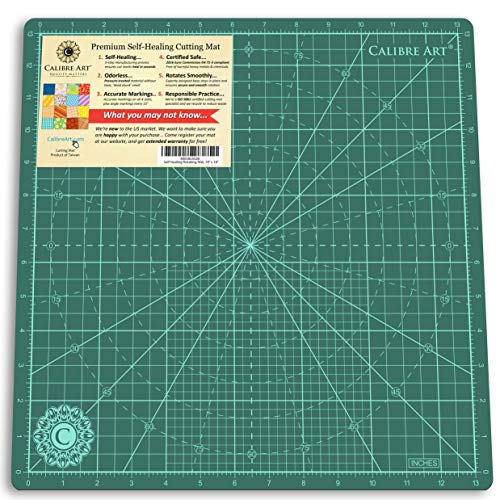
Calibre Art Rotating Self Healing Cutting Mat 14 x 14
Its top face turns on a base, so a quilt block gets squared by rotating the mat rather than lifting pieced fabric. Locks hold the surface at 90 degree stops while the blade runs. At 14 inches square, this one handles blocks rather than yardage.
Pros
- Seams stay aligned while the mat turns
- Locking stops keep every trim square
- Removes constant repositioning of fabric
Cons
- Small face restricts it to block work
- Base raises the cutting height
How they stack up
| # | Model | Size | Best for | Score | Price |
|---|---|---|---|---|---|
| 1 | OLFA 24 x 36 Inch Double-Sided Self-Healing Rotary Mat | 24 by 36 inches | Best overall | 9.4 | Check price |
| 2 | Fiskars Self-Healing Rotary Cutting Mat 24 x 36 | 24 by 36 inches | Best for quilting fabric | 9.2 | Check price |
| 3 | ARTEZA Self Healing Cutting Mat 18 x 24 | 18 by 24 inches | Best value | 9.0 | Check price |
| 4 | Alvin GBM Series Professional Self-Healing Cutting Mat | 12 by 18 up to 40 by 60 inches | Best for drafting tables | 8.7 | Check price |
| 5 | Dahle Vantage Self-Healing Cutting Mat 36 x 48 | 36 by 48 inches | Best for large format work | 8.5 | Check price |
| 6 | X-ACTO Self-Healing Cutting Mat 12 x 18 | 12 by 18 inches | Best budget | 8.2 | Check price |
| 7 | Calibre Art Rotating Self Healing Cutting Mat 14 x 14 | 14 by 14 inches | Best for trimming blocks | 8.0 | Check price |
Before you buy
How self healing cutting mats work Layers of soft PVC are pressed together to form these mats. A sharp blade parts the compound rather than removing material, and the surface closes behind the pass. Firmer mats survive scalpel work longer, while softer ones feel better under a rotary cutter. Nothing heals a groove torn by a blunt blade, so swap blades before they start dragging.
What size cutting mat do you need Match the mat to your longest routine cut. Quilting cotton folded selvedge to selvedge calls for 24 by 36 inches, which explains why OLFA and Fiskars dominate sewing rooms. Card makers and model builders work comfortably on 12 by 18 inches. Pattern drafters cutting full paper sheets should jump straight to the Dahle 36 by 48 inch face.
Grid lines, angles and mat colour Printed grids only help while the lines stay visible after months of cutting. Reversible green and black faces, as on the Alvin GBM, keep light paper readable under bright lamps. Angle guides at 30, 45 and 60 degrees earn their space on binding strips and half square triangles. Anyone working in centimetres should check the scale, which ARTEZA prints beside inches.
Storing a mat without warping it Heat and rolled storage cause most complaints owners raise. Keep mats flat and away from direct sun, because one left in a hot car curls for good. Wipe with mild soap and a damp cloth; alcohol dries the PVC and speeds up cracking. Weighting a warped mat under books for several days often flattens it again.
Common questions
What size self healing cutting mat do you need for quilting?
Start at 24 by 36 inches. That span takes quilting cotton folded selvedge to selvedge, the cut a quilter repeats hundreds of times. Anything smaller forces awkward refolding mid project.
Do self healing cutting mats really repair themselves?
Soft PVC closes behind a sharp blade, so shallow cuts vanish. Damage from dull blades, box cutters or heat stays permanent. Blade condition decides how well the effect holds up.
Can you use a rotary cutter on any cutting mat?
No. Hard plastic and glass boards blunt rotary blades within a few strokes. Stick to self healing PVC rated for rotary use, such as the OLFA or Fiskars mats here.
OLFA vs Fiskars: which cutting mat is better?
OLFA runs firmer and holds grid clarity longer, which suits mixed knife and rotary work. Fiskars feels softer and saves hand strength on long fabric cuts, but scars sooner under a craft knife.
How do you flatten a warped cutting mat?
Lay it flat and spread weight evenly across the whole face for several days. Gentle warmth from a bright room can help. Direct sun often deepens the curl instead of releasing it.
Is a rotating cutting mat worth buying?
For squaring quilt blocks, yes. Turning the Calibre Art top keeps seams aligned instead of lifting pieced fabric. General cutting gains nothing from it beyond extra height.
Which side of a double sided mat should you cut on?
Use the gridded face for measured work and save the plain side for tracing or glue. Alternating faces on the OLFA spreads wear and delays visible scoring.
How long do self healing cutting mats last?
Sharp blades, flat storage and no heat usually buy several years of regular hobby use. Replace the mat once cuts stop closing and a blade begins catching in old grooves.
What is the best cutting mat for model making?
Firm surfaces win here, since scalpels and hobby knives cut with pressure rather than rolling. Alvin GBM suits a bench, while the X-ACTO 12 by 18 inch mat covers a smaller build desk.
The bottom line
Pick the OLFA 24 by 36 inch mat if you sew regularly, because it recovers well under a rotary blade and offers a second face once the first shows wear. Craft desks, card makers and model builders do better with the ARTEZA 18 by 24 inch mat, which takes both blade types in a footprint that fits. Avoid the large format options without flat storage, since a permanently curled mat is worse than a smaller flat one.
Jake Monroe
Jake worked as a residential contractor for over a decade before shifting to full-time writing. He evaluates power tools, hand tools and workshop gear through the lens of someone who has actually used them on job sites, not just read the box.
