Seed Starting Systems Built for Reliable Germination
Burpee’s Self-Watering Seed Starting Kit ranks first. Its capillary mat keeps cells evenly moist, and uneven watering kills more seedlings than anything else. Park Seed’s Bio Dome suits first-time growers with preformed sponge plugs. Bootstrap Farmer’s 1020 trays hold up best for growers starting hundreds of seedlings every season.
Burpee’s Self-Watering Seed Starting Kit suits most home growers. A capillary mat keeps every cell evenly moist. Uneven watering, not cold or bad seed, kills more seedlings than anything else. Park Seed’s Bio Dome removes extra guesswork for a first season. Bootstrap Farmer’s 1020 trays earn their higher cost once you start flats every year.
Seedlings fail in predictable ways. Cells dry out on a sunny afternoon, or seedlings stretch pale toward a distant window. Damping off can flatten a full tray overnight. Most of these failures trace back to the system, not the seed packet. We compared watering method, cell volume, dome ventilation and tray rigidity. Heat and light inclusion mattered too, and we weighed every spec against grower feedback collected after repeated use.
The top picks, ranked
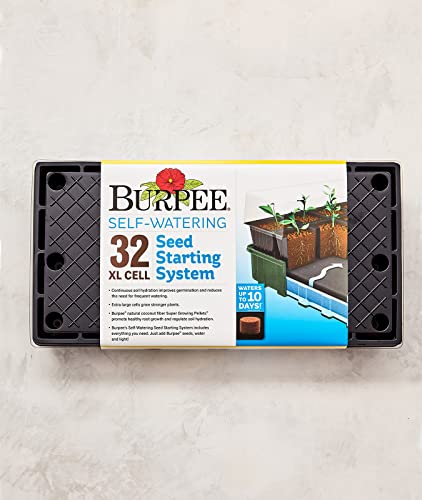
Burpee Self-Watering Seed Starting Kit
Burpee builds this kit around a reservoir and capillary mat. Water wicks up into each cell as the growing medium dries, so timing matters less. A vented dome lifts in stages as seedlings grow, and it fits on a windowsill or under a shop light.
Pros
- Even moisture without daily attention
- Vented dome lowers damping off risk
- Compact footprint suits a windowsill
Cons
- Reservoir needs cleaning between seasons
- Cells run small for crops that resent transplanting
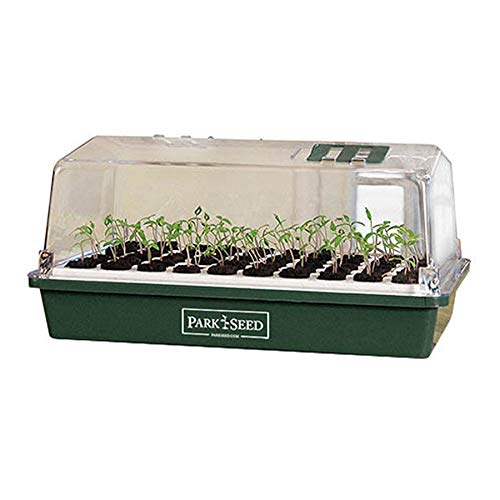
Park Seed Bio Dome Seed Starter
Park Seed replaces loose compost with preformed Bio Sponge plugs. Each plug holds air and water in a ratio many beginners struggle to mix by hand. A rigid foam block drains excess water instead of holding it around the roots. Refill sponges are sold separately, so cost adds up over seasons.
Pros
- Removes guesswork about growing medium
- Foam base resists overwatering by design
- Owners report consistent germination rates
Cons
- Replacement sponges add recurring cost
- Cell volume is modest, so plants need early potting on

Bootstrap Farmer 1020 Seed Starting Trays
Bootstrap Farmer makes trays market gardeners rely on. Thick moulded plastic survives repeated washing and stacking without folding under a full load. Standard 1020 sizing accepts inserts, domes and heat mats from other suppliers. Pricing runs higher than flimsy nursery trays, which only pays off with years of reuse.
Pros
- Carries a full flat without buckling
- Standard sizing fits mats, domes and inserts
- Withstands repeated washing across seasons
Cons
- Higher upfront cost than nursery trays
- Sold as bare trays, so cells and domes cost extra

Jiffy Professional Greenhouse 72 Peat Pellet Kit
Jiffy pellets expand from a compressed disc into a self-contained plug once watered. No compost bag needs buying or mixing. Seedlings transplant with the netting intact, which limits root disturbance. That netting breaks down slowly in soil, so many growers slit or remove it at planting.
Pros
- No compost mixing or measuring
- Minimal root disturbance at transplant
- Fast to set up a full tray
Cons
- Netting can persist in soil after planting
- Peat sourcing concerns some growers

Hydrofarm Jump Start Grow Light System
Light intensity is what most home growers underestimate. This system mounts a T5 fluorescent fixture on an adjustable stand, so it stays inches above seedlings as they grow. That single change stops the pale, stretched growth a windowsill causes, though trays and growing medium are sold separately.
Pros
- Prevents leggy growth caused by weak light
- Stand height adjusts as seedlings grow
- Footprint matches standard 1020 trays
Cons
- Trays and growing medium not included
- Fluorescent tubes need periodic replacement

VIVOSUN Seed Starter Trays
VIVOSUN sells cell inserts and trays in multipacks. Growers starting a large plot, or sharing seedlings with neighbors, get far more cells for the outlay. Domes and pre-punched drain holes come included in most bundles, though thinner plastic flexes when a tray is lifted full.
Pros
- Low cost per cell
- Domes and drainage included in the bundle
- Enough trays for a full plot in one order
Cons
- Thin plastic flexes when lifted full
- Fewer seasons of reuse than heavy-duty trays

iPower Seedling Heat Mat with Thermostat
Peppers, tomatoes and eggplants germinate slowly, or not at all, in a cool room. This heat mat pairs with a thermostat that holds the growing medium in the range those seeds need. A probe-based controller prevents an uncontrolled mat from cooking the tray, and it should switch off once seedlings emerge to avoid stretching.
Pros
- Speeds germination of warm-season crops
- Thermostat prevents overheating the tray
- Sized to fit standard trays
Cons
- Functions as an accessory, not a full system
- Needs switching off after germination to avoid legginess
How to choose
What actually makes seed starting succeed? Two problems account for most seedling failures. Cells dry out during a sunny afternoon, or they stay waterlogged after heavy watering. Bottom watering solves both. Set the tray in a shallow reservoir and let moisture wick upward through the medium. Self-watering kits automate this step. Any tray can be bottom watered by pouring into the base instead of over the tops. Keeping the surface drier also discourages fungus gnats and damping off.
Why do seedlings turn tall and pale? A warm windowsill germinates seeds quickly, then produces stretched, floppy growth. Windows supply only a fraction of the light plants need, and only from one side. Heat mats help germination, but should come off once shoots appear. From that point, seedlings need strong light held a few inches above the leaves for fourteen to sixteen hours daily. Raise the light as plants grow. Few upgrades change results this much.
Which cell size fits which crop? Small cells suit lettuce, brassicas and flowers that transplant fast. They also fit more seedlings under one light. Tomatoes, peppers and squash need more root volume, or they become root bound and stall. A workable approach starts seeds in small cells, then pots them into three-inch containers once true leaves appear. Crops that resent disturbance, like squash, do better started directly in larger cells or soil blocks.
How do you stop damping off before it starts? Damping off is a fungal collapse that flattens seedlings at soil level overnight. It thrives in still, humid, dirty conditions. Wash reused trays in hot soapy water and rinse thoroughly before each season. Use a sterile seed starting mix instead of garden soil. Remove the humidity dome once most seeds germinate. Run a small fan nearby on low to keep air moving; that airflow also thickens stems for easier transplanting.
The lineup, side by side
| # | Model | Watering | Best for | Score | Price |
|---|---|---|---|---|---|
| 1 | Burpee Self-Watering Seed Starting Kit | Reservoir with capillary mat | Best overall | 9.4 | Check price |
| 2 | Park Seed Bio Dome Seed Starter | Preformed Bio Sponge plugs | Best for beginners | 9.2 | Check price |
| 3 | Bootstrap Farmer 1020 Seed Starting Trays | Standard 1020 tray | Best for market gardeners | 9.0 | Check price |
| 4 | Jiffy Professional Greenhouse 72 Peat Pellet Kit | 72 compressed peat pellets | Best for minimal setup | 8.8 | Check price |
| 5 | Hydrofarm Jump Start Grow Light System | T5 fluorescent grow light | Best for stopping leggy seedlings | 8.6 | Check price |
| 6 | VIVOSUN Seed Starter Trays | Multipack cell trays with domes | Best value for large batches | 8.3 | Check price |
| 7 | iPower Seedling Heat Mat with Thermostat | Bottom heat for germination | Best for warm-season crops | 8.0 | Check price |
Frequently asked questions
When should I start seeds indoors?
Count backward from your last expected frost date using the seed packet’s timing. Tomatoes and peppers typically need six to eight weeks. Brassicas and many flowers need three to four weeks. Starting too early causes more problems than starting late, since oversized seedlings struggle indoors.
Why are my seedlings tall, pale and floppy?
Insufficient light causes this stretching. A window delivers far less intensity than seedlings need, and only from one direction. Move plants under a grow light held a few inches above the leaves for fourteen to sixteen hours daily. Turn off any heat mat once germination finishes.
Can I use garden soil for seed starting?
Garden soil is not recommended. It compacts inside small cells, drains poorly and can carry fungal spores, weed seeds and pests. Sterile seed starting mix stays light, holds air around fine roots and lowers damping off risk.
Do seedlings need a heat mat?
Warm-season crops like peppers, tomatoes and eggplants germinate faster with bottom heat in a cool house. Cool-season crops such as lettuce and brassicas do not need it and can germinate worse with added heat. Use a thermostat so the tray never overheats.
When should the humidity dome come off?
Remove it once most seeds have germinated. Leaving it on keeps stem-level humidity high, the exact condition damping off needs. In a very dry room, ventilate gradually instead of removing the dome all at once.
What is damping off and how do you prevent it?
Damping off is a fungal disease that collapses seedlings at soil level, usually overnight. Prevent it with clean trays, sterile mix, bottom watering, prompt dome removal and gentle airflow from a fan. Affected seedlings rarely recover once symptoms appear.
How do you harden off seedlings before transplanting?
Expose seedlings to outdoor conditions gradually over seven to ten days. Start with an hour in a sheltered, shaded spot, then increase time and sun exposure daily. Skipping this step causes wind damage and leaf scorch that sets plants back even if they survive.
Are seed starting trays reusable?
Heavy-duty trays like Bootstrap Farmer’s 1020 line are built for many seasons. Wash them in hot soapy water, rinse thoroughly and let them dry fully before storage. Thin nursery trays often crack after a season or two.
Self-watering kit vs peat pellets: which is easier for beginners?
Self-watering kits like Burpee’s automate moisture, which suits growers who forget to water. Peat pellets like Jiffy’s need no mixing and transplant with minimal root disturbance. Beginners who want the fewest daily decisions often prefer pellets; travelers or forgetful waterers do better with a reservoir system.
What size grow light do I need for a 1020 tray?
A T5 fluorescent fixture sized to match a standard 1020 tray footprint, like Hydrofarm’s Jump Start, covers one full flat evenly. Mount it on an adjustable stand so it can stay a few inches above seedlings as they grow taller.
The bottom line
Burpee’s Self-Watering Seed Starting Kit suits most home gardeners because it solves the moisture problem that ends most trays, and it fits a windowsill or grow light stand without modification. Beginners who want fewer decisions should choose Park Seed’s Bio Dome instead. Growers starting hundreds of seedlings every spring get more value from Bootstrap Farmer’s 1020 trays, which cost more upfront but keep working for years.
Sierra Daniels
Sierra's background is in landscape design and nursery retail. She focuses on lawn and garden equipment, outdoor furniture and gear durability, weighing published specs against how materials actually hold up outside.