Salad Containers Built to Survive a Full Workday
The Bentgo Salad Container with Dressing Compartment suits most people with a separate dressing cup that keeps greens crisp. Commuters needing cold storage do better with the Fit & Fresh Chilled Salad Container, while batch preppers benefit from the stackable Prep Naturals multi-pack.
The Bentgo Salad Container with Dressing Compartment leads this list for anyone packing a salad that needs to stay crisp until lunch. A separate dressing cup keeps greens from going soggy during the commute, though the cup itself holds a limited amount of dressing.
We compared compartment design, seal type and material across product listings rather than claiming our own taste test.
The shortlist, ranked

Bentgo Salad Container with Dressing Compartment
A separate dressing cup keeps greens from wilting before lunchtime arrives. A leak-resistant snap lid holds up to travel inside a bag without spilling. The compact overall shape fits standard lunch bags without extra bulk.
Pros
- Separate dressing cup keeps greens from going soggy before lunch
- Leak-resistant lid holds up to travel in a bag
- Compact shape fits standard lunch bags
Cons
- Fixed dressing cup size limits how much dressing it holds
- Not microwave safe with the lid attached

Fit & Fresh Chilled Salad Container
A built-in gel cooling base keeps salad cold without needing a separate ice pack in the bag. A small side compartment separates toppings from the main bed of greens. The reusable cooling base refreezes overnight for the next day’s use.
Pros
- Built-in gel base keeps salad cold without a separate ice pack
- Side compartment separates toppings from the main greens
- Reusable cooling base refreezes for repeated use
Cons
- Gel base adds bulk compared to containers without cooling
- Smaller main capacity than non-insulated options

Rubbermaid Brilliance Salad Container
A latching lid resists leaks noticeably better than a basic snap-on design during a commute. Tritan plastic resists staining from dressings and tomato sauce better than standard plastic. The stackable shape saves fridge space when prepping several salads ahead.
Pros
- Latching lid resists leaks better than snap-on lids
- Tritan plastic resists staining from dressings and sauces
- Stackable shape saves fridge space when prepping ahead
Cons
- Single compartment does not separate dressing automatically
- No dedicated dressing cup included
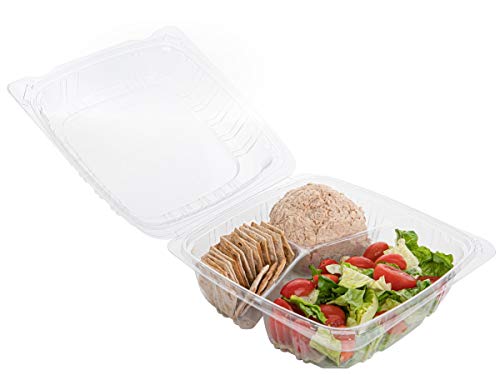
EasyLunchboxes 3-Compartment Salad Container
A multi-pack lets a household prep several salads at once rather than buying containers one at a time. Three divided sections separate greens, toppings and protein without extra small containers. Lower per-container cost makes this an easy entry point for batch prepping.
Pros
- Multi-pack lets a household prep several salads at once
- Three sections separate greens, toppings and protein
- Lower per-container cost than single specialty salad boxes
Cons
- Lid is snap-on rather than a fully latching seal
- No dedicated dressing compartment included
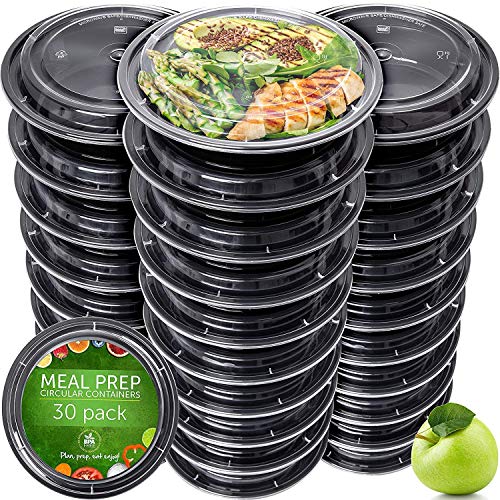
Prep Naturals Salad Meal Prep Containers
Stackable trays suit batch prepping salads for an entire week rather than one lunch at a time. Microwave and freezer safe construction adds flexibility beyond salads alone. A two-section layout keeps dressing separated from the greens underneath.
Pros
- Stackable trays suit batch prepping salads for the whole week
- Microwave and freezer safe adds flexibility beyond just salads
- Two-section layout separates dressing from greens
Cons
- Standard plastic construction feels less premium than glass
- Compartment sizes are fixed and not adjustable

Komax Biokips Salad Container with Locking Lid
A four-point locking lid seals more securely than a simple snap lid during a bumpy commute. The single large compartment fits a full entree-sized salad without crowding. A clear body makes checking contents simple without opening the lid first.
Pros
- Four-point locking lid seals more securely than snap lids
- Large single compartment fits a full entree salad
- Clear body makes checking contents simple
Cons
- No built-in compartment for separating dressing
- Locking clips take two hands to release

Glasslock Salad Meal Prep Container
Tempered glass resists staining and odor absorption better than plastic over repeated use. A microwave-safe body allows reheating other prepped meals in the same container, lid removed. Clear glass shows contents at a glance without needing to open the lid.
Pros
- Tempered glass resists staining and odor absorption better than plastic
- Microwave safe body allows reheating other prepped meals in the same container
- Clear glass shows contents without opening the lid
Cons
- Heavier and more breakable than plastic alternatives
- Lid still plastic and not microwave safe
Before you buy
What to look for in a salad prep container Seal type decides how well a container survives being tossed into a bag, with latching and locking lids outperforming basic snaps. A dedicated dressing compartment keeps greens from wilting, which matters more the longer a salad sits before lunch. Material affects durability and staining, with glass and Tritan plastic resisting sauces better than standard plastic. Capacity should match a typical portion rather than always buying the largest available size.
Containers with a dressing compartment versus without A separate dressing cup, like the Bentgo pick, keeps dressing off the greens until the moment of eating. Containers without a dedicated compartment, such as the Rubbermaid Brilliance and Komax Biokips picks, work fine for dressings added right before eating. Multi-section trays, like the Prep Naturals and EasyLunchboxes options, split toppings and protein as well as dressing. Skipping a dressing compartment is fine for anyone who prefers dressing on the side anyway.
Batch prepping salads for the week Stackable containers, like the Prep Naturals trays, make the most of fridge space when prepping several salads ahead. A multi-pack, such as the EasyLunchboxes set, avoids running out of containers partway through a batch prep session. Microwave and freezer safe construction adds flexibility for prepping other meals in the same containers. Checking stackability before buying avoids containers that take up more fridge space than expected.
Plastic versus glass construction for salad storage Plastic containers, like the Bentgo and Rubbermaid Brilliance picks, stay lighter and more impact resistant for daily carrying. Glass containers, such as the Glasslock pick, resist staining and odor absorption better over repeated dressing exposure. Glass adds weight and a breakage risk that plastic avoids entirely. Choosing between the two often comes down to whether durability against stains or lighter daily carrying matters more.
Side by side
| # | Model | Material | Best for | Score | Price |
|---|---|---|---|---|---|
| 1 | Bentgo Salad Container with Dressing Compartment | BPA-free plastic | Best Overall | 8.9 | Check price |
| 2 | Fit & Fresh Chilled Salad Container | BPA-free plastic with gel cooling base | Best for Built-In Ice Pack | 8.7 | Check price |
| 3 | Rubbermaid Brilliance Salad Container | Tritan plastic | Best for Leak-Proof Seal | 8.5 | Check price |
| 4 | EasyLunchboxes 3-Compartment Salad Container | BPA-free plastic | Best Budget Multi-Pack | 8.1 | Check price |
| 5 | Prep Naturals Salad Meal Prep Containers | BPA-free plastic | Best Value Multi-Pack | 8.2 | Check price |
| 6 | Komax Biokips Salad Container with Locking Lid | BPA-free plastic | Best for Secure Seal | 8.4 | Check price |
| 7 | Glasslock Salad Meal Prep Container | Tempered glass | Best for Glass Build | 8.3 | Check price |
Common questions
What is the best salad prep container overall?
The Bentgo Salad Container with Dressing Compartment keeps greens crisp thanks to its separate dressing cup.
Does a separate dressing compartment really keep salad fresh longer?
Yes, keeping dressing off greens until eating time noticeably slows wilting compared to pre-dressed salad.
What container works best for keeping salad cold on the go?
The Fit & Fresh Chilled Salad Container includes a built-in gel cooling base for commutes without a separate ice pack.
Are glass salad containers better than plastic ones?
Glass resists staining and odor better over time, while plastic stays lighter and more resistant to dropping.
What is the best container for batch prepping a week of salads?
The Prep Naturals Salad Meal Prep Containers stack efficiently and come in multi-packs suited to batch prepping.
Can salad prep containers go in the microwave?
Some, like the Prep Naturals and Glasslock containers, are microwave safe, usually with the lid removed first.
What is the most affordable salad container multi-pack?
The EasyLunchboxes 3-Compartment Salad Container offers a lower per-container cost in its multi-pack set.
Do salad containers need a locking lid to prevent leaks?
A locking or latching lid, like the Komax Biokips or Rubbermaid Brilliance designs, reduces leak risk during transport.
How many compartments does a typical salad container have?
Most salad containers include one to three compartments, depending on whether dressing and toppings are separated.
Can salad prep containers go in the freezer?
Some, including the Prep Naturals containers, are freezer safe, though most salads are better suited to short-term fridge storage.
The bottom line
The Bentgo Salad Container with Dressing Compartment remains the strongest default pick for keeping a packed salad fresh until lunch. Anyone commuting with a salad that needs to stay cold should choose the Fit & Fresh chilled container instead. Batch preppers making several salads at once get more practical value from the stackable Prep Naturals multi-pack.
Dana Whitfield
Dana spent eight years buying and merchandising for a regional kitchenware retailer before moving into editorial work. She has handled thousands of SKUs across cookware, small appliances and kitchen organization, and focuses on the practical differences that matter once a product is actually in daily use.

