Blow Out Your RV Water Lines Without Guesswork
The Camco 36103 Brass Blow-Out Plug is the top pick, threading directly into any RV city water inlet and accepting a standard tire chuck. It suits most owners doing a yearly winterize. Buyers who want to watch line pressure should pick the Camco gauge version instead.
The Camco 36103 Brass Blow-Out Plug leads this list because its solid brass body threads straight into a standard RV city water inlet and takes any Schrader-style air chuck, unlike thinner plastic plugs that can crack under compressor pressure. Its main limitation is the lack of a gauge, so pressure has to be judged by feel or a separate inline gauge.
We compared published thread size, body material, valve type and bundled fittings across each plug rather than running our own pressure tests.
Our top picks
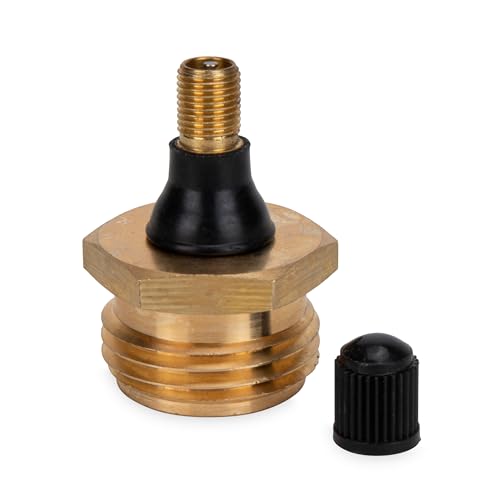
Camco 36103 Brass Blow-Out Plug
A solid brass body threads directly into a standard 3/4 inch RV city water inlet without adapters. The Schrader valve on top accepts any tire chuck, bike pump head or compressor hose fitting already owned. Brass constructiion resists the corrosion that eventually pits cheaper plated plugs left in a toolbox between seasons.
Pros
- Brass body resists corrosion better than plated or plastic plugs
- Schrader valve works with any standard air chuck
- Threads straight into the city water inlet with no adapter needed
Cons
- No gauge included to monitor line pressure
- Small size is easy to lose in a toolbox between seasons
Camco 36094 Blow-Out Plug with Gauge
A dial gauge mounted on the plug body shows exact line pressure while air feeds into the system, taking the guesswork out of staying under a safe limit. The brass fitting matches the same 3/4 inch city water inlet as the standard Camco plug. Watching the needle climb helps an owner back off the compressor before a faucet cartridge takes a hit.
Pros
- Gauge shows real-time line pressure during blowout
- Helps avoid overpressurizing faucet cartridges and fittings
- Same brass threading as the standard Camco plug
Cons
- Costs more than a plug without a gauge
- The gauge is one more part that can eventually stick or fail

Valterra Brass Blow Out Plug
This plug delivers the same brass-and-Schrader formula as pricier options at a lower shelf cost. A rubber sealing washer seats against the city water inlet to stop air from hissing out around the threads. It covers the core winterizing task without extras like a gauge or storage case.
Pros
- Lower cost than premium gauge-equipped plugs
- Rubber washer seals tightly against the inlet threads
- Brass body holds up to repeat seasonal use
Cons
- No gauge or carrying case included
- Washer may need replacing after several seasons of use

JR Products Blow Out Plug
A shorter, low-profile body threads into the city water inlet without sticking out as far as bulkier brass plugs, which helps on RVs with a recessed or tightly boxed inlet panel. The valve stem still accepts a standard tire chuck for quick hookup. Nickel-plated brass construction keeps the weight down compared to solid brass alternatives.
Pros
- Compact body clears recessed or boxed-in water inlet panels
- Nickel plating keeps weight down versus solid brass
- Accepts any standard tire chuck fitting
Cons
- Plating can wear thinner over many seasons than solid brass
- No gauge for pressure feedback

RecPro RV Blow Out Plug Kit
This kit bundles the brass blow-out plug with a quick-connect air hose adapter, so a compressor hose snaps on instead of needing a separate chuck. The extra fitting saves a trip to the hardware aisle for owners who do not already own a tire chuck. Both pieces store together in a small bag included with the kit.
Pros
- Quick-connect fitting skips the need for a separate tire chuck
- Storage bag keeps both pieces together between seasons
- Brass plug body matches standard-size city water inlets
Cons
- Quick-connect fitting only helps if the compressor hose uses a matching coupler
- Costs more than a single plug without extras
AECOJOY RV Water Line Blow Out Plug
This plug covers the basic brass-and-valve function at the lowest cost in this lineup, suiting owners who blow out lines once a year and do not need extra fittings. The Schrader valve still takes a standard tire chuck for air hookup. A simpler rubber gasket seals the threads against the inlet.
Pros
- Lowest cost option that still uses a brass body
- Works with any standard tire chuck or compressor fitting
- Simple one-piece design with nothing extra to misplace
Cons
- No gauge, storage case or extra fittings included
- Gasket quality varies more than on name-brand plugs
Prime Products Blow Out Plug
A quick-connect air fitting comes pre-attached to this plug, so a compressor hose clicks straight on without threading a separate chuck onto the valve stem first. That shaves a step off the winterizing routine for owners who already run quick-connect couplers on their shop compressor. The brass plug body still threads into the standard city water inlet.
Pros
- Pre-attached quick-connect fitting speeds up hookup
- Brass body threads into standard city water inlets
- Saves a step versus threading on a separate chuck
Cons
- Only saves time if the shop compressor already uses a matching quick-connect coupler
- No gauge for pressure feedback
How to pick the right one
What a blowout adapter does during winterizing An RV blowout adapter threads into the city water inlet in place of a garden hose, letting a compressor push compressed air through the plumbing instead of water. Air forces remaining water out of lines, the water heater bypass and faucets before antifreeze goes in. Skipping this step leaves pockets of water that can freeze and crack a line even after antifreeze is added. Most adapters share the same 3/4 inch garden hose thread found on nearly every RV city water inlet.
Brass bodies versus plated or plastic alternatives Solid brass, used in the Camco 36103 and Valterra plugs, resists the corrosion that eventually pits cheaper plated metal left in a damp storage bin. Nickel-plated brass, as used in the JR Products plug, trims weight but can wear thinner at the plating over many seasons. A rubber washer or gasket seals the threads against the inlet regardless of body material, and that seal is usually the first part to need replacing.
Adding a gauge for pressure control The Camco 36094 plug mounts a dial gauge directly on the body, showing line pressure as air feeds in. Most RV plumbing tolerates under 40 psi without stressing faucet cartridges or the water heater bypass valve, and a gauge removes the guesswork of judging pressure by ear. Owners running a shop compressor with its own regulator can skip the extra cost of a gauge-equipped plug and set pressure at the compressor instead.
Matching the plug to your air compressor fitting Most plugs end in a standard Schrader valve stem, the same type found on a car tire, which accepts any tire chuck or compressor blow gun. Kits like the RecPro and Prime Products options add a quick-connect coupler, useful only if the compressor hose already uses a matching quick-connect fitting. Checking which fitting a compressor hose ends in before buying avoids needing a second adapter just to connect the two.
How they compare
| # | Model | Thread | Best for | Score | Price |
|---|---|---|---|---|---|
| 1 | Camco 36103 Brass Blow-Out Plug | 3/4 inch GHT male | Best Overall | 9.0 | Check price |
| 2 | Camco 36094 Blow-Out Plug with Gauge | 3/4 inch GHT male | Best for Monitoring Line Pressure | 8.8 | Check price |
| 3 | Valterra Brass Blow Out Plug | 3/4 inch GHT male | Best Value | 8.5 | Check price |
| 4 | JR Products Blow Out Plug | 3/4 inch GHT male | Best Compact Design | 8.3 | Check price |
| 5 | RecPro RV Blow Out Plug Kit | 3/4 inch GHT male | Best Kit with Extra Fittings | 8.4 | Check price |
| 6 | AECOJOY RV Water Line Blow Out Plug | 3/4 inch GHT male | Best Budget | 7.9 | Check price |
| 7 | Prime Products Blow Out Plug | 3/4 inch GHT male | Best for Quick-Connect Compressor Hookup | 8.1 | Check price |
Good to know
What does an RV water line blowout plug do?
It threads into the city water inlet so a compressor can push air through the plumbing, forcing out water before antifreeze is added for winter storage.
How much air pressure should I use to blow out RV water lines?
Most RV plumbing tolerates under 40 psi; going higher risks damaging faucet cartridges and the water heater bypass valve.
Is a blowout plug the same as an antifreeze bypass kit?
No. A blowout plug clears water with compressed air, while a bypass kit routes antifreeze through the lines afterward without filling the water heater tank.
Can I use a bike pump instead of an air compressor?
A bike pump can work for a small RV plumbing system, but a compressor with a regulated gauge makes it easier to hold steady, safe pressure.
Do all RVs use the same city water inlet thread size?
Nearly all use a standard 3/4 inch garden hose thread, which is what every plug in this list is sized for.
Why would I want a gauge on the blowout plug?
A gauge shows exact line pressure in real time, which helps avoid pushing air in too fast and stressing fittings or faucet cartridges.
Can a blowout plug damage my faucets?
Running pressure well above 40 psi for an extended time can strain faucet cartridges, which is why a gauge or a compressor regulator helps control it.
How long does blowing out RV water lines take?
Clearing a typical system takes only a few minutes per fixture, cycling through each faucet and the toilet until air runs clear instead of sputtering water.
Is brass better than plastic for a blowout plug?
Brass resists corrosion and handles repeat seasonal threading better than plastic, which can crack over time under compressor pressure.
Do I still need antifreeze after blowing out the lines?
Yes. Blowing out the lines removes standing water, but antifreeze still protects the water heater bypass, p-traps and any water left in fittings.
The verdict
The Camco 36103 Brass Blow-Out Plug covers the job for most RV owners doing an annual winterize, pairing a corrosion-resistant brass body with a valve that takes any standard air chuck. Owners who want to watch pressure in real time should step up to the Camco 36094 gauge version instead of guessing by feel. Anyone already running a quick-connect compressor setup gets more convenience from the Prime Products plug, which skips the separate chuck entirely.
Tony Russo
Tony trained as an automotive technician and spent years in service and parts retail before moving into writing. He focuses on garage tools, car care products and accessories from a hands-on maintenance perspective.


