5 RV Water Filters That Clear Out Chlorine and Sediment
Clearsource Premier RV Water Filter System wins on filtration stages and flow rate for full time rigs. Camco EVO Premium is the strongest single canister pick. Camco TastePURE stays the simplest choice for weekend trips focused on taste and odor.
Clearsource Premier RV Water Filter System tops this list because two filtration stages remove sediment without choking flow. Second place goes to Camco EVO Premium, built for owners who want cartridge swaps without a bulky two-piece housing. Weekend campers still reach for the Camco TastePURE inline filter, which solves taste and odor with zero setup.
RV water problems rarely have one cause. Grit from old park plumbing, chlorine taste, and hose odor after months in storage all call for different fixes. A filter fine enough to catch the most also slows flow at the low pressure many parks deliver. We compared micron ratings and filtration stages, flow under realistic pressure, rated capacity, fitting quality, and freeze handling. Then we checked those specs against what owners report about pressure drop and cartridge life on the road.
The top picks, ranked

Clearsource Premier RV Water Filter System
Sediment strains out first in a coarse cartridge, so the fine carbon block downstream keeps working instead of clogging. Flow stays usable even at low park pressure, which is rare among single stage filters. A stainless steel stand keeps the housing upright next to the rig, and full timers moving between unknown water sources get the most benefit.
Pros
- Sediment prefilter protects the fine carbon stage
- Holds usable flow at low park pressure
- Stainless stand prevents hose kinks
Cons
- Highest cost and bulkiest to store
- Two cartridges to track and replace

Camco EVO Premium RV Water Filter
A replaceable cartridge sits inside a reusable canister, so only the media gets swapped out, not the whole housing. Filtration lands well above basic inline filters, without the size or cost of a two canister system. Owners report it fits into a wet bay far more easily than a framed setup.
Pros
- Reusable housing keeps cartridge swaps cheap
- Filters finer than disposable inline tubes
- Compact shape fits a wet bay
Cons
- Flow drops some as the cartridge loads
- Needs draining before freezing weather

Camco TastePURE RV Water Filter
This blue inline filter shows up on half the hookups at any campground, and simplicity explains why. Granular carbon cuts chlorine taste, odor and visible sediment, and a flexible hose protector stops kinking right at the spigot. No assembly is needed, but treat it as a seasonal disposable rather than serious filtration.
Pros
- Lowest cost fix for taste and odor
- No assembly or maintenance required
- Hose protector guards against spigot kinks
Cons
- Filtration is coarse next to canister systems
- Entire unit gets discarded when spent
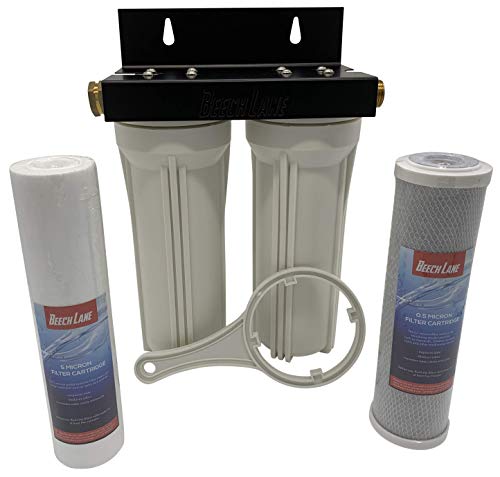
Beech Lane RV Water Filter
Activated carbon and a wide flow path make this the pick when chlorine taste bothers you more than visible dirt. Brass fittings replace the plastic threads that usually strip or crack first. Positioning falls between disposable inline filters and full canister systems.
Pros
- Brass fittings resist cross threading
- Clear improvement in taste and odor
- Holds flow better than narrow inline filters
Cons
- Sediment removal stays limited
- Costs more than standard inline filters
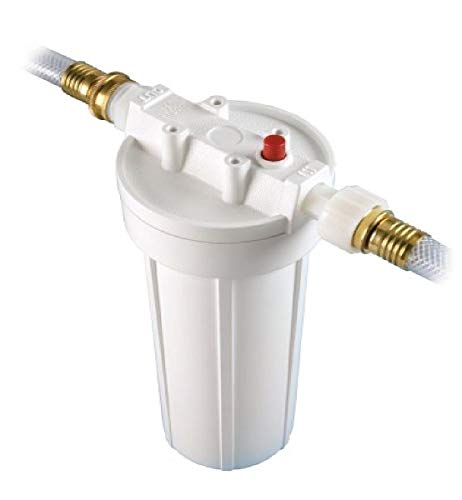
Culligan RV-800 Exterior Pre-Tank RV Water Filter
Culligan brings decades of household filtration into a compact exterior housing built for standard replacement cartridges. Media choice is up to you, so a coarse sediment cartridge handles an older park line and a carbon cartridge handles the next stop. Mounting takes a bit of setup, unlike filters that just clip onto a hose.
Pros
- Cartridge choice matches the water source
- Replacement cartridges stay widely available
- Established household filtration brand
Cons
- Mounting takes more effort than plug and play
- Housing needs draining before storage

Waterdrop RV Inline Water Filter
Waterdrop rates this cartridge for a large volume before replacement, which suits long trips where swapping filters mid route is inconvenient. Media runs as a carbon block, finer than the granular carbon in basic inline units. Owners report a modest pressure drop, the normal trade for finer filtration in an inline shape.
Pros
- Long service interval between cartridge changes
- Carbon block filters finer than granular media
- Hose connection needs no extra parts
Cons
- Some pressure loss at low supply pressure
- No separate sediment stage
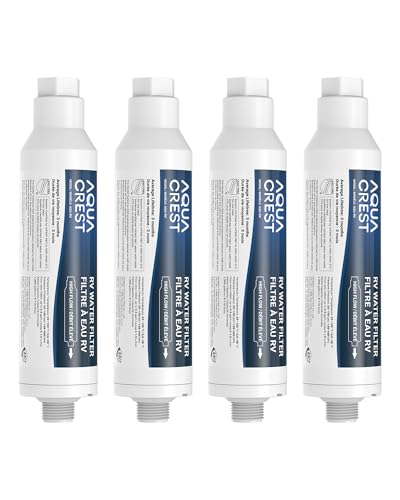
AQUA CREST RV Inline Water Filter
AQUA CREST sells these filters in multipacks, so keeping a spare in the rig costs little. Performance lines up with other granular carbon inline filters, handling taste, odor and visible particles rather than fine filtration. Occasional campers with generally clean water get the most value here.
Pros
- Lowest per filter cost in multipacks
- Easy to keep a spare for every trip
- No setup or maintenance needed
Cons
- Filtration stays basic
- Not built for full time use
How to choose
What does an RV water filter actually remove? Three separate problems get lumped into one purchase decision. Sediment is grit, rust and sand from old park plumbing, and a coarse mechanical filter catches it. Chlorine taste and odor need activated carbon instead. Bacteria and cysts require a sub micron rated element, which most inline filters do not offer. Match the filter to the actual complaint, because a taste focused filter will not clear a cloudy tank.
Micron rating vs flow rate: what is the tradeoff? Finer filtration costs pressure, and many campgrounds already deliver less than a house supply. A sub micron carbon block crammed into one inline tube can leave a weak shower. Two stage systems split the job instead, letting a coarse cartridge take the sediment load so the fine stage stays cleaner longer. That balance keeps flow acceptable even after weeks of use.
Inline, canister or two stage: which format fits your trips? Weekend campers rarely need more than a disposable inline filter, since it costs the least and gets thrown away each season. Canister systems trade a bit more upfront cost for a reusable housing and cheaper long term filtration. Two stage framed systems suit full timers and boondockers pulling from unpredictable sources. Trip frequency, more than budget alone, should decide the format.
How do you winterize and sanitize an RV water filter? Standing water in a filter housing freezes, splits the case and grows biofilm during warm storage. Drain every filter before parking the rig for winter, and store cartridges dry or replace them. Sanitize the fresh water system with a diluted bleach solution at the start of each season. Remove the filter first, since chlorine passing through a carbon filter just consumes the media.
Side by side
| # | Model | Stages | Best for | Score | Price |
|---|---|---|---|---|---|
| 1 | Clearsource Premier RV Water Filter System | Sediment prefilter plus carbon block | Best overall | 9.4 | Check price |
| 2 | Camco EVO Premium RV Water Filter | Replaceable cartridge canister | Best value | 9.2 | Check price |
| 3 | Camco TastePURE RV Water Filter | Disposable inline | Best for weekend trips | 9.0 | Check price |
| 4 | Beech Lane RV Water Filter | Activated carbon | Best for taste improvement | 8.8 | Check price |
| 5 | Culligan RV-800 Exterior Pre-Tank RV Water Filter | Exterior housing, replaceable cartridge | Best for sediment | 8.6 | Check price |
| 6 | Waterdrop RV Inline Water Filter | Inline carbon block | Best for long capacity | 8.3 | Check price |
| 7 | AQUA CREST RV Inline Water Filter | Disposable inline | Best budget | 8.0 | Check price |
Common questions
Do you really need a water filter for your RV?
Yes, if you fill from campground spigots. Park plumbing ranges from new to decades old, and a filter protects taste along with the pump, water heater and fixtures. It is cheap insurance against a water source you cannot inspect.
Where should the filter go, at the spigot or at the rig inlet?
Most owners connect it between the spigot and the fresh water hose, so the filter absorbs park pressure and everything downstream stays cleaner. Some prefer mounting it at the rig inlet to protect the hose itself. Filtering before the hose generally keeps more sediment out of the system.
How often should an RV water filter be replaced?
Disposable inline filters carry a seasonal rating or a stated volume limit, whichever arrives first. Canister cartridges vary by brand, so check the rating printed on the box. Replace early if flow drops or the water starts tasting off, since both signal a loaded cartridge.
Will a water filter reduce my RV’s water pressure?
Some drop is unavoidable, and finer filtration costs more pressure. A clean coarse filter barely registers. A loaded sub micron cartridge can feel very noticeable, especially at parks with weak supply already. Two stage systems exist mainly to manage that tradeoff.
Do RV water filters remove bacteria and viruses?
Only units with a sub micron rating that specifically list cyst or bacteria reduction do that. Standard carbon inline filters do not touch bacteria. Filling from an uncertain or non potable source calls for a dedicated purification system, not a taste and odor filter.
Can you leave an RV water filter connected over winter?
No. Trapped water freezes, cracks the housing and can grow biofilm during storage. Disconnect the filter, drain it, dry the housing, and either store cartridges dry or discard them based on the manufacturer’s guidance.
What is the difference between a sediment filter and a carbon filter?
A sediment filter mechanically strains out particles like sand, rust and silt. A carbon filter adsorbs chlorine along with the compounds behind bad taste and odor. Better systems run one after the other because the two problems need different fixes.
Is a two stage filter worth it for occasional camping?
Usually not. Campers who hook up a handful of weekends a year at established parks get by fine with a disposable inline filter, at a fraction of the cost and with no storage hassle. Two stage systems earn their keep for full timers and anyone drawing from varied or rural sources.
Inline vs canister: which RV water filter lasts longer?
Canister systems last longer overall because only the cartridge gets replaced, not the housing. Inline filters are built to be thrown away whole once spent, typically after one season. Long term cost favors canisters if you camp often enough to justify the higher upfront price.
What micron rating is best for RV drinking water?
Sub micron ratings catch the smallest particles and some cysts, but they also cost the most flow. A 5 micron stage handles typical sediment and taste complaints without choking pressure. Choose finer ratings only if the water source itself is genuinely questionable.
Final word
Clearsource Premier RV Water Filter System stays the top pick for full timers and anyone filling from unfamiliar sources, since the sediment stage keeps the fine element clean and flow usable. Camco EVO Premium delivers most of that benefit from a single canister that actually fits a wet bay. For a few weekends a year, Camco TastePURE inline filter still solves the taste and odor complaint at the lowest cost.
Tony Russo
Tony trained as an automotive technician and spent years in service and parts retail before moving into writing. He focuses on garage tools, car care products and accessories from a hands-on maintenance perspective.