Rubbing Compounds That Remove Swirls Without Damage
Meguiar’s Ultimate Compound stands out as the top overall pick, cutting light scratches and oxidation while finishing clean enough to skip a polish step. Turtle Wax T-415 delivers similar results on oxidized paint for less money. 3M Rubbing Compound 39002 handles the heaviest defects that milder formulas leave behind.
Meguiar’s Ultimate Compound stands out as the strongest all around choice, since its diminishing abrasives cut real defects then refine themselves as you work. That usually means one step instead of two. Turtle Wax T-415 costs less and cuts harder for neglected, chalky paint, while 3M Rubbing Compound 39002 handles correction jobs a milder product already failed.
Picking a compound really means picking how much clear coat you are willing to sacrifice. Too aggressive, and the panel ends up hazy and swirled, needing a polish step to fix. Too mild, and an hour disappears chasing a scratch that never leaves. We compared abrasive type, whether each formula uses diminishing or non diminishing abrasives, stated cut level, dusting behavior, carrier type and machine compatibility, then weighed those specifications against what owners report about finish quality straight off the compound.
How to choose
What’s the difference between rubbing compound, polish and wax? Confusion between these three products causes most bad results. Rubbing compound contains abrasives that physically remove a thin layer of clear coat along with whatever defect sits inside it. Polish uses finer abrasives to erase the haze compound leaves and restore gloss. Wax or sealant adds zero correction and only protects what already exists. Skipping polish after an aggressive compound is why a corrected panel still looks hazy in direct sunlight.
Why test the mildest approach before compounding? Clear coat is finite, often measured in tens of microns, and every pass removes some of it permanently. Detailers reach for the least aggressive pad and product combination first, testing a small hidden area before committing. A light polish sometimes clears swirls without any compound at all. Starting aggressive to save time backfires, because removed clear coat cannot go back on.
How do you match a compound to paint hardness? Clear coat hardness varies by manufacturer and sometimes by model year. Many German vehicles use hard ceramic clears that shrug off mild compounds entirely. Some Japanese and American finishes stay soft enough that an aggressive compound marrs the surface within seconds. A compound doing nothing visible usually signals hard paint that needs more cut or a firmer pad. Immediate hazing points to soft paint, so step down in aggression. A small test section reveals which situation applies within minutes.
What’s the right technique for applying rubbing compound? Direct sunlight dries compound before its abrasives finish breaking down, leaving streaks and wasted product. Working in shade on sections roughly two feet square keeps results consistent. Enough product keeps the pad lubricated without flooding the surface. Wiping each section with a clean microfiber towel and inspecting under bright light catches defects before they get buried under fresh residue.
Our top picks

Meguiar’s Ultimate Compound
Micro abrasive particles in this formula break down as they work, so the compound refines itself instead of leaving a flat cut. Oxidation, water spots and light scratches lift away with moderate pressure, and dust stays minimal throughout. Most panels come out clear enough to skip a separate polish step, which owners say makes it forgiving for a first paint correction attempt.
Pros
- Diminishing abrasives finish clean without a second product
- Minimal dust compared to traditional compounds
- Forgiving cut for first time users
Cons
- Light cut struggles with deep scratches
- Best results need a dual action polisher
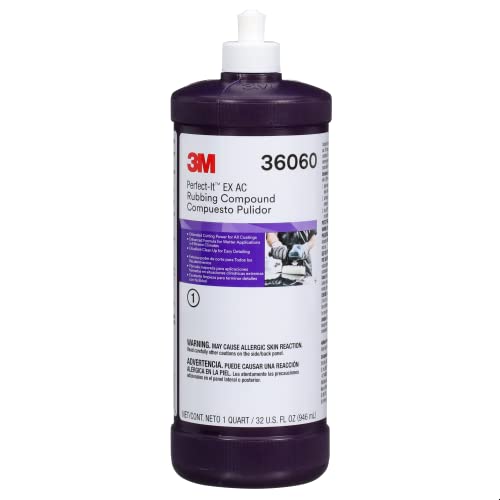
3M Rubbing Compound 39002
Body shops reach for this compound when sanding marks and heavy oxidation refuse to budge. Aggressive abrasives remove material fast, which means haze forms and a polish step follows almost every time. Machine application spreads the load evenly across large panels, something hand pressure alone cannot match.
Pros
- Cuts through defects lighter compounds cannot touch
- Long history in professional body shop use
- Fast on heavily oxidized paint
Cons
- Haze remains until a polish step follows
- Aggressive cut risks removing too much clear coat

Turtle Wax T-415 Premium Rubbing Compound
Chalky, weathered single stage paint responds well to this traditional formula. Cut sits between a light polish and a body shop compound, strong enough for neglected finishes without overwhelming a beginner. Based on specifications, older vehicles with sun damaged clear coats suit it best, and the low price makes trial and error affordable.
Pros
- Low cost relative to other compounds here
- Cuts effectively through chalky oxidation
- Sold at most auto parts retailers
Cons
- Marring remains after use and needs polishing
- Dust output exceeds newer diminishing formulas

Griot’s Garage Complete Compound
Dual action polishers pair naturally with this ceramic based formula, since it stays workable on the pad far longer than most compounds. Medium cut removes moderate defects while finishing down enough that many people move straight to wax. Softer modern clear coats, common on newer vehicles, respond particularly well according to owner feedback.
Pros
- Long working time reduces reapplication
- Finishes down clean on soft clear coats
- Ceramic abrasives limit swirling during use
Cons
- Hand application struggles without a machine
- Priced higher per bottle than basic compounds

Chemical Guys VSS Scratch and Swirl Remover
Wash induced swirl marks and light marring are the real target here, not deep scratches. Fine diminishing abrasives leave a gloss finish that needs nothing beyond a sealant. Dark colored paint, where marring shows most, benefits especially from the light touch this formula applies.
Pros
- High gloss result straight off the pad
- Low risk of adding new marring
- Shows swirl correction clearly on dark paint
Cons
- Deeper scratches stay put after multiple passes
- Hard clear coats need more than one pass

Adam’s Polishes Heavy Correcting Compound
Hard ceramic clear coats found on many German and Japanese vehicles resist milder compounds, which is exactly where this formula earns its keep. Water based chemistry keeps dust lower than older heavy compounds despite the aggressive cut. Rotary or dual action machines get the most from it, and a polish step still follows correction on most panels.
Pros
- Cuts effectively on unusually hard clear coats
- Dust stays lower than similar cut products
- Water based formula simplifies panel cleanup
Cons
- Requires a polish step to remove haze
- Too aggressive for softer factory paint

Mothers Professional Rubbing Compound
Hand application stays realistic with this formula, which matters for anyone without a polisher tackling one panel or a single scratch. Cut progresses steadily rather than aggressively, giving more control over how much material comes off. Spot repairs on a driveway suit it better than correcting an entire vehicle in one session.
Pros
- Usable without owning a polisher
- Steady, controllable cut reduces mistakes
- Well suited to isolated scratch repair
Cons
- Whole vehicle correction takes considerable time
- Hand application demands real physical effort
Compared at a glance
| # | Model | Abrasive | Best for | Score | Price |
|---|---|---|---|---|---|
| 1 | Meguiar’s Ultimate Compound | Micro abrasive, diminishing | Best overall | 9.4 | Check price |
| 2 | 3M Rubbing Compound 39002 | Aggressive cutting abrasives | Best for heavy defects | 9.2 | Check price |
| 3 | Turtle Wax T-415 Premium Rubbing Compound | Traditional cutting abrasives | Best value | 9.0 | Check price |
| 4 | Griot’s Garage Complete Compound | Ceramic based, diminishing | Best for machine polishing | 8.7 | Check price |
| 5 | Chemical Guys VSS Scratch and Swirl Remover | Fine, diminishing | Best for light swirls | 8.5 | Check price |
| 6 | Adam’s Polishes Heavy Correcting Compound | Heavy cut, water based | Best for hard clear coats | 8.3 | Check price |
| 7 | Mothers Professional Rubbing Compound | Medium cutting abrasives | Best for hand application | 8.0 | Check price |
Common questions
What is the difference between rubbing compound and polishing compound?
Rubbing compound uses coarser abrasives that cut away a thin layer of clear coat to remove defects. Polishing compound uses much finer abrasives that erase the haze cutting leaves and restore gloss. Most correction jobs use compound first, then follow with polish.
Can rubbing compound remove deep scratches?
Only if the scratch stays within the clear coat layer. Run a fingernail across it, and if the nail catches, the scratch has reached the base coat where no compound helps. Those scratches need touch up paint or professional refinishing instead.
How do you apply rubbing compound by hand?
Choose a compound formulated to stay workable without a machine, such as Mothers Professional Rubbing Compound. Use a foam applicator pad, work small sections and apply firm, even pressure. A dual action polisher still saves significant time across a full vehicle.
Will rubbing compound damage my clear coat?
It removes a small amount of clear coat by design, which is how correction works. Occasional use causes no lasting harm. Repeated aggressive compounding over years thins the clear coat until it eventually fails, so use the mildest product that solves the problem.
Do you need to polish after using a rubbing compound?
It depends on the formula. Compounds with diminishing abrasives, like Meguiar’s Ultimate Compound, often finish clean enough to skip straight to wax. Traditional heavy compounds, such as 3M Rubbing Compound 39002, almost always leave haze that needs a polish step.
Which pad should you use with rubbing compound?
Firmer foam or microfiber cutting pads suit heavy compounds. Polishing pads match medium compounds, and finishing pads suit light ones. Pad choice changes the effective cut nearly as much as the product itself, so a mild compound on a cutting pad can outcut a heavy compound on a soft pad.
Is rubbing compound safe to use on headlights?
Yes, on lightly hazed polycarbonate lenses. Heavily oxidized headlights usually need wet sanding before compounding helps. Apply a UV protective coating afterward, since bare polished polycarbonate yellows again within months.
Should you wax a car after compounding?
Yes, always. Compounding strips away existing protection and exposes bare clear coat. A wax, sealant or ceramic coating applied afterward protects the corrected finish, otherwise oxidation restarts and the work does not last.
What is the best rubbing compound for beginners?
Meguiar’s Ultimate Compound suits first time users because its diminishing abrasives forgive uneven technique and finish clean with minimal risk. Chemical Guys VSS Scratch and Swirl Remover works well too, for anyone starting with light swirl marks rather than deep defects.
How often can you compound the same panel?
As rarely as possible, since each pass removes clear coat permanently. Most panels tolerate a handful of corrections across their lifetime before the clear coat gets dangerously thin. Space corrections years apart and rely on regular washing and waxing to limit new defects between them.
The bottom line
Meguiar’s Ultimate Compound earns the top spot because it removes genuine defects and finishes clean enough that most jobs stop there. Chalky, oxidized paint on older vehicles responds best to the harder cutting, lower cost Turtle Wax T-415. Save 3M Rubbing Compound 39002 for defects that already resisted a milder product, and plan on polishing the haze it leaves behind.
Tony Russo
Tony trained as an automotive technician and spent years in service and parts retail before moving into writing. He focuses on garage tools, car care products and accessories from a hands-on maintenance perspective.
