How to Pick a Rowing Machine Built for Smaller Athletes
Sunny Health & Fitness SF-RW5515 leads for its light starting resistance and shorter rail built for smaller frames. Stamina Body Trac Glider 1050 folds flat and costs less while still scaling down for lighter users. EFITMENT Foldable Rowing Machine RW033 works as the cheapest way to test interest before a bigger purchase.
Adult-rated rowers often keep their lightest resistance setting too heavy for a smaller frame. Sunny Health & Fitness SF-RW5515 starts light enough to fix that, and Stamina Body Trac Glider 1050 folds flat for households without a dedicated workout room. EFITMENT Foldable Rowing Machine RW033 covers the basics for anyone testing whether a young athlete sticks with rowing at all.
Seat rail length and weight capacity both need checking before buying for a teenager, since specs written for full-size adults do not automatically scale down. We compared stated resistance range, minimum weight capacity, folded footprint and owner reports on fit for smaller or younger users.
The top picks, ranked

Sunny Health & Fitness SF-RW5515 Magnetic Rowing Machine
Magnetic resistance runs quiet enough for shared living spaces and spans eight levels from light to moderately demanding. A 38 inch seat rail sits shorter than commercial-length rowers, which suits a smaller frame better through the full stroke. Parents supervising a teenager’s home workouts note the smooth pull compared with hydraulic alternatives.
Pros
- Quiet magnetic resistance suits shared rooms
- Shorter rail fits smaller frames comfortably
- Eight levels cover light to moderate effort
Cons
- Console tracks basic metrics only
- Foam seat needs a towel for longer sessions

Stamina Body Trac Glider 1050 Rowing Machine
Dual hydraulic pistons fold the frame flat in seconds, a plus for households without a spare workout room. Each piston adjusts independently, letting a lighter user set tension well below adult-level resistance. Owners buying it for a teenager cite the compact folded size as the deciding factor.
Pros
- Folds flat for easy storage between uses
- Adjustable pistons scale down for lighter users
- Lower price than magnetic alternatives
Cons
- Hydraulic motion feels less smooth than magnetic
- Shorter rail limits taller teenagers

EFITMENT Foldable Rowing Machine RW033
Eight magnetic resistance levels cover light cardio without demanding much of a learning curve. A basic monitor tracks time, distance and calories, and the frame folds down between sessions. Households testing whether a young athlete enjoys rowing choose this first to keep the initial cost low.
Pros
- Low entry cost for trying rowing
- Basic monitor covers core workout stats
- Light enough to move and store easily
Cons
- Build feels less sturdy at higher resistance
- Monitor lacks heart rate or app connectivity

Stamina 1215 Orbital Rowing Machine
An orbital motion path shortens the machine’s overall footprint compared with a straight-rail design. Adjustable tension bands let a lighter user dial in a comfortable pull instead of settling for one fixed setting. Apartment owners with limited floor space mention this as the only rower that actually fit their room.
Pros
- Shorter footprint suits small rooms
- Tension adjusts for a lighter pull
- Compact storage between workouts
Cons
- Orbital motion feels different from traditional rowing
- Less realistic for competitive rowing training
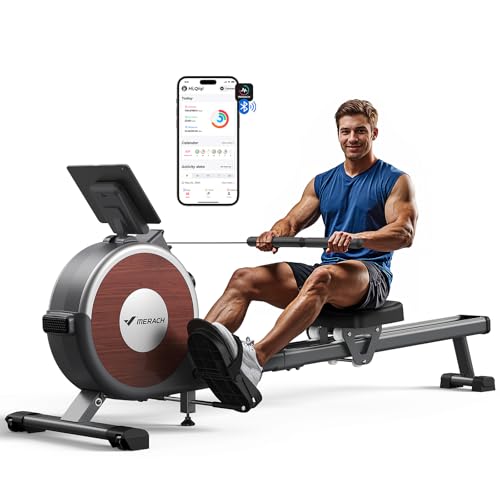
Merax Magnetic Rowing Machine
The lowest of eight magnetic settings stays light enough for a smaller or newer rower to build technique before adding tension. A padded seat and adjustable foot straps accommodate a range of shoe sizes. Households introducing a lighter teenager to rowing mention the gentle starting point most often.
Pros
- Very light minimum resistance for beginners
- Adjustable foot straps fit smaller shoe sizes
- Padded seat improves comfort for longer sessions
Cons
- Top resistance level feels mild for stronger adults
- Assembly instructions are frequently reported as unclear

Xterra Fitness ERG220 Rowing Machine
Sixteen magnetic resistance levels give far more fine-tuning than the eight levels common on cheaper rowers. That range lets a lighter user start easy and grow into harder settings over several months. Parents buying for a growing teenager like not needing a replacement machine as strength improves.
Pros
- Sixteen levels allow fine resistance control
- Room to grow as strength increases
- Longer rail suits taller teenagers too
Cons
- Larger footprint than compact orbital rowers
- Pricier than basic entry level models

Sunny Health & Fitness Obsidian Surge 500 Rowing Machine
A 33 inch rail keeps the overall frame shorter than full-length rowers built for taller adults. Dual hydraulic pistons adjust independently, allowing asymmetric resistance between the left and right pull. Buyers shopping for younger or petite users cite the shorter reach as the reason it fit when others did not.
Pros
- Shorter frame suits smaller users better
- Independent pistons allow custom resistance
- Folds flat for compact storage
Cons
- Short rail limits taller athletes long term
- Hydraulic motion less smooth than magnetic
Compared at a glance
| # | Model | Resistance type | Best for | Score | Price |
|---|---|---|---|---|---|
| 1 | Sunny Health & Fitness SF-RW5515 Magnetic Rowing Machine | Magnetic, 8 levels | Best overall | 9.3 | Check price |
| 2 | Stamina Body Trac Glider 1050 Rowing Machine | Hydraulic piston, adjustable | Best value | 9.0 | Check price |
| 3 | EFITMENT Foldable Rowing Machine RW033 | Magnetic, 8 levels | Best budget | 8.6 | Check price |
| 4 | Stamina 1215 Orbital Rowing Machine | Adjustable tension band | Best compact footprint | 8.4 | Check price |
| 5 | Merax Magnetic Rowing Machine | Magnetic, 8 levels | Best for lighter users | 8.2 | Check price |
| 6 | Xterra Fitness ERG220 Rowing Machine | Magnetic, 16 levels | Best for adjustable difficulty | 8.1 | Check price |
| 7 | Sunny Health & Fitness Obsidian Surge 500 Rowing Machine | Dual hydraulic pistons | Best for smaller frames | 8.0 | Check price |
How to choose
What to look for in a rowing machine for a younger user Minimum resistance matters more than maximum resistance, since a heavy starting pull discourages a lighter or newer rower before technique develops. Seat rail length should match the user’s height, because a rail sized for an adult forces an awkward stroke on a smaller frame. Weight capacity confirms the machine is rated safely for the actual user rather than an assumed adult body weight. Folding design helps households without a dedicated workout room.
Magnetic vs hydraulic resistance for younger rowers Magnetic resistance stays quiet and adjusts smoothly across levels, which suits shared living spaces and consistent technique work. Hydraulic pistons cost less and fold flatter, though the resistance curve feels less even through the stroke. Neither type poses a safety risk for a younger user, so the choice comes down to noise tolerance and storage space. Independent piston adjustment, like on the Obsidian Surge 500, adds flexibility hydraulic designs sometimes lack.
Best rowing machines for a growing teenager A wider resistance range, like the sixteen levels on the Xterra ERG220, extends a machine’s useful life as strength builds over months. Longer seat rails matter here too, since a taller teenager eventually needs the reach an adult uses. Buying slightly ahead of current strength avoids a replacement purchase within a year or two. A weight capacity well above current body weight also allows room for growth.
Best rowing machines for small rooms or first-time use Compact, foldable designs such as the Stamina Body Trac Glider 1050 or Stamina 1215 Orbital matter most when floor space runs tight. Lower-cost entry models like the EFITMENT let a household test interest before investing in a pricier machine. Shorter frames, like the Obsidian Surge 500, fit smaller users better than full-length rail rowers built for adults. Prioritize footprint and starting resistance over advanced console features for a first rowing machine.
Questions worth asking
Is a rowing machine safe for a teenager to use?
Yes, rowing is generally a safe, low-impact exercise for teenagers when resistance and seat rail length match their size. Start at the lowest resistance level and focus on form before increasing difficulty. Supervision during the first few sessions helps correct technique early.
What is the minimum age for using a rowing machine?
There is no universal minimum age, since it depends more on a child’s size, strength and ability to hold proper form. Most guidance suggests waiting until a child comfortably reaches the footplates and manages the seat rail’s length. Younger children generally do better with short, supervised sessions than an independent routine.
What weight capacity should a rowing machine for a smaller user have?
Pick a machine rated at least 50 pounds above the user’s current weight for a safety margin. Rowers aimed at youth or lighter users typically list capacities between 220 and 260 pounds. Regularly exceeding the stated capacity wears out resistance mechanisms faster.
How do you adjust a rowing machine for a shorter person?
Shorten the foot strap position and slide the seat back only as far as a full, comfortable stroke allows. Some rowers, like the Obsidian Surge 500, use a naturally shorter rail that suits smaller frames without adjustment. Watch for knees locking painfully straight at full extension, a sign the rail runs too long for that user.
Do rowing machines help build strength in teenagers?
Yes, rowing works the legs, back, shoulders and arms in one continuous motion, building broad strength over time. It also improves cardiovascular fitness alongside muscular endurance. Progressing resistance gradually, instead of jumping straight to high levels, produces steadier gains.
Which is better for a younger user, magnetic or hydraulic resistance?
Magnetic resistance gives a smoother, more consistent pull through the stroke, which helps build correct technique early. Hydraulic rowers cost less and fold more compactly, useful where storage space runs tight. Both suit younger users once set to a light starting resistance.
Can two people of different sizes share the same rowing machine?
Yes, as long as the seat rail adjusts enough and the resistance range covers both users comfortably. Independent piston designs, like the Sunny Health & Fitness Obsidian Surge 500, allow different resistance settings without swapping hardware. Check foot strap adjustment before each user switches on.
How much space does a rowing machine need?
Add roughly two feet beyond the machine’s stated length for a full stroke without hitting a wall or furniture. Foldable designs cut storage footprint significantly when not in use. Compact orbital designs, like the Stamina 1215, need less total floor length than straight-rail rowers.
What is the best rowing machine for a first-time young rower?
The EFITMENT Foldable Rowing Machine RW033 keeps cost low enough to test interest before a bigger investment. Its eight-level magnetic resistance and basic monitor cover everything a beginner needs to learn the stroke. Households can upgrade later once the young athlete sticks with rowing.
Magnetic vs hydraulic rowing machine, which lasts longer for daily use?
Magnetic resistance mechanisms generally hold their smooth feel longer under daily use than hydraulic pistons, which can wear unevenly. Hydraulic designs fold flatter and cost less upfront, a tradeoff some households accept. Daily riders benefit more from magnetic’s consistent resistance curve over years of use.
Our pick
Most households introducing a teenager to rowing should start with the Sunny Health & Fitness SF-RW5515, thanks to its light starting resistance and quiet magnetic pull. Budget-conscious buyers should pick the Stamina Body Trac Glider 1050 instead, which folds away just as easily for less money. Choose the Xterra Fitness ERG220 if the goal is a machine that keeps pace as strength grows over several years, since its sixteen resistance levels and longer rail outlast basic entry models.
Derek Holt
Derek has a background coaching recreational and amateur athletes and has worked the sales floor at specialty fitness retailers. He focuses on equipment durability, ergonomics and realistic use cases rather than marketing claims.