Wood Routers That Handle Trim, Joinery and Table Work
The DEWALT DWP611PK is the strongest all-around pick, pairing a fixed and plunge base combo with enough power for trim and joinery work. The Makita RT0701CPK suits buyers who mainly need a compact trim router, while the Ryobi RE180PL1G fits anyone starting out on a tighter budget.
The DEWALT DWP611PK leads this list because its interchangeable fixed and plunge bases cover trim work and deeper joinery cuts without buying two separate routers. Its main limitation is motor size, which is lighter duty than full-size routers meant for permanent table mounting.
We compared published motor horsepower, collet size, base type and speed range across each router rather than running our own cutting tests.
The shortlist, ranked

DEWALT DWP611PK Combo Fixed and Plunge Base Router Kit
A 1.25 horsepower motor with variable speed control handles trim, edge profiling and shallow joinery across both included bases. The fixed base suits handheld edge work, while the plunge base allows controlled depth cuts for mortises and dadoes. A quick-release motor pack switches between bases without extra tools.
Pros
- Two base types cover more tasks than a single-base router
- Quick-release motor pack speeds up base switching
- Variable speed suits different woods and bit sizes
Cons
- Not powerful enough for permanent router table mounting
- 1/4 inch collet limits use of larger-shank bits

Bosch 1617EVSPK Fixed and Plunge Base Router Kit
A 2.25 horsepower motor gives more cutting power than compact trim routers, suited to deeper joinery and larger bits. The plunge base includes a depth-adjustment ring for precise, repeatable cut depths. Both 1/4 inch and 1/2 inch collets are included for broader bit compatibility.
Pros
- Higher horsepower than compact combo kits
- Dual collet sizes expand bit compatibility
- Precision depth ring improves repeatable plunge cuts
Cons
- Heavier and bulkier than trim-focused routers
- Higher price than basic single-base routers

Makita RT0701CPK Compact Router Kit
A lightweight 1.25 horsepower motor suits handheld edge trimming, laminate work and small joinery tasks. Both a fixed base and trimmer base are included, covering tasks from flush trimming to light profiling. Electronic speed control holds RPM steady as cutting load changes.
Pros
- Lightweight design suits extended handheld use
- Electronic speed control resists bogging under load
- Trimmer base improves access for laminate and edge work
Cons
- Not built for heavy joinery or table mounting
- Smaller motor than full-size plunge routers

PORTER-CABLE 890RB Fixed-Base Router
A 1.75 horsepower motor in a dedicated fixed base favors stability over the added complexity of a plunge mechanism. Micro-fine depth adjustment allows small, precise changes without removing the motor from the base. The dual-collet system switches between 1/4 inch and 1/2 inch bits.
Pros
- Fixed-base design offers strong handheld stability
- Micro-fine depth adjustment aids precision edge work
- Dual collet sizes handle more bit types
Cons
- No plunge base option included in this kit
- Less versatile than combo fixed and plunge kits
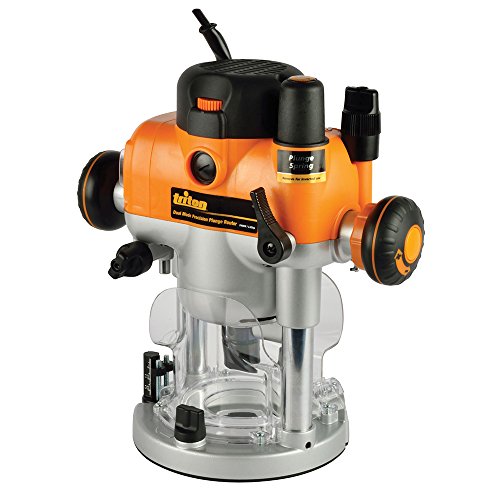
Triton TRA001 2.25 HP Dual Mode Router
This router switches between plunge and fixed-base style operation within a single unit, useful for both handheld and table-mounted work. Above-table height adjustment lets users change bit height without reaching under the table, a feature most routers lack. A 2.25 horsepower motor provides enough power for sustained table use.
Pros
- Above-table height adjustment is rare on routers this size
- Dual-mode design works handheld or table-mounted
- Strong motor power suits sustained table routing
Cons
- Bulkier housing than dedicated handheld routers
- Higher price than basic fixed-base models

Ryobi RE180PL1G Variable Speed Plunge Router
A 1.5 horsepower motor and plunge base cover basic joinery and edge profiling for occasional DIY projects. Variable speed control adjusts for different wood types and bit sizes. A built-in edge guide helps keep straight cuts consistent along a board edge.
Pros
- Lower price than premium combo router kits
- Built-in edge guide helps with straight-line cuts
- Enough power for occasional DIY joinery projects
Cons
- Less durable for frequent or heavy daily use
- No fixed base included for handheld edge trimming
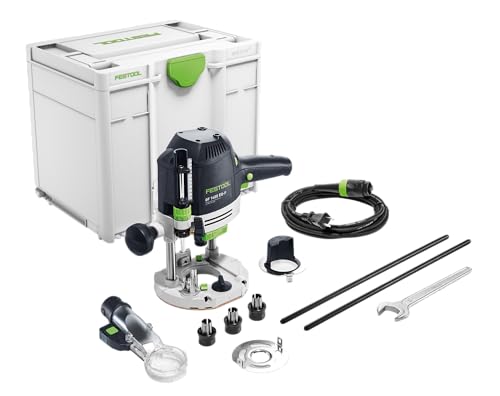
Festool OF 1400 EQ Plunge Router
A precision plunge mechanism and dust extraction port target professional cabinetmakers and finish carpenters who need accuracy and clean dust collection. Electronic speed control and a soft-start motor reduce the jolt common when starting heavier cuts. Compatible with Festool’s guide rail system for straight-line cutting without a separate fence.
Pros
- Integrated dust extraction keeps the work area cleaner
- Compatible with guide rail system for precise straight cuts
- Soft-start motor reduces jolt on heavier cuts
Cons
- Premium price well above other routers on this list
- Guide rail accessories add further cost
Before you buy
What to look for in a wood router Motor power, measured in horsepower, determines how easily the router handles larger bits and denser hardwoods. Base type decides between fixed-base stability for edge work and plunge-base control for deeper, controlled cuts. Collet size limits which router bits fit, with 1/2 inch collets generally accepting a wider range of larger bits than 1/4 inch.
Compact trim routers versus full-size routers Lightweight trim routers like the Makita RT0701CPK suit laminate trimming, edge profiling and smaller joinery tasks where a bulky router gets in the way. Full-size routers, including the Bosch 1617EVSPK and Triton TRA001, bring more power for deeper cuts, larger bits and eventual table mounting. Buyers should match router size to the scale of projects they actually plan to build.
Handheld routing versus table-mounted setups Handheld use favors routers with good ergonomics and base stability, like the PORTER-CABLE 890RB’s fixed base. Table-mounted setups benefit from routers built with above-table adjustment in mind, such as the Triton TRA001, which avoids reaching underneath the table to change bit height. Anyone planning to build a router table eventually should prioritize table-mount compatibility early in the buying decision.
Matching a router to project frequency and precision needs Occasional DIY projects do not need the dust extraction or precision of a professional tool like the Festool OF 1400 EQ, making the Ryobi RE180PL1G a reasonable starting point. Cabinetmakers and finish carpenters working daily benefit from the dust control and guide rail compatibility that justify the Festool’s higher price. Matching router grade to actual project frequency avoids overspending on capability that will not be used.
How they compare
| # | Model | Motor | Best for | Score | Price |
|---|---|---|---|---|---|
| 1 | DEWALT DWP611PK Combo Fixed and Plunge Base Router Kit | 1.25 HP, variable speed | Best Overall | 9.0 | Check price |
| 2 | Bosch 1617EVSPK Fixed and Plunge Base Router Kit | 2.25 HP, variable speed | Best for Plunge Base Control | 8.9 | Check price |
| 3 | Makita RT0701CPK Compact Router Kit | 1.25 HP | Best Compact Trim Router | 8.7 | Check price |
| 4 | PORTER-CABLE 890RB Fixed-Base Router | 1.75 HP | Best for Fixed-Base Power | 8.5 | Check price |
| 5 | Triton TRA001 2.25 HP Dual Mode Router | 2.25 HP | Best for Table-Mounted Use | 8.8 | Check price |
| 6 | Ryobi RE180PL1G Variable Speed Plunge Router | 1.5 HP | Best Budget | 8.1 | Check price |
| 7 | Festool OF 1400 EQ Plunge Router | 1400 watt, variable speed | Best Premium | 9.1 | Check price |
Questions worth asking
What is the difference between a fixed-base and plunge router?
A fixed-base router sets its cutting depth before starting, offering more stability for edge work, while a plunge router lowers the bit into the material during the cut for controlled depth changes.
What size router collet is best for woodworking?
A 1/2 inch collet, available on routers like the Bosch 1617EVSPK, generally accepts a wider range of larger bits than a 1/4 inch collet, though many routers include both sizes.
Can a handheld router be mounted in a table?
Yes, many handheld routers, including the Triton TRA001, are designed to work in a router table, especially those with above-table height adjustment features.
How much horsepower does a wood router need?
Trim and edge work can use a lighter 1.25 horsepower motor, like on the Makita RT0701CPK, while deeper joinery and table use benefit from 2 horsepower or more.
Is a plunge router better than a fixed-base router for beginners?
Combo kits like the DEWALT DWP611PK let beginners start with either base and learn both styles without buying two separate routers.
What router bits come with a typical router kit?
Most router kits, including budget options like the Ryobi RE180PL1G, do not include bits and require purchasing them separately based on the project.
Do wood routers need dust collection?
Dust collection is not required but improves visibility and cleanup, with some premium routers like the Festool OF 1400 EQ including an integrated port for a shop vacuum.
What is variable speed control used for on a router?
Variable speed control adjusts the bit’s rotation speed to match different wood densities and bit diameters, reducing burning or tear-out on softer woods.
Can a compact trim router replace a full-size router?
A compact trim router like the Makita RT0701CPK handles lighter tasks well but lacks the power and base options needed for deeper joinery or table mounting.
Our take
For most woodworkers who want one router that covers trim work and deeper joinery, the DEWALT DWP611PK offers the best balance of power and base flexibility. Anyone planning to build a dedicated router table should choose the Triton TRA001 instead for its above-table adjustment feature. Buyers who only need light edge trimming and laminate work should skip full-size routers entirely and go with the compact Makita RT0701CPK.
Jake Monroe
Jake worked as a residential contractor for over a decade before shifting to full-time writing. He evaluates power tools, hand tools and workshop gear through the lens of someone who has actually used them on job sites, not just read the box.


