Top Rotary Cutters for Fabric That Slice Cleanly
The Fiskars Classic 45mm Rotary Cutter leads our list for its comfortable handle and sharp blade that slices through multiple layers with ease. It is best for everyday quilters and sewists who need a reliable cutter without extra frills. Its main advantage is the ergonomic design that reduces hand fatigue during long cutting sessions, but a limitation is that the blade guard requires manual sliding, which some users find less convenient than spring-loaded options.
Rotary cutters are essential tools for fabric crafting, making clean cuts through multiple layers quickly. With so many options, choosing the right one can feel overwhelming.
We compared top-selling rotary cutters from trusted brands to help you find one that suits your quilting, sewing, or crafting style.
The best picks, ranked

Fiskars Classic 45mm Rotary Cutter
The Fiskars Classic Rotary Cutter is a favorite among sewists for its sharp, durable blade and comfortable handle. It easily cuts through multiple layers of fabric, making it ideal for quilting projects. The blade is replaceable, and the handle is designed to reduce hand fatigue. Users appreciate its smooth rolling action and precise control.
Pros
- Ergonomic handle reduces strain
- Sharp blade cuts cleanly
- Replaceable blades
Cons
- Safety lock not automatic
- Blade guard can be tricky to slide
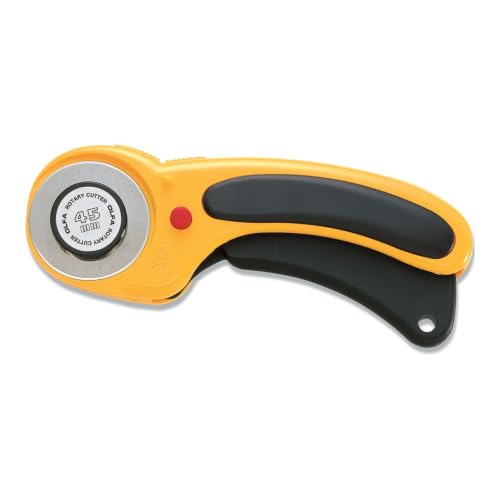
OLFA Deluxe 45mm Rotary Cutter
OLFA’s Deluxe Rotary Cutter features a patented ergonomic handle and a snap-lock mechanism for safety. The blade is made from high-carbon steel, ensuring long-lasting sharpness. It cuts through thick fabrics and multiple layers with ease. Users love the comfortable grip and the easy blade change system.
Pros
- Automatic blade guard for safety
- Comfortable non-slip grip
- High-carbon steel blade
Cons
- Slightly higher price
- Blade guard can be stiff initially

Fiskars 28mm Rotary Cutter
This smaller 28mm cutter from Fiskars is perfect for cutting curves, applique, and small fabric pieces. Its compact size offers better maneuverability, and the handle is designed for comfort. The blade is sharp and precise, making it a great addition to any sewing kit.
Pros
- Great for fine detail work
- Lightweight and easy to control
- Affordable
Cons
- Not suitable for thick layers
- Blade may dull faster
Gingher 45mm Rotary Cutter
Gingher is known for quality cutting tools, and this rotary cutter is no exception. It features a sturdy construction and a sharp blade that handles multiple layers of fabric without effort. The handle is comfortable, and the blade guard retracts automatically, adding safety. This cutter is built to last.
Pros
- Durable metal construction
- Automatic safety guard
- Smooth cutting action
Cons
- Heavier than others
- Price is on the higher side
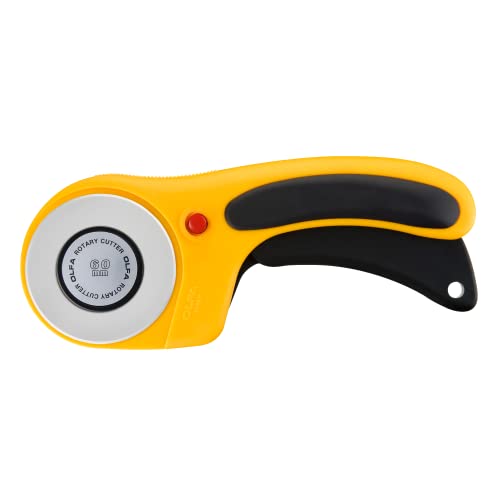
OLFA 60mm Rotary Cutter
With a larger 60mm blade, this OLFA cutter slices through thick fabrics, denim, and multiple layers with ease. It is ideal for quilters who need to cut several layers at once. The handle is ergonomic, and the blade guard is spring-loaded for safety. Users appreciate its efficiency and clean cuts.
Pros
- Cuts many layers at once
- Large blade for straight lines
- Comfortable grip
Cons
- Bulky for small hands
- Requires more storage space

Fiskars Comfort Loop Rotary Cutter
The Fiskars Comfort Loop features a unique loop handle that allows fingers to rest naturally, reducing strain. It is excellent for those with arthritis or repetitive stress issues. The 45mm blade is sharp and cuts precisely. The handle is designed to fit both right and left hands.
Pros
- Ergonomic loop design
- Comfortable for all-day use
- Works for left and right hands
Cons
- Takes time to get used to
- Not as compact
MeadowCraft 45mm Rotary Cutter
The MeadowCraft 45mm Rotary Cutter is an affordable yet reliable choice for beginners or occasional use. It features a comfortable handle and a sharp blade that works well on cotton and other fabrics. The safety lock is easy to engage, and it comes with a spare blade. While not as durable as premium brands, it offers good value.
Pros
- Very affordable
- Comes with extra blade
- Lightweight
Cons
- Handle less ergonomic
- Blade may dull quickly
How they compare
| # | Model | Blade Size | Best for | Score | Price |
|---|---|---|---|---|---|
| 1 | Fiskars Classic 45mm Rotary Cutter | 45mm | Everyday quilting and sewing | 9.4 | Check price |
| 2 | OLFA Deluxe 45mm Rotary Cutter | 45mm | Precision cutting and durability | 9.2 | Check price |
| 3 | Fiskars 28mm Rotary Cutter | 28mm | Small projects and curves | 8.9 | Check price |
| 4 | Gingher 45mm Rotary Cutter | 45mm | Heavy-duty cutting | 9.0 | Check price |
| 5 | OLFA 60mm Rotary Cutter | 60mm | Cutting thick materials and multiple layers | 9.1 | Check price |
| 6 | Fiskars Comfort Loop Rotary Cutter | 45mm | Users with arthritis or hand fatigue | 9.0 | Check price |
| 7 | MeadowCraft 45mm Rotary Cutter | 45mm | Budget-friendly option | 8.0 | Check price |
Before you buy
Good to know
What size rotary cutter is best for quilting?
A 45mm rotary cutter is the most versatile for quilting, as it cuts through multiple layers of cotton fabric easily and handles both straight lines and gentle curves.
Can I use a rotary cutter without a mat?
It is not recommended. Rotary cutters are designed to be used with a self-healing mat to protect both the blade and your work surface. Cutting on other surfaces can dull the blade quickly.
How often should I replace the blade on my rotary cutter?
Depending on usage, you may need to replace the blade every few months. Signs of dullness include fabric snagging, increased resistance, or uneven cuts. Always have spare blades on hand.
Are rotary cutters safe for left-handed users?
Yes, most rotary cutters are ambidextrous, but some handles are shaped for right-handed users. Look for models with symmetrical handles or those specifically labeled as ambidextrous.
Can rotary cutters cut through multiple layers of fabric?
Yes, rotary cutters are excellent for cutting multiple layers, especially when using a rotary mat. A 45mm or larger blade can cut through several layers of cotton at once.
What is the difference between a rotary cutter and a scissors?
Rotary cutters offer faster, straighter cuts and can handle multiple layers, while scissors are better for detailed or curved cuts. Rotary cutters are also safer for cutting long strips.
How do I change the blade on a rotary cutter?
Most rotary cutters have a simple mechanism: you slide the guard back, loosen the screw or release the lock, then remove the old blade and insert a new one. Always follow the manufacturer’s instructions.
What is a self-healing cutting mat?
A self-healing mat is a special mat that closes up after being cut, extending the life of the mat and protecting your table. It also provides a non-slip surface for cutting.
Can I use a rotary cutter on paper or other materials?
Yes, rotary cutters can be used on paper, cardboard, and even vinyl, but this will dull the blade faster. It is best to use separate blades for fabric and other materials.
What is the best rotary cutter for beginners?
The Fiskars Classic 45mm is a great choice for beginners because it is affordable, easy to use, and has a comfortable handle. It offers good control and safety features.
Our pick
For most sewists, the Fiskars Classic 45mm Rotary Cutter is the best choice because it combines comfort, reliability, and affordability. If you need to cut through thick layers regularly, consider the OLFA 60mm, which excels at heavy-duty tasks. For those with hand pain, the Fiskars Comfort Loop is a thoughtful alternative. Ultimately, prioritize safety and ergonomics based on your cutting habits.
Dana Whitfield
Dana spent eight years buying and merchandising for a regional kitchenware retailer before moving into editorial work. She has handled thousands of SKUs across cookware, small appliances and kitchen organization, and focuses on the practical differences that matter once a product is actually in daily use.