Roof Cargo Carriers That Actually Fit Your Rack
Thule’s Motion XT XL wins on capacity, quiet running and dual side loading. Yakima’s SkyBox 16 Carbonite fits shorter roofs and tight rear hatches better. RoofBag Explorer skips crossbars entirely, strapping to bare roofs for sedans that lack rails or bars.
Most shoppers should start with the Thule Motion XT XL for family sized trips. Shorter SUVs fit the Yakima SkyBox 16 Carbonite better, and cars without roof rails need the RoofBag Explorer instead.
Listings rarely mention crossbar spread, rear hatch clearance or garage height, yet those three numbers decide whether a box actually fits. We compared published capacities, mounting systems and lock designs. Owner feedback on wind noise, one handed opening and off season storage filled in the rest.
The shortlist, ranked

Thule Motion XT XL Rooftop Cargo Box
Dual side opening lets you load from either curb, a real convenience in tight parking lots. Its tapered shape cuts wind noise at highway speed compared with boxes that have squared ends. SlideLock hardware shows green when the lid is fully secured, so you are not guessing before pulling away.
Pros
- Quiet at highway speed for its size
- Loads from either curb
- Lock status visible at a glance
Cons
- Long body can block a short vehicle’s hatch
- Needs real garage space when not in use

Yakima SkyBox 16 Carbonite
Sixteen cubic feet of storage sits inside a taller, narrower shell than most boxes this size. That shape frees crossbar space for a bike rack or ski mount alongside it. Textured Carbonite finish hides scuffs better than a glossy shell, and one SKS key locks both latches.
Pros
- Leaves room on the bars for other gear
- Clears rear hatches on many compact SUVs
- One key locks both latches
Cons
- Extra height can matter in low garages
- Narrow shape struggles with wide items

INNO Wedge Plus Rooftop Cargo Box
A wedge profile keeps this box among the flattest on the market, useful for garages with tight overhead clearance. Lower height also cuts drag at highway speed versus boxes with a squared top. Interior depth runs shallower than a standard box, so bulky items need careful packing.
Pros
- Adds the least height of this group
- Lower drag at highway speed
- Rear opening works well for curbside loading
Cons
- Shallow interior limits bulky items
- Rear access means walking around the car

SportRack Vista XL Rooftop Cargo Box
Family sized capacity comes without the dual opening or premium latches found on flagship boxes, which keeps the cost down. A universal clamp mount fits most factory and aftermarket crossbars. Owners report the molded ABS shell holds up well across repeated road trips with basic seal care.
Pros
- Strong capacity relative to the cost
- Fits a wide range of crossbar styles
- Simple latch design with few failure points
Cons
- No dual side opening
- Runs louder than tapered premium boxes
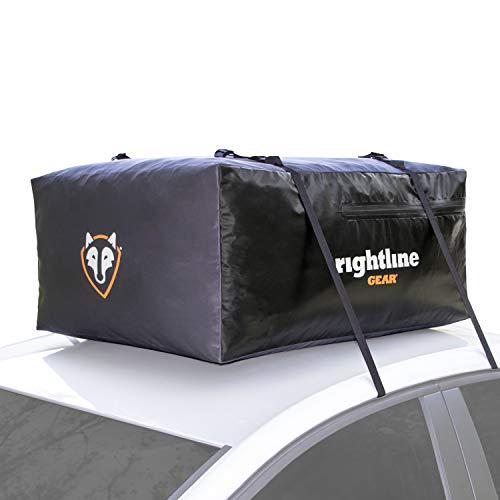
Rightline Gear Sport 3 Car Top Carrier
This soft carrier straps directly to existing roof rails, skipping crossbars entirely. Welded seams and a zip cover keep contents dry through ordinary rain. Folded flat, it stores in a closet instead of a garage, and it weighs far less than any hard shell here.
Pros
- Packs down to almost nothing
- Much easier to lift onto the roof
- Lowest cost option in this lineup
Cons
- No locking mechanism for security
- Sharp cornered items can stress the fabric

RoofBag Explorer Waterproof Rooftop Cargo Carrier
Door straps and a protective mat replace crossbars, making this the practical choice for sedans and hatchbacks with a bare roof. A waterproof laminate shell, not just coated fabric, sheds rain according to the listing. Owners report it stays dry as long as the straps stay properly tensioned on the drive.
Pros
- Works on roofs with no rails at all
- Protective mat guards the paint underneath
- Stores flat in a closet
Cons
- Door straps route through the cabin
- Needs re tensioning on longer drives

Apex ACB-4906 Steel Roof Cargo Basket
An open steel frame handles odd shaped gear that will not fit a molded shell, such as camping chairs, coolers or fuel cans. A cargo net and separate waterproof bag supply the weather protection the basket lacks on its own. Powder coated steel resists corrosion better than bare metal over years of outdoor storage.
Pros
- Carries shapes no box will hold
- Durable steel construction built for years of use
- Straps secure gear directly to the frame
Cons
- No weather protection on its own
- Generates more wind noise than a closed box
How they stack up
| # | Model | Capacity | Best for | Score | Price |
|---|---|---|---|---|---|
| 1 | Thule Motion XT XL Rooftop Cargo Box | Extra large family volume | Best overall | 9.4 | Check price |
| 2 | Yakima SkyBox 16 Carbonite | 16 cubic feet | Best for shorter roofs | 9.2 | Check price |
| 3 | INNO Wedge Plus Rooftop Cargo Box | Low aerodynamic wedge | Best for low garage clearance | 9.0 | Check price |
| 4 | SportRack Vista XL Rooftop Cargo Box | Extra large family volume | Best value | 8.7 | Check price |
| 5 | Rightline Gear Sport 3 Car Top Carrier | Soft cargo bag | Best budget | 8.5 | Check price |
| 6 | RoofBag Explorer Waterproof Rooftop Cargo Carrier | Door strap system, no rack required | Best for cars without roof racks | 8.2 | Check price |
| 7 | Apex ACB-4906 Steel Roof Cargo Basket | Open steel basket | Best for awkward loads | 8.0 | Check price |
How to pick the right one
What to measure before you compare capacity Cargo volume alone says little about fit. Box length matters most, since a long box can block a short vehicle’s rear hatch from opening fully. Total height matters too if your garage door sits low. Most carriers also list a minimum and maximum crossbar spread, so measure your bars before ordering.
Hard box, soft bag or open basket Hard boxes lock, seal against weather and run quiet, but cost more and take up garage space when empty. Soft bags fold flat, weigh little and cost far less, though they offer no real security. Open baskets carry oddly shaped gear that will not fit a molded shell, but you supply your own weatherproofing and accept extra wind noise.
How much weight your roof can actually carry Check your owner’s manual for the dynamic roof load rating, the real limit while driving. That number includes the rack and the carrier itself, not just your cargo. Subtract both before loading anything. Keep heavy items low inside the vehicle and pack light, bulky items on the roof to protect handling.
Fuel economy and noise once it’s mounted Anything mounted on the roof disrupts airflow, so expect lower fuel economy and more cabin noise above highway speed. Tapered, low profile boxes cost the least in both categories. Open baskets cost the most. Removing the carrier between trips is the simplest way to recover normal mileage.
Questions worth asking
Do roof cargo carriers need crossbars?
Hard boxes and open baskets need crossbars or factory rails to clamp onto. Soft bags split two ways: rail mounted bags need rails or bars, while door strap bags work on a bare roof. Check which type a listing actually is before ordering.
How much weight can I put on my roof?
Look up the dynamic roof load rating in your owner’s manual. Subtract the weight of the rack and the carrier itself. The number left over is your real cargo allowance, and it is usually smaller than shoppers expect.
Which roof box holds the most cargo?
The Thule Motion XT XL and SportRack Vista XL both offer extra large family volume in this lineup. Interior shape matters as much as the stated number, since a wedge box like the INNO Wedge Plus trades depth for a lower profile.
Are soft roof bags waterproof in heavy rain?
Welded seams and a zip cover, like those on the Rightline Gear Sport 3, handle ordinary rain well. For extended downpours, pack sensitive items in a dry bag inside as backup protection.
Can I fit a roof box if my car has no roof rails?
Yes, with a door strap system like the RoofBag Explorer, which mounts using straps routed through the door frames instead of crossbars. It includes a protective mat to guard the paint underneath.
How much fuel economy do you lose with a roof carrier?
It depends on speed, vehicle shape and carrier profile. Low tapered boxes cost the least, open baskets cost the most, and the penalty grows sharply above highway speed. Removing the carrier between trips avoids it.
Is a roof basket better than a roof box?
A basket like the Apex ACB-4906 suits oddly shaped gear a molded box cannot hold, such as coolers or folding chairs. A box protects against weather on its own and locks shut, which a basket cannot do without added accessories.
Can I leave a roof cargo carrier on year round?
You can, but it adds constant drag, exposes the shell to sun and weather, and raises the odds of a garage clearance mistake. Most owners mount it for trips and store it between them.
Which side should a roof box open from?
Dual side opening, found on the Thule Motion XT XL and Yakima SkyBox 16 Carbonite, lets you load from whichever curb you park against. Rear opening boxes work fine but mean walking behind the vehicle.
Our take
Thule’s Motion XT XL tops this lineup by pairing family sized capacity with quiet running and a lock you can verify at a glance. Shorter vehicles or tight garages fit the Yakima SkyBox 16 Carbonite or INNO Wedge Plus better. Drivers without roof rails or a big budget should look at the RoofBag Explorer or Rightline Gear Sport 3 instead.
Tony Russo
Tony trained as an automotive technician and spent years in service and parts retail before moving into writing. He focuses on garage tools, car care products and accessories from a hands-on maintenance perspective.


