Rolling Tool Trays That Keep Sockets Within Reach
The Traxion 2-in-1 ProGear Mechanic Stool is the top pick, flipping between a rolling seat and a kneeling pad while a built-in tray keeps tools under the user. It suits most home mechanics working on cars at ground level. Shops needing a seatless, high-capacity tray should pick the Pit Posse cart instead.
The Traxion 2-in-1 ProGear Mechanic Stool leads this list because it switches between a rolling seat and a padded kneeling position without separate tools, keeping a built-in tray of sockets and wrenches within arm’s reach either way. Its main limitation is tray size, since the flip-design keeps the tray smaller than a dedicated flat rolling cart.
We compared published tray capacity, seat or kneeling pad design, caster quality and weight rating across each option rather than road-testing them in a shop ourselves.
How to pick the right one
What to look for in a rolling tool tray Tray capacity decides how many sockets, wrenches and small parts stay within reach without walking back to a toolbox mid-job. Seat design, whether fixed, padded or flip-style, affects comfort during longer jobs like brake work or oil changes. Caster quality determines how smoothly the unit rolls across a garage floor and whether it catches on seams or cracks. Weight rating matters both for the user’s body weight and for any tools or parts loaded onto the tray itself.
Seat-based stools versus flat rolling trays with no seat Seat-based options like the Traxion, TORIN and Lisle models combine seating and tool storage in one unit, useful for mechanics who sit while working on lower areas of a vehicle. Flat trays without a seat, like the Pit Posse cart, trade seating for more usable tray surface, which suits mechanics who already use a separate stool or prefer standing. Choosing between the two comes down to whether a single combined unit or maximum tray space matters more for a given workflow.
Matching weight rating to the job Standard stools rated around 225 to 275 pounds cover most occasional home garage use without issue. Heavier users or shops running a stool daily benefit from a reinforced frame like the Sunex model, rated up to 350 pounds. Checking the weight rating against both body weight and any tools stacked on the tray avoids a seat that sags or casters that flatten under load over time.
Low-profile trays for working under raised vehicles A standard seat-based stool is often too tall or wide to slide alongside a car raised on jack stands or a lift. The IPA dolly solves that specific problem with a slim, flush-caster build designed to fit in that tighter space. Mechanics doing frequent underbody work, like exhaust or suspension jobs, get more practical use from a low-profile dolly than from a taller seat-based stool in that scenario.
What we recommend

Traxion 2-in-1 ProGear Mechanic Stool
A flip mechanism switches this unit between a rolling seat for sitting-height jobs and a padded kneeling position for working closer to the ground, without swapping tools. A built-in tray around the base holds sockets, wrenches and small parts within reach in either position. Smooth-rolling casters move easily across a sealed garage floor.
Pros
- Flips between seat and kneeling pad without extra tools
- Built-in tray keeps hand tools within reach in either position
- Smooth casters roll easily on sealed floors
Cons
- Tray holds fewer tools than a dedicated flat rolling cart
- Flip mechanism adds moving parts versus a fixed stool
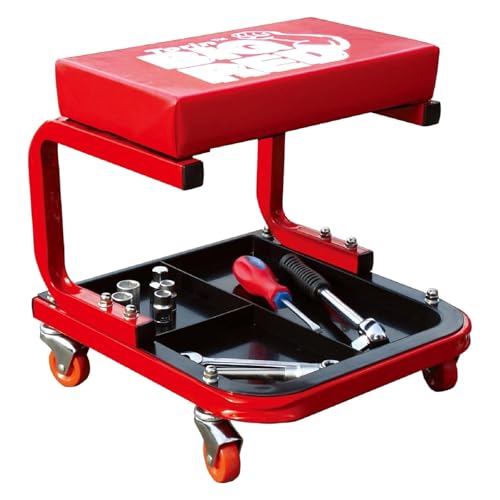
TORIN Big Red Rolling Garage Seat with Tool Tray
A padded seat sits atop a tray base that holds tools and small parts directly underneath, keeping both seating and storage in one low-cost unit. Four casters let it roll across the floor without needing to stand and reposition tools separately. The simple fixed design skips the flip mechanism found on pricier stools.
Pros
- Lower cost than flip-style or heavy-duty stools
- Padded seat adds comfort for longer jobs
- Tray base keeps tools under the seat within reach
Cons
- Fixed design does not convert to a kneeling position
- Tray capacity is smaller than a dedicated flat cart

Lisle Rolling Creeper Seat with Tool Tray
A thicker cushion than most rolling seats in this category reduces pressure during longer jobs like brake work or oil changes. The tray wraps around the base rather than sitting only underneath, giving a wider reach radius for tools without standing up. Casters are sized for rolling over typical garage floor seams without catching.
Pros
- Extra-thick cushion suits longer jobs better than thin padding
- Wraparound tray gives a wider tool reach radius
- Casters handle typical garage floor seams without catching
Cons
- No kneeling or flip option like the Traxion model
- Thicker cushion adds some bulk to overall height

Pit Posse Rolling Tool Tray Cart
This cart skips the seat entirely, offering a larger flat tray surface for mechanics who already use a separate stool or stand while working. The extra surface area holds more tools and small parts than a tray built around a seat base. Locking casters let it stay put once positioned next to a vehicle.
Pros
- Larger flat tray surface holds more tools than seat-based designs
- Locking casters keep the cart from rolling away mid-job
- No seat means less bulk for mechanics who stand or use a separate stool
Cons
- No seating, so a separate stool is still needed for sitting-height jobs
- Locking casters add a step before and after moving the cart
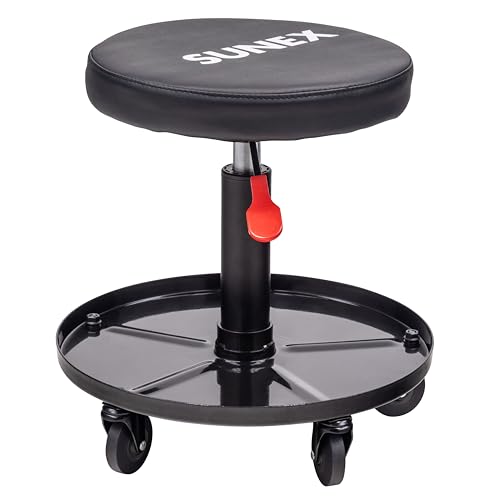
Sunex Rolling Shop Stool with Tray
A reinforced steel frame pushes the weight rating higher than standard padded stools, suiting heavier users or shops where the stool sees daily use. The tray sits lower and wider than lighter-duty models, holding bulkier tools like ratchets and larger sockets. Casters are rated for the added frame weight without flattening under load.
Pros
- Reinforced frame supports a higher weight rating than standard stools
- Wider tray holds bulkier ratchets and larger sockets
- Casters are rated for the added frame weight
Cons
- Heavier overall unit than lightweight padded stools
- Costs more than basic fixed-seat models

Buffalo Tools Rolling Shop Seat with Tray
This seat covers the core rolling-stool-with-tray function at the lowest cost in this lineup, suiting occasional home use rather than daily shop work. A basic tray underneath holds small hand tools within reach while seated. Standard casters roll fine on smooth garage floors without added load rating.
Pros
- Lowest cost option that still includes a tray
- Covers basic occasional home garage use
- Standard casters work fine on smooth floors
Cons
- Lower weight rating than heavy-duty or reinforced models
- Tray holds fewer tools than wraparound or flat-cart designs
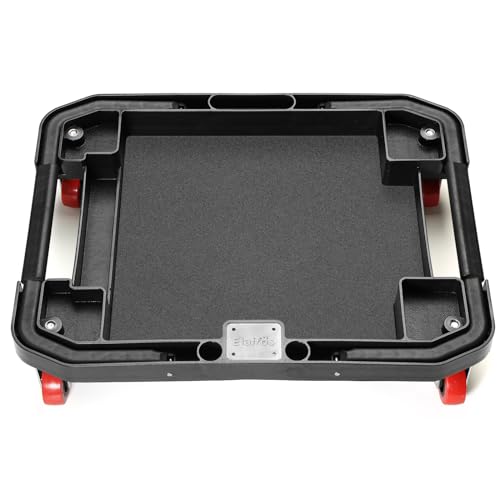
IPA Rolling Tool Tray Dolly
A low-profile build keeps this tray slim enough to slide alongside a vehicle raised on jack stands or a lift, something bulkier seat-based stools cannot do. Recessed sections in the tray keep loose fasteners and small parts from rolling off during use. Casters sit flush with the frame to maintain the low height.
Pros
- Low-profile build slides under vehicles on jack stands or a lift
- Recessed tray sections keep small fasteners from rolling off
- Flush casters maintain a slim overall height
Cons
- No seating option at all
- Smaller overall tray surface than full-size flat carts
How they compare
| # | Model | Design | Best for | Score | Price |
|---|---|---|---|---|---|
| 1 | Traxion 2-in-1 ProGear Mechanic Stool | Flips between seat and kneeling pad | Best Overall | 9.0 | Check price |
| 2 | TORIN Big Red Rolling Garage Seat with Tool Tray | Fixed padded seat with tray base | Best Value | 8.6 | Check price |
| 3 | Lisle Rolling Creeper Seat with Tool Tray | Fixed seat with wraparound tray | Best for Padded Comfort | 8.4 | Check price |
| 4 | Pit Posse Rolling Tool Tray Cart | Flat tray, no seat | Best Flat Rolling Tray (No Seat) | 8.5 | Check price |
| 5 | Sunex Rolling Shop Stool with Tray | Reinforced steel-frame stool with tray | Best Heavy-Duty Weight Capacity | 8.7 | Check price |
| 6 | Buffalo Tools Rolling Shop Seat with Tray | Fixed seat with basic tray | Best Budget | 7.9 | Check price |
| 7 | IPA Rolling Tool Tray Dolly | Low-profile flat tray dolly | Best Low-Profile for Sliding Under Vehicles | 8.2 | Check price |
Questions worth asking
What is a rolling tool tray used for?
It keeps hand tools and small parts within reach while rolling alongside a vehicle, cutting down on trips back to a toolbox during a repair.
Is a rolling stool with a tray better than a flat tray cart?
A seat-based stool combines seating and storage in one unit, while a flat cart like the Pit Posse model offers more tray space for mechanics who already sit on a separate stool.
Can a rolling tool tray hold heavy tools like impact wrenches?
Heavier-duty trays, like the Sunex model with its reinforced frame, handle bulkier tools better than lightweight budget trays built for small hand tools.
Do rolling tool trays work on uneven garage floors?
Most caster designs handle typical floor seams, though a dedicated low-profile dolly like the IPA model uses flush casters built for smoother rolling under raised vehicles specifically.
What is the benefit of a flip-style mechanic stool?
A flip design, like the Traxion model, switches between a rolling seat and a kneeling pad without needing two separate pieces of equipment.
How much weight can a rolling tool tray hold?
Weight ratings vary from around 200 pounds on basic trays up to 350 pounds on reinforced heavy-duty stools like the Sunex model.
Can a rolling tray slide under a car on jack stands?
Only low-profile designs built for that clearance, like the IPA dolly, are slim enough to fit alongside a vehicle raised on stands or a lift.
Are padded seats worth it on a rolling tool stool?
Extra-thick padding, like on the Lisle model, reduces pressure during longer jobs compared to thinner cushions on basic stools.
Do budget rolling tool trays hold up to daily shop use?
Budget models like the Buffalo Tools seat suit occasional home use, while daily shop use benefits more from a reinforced frame rated for higher weight.
What tools typically fit in a rolling tray?
Most trays hold sockets, wrenches, screwdrivers and small fasteners, though wider trays like the Lisle wraparound design fit bulkier items too.
Our take
Most home mechanics working at ground level on a vehicle should choose the Traxion 2-in-1 ProGear Mechanic Stool, since its flip design covers both sitting and kneeling positions with tools close at hand. Shops that need more tray surface and already use a separate stool should pick the Pit Posse Rolling Tool Tray Cart instead. Mechanics doing frequent underbody work on raised vehicles get more practical use from the low-profile IPA dolly than from any seat-based option in this lineup.
Jake Monroe
Jake worked as a residential contractor for over a decade before shifting to full-time writing. He evaluates power tools, hand tools and workshop gear through the lens of someone who has actually used them on job sites, not just read the box.