Under Sink Reverse Osmosis Systems Worth Installing
The APEC ROES-50 is the most dependable all-around choice, a 5-stage system built around NSF-tested components. The Waterdrop G3P800 suits kitchens that want fast, tankless filtration without a bulky storage tank. Households on well water do better with the Home Master TMAFC-ERP, built to handle higher sediment and TDS levels.
The APEC ROES-50 leads this list because its 5-stage design and NSF-tested components give it a long track record for consistent, clean output on standard municipal water. It suits most kitchens replacing an aging filter pitcher or a single carbon filter under the sink, though its storage tank takes up more cabinet space than a tankless unit. Anyone short on cabinet room should look at the tankless Waterdrop G3P800 instead.
Source water differs block to block, so a system built for city water with chlorine and chloramine does not always handle well water sediment or high TDS the same way. We compared stage count, flow rate in gallons per day, tank versus tankless design, and whether each system adds minerals back through remineralization, before narrowing the field to these seven.
What we recommend

APEC Water Systems ROES-50 5-Stage RO System
APEC assembles this ROES-50 in the United States around a 5-stage filtration train, including sediment, two carbon stages, the RO membrane and a final carbon polish. Components carry NSF testing for material safety rather than full system certification. A standard pressurized storage tank holds filtered water ready for immediate use at the faucet.
Pros
- Long track record with widely available replacement filters
- US-based assembly with documented component testing
- Tank keeps water ready without waiting on fresh filtration
Cons
- Tank takes up more under-sink space than tankless designs
- No built-in remineralization stage
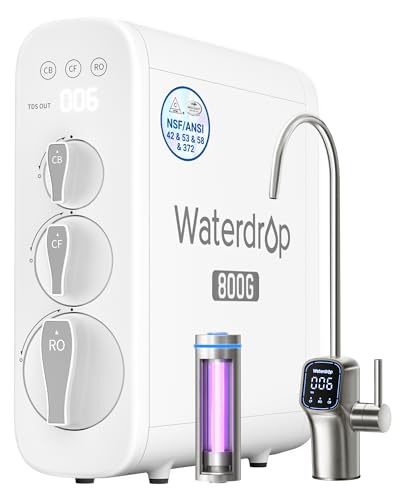
Waterdrop G3P800 Tankless RO System
Waterdrop rates this G3P800 at 800 gallons per day, far above a typical tank-based system, since it filters on demand rather than storing pre-filtered water. A smart faucet display shows remaining filter life and total dissolved solids readings in real time. The tankless design frees up cabinet space that a pressurized tank would otherwise occupy.
Pros
- No bulky tank taking up cabinet space
- Faucet display tracks filter life and water quality
- Fast on-demand flow for filling pots or pitchers
Cons
- Higher upfront cost than tank-based systems
- Requires a nearby outlet for the display and booster

iSpring RCC7AK 6-Stage RO System with Alkaline Remineralization
iSpring adds a sixth stage to this RCC7AK specifically to reintroduce calcium and magnesium minerals that reverse osmosis otherwise strips out. The alkaline filter raises pH slightly compared to standard RO output, which some owners prefer for taste. A standard storage tank and under-sink faucet round out the installation.
Pros
- Remineralization stage addresses the flat taste of plain RO water
- Six stages give extra filtration margin on tap water
- Straightforward DIY installation kit included
Cons
- Remineralization cartridge adds another filter to replace
- Tank-based design needs the same cabinet space as basic systems

Home Master TMAFC-ERP Artesian Full Contact RO System
Home Master designed this TMAFC-ERP with well water in mind, pairing a permeate pump that improves efficiency on higher-pressure or higher-TDS source water. A non-electric permeate pump reduces drain water waste compared to a standard restrictor-based system. Larger filter cartridges extend the interval between changes versus smaller inline filters.
Pros
- Permeate pump improves efficiency on well water pressure swings
- Larger cartridges mean fewer filter changes per year
- Mineral stage restores some taste after filtration
Cons
- Bulkier installation than a basic 5-stage system
- Higher price than standard municipal-water systems

Frizzlife SP99-A Tankless RO System
Frizzlife keeps this SP99-A compact enough to fit cramped under-sink cabinets that still have a garbage disposal or soap dispenser line taking up space. Filtration runs through a quick-change cartridge format rather than separate housings for each stage. The tankless design filters on demand, trading some peak flow rate for the smaller footprint.
Pros
- Smaller footprint fits crowded under-sink cabinets
- Quick-change cartridges simplify maintenance
- No tank means no stored water sitting between uses
Cons
- Lower rated output than larger tankless systems
- Fewer filtration stages than the iSpring or Home Master

Culligan RO-US-EZ-4 Under Sink RO System
Culligan builds this RO-US-EZ-4 around twist-and-lock filter cartridges that swap without wrenches or disconnecting water lines. Four filtration stages cover sediment, carbon and the RO membrane in a straightforward sequence. A dedicated faucet and standard tank complete the typical installation.
Pros
- Filter changes take minutes without tools
- Backed by a long-established water treatment brand
- Nationwide dealer network for service questions
Cons
- Fewer stages than the iSpring or Home Master systems
- Replacement cartridges cost more than generic equivalents

Brondell Circle RC100 Under Sink RO System
Brondell designed this Circle RC100 around a higher recovery ratio than older RO designs, meaning it sends less filtered water down the drain for every gallon produced at the faucet. A tankless, electric-pump design maintains flow rate despite the efficiency gains. The system includes a leak detection shutoff as a standard safety feature.
Pros
- Wastes less water per gallon filtered than basic RO systems
- Leak detection shutoff adds a safety layer under the sink
- Compact tankless design saves cabinet space
Cons
- Electric pump needs a nearby outlet
- Higher price than simple tank-based 5-stage systems
How to pick the right one
What to look for in an under sink RO system Stage count describes the filtration sequence, typically sediment removal, carbon for chlorine and taste, the RO membrane itself, and sometimes a polishing or remineralization stage. Flow rate, measured in gallons per day, determines how quickly the system refills after heavy use, which matters more for tankless designs than tank-based ones. NSF testing on individual components is common; full NSF/ANSI 58 system certification is less universal, so check what a specific listing actually claims.
Tank versus tankless systems A tank-based system like the APEC ROES-50 stores pre-filtered water under pressure, so it is ready the instant the faucet opens, but the tank itself takes up a chunk of cabinet space. Tankless systems like the Waterdrop G3P800 or Frizzlife SP99-A filter on demand, freeing that space but depending on steady line pressure and sometimes an electric booster pump to maintain flow.
Best for well water and higher sediment or TDS levels Well water often carries more sediment and a higher starting TDS than municipal supply, which shortens filter life on a system not built for it. The Home Master TMAFC-ERP’s permeate pump and larger cartridges are built around that reality, improving efficiency when source pressure or mineral content varies more than city water typically does.
Installation and filter change maintenance Most systems in this lineup install with a saddle valve or adapter at the cold water line and a dedicated small faucet drilled into the sink deck or countertop, a project many homeowners handle without a plumber. Filter change intervals range from six months for basic carbon stages up to a year or more for the RO membrane itself, and twist-and-lock designs like Culligan’s cut the time each change takes.
Side by side
| # | Model | Filtration stages | Best for | Score | Price |
|---|---|---|---|---|---|
| 1 | APEC Water Systems ROES-50 5-Stage RO System | 5 | Best overall | 9.3 | Check price |
| 2 | Waterdrop G3P800 Tankless RO System | 800 GPD | Best tankless for fast filtration | 9.0 | Check price |
| 3 | iSpring RCC7AK 6-Stage RO System with Alkaline Remineralization | 6, including alkaline remineralization | Best with remineralization | 8.8 | Check price |
| 4 | Home Master TMAFC-ERP Artesian Full Contact RO System | Non-electric permeate pump | Best for well water and high TDS | 8.9 | Check price |
| 5 | Frizzlife SP99-A Tankless RO System | Tankless, filters on demand | Best compact tankless | 8.6 | Check price |
| 6 | Culligan RO-US-EZ-4 Under Sink RO System | 4 | Best for easy filter changes | 8.5 | Check price |
| 7 | Brondell Circle RC100 Under Sink RO System | Tankless, electric pump assisted | Best low waste ratio | 8.7 | Check price |
Questions worth asking
Do I need a tank for a reverse osmosis system?
No. Tankless systems like the Waterdrop G3P800 filter water on demand instead of storing it, which saves cabinet space but relies more on steady water pressure to maintain flow rate.
How often do reverse osmosis filters need to be changed?
Sediment and carbon pre-filters commonly need replacement every six to twelve months, while the RO membrane itself often lasts two to three years depending on source water quality and usage.
Does reverse osmosis remove beneficial minerals from water?
Yes, RO membranes remove most dissolved minerals along with contaminants, which is why systems like the iSpring RCC7AK and Home Master TMAFC-ERP add a remineralization stage back in for taste.
Is reverse osmosis water safe to drink every day?
Reverse osmosis water is widely considered safe for daily drinking, since it simply removes dissolved solids and contaminants rather than adding anything harmful.
How much water does an under sink RO system waste?
Traditional restrictor-based systems can send several gallons down the drain per gallon produced, while permeate pump and higher recovery designs like the Brondell Circle RC100 reduce that ratio.
Can I install an under sink reverse osmosis system myself?
Most systems ship with a saddle valve or adapter kit designed for DIY installation, though drilling a hole for the dedicated faucet in a countertop or sink deck is the step some homeowners prefer a plumber to handle.
Does reverse osmosis reduce water pressure at the faucet?
A dedicated RO faucet runs at a lower flow than a standard kitchen tap by design, since the water has passed through a restrictive membrane, though tank-based systems help smooth out usage.
What does TDS mean and why does it matter for drinking water?
TDS stands for total dissolved solids, a measurement of dissolved minerals and contaminants in water. Higher starting TDS, common in well water, can shorten filter and membrane life on a system not rated for it.
What is the difference between reverse osmosis and a water softener?
A water softener targets hardness minerals like calcium and magnesium through ion exchange, while reverse osmosis filters a much broader range of dissolved solids and contaminants for drinking water specifically.
Is an under sink RO system better than a filter pitcher?
An under sink system filters a far larger range of dissolved contaminants than a pitcher’s carbon filter and delivers filtered water on demand at the tap, rather than requiring a wait for each new pitcher batch.
The verdict
The APEC ROES-50 is the safest default pick for most kitchens on municipal water, backed by NSF-tested components and a filtration sequence that has held up over years of use. Kitchens tight on cabinet space should move to the tankless Waterdrop G3P800 instead. Anyone on a well, or dealing with consistently high TDS readings, is better served by the Home Master TMAFC-ERP and its permeate pump design.
Dana Whitfield
Dana spent eight years buying and merchandising for a regional kitchenware retailer before moving into editorial work. She has handled thousands of SKUs across cookware, small appliances and kitchen organization, and focuses on the practical differences that matter once a product is actually in daily use.


